


- ¥1400
- ATCC,ECACC, DSMZ, RIKEN 等
- 美国
- CM-M032
- 2026年10月18日

企业认证
相关产品推荐更多 >

万千商家帮你免费找货
0 人在求购买到急需产品
相关阅读
源叶生物 十万种现货试剂速发,品质稳、品类全,实验不再等!Takara 秋促来袭,提取+反转录+定量套装仅 1200 元abinScience 体内级抗体 全年锁价 低至 ¥1200阿拉丁 22万+ 科研级产品现货速发,品质严控、科研无忧- 详细信息
- 文献和实验
- 技术资料
- 英文名:
SV40-MES-13
- 库存:
大量库存
- 供应商:
盖宁生物
- 肿瘤类型:
详询
- 细胞类型:
肿瘤细胞/正常细胞
- 品系:
详询
- 组织来源:
详见说明
- 相关疾病:
详询
- 物种来源:
鼠源
- 免疫类型:
详询
- 细胞形态:
上皮细胞样
- 是否是肿瘤细胞:
详询
- 器官来源:
详询人员
- 运输方式:
空运
- 年限:
永久
- 生长状态:
优良
特别提醒:该产品仅限于实验室科学研究使用,不得用于其他用途
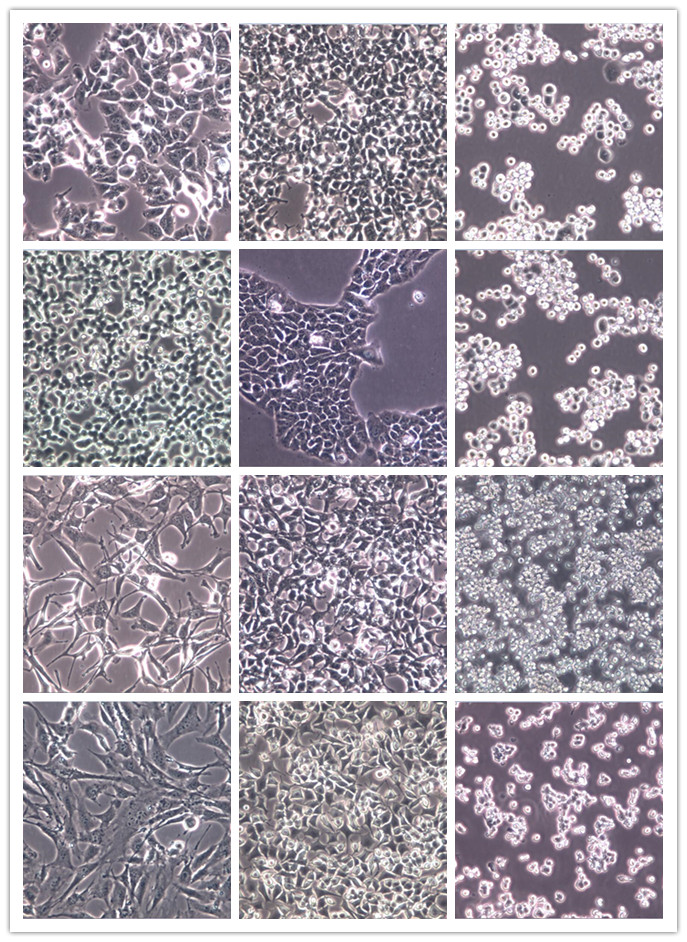
细胞名称:SV40 MES 13 小鼠肾小球系膜细胞
组织来源:肾小球系膜细胞
培养条件:DMEM:F12=3:1 +5% FBS
形 态:贴壁;成纤维细胞
背 景:这株细胞的细胞骨架染色突出呈现肌动蛋白,在细胞质中有丰富的平行微丝。有报道称在1uM血管紧张素II存在下,它们会收缩。细胞在软琼脂中形成克隆,SV40大T抗原阳性。
PubMed=2835539; DOI=10.1038/ki.1988.53
MacKay K., Striker L.J., Elliot S., Pinkert C.A., Brinster R.L., Striker G.E.
Glomerular epithelial, mesangial, and endothelial cell lines from transgenic mice.
Kidney Int. 33:677-684(1988)
PubMed=17178593; DOI=10.1080/13813450601093518
Cheng D.W., Jiang Y., Shalev A., Kowluru R., Crook E.D., Singh L.P.
An analysis of high glucose and glucosamine-induced gene expression and oxidative stress in renal mesangial cells.
Arch. Physiol. Biochem. 112:189-218(2006)
PubMed=25277546; DOI=10.1186/1471-2164-15-847
Didion J.P., Buus R.J., Naghashfar Z., Threadgill D.W., Morse H.C. III, Pardo-Manuel de Villena F.
SNP array profiling of mouse cell lines identifies their strains of origin and reveals cross-contamination and widespread aneuploidy.
BMC Genomics 15:847.1-847.11(2014)
风险提示:丁香通仅作为第三方平台,为商家信息发布提供平台空间。用户咨询产品时请注意保护个人信息及财产安全,合理判断,谨慎选购商品,商家和用户对交易行为负责。对于医疗器械类产品,请先查证核实企业经营资质和医疗器械产品注册证情况。
 文献和实验
文献和实验*发表【中文论文】请标注:由上海盖宁生物科技有限公司提供;
*发表【英文论文】请标注:From Shanghai Gaining Biotechnology Co., Ltd.
Normal cells in culture divide a defined number of times before reaching replicative senescence (1 ). The number of divisions that cells can undergo varies with the species of animal and tissue from which the cells are derived. Cells
SV40 is a small simian virus that has been extensively used as a viral vector in mammalian cells (1 –4 ). The viral genome is a double-stranded supercoiled DNA molecule of 5243 bp (Fig. 1A ) that is packaged into a capsid containing
Cell-Free Transcription of SV40
has been investigating the molecular mechanisms by which the genes of SV40 are transcriptionally regulated. To elucidate the biochemical factors involved in the transcriptional regulation of SV40, the development of a cell-free transcription system was required
 技术资料
技术资料
