

- ¥800 - 1300
- solarbio

- 北京
- L7800
- 2025年07月16日

企业认证
相关产品推荐更多 >

万千商家帮你免费找货
0 人在求购买到急需产品
- 详细信息
- 询价记录
- 文献和实验
- 技术资料
- 保存条件:
2-8℃
- 保质期:
1年以上
- 英文名:
Lip2000™ Transfection Reagent
- 库存:
现货
- 供应商:
solarbio
- CAS号:
L7800
- 规格:
0.75ml/1.5ml
| 规格: | 0.75ml | 产品价格: | ¥800.0 |
|---|---|---|---|
| 规格: | 1.5ml | 产品价格: | ¥1300.0 |
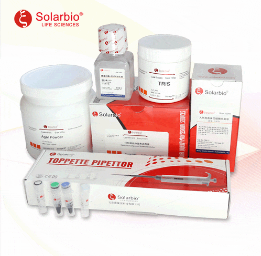
脂质体2000/Lip2000
品牌:Solarbio | 货号:L7800 | CAS:
别名 : 脂质体2000 转染试剂2000 英文名称 : Lip2000™ Transfection Reagent 储存条件 : 2-8℃
产品介绍:
Lip2000™ is a newly developed and proprietary reagent for the transfection of nucleic acids into eukaryotic cells.
Lip2000™ has the following advantages:
The highest transfection efficiency in many cell types and formats.
DNA-Lip2000™ complexes can be directly added to cells in culture medium (with or without serum).
It is not necessary to remove DNA-Lip2000™ complexes or change medium following transfection.
The complexes can be removed after 4-6 hours by replacing with refresh medium (optional)
Contents and Storage
Lip2000™ is supplied in liquid form at a concentration of 1mg/ml. Store at 4℃. DO NOT FREEZE.
Product Qualification
Lip2000™ has been extensively tested by transfection of HEK293 cells with an EGFP reporter containing
plasmid. Lip2000™ is free of microbial contamination.
Important Guidelines
Follow these guidelines when performing transfections:
1. The ratio of DNA (in μg) : Lip2000™ (in μl) to use when preparing complexes should be 1:2 to 1:3 for most cell lines. To transfect 0.5 -2 ×10⁵ cells in a 24-well format, use 0.8-1 μg DNA and 2-3 μl of Lip2000™. Optimizing transfection by varying DNA/Lip2000™ ratio is possible.
2. It is CRITICAL to transfect cells at high cell density. 90-95% confluence the time of transfection is recommended to obtain high efficiency and expression levels and to minimize decreased cell growth associated with high transfection activity. Lower cell densities are suitable with optimization of conditions. Take care to maintain a standard seeding protocol between experiments because transfection efficiency is dependent on culture confluence.
3. DO NOT add antibiotics to media during transfection as this will cause cell death.
For better results, you may choose to:
Use Opti-MEM I medium to dilute Lip2000™ prior to complexing with DNA. Other media without serum (e.g.DMEM) may be used to dilute Lip2000™,but transfection efficiency may be compromised.
Note: Some serum-free formulations can inhibit Lip2000™ mediated transfection, for example:CD 293, 293 SFM II, and VP-SFM etc.
Transfection Procedure for 24-Well Format
For adherent cells: One day before transfection,plate cells in growth medium (without antibiotics) so that they will be 90-95% confluent at the time of transfection (0.5 -2 ×10⁵ cells/well for a 24-well plate).
For suspension cells: On the day of transfection just prior to preparing complexes,plate 4-8×10⁵cells/500 μl of growth medium (without antibiotics) in a 24-well plate.
1. For each transfection sample, prepare DNA-Lip2000™ complexes as follows:
• Dilute DNA in 50 μl of Opti-MEM I Reduced Serum Medium without serum (or other medium without serum). Mix gently.
• Mix Lip2000™ gently before use, then dilute the appropriate amount in 50 μl of Opti-MEM I Medium (or other medium without serum). Mix gently and incubate for 5 minutes at room temperature.
Note: Combine the diluted Lip2000™ with the diluted DNA within 30 minutes. Longer incubation times may decrease activity. If DMEM is used as a diluent for the Lip2000™, mix with the diluted DNA within 5 minutes. After the 5 minute incubation,combine the diluted DNA with the diluted Lip2000™ (total volume is 100 μl).
•Mix gently and incubate for 20 minutes at room temperature to allow the DNALip2000™ complexes to form. The solution may appear cloudy,but this will not inhibit the transfection.
Note:DNA-Lip2000™ complexes are stable for at least 5 hours at room temperature.
2. Add the 100 μl of DNA-Lip2000™ complexes to each well. Mix gently by rocking the plate back and forth.
3. Incubate the cells at 37℃ in a CO2 incubator for 24-48 hours until they are ready to assay for transgene expression. It is not necessary to remove the complexes or change the medium; however,growth medium may be replaced after 4-6 hours without loss of transfection activity.
For stable cell lines: Passage the cells at a 1:10 or higher dilution into fresh growth medium 24 hours after transfection. Add selective medium the following day.
For suspension cells: Add PMA and/or PHA (if desired) 4 hours after adding the DNA-Lip2000™ complexes to the cells.
Tip: For Jurkat cells, adding PHA-L and PMA at final concentrations of 1 μg/ml and 50 ng/ml, respectively, enhances CMV promoter activity and gene expression. For K562 cells, adding PMA alone is sufficient to enhance promoter activity.
Scaling Up or Down Transfections
To transfect cells in different tissue culture formats, vary the amounts of Lip2000™ , DNA, cells, and medium used in proportion to the difference in surface area (see table below). With automated, highthroughput systems, larger complexing volumes are recommended for transfections in 96-well plates. Note: You may perform rapid 96-well plate transfections (plate cells and transfect simultaneously) by adding a suspension of cells directly to complexes prepared in the plate. Prepare complexes and add cells at twice the cell density as
参考文献:
《MicroRNA-206 Reduces Osteosarcoma Cell Malignancy In Vitro by Targeting the PAX3-MET Axis》 作者:Fang-Biao Zhan, Xian-Wei Zhang, Shi-Long Feng, Jun Cheng, You Zhang,Bo Li,Li-Zhong Xie and Qian-Rong Deng 期刊:Yonsei Medical Journal 影响因子:1.759 PMID:30666838
风险提示:丁香通仅作为第三方平台,为商家信息发布提供平台空间。用户咨询产品时请注意保护个人信息及财产安全,合理判断,谨慎选购商品,商家和用户对交易行为负责。对于医疗器械类产品,请先查证核实企业经营资质和医疗器械产品注册证情况。
- 作者
- 内容
- 询问日期
 文献和实验
文献和实验
论文引用
Paper Citation
25-hydroxycholesterol inhibits human papillomavirus infection in cervical epithelial cells by perturbing cytoskeletal remodeling
点击查看|
AuthorBoning Li, Chen Hua, Pu Tian, Yiou Sha, Lu Zhang, Qian Wang, Lu Lu, Shibo Jiang, Long Sui
|
Publish_toJOURNAL OF MEDICAL VIROLOGY
|
|
IF20.6930
|
PMID37254637
|
Transcriptomics based identification of S100A3 as the key anti-hepatitis B virus factor of 16F16
点击查看|
AuthorFaisal Mahmood, Ruixian Xu, Maher Un Nisa Awan, Ting Jia, Taoping Zhang, Wengang Shi, Min Liu, Qinqin Han, Qianhua Zhu, Qilin Zhang, Yuzhu Song, Xueshan Xia, Jinyang Zhang
|
Publish_toBIOMEDICINE & PHARMACOTHERAPY
|
|
IF7.4190
|
PMID37207431
|
Hypoxia-Related Gene FUT11 Promotes Pancreatic Cancer Progression by Maintaining the Stability of PDK1
点击查看|
AuthorCao Wenpeng, Zeng Zhirui, Pan Runsang, Wu Hao, Zhang Xiangyan, Chen Hui, Nie Yingjie, Yu Zijiang, Lei Shan
|
Publish_toFrontiers in Oncology
|
|
IF6.2440
|
PMID34221996
|
ELAC2 Functions as a Key Gene in the Early Development of Placental Formation Based on WGCNA
点击查看|
AuthorJunyong Liang, Jingjie Liang, Qiang Tan, Zhengguang Wang
|
Publish_toCells
|
|
IF6.0000
|
PMID36831280
|
Effect of non-permeable cryoprotectant sucrose on the development of spotted knifejaw (Oplegnathus punctatus) embryos
点击查看|
AuthorDecai Wang, Fan Wang, Yu Huang, Jianjun Wang, Huiwen Luo, Pu Zhang, Jingtao Peng, Gang Tang, Yaodong Wang, Li Yu, Dong Ni
|
Publish_toINTERNATIONAL IMMUNOPHARMACOLOGY
|
|
IF5.6000
|
PMID37364323
|
Mitochonic acid 5 regulates mitofusin 2 to protect microglia
点击查看|
AuthorJian Tan, Shuang-Xi Chen, Qing-Yun Lei, Shan-Qing Yi, Na Wu, Yi-Lin Wang, Zi-Jian Xiao, Heng Wu
|
Publish_toNeural Regeneration Research
|
|
IF5.1350
|
PMID33510088
|
Curdione induces ferroptosis mediated by m6A methylation via METTL14 and YTHDF2 in colorectal cancer
点击查看|
AuthorWang Fang, Sun Zheng, Zhang Qunyao, Yang Hao, Yang Gang, Yang Qi, Zhu Yimiao, Wu Wenya, Xu Wenwen, Wu Xiaoyu
|
Publish_toChinese Medicine
|
|
IF4.9000
|
PMID37735401
|
Knockdown of SNHG1 alleviates autophagy and apoptosis by regulating miR-362-3p/Jak2/stat3 pathway in LPS-injured PC12 cells
点击查看|
AuthorZhou Jiahui, Li Zhiyue, Zhao Qun, Wu Tianding, Zhao Qiancheng, Cao Yong
|
Publish_toNEUROCHEMICAL RESEARCH
|
|
IF3.9960
|
PMID33515352
|
Upregulation of Linc-ROR Promotes the Proliferation, Migration, and Invasion of Gastric Cancer Cells Through miR-212-3p/FGF7 Axis
点击查看|
AuthorYanjun Mi, Yongwen Li, Zhuo He, Donghan Chen, Qingqi Hong, Jun You
|
Publish_toCancer Management and Research
|
|
IF3.6020
|
PMID33564265
|
Molecular characterization and functional implications on mouse peripheral blood mononuclear cells of annexin proteins from Echinococcus granulosus sensu lato
点击查看|
AuthorHe Xue, Shao Guoqing, Du Xiaodi, Hua Ruiqi, Song Hongyu, Chen Yanxin, Zhu Xiaowei, Yang Guangyou
|
Publish_toParasites & Vectors
|
|
IF3.2000
|
PMID37803469
|
Knockdown of Ptprn-2 delays the onset of puberty in female rats
点击查看|
AuthorTiezhu Kang, Jing Ye, Ping Qin, Hailing Li, Zhiqiu Yao, Ya Liu, Yinghui Ling, Yunhai Zhang, Tong Yu, Hongguo Cao, Yunsheng Li, Juhua Wang, Fugui Fang
|
Publish_toTHERIOGENOLOGY
|
|
IF2.7400
|
PMID34607132
|
Overexpression of TRPM7 promotes the therapeutic effect of curcumin in wound healing through the STAT3/SMAD3 signaling pathway in human fibroblasts
点击查看|
AuthorHongzhuang Zhang, Helin Li, Hang Wang, Shaojun Lei, Li Yan
|
Publish_toBURNS
|
|
IF2.6090
|
PMID35850880
|
Lycopene mitigates DHT-induced apoptosis and oxidative stress in human granulosa cell line KGN by regulating the Nrf2 pathway
点击查看|
AuthorChen Yue, Zhao Mengmeng, Li Xiaoqing, Liu Yuanyuan, Shang Yuhong
|
Publish_toMolecular & Cellular Toxicology
|
|
IF1.7000
|
PMIDnull
|
MicroRNA-206 Reduces Osteosarcoma Cell Malignancy In Vitro by Targeting the PAX3-MET Axis
点击查看|
AuthorFang-Biao Zhan,1,* Xian-Wei Zhang,2,* Shi-Long Fen
|
Publish_toYonsei Medical Journal
|
|
IF1.5640
|
PMID30666838
|
0.25%的trypsin+0.02%EDTA消化细胞传代,弯头吸管稍加吹打,可使细胞分散的很均匀,消化的时间一定要掌握好,时间不够不易吹下且对细胞造成机械损伤,消化过了成片脱落,再想吹打成单细胞悬液就不容易了;4、根据脂质体介导细胞转染的原理,在质粒提取时要除去内毒素,否则会降低转染效率;5、对于转染时DNA和脂质体的量说明书上有个推荐的范围,DNA (μg):Lipofectamine™; 2000 (μl)=1:0.5 ~ 1:5,可在此范围内设几个梯度摸索一下,从而找到最适比例;6、转染时用于
1、lipofectamine 2000毒性比较大,所以建议转染6 h后换去转染培养基; 2、采用先铺板再转染的方式比采用同时转染的方式效率会高,但需根据实验需要设计,如果采用前种方式,细胞的汇合度一定要在80%以上再转染(说明书上好像是达到90%); 3、采用0.25%的trypsin+0.02%EDTA消化细胞传代,弯头吸管稍加吹打,可使细胞分散的很均匀,消化的时间一定要掌握好,时间不够不易吹下且对细胞造成机械损伤,消化过了成片脱落,再想吹打成单细胞悬液就不容易了; 4、根据脂质体
3) 转染准备:用2ml不含血清培养基漂洗2次,再加入1ml不含血清培养基。 4) 转染:把A/B复合物缓缓加入培养基中,摇匀,置37℃温箱中6-24h,吸除无血清转染液,换入正常培养基继续培养。 5) 其余处理:如观察、筛选、检测等与其他转染法相同。 6) 注意:转染时切勿加血清,血清对转染效率有很大影响。 2. 快速脂质体转染法操作步骤(方法二): 1) 将细胞以5 x 10⁵个/孔接种于6孔板中培养24


