

| 出品公司: | ZYbscience |
|---|---|
| 载体名称: | pCFB-EGSH |
| 质粒类型: | 逆病毒载体 |
| 高拷贝/低拷贝: | 低拷贝 |
| 克隆方法: | 限制性内切酶,多克隆位点 |
| 启动子: | CMV |
| 载体大小: | 6982 bp |
| 5' 测序引物及序列: | 5′-CTCTGAATACTTTCAACAAGTTAC -3′ |
| 3' 测序引物及序列: | 5′-GGCTGCCGACCCCGGGGGTGG -3′ |
| 载体标签: | 3x HA (C-端) |
| 载体抗性: | 氨苄青霉素 |
| 筛选标记: | 潮霉素(Hygromycin) |
| 克隆菌株: | DH5α 等 |
| 宿主细胞(系): | 常规细胞系(293、CV-1、CHO等) |
| 备注: | -- |
| 产品目录号: | ZY240028 |
| 稳定性: | 稳表达 |
| 组成型/诱导型: | 组成型 |
| 病毒/非病毒: | 逆转录病毒 |

- ¥4000
- ZYbscience
- 中国/美国
- ZY 240028
- 2025年07月14日

10 年钻石会员
企业认证
万千商家帮你免费找货
0 人在求购买到急需产品
- 详细信息
- 技术资料
- 保存条件:
-20℃低温保存
- 保质期:
三年
- 英文名:
pCFB-EGSH
- 库存:
20
- 供应商:
泽叶生物
载体基本信息
载体质粒图谱和多克隆位点信息
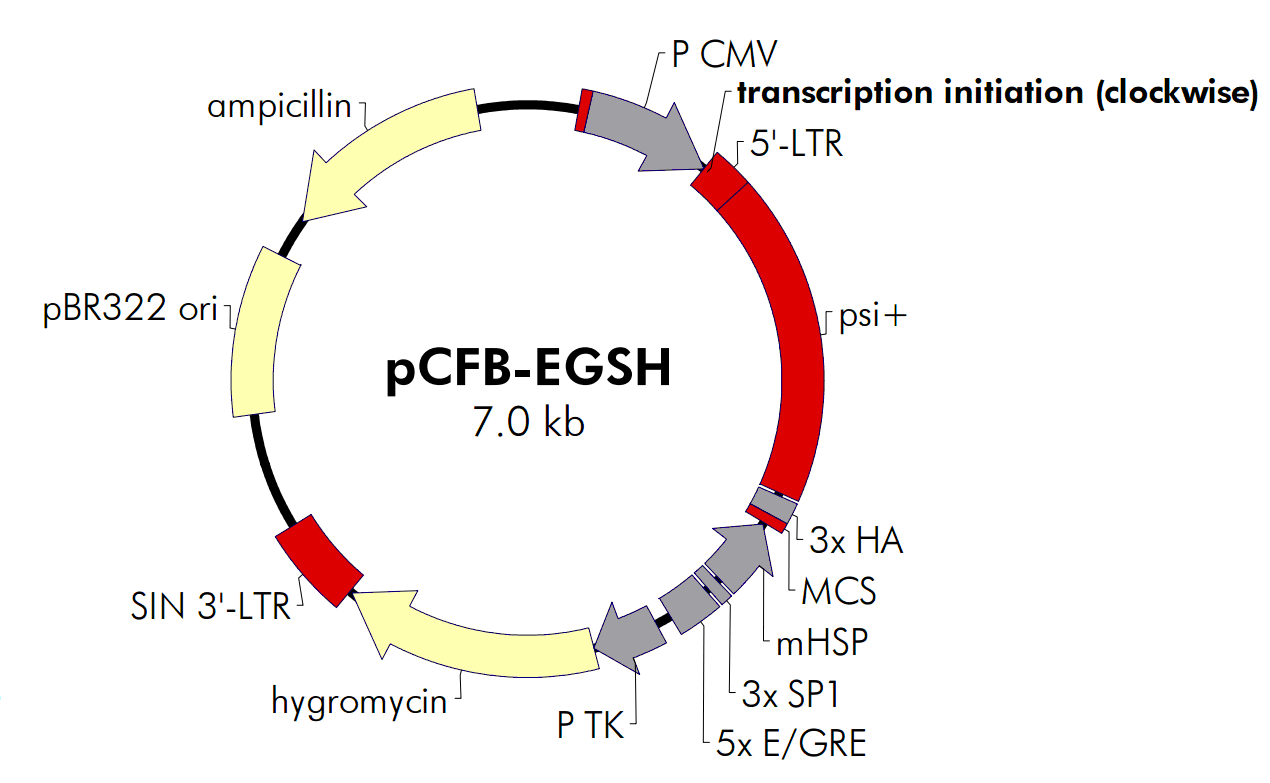
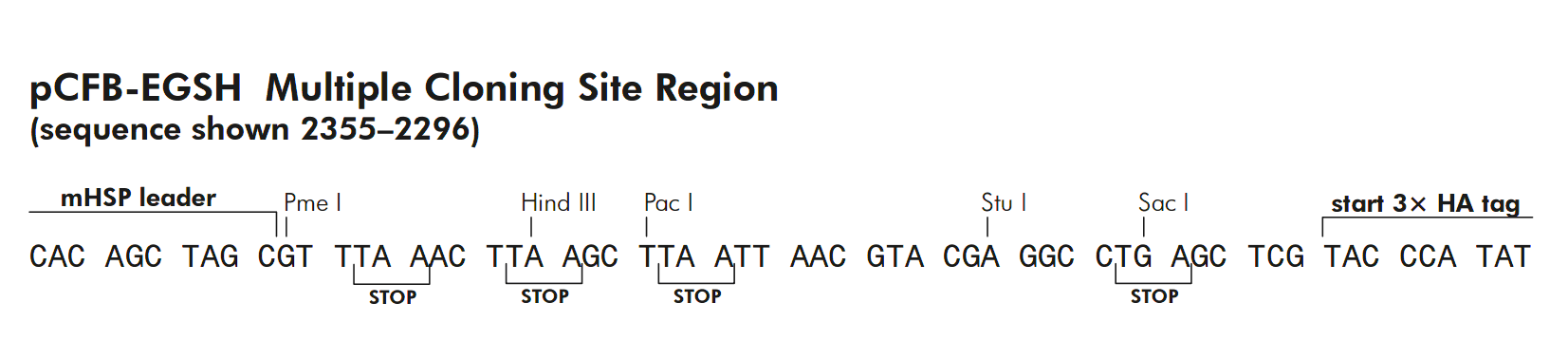
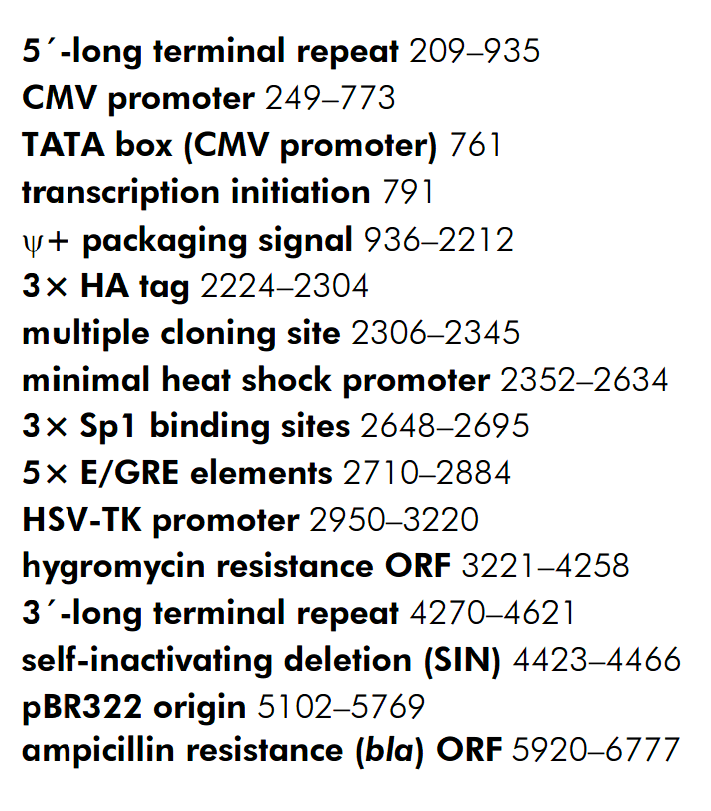
载体简介
pCFB-EGSH载体描述

DNA vector-based systems that allow precise control of gene expression in vivo have become invaluable for the study of gene function in a variety of organisms, particularly when applied to the study of developmental and other biological processes for which the timing or dosage of gene expression is critical to gene function. Such systems have also been successfully used to overexpress toxic or disease-causing genes, to induce gene targeting, and to express antisense RNA. Inducible systems are currently being used by pharmaceutical companies to facilitate screening for inhibitors of clinically relevant biological pathways, and potential applications for gene therapy are being explored.

The Agilent Complete Control ecdysone-inducible plasmid vectors are based on the insect molting hormone ecdysone, which can stimulate transcriptional activation in mammalian cells harboring the ecdysone receptor protein from Drosophila melanogaster.2 The system has a number
of advantages over alternative systems. Firstly, the lipophilic nature and short in vivo half-life of the ecdysone analog ponasterone A (ponA) allows efficient penetrance into all tissues including brain, resulting in rapid and potent inductions and rapid clearance. Secondly, ecdysteroids are not known, nor are they expected, to affect mammalian physiology in any measurable way. Thirdly, the heterodimeric ponA responsive receptor and receptor DNA recognition element have been genetically altered such that trans-activation of endogenous genes by the ecdysone receptor, or of the ponA-responsive expression cassette by endogenous transcription factors, is extremely unlikely. In addition, it has been found that in the absence of inducer the heterodimer remains bound at the promoter in a complex with corepressors and histone deacetylase, and is thus tightly repressed until ligand binding, at which time high-level transcriptional activation occurs (i.e., the heterodimer is converted from a tight repressor to a transactivator). In transient assays and stable cell lines harboring receptor expression plasmids in combination with a plasmid bearing an inducible luciferase expression cassette, induction ratios of 1,000-fold have been achieved.3

A limitation to the use of plasmid-based vectors for controlled gene expression is the fact that many cell types of academic, industrial or clinical interest are difficult or virtually impossible to transfect using current transfection methods. In particular, primary human cell lines, lymphocytes, neurons and other nondividing cells are best transduced using viral delivery systems. The most popular and user-friendly of these are the retroviral vectors. Infection with retroviruses often yields transduction efficiencies close to 100%, and the proviral copy number can be easily controlled by varying the multiplicity of infection (MOI). This latter feature is particularly important for inducible systems, for which low basal expression and high induction ratios are affected by copy number. Thus infection of the target cell with virus at an optimal MOI should yield a high frequency of clones capable of mediating desirable expression profiles without exhaustive colony screening.

With the vectors pFB-ERV and pCFB-EGSH, we have adapted the ecdysone inducible components of the Complete Control System for retroviral delivery. Used together, we have attained induction ratios of >1,000-fold with these vectors in tissue culture cells.


OVERVIEW OF ECDYSONE-REGULATABLE GENE EXPRESSION

The ecdysone receptor (EcR) is a member of the retinoid-X-receptor (RXR) family of nuclear receptors and is composed of three domains: an N-terminal activation domain (AD), a central DNA-binding domain (DBD), and a C-terminal ligand-binding and dimerization domain (LBD). In insect cells, EcR and the nuclear receptor ultraspiracle (USP) form a promoterbound heterodimer, which regulates transcription (see Figure 1). In the absence of ecdysone, the receptor heterodimer binds to corepressors and tightly represses transcription.4
 When ecdysone binds to the EcR LBD, the corepressors are released, coactivators are recruited to the complex, and transcriptional activation is enabled.
In mammalian cells harboring the EcR gene, EcR heterodimerizes with RXR, the mammalian homologue of USP. The EcR–RXR heterodimer binds to multiple copies of the ecdysone-responsive element (EcRE), and in the absence of ponA, represses transcription of an expression cassette. When ponA binds to the receptor, the receptor complex activates transcription of a reporter gene or a gene of interest. To avoid pleiotropic interactions with endogenous pathways in mammalian host cells, both the EcRE recognition sequence and the EcR protein were modified.

The EcRE sequence was modified to create a synthetic recognition site that does not bind any endogenous transcription factors. The wild-type EcRE sequence consists of two inverted repeat sequences separated by a single nucleotide: AGTGCA N TGCACT. The EcRE sequence was changed to AGTGCA N1 TGTTCT (and renamed E/GRE). Recognition of the synthetic E/GRE recognition sequence by either a steroid receptor or a wild-type RXR heterodimer receptor is extremely unlikely, as these receptors recognized only the wild-type perfect inverted repeat. The E/GRE recognition sequence has imperfect inverted half sites separated by one nucleotide. A wild-type RXR heterodimer requires single nucleotide separation of the inverted repeats, and the majority bind to direct repeats rather than inverted repeats (EcRE is an exception).

The EcR protein was modified to create a synthetic ecdysone-binding receptor that does not transactivate any host genes. Three amino acids in the EcR DBD were mutated to change its DNA-binding specificity to that of the glucocorticoid receptor (GR), which recognizes the half-site AGAACA.2 Like all steroid receptors and unlike RXR receptors, the GR protein homodimerizes and recognizes two inverted repeat sequences separated by three nucleotides. The GR–EcR fusion protein (GEcR) retains the ability to dimerize with RXR and activate, with ponA-dependence, reporter genes that contain the synthetic E/GRE recognition sequence.
The GEcR receptor was further modified by replacing the EcR AD with the more potent VP16 AD. The result of all the modifications is the synthetic ecdysone-binding receptor VgEcR. VgEcR is a fusion of the ligand-binding and dimerization domain of the D. melanogaster ecdysone receptor, the DNA-binding domain of the glucocorticoid receptor, and the transcription activation domain of herpes simplex virus (HSV) VP16

OVERVIEW OF REPLICATION-DEFECTIVE RETROVIRAL GENE TRANSFER SYSTEMS

Non-replicating retroviral vectors contain all of the cis elements required for transcription of mRNA molecules encoding a gene of interest, and packaging of these transcripts into infectious virus particles (Figure 2). The vectors are typically comprised of an E. coli plasmid backbone containing a pair of 600 base pair viral long terminal repeats (LTRs) between which the gene of interest is inserted. The LTR is divided into 3 regions. The U3 region contains the retroviral promoter/enhancer. The U3 region is flanked in the 3′ direction by the R region, which contains the viral polyadenylation signal (pA), followed by the U5 region which, along with R, contains sequences that are critical for reverse transcription. Expression of the viral RNA is initiated within the U3 region of the 5′ LTR and is terminated in the R region of the 3′ LTR. Between the 5′ LTR and the coding sequence for the gene of interest resides an extended version of the viral packaging signal (ψ+), which is required in cis for the viral RNA to be packaged into virion particles.

In order to generate infectious virus particles that carry the gene of interest, specialized packaging cell lines have been generated that contain chromosomally integrated expression cassettes for viral Gag, Pol and Env proteins, all of which are required in trans to make virus. The gag gene encodes internal structural proteins, pol encodes reverse transcriptase (RT) and integrase, and the env gene encodes the viral envelope protein, which resides on the viral surface and facilitates infection of the target cell by direct interaction with cell type-specific receptors; thus the host range of the virus is dictated not by the DNA vector but by the choice of the env gene used to construct the packaging cell. The packaging cell line is transfected with the vector DNA, and at this point either stable viral producer cell lines may be selected (providing the vector has an appropriate selectable marker), or mRNAs that are transiently transcribed from the vector are encapsidated and bud off into the cell supernatant. These supernatants are collected, and used to infect target cells. Upon infection of the target cell, the viral RNA molecule is reverse transcribed by RT (which is present in the virion particle), and the cDNA of the gene of interest, flanked by the LTRs, is integrated into the host DNA. Because the vector itself carries none of the viral proteins, once a target cell is infected the LTR expression cassette is incapable of proceeding through another round of virus production. Recent advances in transfection technology have allowed the production of high titer viral supernatants following transient cotransfection of the viral vector together with expression vectors encoding the gag, pol and env genes (Figure 2),5, 6 obviating the need for the production and maintenance of stable packaging cell lines. For example, Agilent pVPack gag-pol and env-expressing packaging vectors consistently give rise to titers of >107 infectious units (IU)/ml when cotransfected with the pFB-hrGFP control vector (Agilent Catalog #240027), using a 293-derived cell line for virus production.


Description of the Vectors

The pFB-ERV vector was derived from the high-titer MoMLV vector pFBNeo5 for efficient delivery of the ecdysone receptor proteins VgEcR and RXR (Figure 3). In the vector pFB-ERV the ecdysone receptor and the neomycin-resistance open reading frame (ORF) are expressed from a tricistronic message with the neomycin resistance ORF expressed at the end of the message. Thus, maintenance of infected cell lines in G418 ensures expression of the transcript encoding the receptor genes. The tricistronic transcript is expressed from the CMV promoter, which is flanked by unique EcoR I and Fse I sites so that a cell type-specific promoter of interest may be substituted. The viral promoter within the 3′ LTR has been deleted to make this a self-inactivating (SIN) vector. Upon infection and chromosomal integration into the target cell genome, the SIN deletion is transferred to the 5′ LTR, resulting in an integrated expression cassette in which only the CMV promoter is active. Cells containing an estimated single integrated viral expression cassette can be selected in as high as 1 mg/ml G418, although 600 μg/ml is routinely used.

The vector pCFB-EGSH contains an ecdysone-inducible expression cassette inserted between the viral LTRs in the antisense orientation relative to that for the viral promoter (see Figure 4). The U3 promoter within the 5′ LTR of the vector has been replaced with the CMV promoter to increase production of viral RNA in packaging cells, thereby increasing the titer of the viral supernatants. Potential interference from the proviral 5′ LTR is obviated due to the SIN deletion. The inducible expression cassette contains a multiple cloning site that contains three contiguous copies of the HA epitope(3× HA) positioned for fusion at the C-terminus of the protein of interest. A second expression cassette in which the hygromycin-resistance gene is expressed from the TK promoter is located downstream (relative to transcription from the LTRs) of the inducible cassette. A pBR322 origin and ampicillin-resistance gene allow pCFB-EGSH to be propagated in prokaryotes.

The pCFB-EGSH-Luc vector contains the luciferase reporter gene and is intended for use as a positive control vector to test the expression of the VgEcR and RXR receptors in pFB-ERV-containing cell lines. The pCFB-EGSH-Luc vector is derived from the pCFB-EGSH vector and has the luciferase gene inserted in the MCS. The pCFB-EGSH-Luc vector does not contain the HA epitope sequence.


pCFB-EGSH载体限制性酶切位点

pCFB-EGSH, 6982 bp			       version 075003


Enzymes with 1-10 cleavage sites:

              #sites   --  Bp position of recognition site --

  AatII          7      328,    381,    464,    650,   1153
                       3244,   6908
  Acc65I         3      822,   2022,   4508
  AccI           4     2143,   2603,   2885,   4868
  AccIII         6     2258,   3442,   3979,   4115,   4228
                       4429
  AclI           2     6215,   6588
  AcuI           2     5624,   6672
  AflII          4      202,   1440,   2333,   4381
  AflIII         6      164,   2277,   2564,   3132,   4460
                       5097
  AgeI           1     2016
  AhdI           6      862,    908,   1449,   4548,   4594
                       5985
  Alw44I         6     1229,   3501,   3803,   4913,   5411
                       6657
  AlwNI          1     5508
  ApaI           1     1413
  ApoI           5       87,   1303,   2905,   3068,   3464
  AscI           1     4452
  AseI           1     6161
  AsiSI          1     3581
  AvaI          10      785,    818,   1416,   2194,   2647
                       2705,   2938,   3203,   4471,   4504
  BanII          4      939,   1413,   2306,   4625
  BbeI           3      790,   1831,   4476
  BbsI           1     6975
  BceAI          8     1174,   1574,   2147,   3498,   3928
                       4059,   4163,   5583
  BciVI          6      831,   2162,   2273,   4517,   5306
                       6833
  BclI           1     4423
  BfrBI          2      774,   4434
  BglI           4      291,    413,    484,   6104
  BglII          2     1853,   2879
  BlpI           2     2545,   2556
  Bme1580I       8     1229,   1413,   1865,   3501,   3803
                       4913,   5411,   6657
  BmgBI          1     2563
  BmrI           3      501,   4843,   6035
  BmtI           6        6,     16,     26,    197,   2346
                       4376
  BpmI           5     1974,   3868,   3922,   4329,   6075
  Bpu10I         2     1723,   2308
  BpuEI          4     5203,   5465,   5742,   6610
  BsaAI          4      545,   2176,   4439,   4849
  BsaBI          1     2915
  BsaI           9      869,    890,    957,   1589,   1977
                       4555,   4576,   4643,   6057
  BseRI          5      893,   1243,   1736,   1775,   4579
  BseYI          3     3048,   4217,   5401
  BsiHKAI        8     1229,   2306,   3501,   3803,   4913
                       5411,   6572,   6657
  BsiWI          2     2268,   2318
  BsmBI          7     1151,   1268,   1512,   1571,   1757
                       3283,   4746
  BspHI          3     5817,   6825,   6930
  BspMI          1     3525
  BsrBI          7     2935,   2941,   3610,   3968,   4285
                       5028,   6829
  BsrDI          3     3211,   6044,   6226
  BsrGI          1     1716
  BssHII         1     4453
  BssSI          5     3321,   3800,   5270,   6654,   6961
  Bst1107I       1     4868
  BstAPI         3     3520,   3796,   4915
  BstBI          1     3071
  BstEII         1     1521
  BstXI          1     2920
  Bsu36I         1     1451
  BtgI           7      151,    567,   1106,   2962,   3573
                       3929,   3998
  BtgZI          3      556,   2151,   3878
  BtsI           2     6383,   6411
  Cfr10I         3     2016,   3559,   6070
  DraI           4     2339,   5854,   5873,   6565
  DraIII         3     2049,   3504,   3797
  DrdI           4     3719,   4100,   4786,   5199
  EagI           8     1136,   2873,   2932,   2944,   3426
                       3591,   4161,   4263
  EarI           4     1509,   1739,   4975,   6779
  EciI           9      713,   1099,   1731,   1750,   2060
                       2652,   5169,   5315,   6143
  Eco57MI        7     1974,   3868,   3922,   4329,   5624
                       6075,   6672
  EcoICRI        1     2306
  EcoNI          1     1822
  EcoO109I       4     1652,   2100,   4445,   6965
  EcoRI          3     2905,   3068,   3464
  EcoRV          1     2915
  FspI           1     6210
  HaeII          6      790,   1831,   2611,   4476,   4971
                       5341
  HincII         4     2885,   3183,   4055,   6529
  HindIII        1     2330
  KasI           3      790,   1831,   4476
  KpnI           3      822,   2022,   4508
  MluI           3     2277,   3132,   4460
  MlyI          10      617,    812,   1195,   1220,   2039
                       4291,   4498,   4997,   5468,   5985
  MmeI           8      859,   1558,   2700,   3287,   3821
                       4545,   5287,   5471
  MscI           3     1002,   1543,   1843
  MslI           8      159,    568,   2957,   3077,   4427
                       6238,   6397,   6756
  MunI           2       11,     21
  NarI           3      790,   1831,   4476
  NcoI           2      567,   3573
  NdeI           6      440,   1839,   1847,   2295,   3670
                       4919
  NheI           6        6,     16,     26,    197,   2346
                       4376
  NotI           3     2931,   2943,   4262
  NsiI           2      774,   4434
  NspI           5      164,    244,   3014,   4732,   5097
  PacI           1     2324
  PciI           2      164,   5097
  PfoI           3      946,   4632,   4741
  PleI          10      617,    812,   1195,   1220,   2039
                       4291,   4498,   4997,   5468,   5985
  PmeI           1     2338
  PmlI           1     2176
  PpuMI          3     1652,   2100,   4445
  PshAI          2     1190,   3244
  PsiI           1     2892
  PspOMI         1     1413
  PstI           7     1353,   1535,   2505,   2910,   3161
                       3554,   6231
  PvuI           3     1209,   3582,   6357
  PvuII          1     2526
  RsrII          2     3101,   3628
  SacI           1     2306
  SacII          2      151,   3998
  SalI           1     2885
  SanDI          1     4445
  SapI           1     4974
  ScaI           3     2695,   4189,   6468
  SexAI          1     1649
  SfoI           3      790,   1831,   4476
  SmaI           7      818,   1416,   2194,   2647,   2705
                       3203,   4504
  SmlI           9      202,   1440,   2333,   2938,   4381
                       5203,   5465,   5742,   6610
  SnaBI          2      545,   4439
风险提示:丁香通仅作为第三方平台,为商家信息发布提供平台空间。用户咨询产品时请注意保护个人信息及财产安全,合理判断,谨慎选购商品,商家和用户对交易行为负责。对于医疗器械类产品,请先查证核实企业经营资质和医疗器械产品注册证情况。
 技术资料
技术资料暂无技术资料 索取技术资料
pCFB-EGSH载体
¥4000
