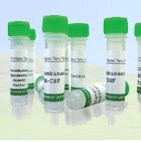
- ¥1080 - 81144
- PROSPEC
- 以色列
- cyt-944
- 2025年07月19日

企业认证
相关产品推荐更多 >


万千商家帮你免费找货
0 人在求购买到急需产品
- 详细信息
- 文献和实验
- 技术资料
- 保存条件:
for future use below -18°C
- 保质期:
See instructions
- 英文名:
CTF1
- 库存:
部分小规格有备货
- 供应商:
上海经科化学科技有限公司
- CAS号:
无
- 规格:
2ug/10ug/1mg
| 规格: | 2ug | 产品价格: | ¥1080.0 |
|---|---|---|---|
| 规格: | 10ug | 产品价格: | ¥2415.0 |
| 规格: | 1mg | 产品价格: | ¥81144.0 |

CATALOGUE NUMBER
CYT-944
SYNONYMS
INTRODUCTION
CT 1 has also a neurotrophic function. CTF1 deficiency causes increased motoneuron cell death in spinal cord and brainstem nuclei of mice during a period between embryonic day 14 and the first postnatal week. Moreover, CT-1 is a hepatocyte survival factor that efficiently reduces hepatocellular damage in animal models of acute liver injury. Cardiotrophin 1 expression is augmented after hypoxic stimulation and it can protect cardiac cells when added either prior to simulated ischaemia or at the time of reoxygenation following simulated ischaemia. Cardiotrophin 1 can induce expression of the protective heat shock proteins (hsps) in cardiac cells.
Cardiotrophin-1 increased ventricular expression of ANP, brain natriuretic peptide (BNP) and angiotensinogen mRNA.
Cardiophin 1 levels were significantly elevated in patients with heart failure, patients with dilatative cardiomyopathy, moderate/severe mitral regurgitation, stable and unstable angina and after acute myocardial infarction.
DESCRIPTION
The CTF1 is purified by proprietary chromatographic techniques.
SOURCE
PHYSICAL APPEARANCE
FORMULATION
SOLUBILITY
STABILITY
For long term storage it is recommended to add a carrier protein (0.1% HSA or BSA).
Please prevent freeze-thaw cycles.
PURITY
(a) Analysis by RP-HPLC.
(b) Analysis by SDS-PAGE.
AMINO ACID SEQUENCE
BIOLOGICAL ACTIVITY
SAFETY DATA SHEET
SDS
USAGE
BACKGROUND
Title: Cardiotrophin-1 Human Recombinant: A Potential Therapeutic Target for Cardiovascular Diseases
Abstract:
Cardiotrophin-1 (CT-1) is a cytokine that plays a crucial role in cardiac development and homeostasis. This research paper provides a comprehensive analysis of human recombinant CT-1, focusing on its production, characterization, and potential therapeutic implications in cardiovascular diseases. The paper discusses the significance of CT-1 in cardiac cell survival, hypertrophy, and regeneration. Furthermore, it elucidates the ongoing research and clinical trials exploring the therapeutic potential of recombinant CT-1 in cardiovascular disorders. The information presented in this paper aims to enhance the understanding of human recombinant CT-1 and its utility as a research tool and a potential therapeutic agent for cardiovascular diseases.
Introduction:
Cardiotrophin-1 (CT-1) is a member of the interleukin-6 cytokine family, primarily produced by cardiac cells. It exerts its effects by binding to the CT-1 receptor complex, leading to the activation of various signaling pathways. Human recombinant CT-1, produced through genetic engineering techniques, provides researchers with a valuable tool to explore its biological functions and therapeutic potential.
Production and Characterization:
Recombinant CT-1 is typically produced using expression systems such as mammalian cells or bacteria. The protein is then purified and characterized to ensure its structural integrity and functional activity. Quality control measures are implemented to confirm the specificity and bioactivity of the recombinant CT-1.
Role in Cardiovascular Physiology:
CT-1 plays a critical role in cardiac cell survival, hypertrophy, and regeneration. It promotes cardiomyocyte growth and survival, contributing to the adaptation of the heart to stress and injury. CT-1 also exhibits angiogenic properties, stimulating the formation of new blood vessels in the heart. These functions make recombinant CT-1 an important tool for studying cardiac physiology and exploring potential therapeutic interventions.
Therapeutic Implications:
The dysregulation of CT-1 signaling has been implicated in various cardiovascular diseases, including heart failure, myocardial infarction, and cardiac hypertrophy. Recombinant CT-1 holds promise as a potential therapeutic agent for these conditions. Clinical trials are underway to evaluate the safety and efficacy of CT-1-based therapies, including recombinant CT-1 administration and gene therapy approaches.
Conclusion:
Human recombinant CT-1 is a valuable research tool and a potential therapeutic target for cardiovascular diseases. Its production, characterization, and applications in cardiac cell signaling contribute to our understanding of cardiovascular physiology and the development of novel treatments. Continued research and clinical trials exploring the therapeutic potential of recombinant CT-1 hold promise for improving outcomes in patients with cardiovascular disorders.
风险提示:丁香通仅作为第三方平台,为商家信息发布提供平台空间。用户咨询产品时请注意保护个人信息及财产安全,合理判断,谨慎选购商品,商家和用户对交易行为负责。对于医疗器械类产品,请先查证核实企业经营资质和医疗器械产品注册证情况。
 文献和实验
文献和实验- Loffredo, F. S., & Lee, R. T. (2015). Therapeutic applications of CT-1 in cardiovascular disease. Heart Failure Reviews, 20(5), 553-558.
- Pennica, D., King, K. L., Shaw, K. J., et al. (1995). Expression cloning of cardiotrophin 1, a cytokine that induces cardiac myocyte hypertrophy. Proceedings of the National Academy of Sciences, 92(25), 1142-1146.
- Hirota, H., Chen, J., Betz, U. A., et al. (1999). Loss of a gp130 cardiac muscle cell survival pathway is a critical event in the onset of heart failure during biomechanical stress. Cell, 97(2), 189-198.
- de Castro Bras, L. E., & Lopes, L. R. (2017). Cardiotrophin-1 in heart health and disease. In K. Samarel (Ed.), Cardiac Cytokines (pp. 163-183). Springer.
- McMullen, J. R., & de Bold, A. J. (2015). Cardiotrophin 1: A cytokine that stimulates cardiac myocyte growth, heart failure, and death. Circulation Research, 96(7), 664-668.
Construction of Recombinant Human Cytomegalovirus
The use of reverse genetics to generate recombinant viruses allows the researcher to investigate the exact functional significance of particular viral genes during the virus life cycle, by means of their deletion or modification in the viral
Delivery of Recombinant Adenoviruses to Human Saphenous Vein
The human saphenous vein is the most commonly used conduit for coronary artery bypass grafting owing to its ready availability, ease of harvesting, and favorable surgical handling (1 ). However, it suffers from a progressive decline
Recombinant Genetic Libraries and Human Monoclonal Antibodies
In order to comprehensively manipulate the human proteome we require a vast repertoire of pharmacological reagents. To address these needs we have developed repertoires of synthetic antibodies by phage display, where diversified
 技术资料
技术资料