- ¥120
- SCHOTT

- 德国
- NEXTERION®Slide H
- 2025年07月15日


万千商家帮你免费找货
0 人在求购买到急需产品
- 详细信息
- 文献和实验
- 技术资料
- 库存:
大量
- 供应商:
德国肖特(SCHOTT)
- 现货状态:
现货
涂层:三维薄膜涂层3-D thin film coating
可应用于:乙肝诊断蛋白质芯片、寡核苷酸微阵列、微孔板蛋白芯片、SARS 诊断蛋白质芯片、化学微阵列、信号检测分析、某些肿瘤诊断蛋白质芯片、基于细胞的微阵列、探针的制备
3-D thin film coating (价格请电议)
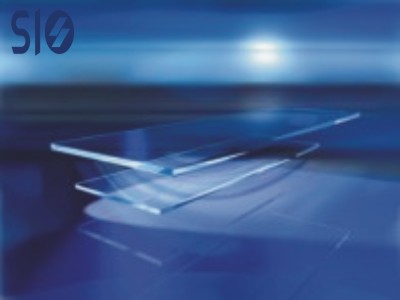
NEXTERION® Slide H
SCHOTT launched NEXTERION® Slide H as a dedicated slide surface for printing protein microarrays, as it is ideally suited for the covalent immobilization of peptides and proteins such as antibodies, antibody fragments, enzymes, or receptors. For many protein microarray applications NEXTERION® Slide H has proven to be a very attractive alternative to the commonly used nitrocellulose coated slide, especially where low background, or slide transparency are important considerations. Since its introduction, the slide coating has also been successfully used with amino-modified oligonucleotides, and has become the slide of choice for printing amino-linked glycan microarrays.
Carbohydrate arrays are a rapidly growing area of microarray research and NEXTERION®Slide H is an excellent choice for use in the rapid screening of carbohydrateprotein interactions. The permeable, polymer coating has a large immobilization capacity, and helps to preserve the native three-dimensional structure of complex bio-molecules, thus maintaining conformation and functionality.
NEXTERION® Slide H produces excellent signal-to-background ratios and an exceptionally wide dynamic range compared to conventional “two-dimensional” coatings through a unique combination of low non-specific binding characteristics, and high probe loading capacity. Even very low intensity signals, such as those obtained from low-abundance analytes, or weakly expressed genes can be reliably detected and quantified on NEXTERION® Slide H. The robust coating matrix is fully compatible with commercial microarray printers and scanners. Simple and robust protocols are available making NEXTERION® Slide H easy-to-use.
Overview
| Type of coating | Immobilization method | Typical probes | Ordering information | |||
| NEXTERION®product | Barcode option | Item number | Slides per pack | |||
| Thin film 3-D polymer surface | Amine reactive chemistry Covalent binding |
• Proteins • Amino-linked glycans • Amino-linked oligonucleotides |
Slide H | Laser | 1070936 | 25 |
| Key product features |
| • Ideal substrate for printing protein, amino-modified glycans or oligonucleotide microarrays |
| • High probe loading capacity |
| • Exceptionally wide dynamic range |
| • Very low non-specific binding characteristics |
| • Optimal preservation of native structure and biological activity of protein probes |
| • Compatible with all common microarray printers and scanners |
| Typical applications |
| • Proteome expression profiling |
| • Functional protein arrays |
| • Transcriptional profiling |
| • Biomarker discovery |
| • Detection of protein modifications |
| • Carbohydrate–protein interactions |
| • Bacteria serotyping |
| • Immunoassays |
| Suitable probe types |
| • Antibodies and antibody fragments |
| • Functional proteins such as enzymes or receptors |
| • Small protein fragments such as peptides |
| • Amino-modified oligonucleotides 16 to 70 mers |
| • Amino-linked glycans |
| • Cells |
Immobilization chemistry
The NEXTERION® Slide H coating has been engineered to exhibit a very low intrinsic non-specific background without the need for blocking. This is achieved by using a polymer based layer that is extremely resistant to nonspecific binding. The polymer coating has a three-part structure; NHS-ester reactive groups are attached to the cross-linked hydrophilic polymer layer via long, flexible spacers. The terminal amino group of amino-modified nucleic acids and glycans react immediately and irreversibly with the NHS-ester groups to form a covalent bond. Proteins and other bio-molecules bind via surfaceexposed amine-groups. The flexible spacers tether the immobilized bio-molecules in a quasi-liquid environment that maintains the protein specificity and chemical conformation. The high accessibility of the tethered bio-molecules facilitates interactions with their binding targets in solution.
NEXTERION® Slide H is fabricated using a proprietary thin-film deposition process optimized by SCHOTT to produce a uniform and reproducible polymer coating on one side of a high quality borosilicate glass slide. All slides are individually examined for physical defects and the presence of particles before and after coating. The surface is applied in a tightly controlled, class 100 clean room facility, resulting in coated slides with highly uniform surface properties and low auto-fluorescence.
Excellent spot morphology and signal-to-background ratios
NEXTERION® Slide H provides excellent spot morphologies and reproducible spot sizes over a wide range of probe concentrations for protein, oligonucleotide and other bio-molecule microarray applications.
NEXTERION® Slide H are packaged in chemically stable plastic boxes and sealed under an inert atmosphere. The slides are ready-to-use from the box, and are stable for 12 months in the sealed packaging when stored at – 20 oC.
Format
NEXTERION® Slide H is available in packs of 25 slides with code 128 barcodes enabling automated sample tracking. The identical coating is also available in a 16-well and 48-well slide format.
风险提示:丁香通仅作为第三方平台,为商家信息发布提供平台空间。用户咨询产品时请注意保护个人信息及财产安全,合理判断,谨慎选购商品,商家和用户对交易行为负责。对于医疗器械类产品,请先查证核实企业经营资质和医疗器械产品注册证情况。
 文献和实验
文献和实验a greasy film that has a high degree of autofluorescence. Clean all glassware and racks used for slide cleaning and coating with highly purified H2O only. Do not use detergent. 2.9. SLIDE BLOCKING At the end of the print, slides are removed
SSR GEL and Silver Staining Protocol
, rinse the gel thoroughly in d.i. water. Neutralizing too long will bleach out the bands. 9. Air dry the gel. Photographic contact prints can be made with APC film (Promega) for permanent record. (Develop APC film 3 min in X-ray film developer, wash
SSR GEL and Silver Staining Protocol
underneath the plate. As soon as the bubbling stops, rinse the gel thoroughly in d.i. water. Neutralizing too long will bleach out the bands. 9. Air dry the gel. Photographic contact prints can be made with APC film (Promega) for permanent record. (Develop APC film
 技术资料
技术资料暂无技术资料 索取技术资料