

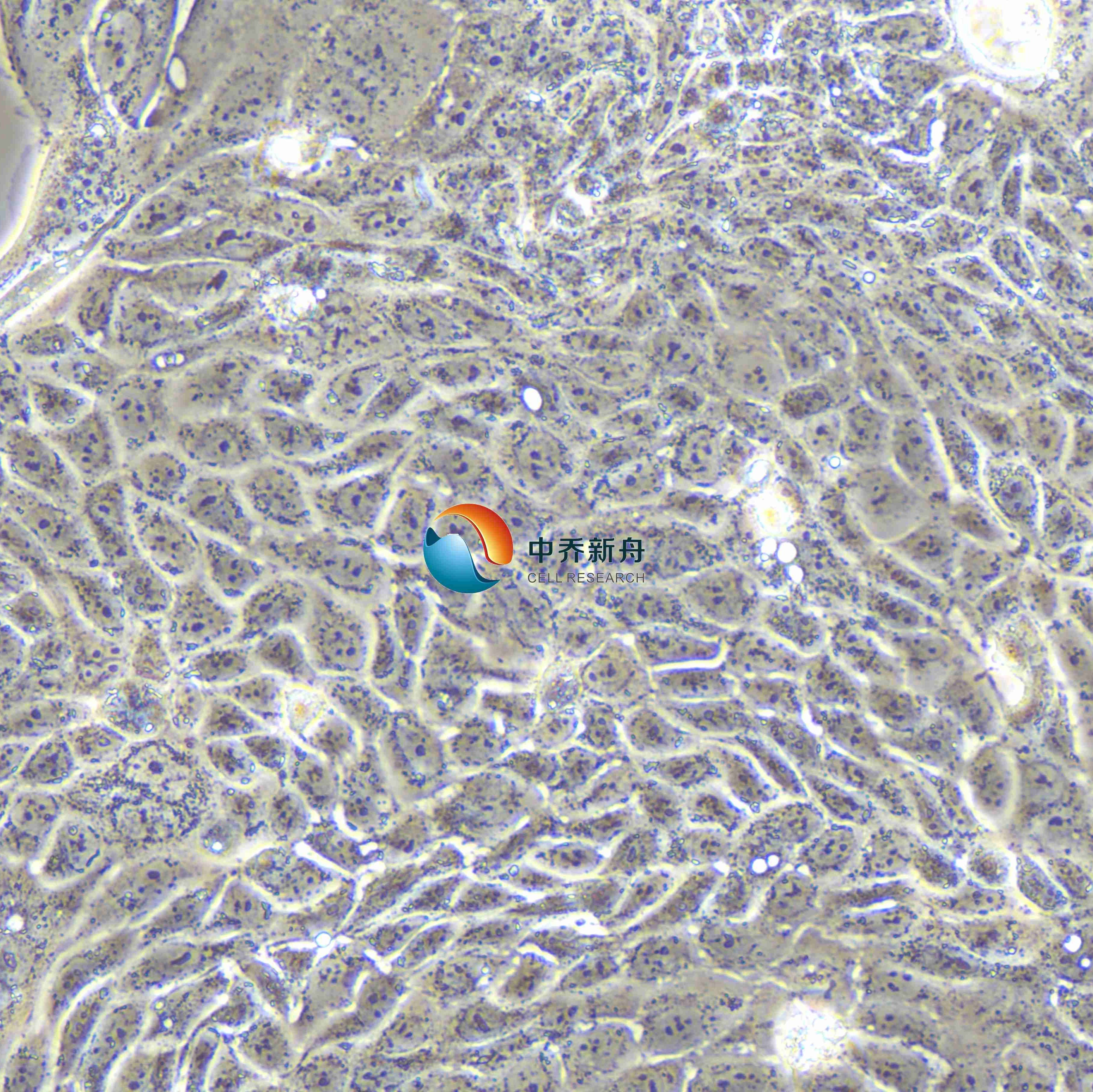
- ¥1350
- 中乔新舟

- 中国
- ZQ0392
- 2026年09月18日

企业认证
相关产品推荐更多 >



万千商家帮你免费找货
0 人在求购买到急需产品
相关阅读
细胞污染识别与处理全攻略:5 种常见类型+关键误区Cytoscape 教程来了!快速实现顶刊同款通路网络图五大应用案例:Mustang Q 膜层析应用全解析1 个小工具,一次性搞定流程图、质粒图谱和信号通路图- 详细信息
- 文献和实验
- 技术资料
- 英文名:
Calu-3
- 库存:
大量
- 供应商:
中乔新舟
- 品系:
细胞系
- 组织来源:
肺
- 相关疾病:
否
- 物种来源:
肺
- 免疫类型:
否
- 细胞形态:
咨询销售
- 器官来源:
肺
- 运输方式:
T25瓶运输
- 年限:
5-10年
- 生长状态:
贴壁生长
- 规格:
5 x 10^5 cells/vial
|
产品名称 |
Calu-3人肺腺癌 (胸水) |
|
货号 |
ZQ0392 |
|
产品介绍 |
Calu-3细胞是一种人类上皮细胞系,来源于1975年25岁患者的肺腺癌,该患者先前接受了环磷酰胺、博莱霉素和阿霉素的治疗。该细胞表现出上皮形态,其特点是能够形成紧密连接、桥粒和微绒毛,反映了肺上皮的结构特征。Calu 3细胞以其高水平分泌粘蛋白而闻名,粘蛋白是一种参与保护和润滑肺气道的糖蛋白,使其成为研究气道上皮生物学(包括粘蛋白的产生、分泌及其调控)的相关体外模型。 注意事项: |
|
种属 |
人 |
|
性别/年龄 |
男/25岁 |
|
组织 |
肺腺癌;来源于转移部位:胸腔积液 |
|
疾病 |
腺癌 |
|
细胞类型 |
肿瘤细胞 |
|
形态学 |
上皮的 |
|
生长方式 |
贴壁 |
|
倍增时间 |
大约35~84小时 |
|
培养基和添加剂 |
MEM(含NEAA)(品牌:中乔新舟 货号:ZQ-300)+10%胎牛血清(中乔新舟 货号:ZQ0500)+1%P/S(中乔新舟 货号:CSP006) |
|
推荐完全培养基货号 |
ZM0392 |
|
生物安全等级 |
BSL-1 |
|
STR位点信息 |
Amelogenin: X CSF1PO: 11,12 D13S317: 12 D16S539: 12,14 D5S818: 11 D7S820: 10,11 TH01: 6,9.3 TPOX: 8 vWA: 16,17 |
|
培养条件 |
95%空气,5%二氧化碳;37℃ |
|
抗原表达/受体表达 |
*** |
|
基因表达 |
*** |
|
保藏机构 |
ATCC; HTB-55 BCRJ; 0264 |
|
供应限制 |
仅供科研使用 |
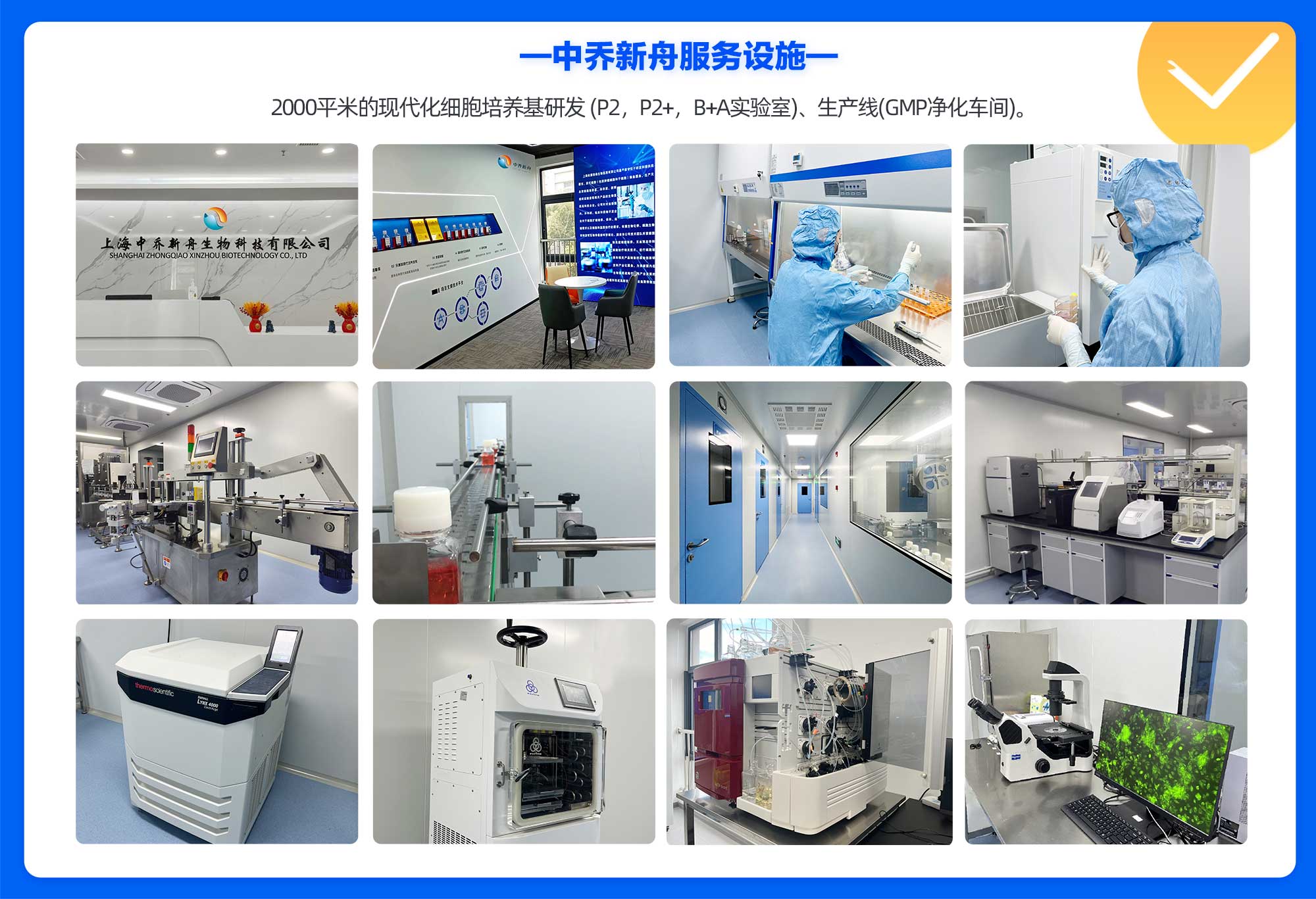
上海中乔新舟生物科技有限公司成立于2011年,历经十多年发展,主要专注于细胞生物学产品的研究和开发,专注于为药企、各类科研机构及CRO企业提供符合标准规范的细胞培养服务、细胞培养基、细胞检测试剂盒、细胞培养试剂,胎牛血清和细胞生物学技术服务等。
公司一直致力于为高等院校、研究机构、医院、CRO及CDMO企业提供细胞培养完整解决方案,这些产品旨在满足细胞培养的多样需求,确保实验和研究的有效进行。引用中乔新舟(ZQXZBIO)产品和服务的文献超数千篇。
产品服务
细胞资源:原代细胞、细胞株、干细胞、示踪细胞、耐药株细胞、永生化细胞等基因工程细胞。
试剂产品:胎牛血清、完全培养基(适用于原代细胞及细胞株)、无血清培养基、基础培养基、细胞转染试剂、重组因子、胰酶和双抗等等细胞培养所有实验相关产品。
技术服务:稳转株构建、原代细胞分离、特殊培养基定制服务、细胞检测等。
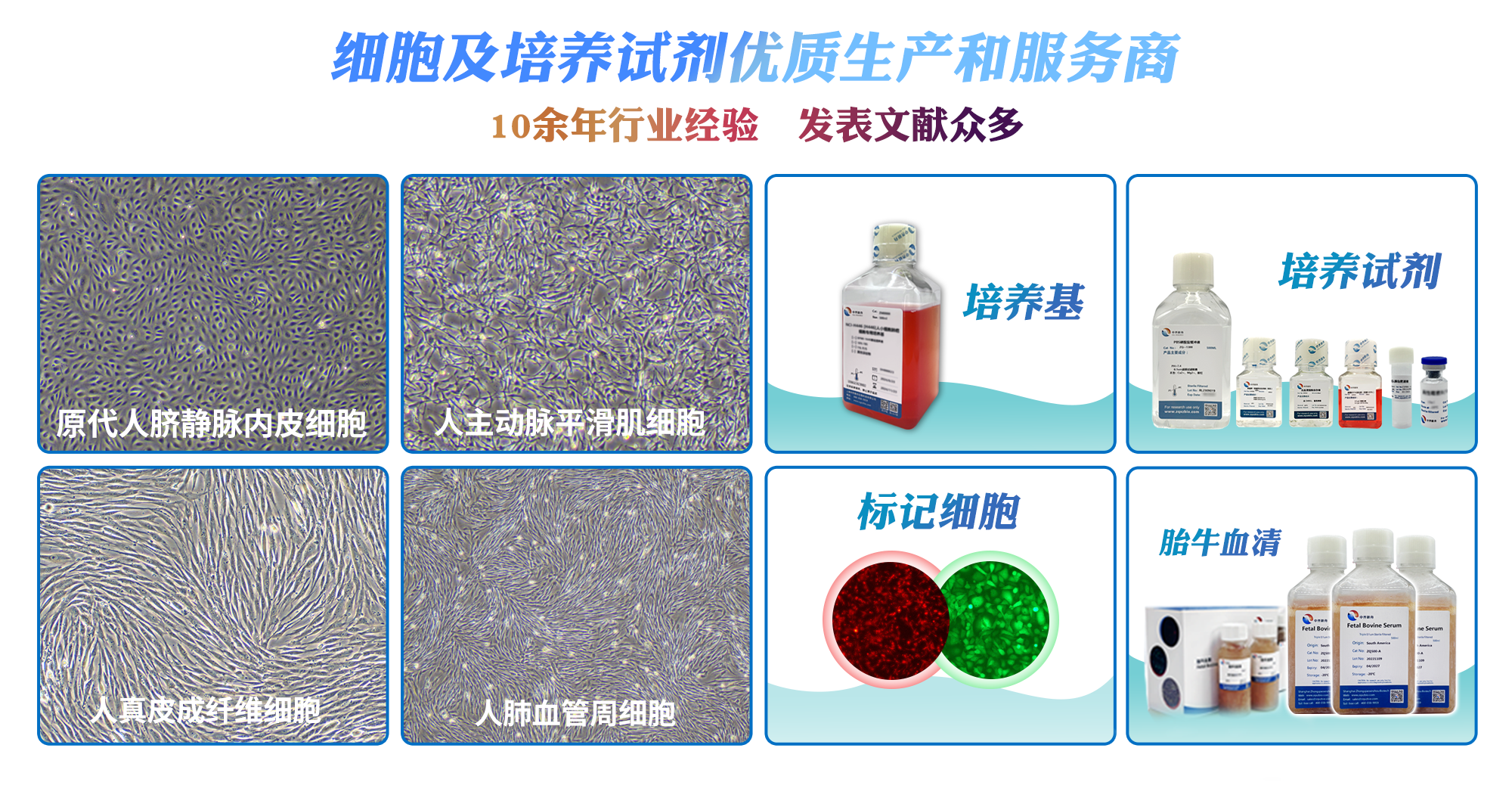
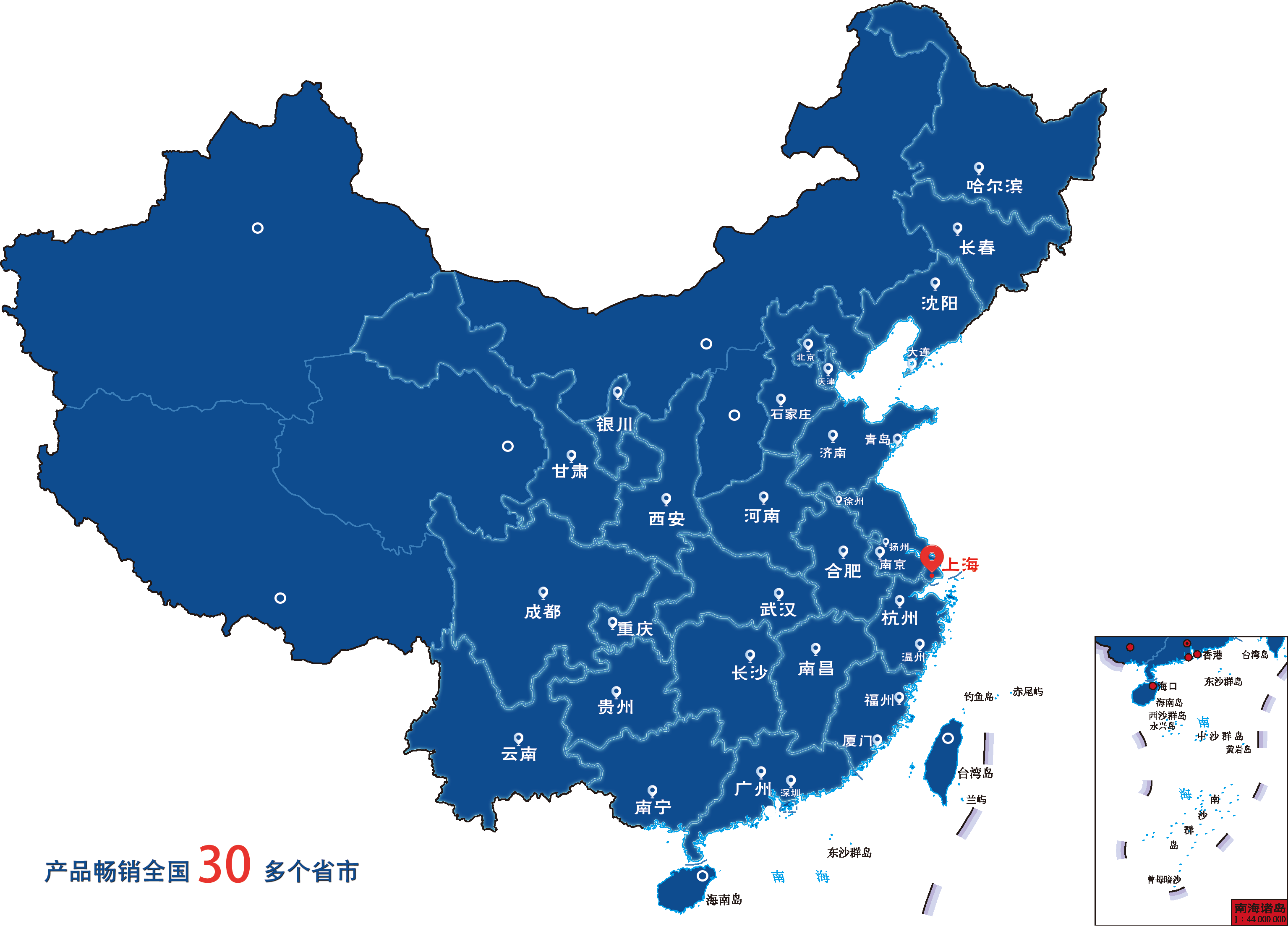
目前产品已经畅销国内30多个省市,与客户建立长期的合作伙伴关系,共同实现成功。全体员工将不懈努力,继续为科研人员提供优良的产品和服务,致力成为全球细胞培养领域的参与者。
企业愿景
致力于成为国内细胞培养基产业的佼佼者,生物医药领域上游原材料的优良提供商。
企业使命
成长为专业细胞系及原代细胞培养供应商、专业细胞培养基及培养试剂生产商。
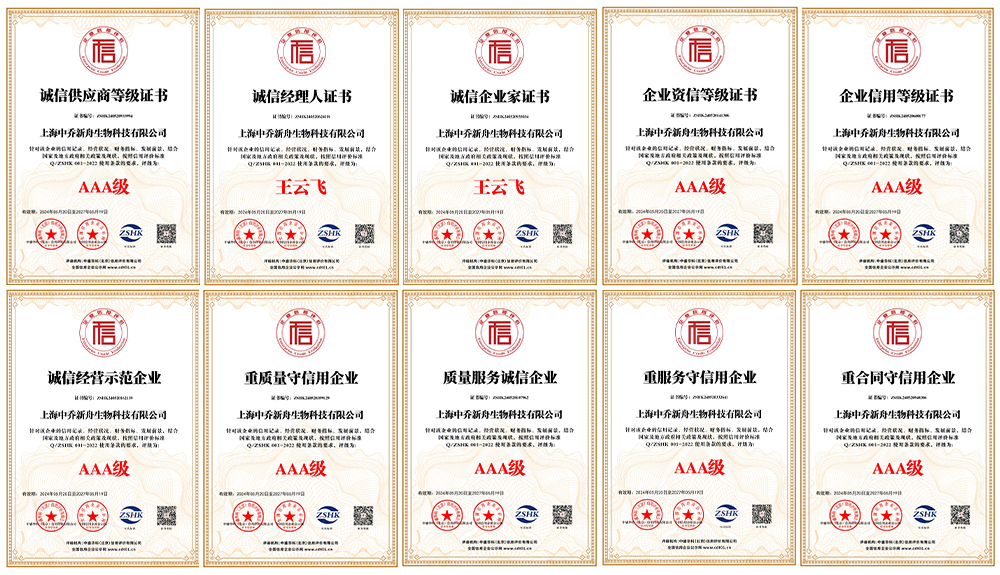
企业荣誉

风险提示:丁香通仅作为第三方平台,为商家信息发布提供平台空间。用户咨询产品时请注意保护个人信息及财产安全,合理判断,谨慎选购商品,商家和用户对交易行为负责。对于医疗器械类产品,请先查证核实企业经营资质和医疗器械产品注册证情况。
 文献和实验
文献和实验论文标题: Active components in Ephedra sinica stapf disrupt the interaction between ACE2 and SARS-CoV-2 RBD: Potent COVID-19 therapeutic agents
DOI: 10.1016/j.jep.2021.114303
发表时间: 2021-06-05
期刊: JOURNAL OF ETHNOPHARMACOLOGY
影响因子: 4.36
货号: ZQ0392
产品名称: Human airway epithelial cells (Calu-3)
PubMed=327080; DOI=10.1093/jnci/59.1.221
Fogh J., Fogh J.M., Orfeo T.
One hundred and twenty-seven cultured human tumor cell lines producing tumors in nude mice.
J. Natl. Cancer Inst. 59:221-226(1977)
PubMed=7459858
Rousset M., Zweibaum A., Fogh J.
Presence of glycogen and growth-related variations in 58 cultured human tumor cell lines of various tissue origins.
Cancer Res. 41:1165-1170(1981)
PubMed=6220172
Dracopoli N.C., Fogh J.
Polymorphic enzyme analysis of cultured human tumor cell lines.
J. Natl. Cancer Inst. 70:469-476(1983)
PubMed=3518877; DOI=10.3109/07357908609038260
Fogh J.
Human tumor lines for cancer research.
Cancer Invest. 4:157-184(1986)
PubMed=3940644
Brower M., Carney D.N., Oie H.K., Gazdar A.F., Minna J.D.
Growth of cell lines and clinical specimens of human non-small cell lung cancer in a serum-free defined medium.
Cancer Res. 46:798-806(1986)
PubMed=3129183
Hubbard W.C., Alley M.C., McLemore T.L., Boyd M.R.
Evidence for thromboxane biosynthesis in established cell lines derived from human lung adenocarcinomas.
Cancer Res. 48:2674-2677(1988)
PubMed=3335022
Alley M.C., Scudiero D.A., Monks A., Hursey M.L., Czerwinski M.J., Fine D.L., Abbott B.J., Mayo J.G., Shoemaker R.H., Boyd M.R.
Feasibility of drug screening with panels of human tumor cell lines using a microculture tetrazolium assay.
Cancer Res. 48:589-601(1988)
PubMed=7515578; DOI=10.1152/ajplung.1994.266.5.L493
Shen B.-Q., Finkbeiner W.E., Wine J.J., Mrsny R.J., Widdicombe J.H.
Calu-3: a human airway epithelial cell line that shows cAMP-dependent Cl-secretion.
Am. J. Physiol. 266:L493-L501(1994)
PubMed=9636188; DOI=10.1073/pnas.95.13.7556
Kaplan D.H., Shankaran V., Dighe A.S., Stockert E., Aguet M., Old L.J., Schreiber R.D.
Demonstration of an interferon gamma-dependent tumor surveillance system in immunocompetent mice.
Proc. Natl. Acad. Sci. U.S.A. 95:7556-7561(1998)
PubMed=10523844; DOI=10.1038/sj.onc.1202957
Agochiya M., Brunton V.G., Owens D.W., Parkinson E.K., Paraskeva C., Keith W.N., Frame M.C.
Increased dosage and amplification of the focal adhesion kinase gene in human cancer cells.
Oncogene 18:5646-5653(1999)
PubMed=11064206; DOI=10.1016/S0378-5173(00)00452-X
Foster K.A., Avery M.L., Yazdanian M., Audus K.L.
Characterization of the Calu-3 cell line as a tool to screen pulmonary drug delivery.
Int. J. Pharm. 208:1-11(2000)
PubMed=15463957; DOI=10.1016/j.jcf.2004.05.040
Gruenert D.C., Willems M., Cassiman J.-J., Frizzell R.A.
Established cell lines used in cystic fibrosis research.
J. Cyst. Fibros. 3:191-196(2004)
PubMed=17483357; DOI=10.1158/0008-5472.CAN-06-4495
Tooker P., Yen W.-C., Ng S.-C., Negro-Vilar A., Hermann T.W.
Bexarotene (LGD1069, Targretin), a selective retinoid X receptor agonist, prevents and reverses gemcitabine resistance in NSCLC cells by modulating gene amplification.
Cancer Res. 67:4425-4433(2007)
PubMed=18083107; DOI=10.1016/j.cell.2007.11.025
Rikova K., Guo A.-L., Zeng Q.-F., Possemato A., Yu J., Haack H., Nardone J., Lee K., Reeves C., Li Y., Hu Y.-R., Tan Z.-P., Stokes M.P., Sullivan L., Mitchell J., Wetzel R., MacNeill J., Ren J.-M., Yuan J., Bakalarski C.E., Villen J., Kornhauser J.M., Smith B., Li D.-Q., Zhou X.-M., Gygi S.P., Gu T.-L., Polakiewicz R.D., Rush J., Comb M.J.
Global survey of phosphotyrosine signaling identifies oncogenic kinases in lung cancer.
Cell 131:1190-1203(2007)
PubMed=19153074; DOI=10.1093/hmg/ddp034
Medina P.P., Castillo S.D., Blanco S., Sanz-Garcia M., Largo C., Alvarez S., Yokota J., Gonzalez-Neira A., Benitez J., Clevers H.C., Cigudosa J.C., Lazo P.A., Sanchez-Cespedes M.
The SRY-HMG box gene, SOX4, is a target of gene amplification at chromosome 6p in lung cancer.
Hum. Mol. Genet. 18:1343-1352(2009)
PubMed=19472407; DOI=10.1002/humu.21028
Blanco R., Iwakawa R., Tang M.-Y., Kohno T., Angulo B., Pio R., Montuenga L.M., Minna J.D., Yokota J., Sanchez-Cespedes M.
A gene-alteration profile of human lung cancer cell lines.
Hum. Mutat. 30:1199-1206(2009)
PubMed=20090954; DOI=10.1371/journal.pone.0008729
Yoshikawa T., Hill T.E., Yoshikawa N., Popov V.L., Galindo C.L., Garner H.R., Peters C.J., Tseng C.-T.
Dynamic innate immune responses of human bronchial epithelial cells to severe acute respiratory syndrome-associated coronavirus infection.
PLoS ONE 5:E8729-E8729(2010)
PubMed=20164919; DOI=10.1038/nature08768
Bignell G.R., Greenman C.D., Davies H., Butler A.P., Edkins S., Andrews J.M., Buck G., Chen L., Beare D., Latimer C., Widaa S., Hinton J., Fahey C., Fu B.-Y., Swamy S., Dalgliesh G.L., Teh B.T., Deloukas P., Yang F.-T., Campbell P.J., Futreal P.A., Stratton M.R.
Signatures of mutation and selection in the cancer genome.
Nature 463:893-898(2010)
PubMed=20215515; DOI=10.1158/0008-5472.CAN-09-3458
Rothenberg S.M., Mohapatra G., Rivera M.N., Winokur D., Greninger P., Nitta M., Sadow P.M., Sooriyakumar G., Brannigan B.W., Ulman M.J., Perera R.M., Wang R., Tam A., Ma X.-J., Erlander M., Sgroi D.C., Rocco J.W., Lingen M.W., Cohen E.E.W., Louis D.N., Settleman J., Haber D.A.
A genome-wide screen for microdeletions reveals disruption of polarity complex genes in diverse human cancers.
Cancer Res. 70:2158-2164(2010)
PubMed=20557307; DOI=10.1111/j.1349-7006.2010.01622.x
Iwakawa R., Kohno T., Enari M., Kiyono T., Yokota J.
Prevalence of human papillomavirus 16/18/33 infection and p53 mutation in lung adenocarcinoma.
Cancer Sci. 101:1891-1896(2010)
PubMed=22460905; DOI=10.1038/nature11003
Barretina J.G., Caponigro G., Stransky N., Venkatesan K., Margolin A.A., Kim S., Wilson C.J., Lehar J., Kryukov G.V., Sonkin D., Reddy A., Liu M., Murray L., Berger M.F., Monahan J.E., Morais P., Meltzer J., Korejwa A., Jane-Valbuena J., Mapa F.A., Thibault J., Bric-Furlong E., Raman P., Shipway A., Engels I.H., Cheng J., Yu G.-Y.K., Yu J.-J., Aspesi P. Jr., de Silva M., Jagtap K., Jones M.D., Wang L., Hatton C., Palescandolo E., Gupta S., Mahan S., Sougnez C., Onofrio R.C., Liefeld T., MacConaill L.E., Winckler W., Reich M., Li N.-X., Mesirov J.P., Gabriel S.B., Getz G., Ardlie K., Chan V., Myer V.E., Weber B.L., Porter J., Warmuth M., Finan P., Harris J.L., Meyerson M.L., Golub T.R., Morrissey M.P., Sellers W.R., Schlegel R., Garraway L.A.
The Cancer Cell Line Encyclopedia enables predictive modelling of anticancer drug sensitivity.
Nature 483:603-607(2012)
PubMed=22961666; DOI=10.1158/2159-8290.CD-12-0112
Byers L.A., Wang J., Nilsson M.B., Fujimoto J., Saintigny P., Yordy J., Giri U., Peyton M., Fan Y.-H., Diao L.-X., Masrorpour F., Shen L., Liu W.-B., Duchemann B., Tumula P., Bhardwaj V., Welsh J., Weber S., Glisson B.S., Kalhor N., Wistuba I.I., Girard L., Lippman S.M., Mills G.B., Coombes K.R., Weinstein J.N., Minna J.D., Heymach J.V.
Proteomic profiling identifies dysregulated pathways in small cell lung cancer and novel therapeutic targets including PARP1.
Cancer Discov. 2:798-811(2012)
PubMed=24207061; DOI=10.1186/1559-0275-10-16
Cerciello F., Choi M., Nicastri A., Bausch-Fluck D., Ziegler A., Vitek O., Felley-Bosco E., Stahel R.A., Aebersold R., Wollscheid B.
Identification of a seven glycopeptide signature for malignant pleural mesothelioma in human serum by selected reaction monitoring.
Clin. Proteomics 10:16.1-16.12(2013)
Transepithelial Measurements of Bicarbonate Secretion in Calu-3 Cells
poorly understood and underinvestigated. Studies from our own laboratory ( 4 ) and the laboratories of Wine and Widdicombe ( 5 ) have now established that the human airway serous cell line, Calu-3 cells, secrete HCO 3 and not Cl - , in response to a cAMP
(一)胸水的采集 主要采用胸腔穿刺法收集实验动物的胸水,也可处死实验动物剖开胸腔采集胸水。 1、穿刺点定位 于实验动物腋后线第11~12肋间隙穿刺,穿刺针紧贴肋骨上缘,否则容易损伤肋间神经。也可在胸壁近胸骨左侧缘第4~5肋间隙穿刺。 2、穿刺方法 收集胸水常采用穿刺法。如果实验不要求动物继续存活,也可用处死动物剖胸取胸水。穿刺部位在动物脊侧腋后线胸壁第11~12肋间隙穿刺较安全。此部位是肺最下界之外
抗人肺腺癌单链抗体的构建 (1)将表达载体pFUW80质粒经XbaI和EcoRI双酶切,同样双酶切在pUC19中克隆的VL基因,分别回收后,连接并转化大肠杆菌JM109株,鉴定阳性重组子(可通过XbaI、EcoRI双酶切切下合适大小的带,即VL片段)。 (2)将上述经过鉴定的重组质粒用XhoI、SpeI双酶切,回收后,与同样双酶切的在pUC19中克隆的VH基因相连,再次转化JM109感受态细菌。重组质粒筛选、鉴定同上所述。至此抗人肺腺癌
 技术资料
技术资料暂无技术资料 索取技术资料

