

- 询价
- 钰博生物
- 进口/国产
- YB-1910R
- 2025年12月08日

企业认证
相关产品推荐更多 >

万千商家帮你免费找货
0 人在求购买到急需产品
相关阅读
香烟烟雾如何加速声带纤维化?CD44-透明质酸轴是关键通路Takara 秋促来袭,提取+反转录+定量套装仅 1200 元abinScience 体内级抗体 全年锁价 低至 ¥1200阿拉丁 22万+ 科研级产品现货速发,品质严控、科研无忧- 详细信息
- 文献和实验
- 技术资料
- 克隆性:
单克隆
- 抗体英文名:
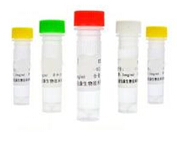
Anti-TGF-βR 3(Transf
- 抗体名:
转移生长因子–β受体3抗体
Transforming growth factor beta is a multifunctional cytokine known to modulate several tissue development and repair processes, including cell differentiation, cell cycle progression, cellular migration, adhesion, and extracellular matrix production. There are 3 forms encoded by separate genes TGFB1, TGFB2, and TGFB3. The diverse effects of TGF beta are mediated by the TGF beta receptors and cell surface binding proteins. In addition to type I TGF beta receptor (TGFBR1) and type II (TFGBR2), type III (TGF beta III receptor) has been identified. It is a glycoprotein that binds TGF beta and exists in both a membrane bound and a soluble form. It may serve as a receptor accessory molecule in both the TGF beta and fibroblast growth factor systems. TGF beta III receptor lacks a recognizable signaling domain and has no clearly defined role in TGF beta signaling. Endothelial cells undergoing epithelial mesenchymal transformation express TGF beta III receptor, and TGF beta III receptor specific antisera inhibits mesenchyme formation and migration. Misexpression of TGF beta III receptor in nontransforming ventricular endothelial cells conferrs transformation in response to TGFB2. These results support a model where TGF beta III receptor localizes transformation in the heart and plays an essential, nonredundant role in TGF beta signaling.
TGF beta III receptor, or beta glycan, can function as an inhibin coreceptor with ActRII. TGF beta III receptor binds inhibin with high affinity and enhances binding in cells coexpressing ActRII and TGF beta III receptor. Inhibin forms crosslinked complexes with both recombinant and endogenously expressed TGF beta III receptor and ActRII. TGF beta III receptor confers inhibin sensitivity to cell lines that otherwise respond poorly to this hormone. The ability of TGF beta III receptor to inhibit or to facilitate inhibin antagonism of activin provides a variation on the emerging roles of proteoglycans as coreceptors modulating ligand receptor sensitivity, selectivity, and function. Beta arrestin 2 binds to TGF beta III receptor, triggered by phosphorylation of the receptor on its cytoplasmic domain, likely at threonine 841. Phosphorylation is mediated by TGFBR2, which is itself a kinase, rather than by a G protein coupled receptor kinase. Association with beta arrestin 2 leads to internalization of both receptors and downregulation of TGF beta signaling. The regulatory actions of beta arrestins are broader than previously appreciated, extending to the TGF beta receptor family as well.
mol wt:280kDa
风险提示:丁香通仅作为第三方平台,为商家信息发布提供平台空间。用户咨询产品时请注意保护个人信息及财产安全,合理判断,谨慎选购商品,商家和用户对交易行为负责。对于医疗器械类产品,请先查证核实企业经营资质和医疗器械产品注册证情况。
 文献和实验
文献和实验Cancer Cell:整合素 αvβ6-TGFβ-SOX4 途径驱动三阴性乳腺癌的免疫逃逸
近几年,肿瘤免疫治疗研究不断升温,特别是抗 PD-1 抗体治疗在霍奇金淋巴瘤、肝癌、非小细胞肺癌和食管鳞癌等癌症中表现出卓越的疗效。但是肿瘤免疫治疗对许多起源于上皮组织的实体瘤疗效有限,包括三阴性乳腺癌。三阴性乳腺癌(TNBC)有很高的转移扩散倾向。虽然近期抗 PD-L1 抗体联合紫杉醇在治疗转移性 TNBC 上表现出不错的效果,但仍然有大量的患者未能从免疫治疗中获益。因此,解析 TNBC 肿瘤免疫逃逸机制显得尤为重要!2020 年 12 月 31 日,哈佛医学院的 Kai W
- - Matrigel - - - - 20% - - hPSCs培养 1、将冻存的 Matrigel 在 4℃ 下过夜解冻,在 6 孔板的每孔滴加 1ml 冷的 Matrigel,旋动 6 孔板使 Matrigel 分布均匀。随后转移至 37℃ 条件下孵育 10min 使其凝固,使用前需室温静置 1h。 2、将 hPSCs 接种在包被 Matrigel 的 6 孔板中,每孔加入 3ml E8 培养基,放置在 37℃,5%CO2 的培养箱中,培养至细胞汇合度约为 75–85
临床验证。抗人CD20(Rituximab)是第1个为FDA批准可用于临床癌症治疗的单抗。Rituximab与细胞表面的CD20分子结合后,可通过诱导ADCC和CDC清除高表达CD20分子的恶性B细胞,从而被认为在低分化的B细胞淋巴瘤和非霍奇金淋巴瘤的治疗中起重要作用。 近年来,另一个备受人们关注的治疗性单抗是抗Her-2的抗体。Her-2是表皮生长因子受体(EGFR)成员,参与乳腺癌的发生,且与乳腺癌患者的预后有关。相应单抗与Her-2结合可阻止Her-2与相应的生长因子的结合,抑制乳腺
 技术资料
技术资料暂无技术资料 索取技术资料

