

- 询价
- Biotium

- 美国
- 10112-2
- 2025年07月10日

企业认证
相关产品推荐更多 >


万千商家帮你免费找货
0 人在求购买到急需产品
- 详细信息
- 文献和实验
- 技术资料
- 保存条件:
Store solids at -20°C or -70°C
- 保质期:
3年
- 英文名:
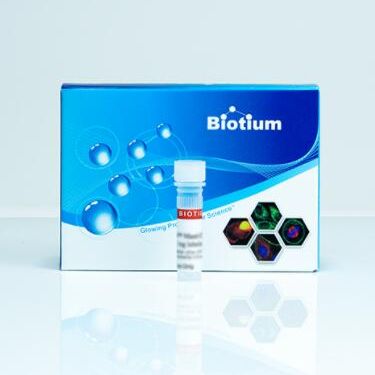
COELENTERAZINE CP 10112-2
- 库存:
99
- 供应商:
Biotium
- CAS号:
1
Coelenterazine and its analogs are luminescent enzyme substrates for apoaequorin and Renilla luciferase. Apoaequorin is used as a calcium indicator whereas Renilla luciferase is commonly used as a reporter of transcription regulation. Coelenterazine binds to apoaequorin to form aequorin which emits light upon binding to calcium. Aequorin can be used to measure a broad concentration
range of calcium from ~0.1 uM to >100 uM. Renilla luciferase has been widely used as a reporter protein and as a bioluminescence donor in bioluminescence resonance energy transfer (BRET) to study protein-protein interactions. Other uses of coelenterazine include chemiluminescent detection of superoxide anion and peroxynitrite in cells or tissues.
Can’t decide which coelenterazine analog to use? Try our Coelenterazine Sampler Kit (catalog no. 10123). The kit includes 25 ug each of nine coelenterazine analogs including native, cp, f, fcp, h, hcp, i, ip and n.
Coelenterazine Products
| Product | Catalog Number | MW | Format |
|---|---|---|---|
| Coelenterazine Sampler Kit | 10123 | --- | 25 ug each of nine coelenterazine analogs: native, cp, f, fcp, h, hcp, i, ip and n |
| Aquaphile™ Coelenterazine (native) | 10126 | 423.5 | Yellow solid soluble in water or PBS buffer |
| Aquaphile™ Coelenterazine h | 10127 | 407.5 | Yellow solid soluble in water or PBS buffer |
| Coelenterazine (native) | 10110 | 423.5 | Yellow solid soluble in MeOH or EtOH |
| Coelenterazine h | 10111 | 407.5 | Yellow solid soluble in MeOH or EtOH |
| Coelenterazine cp | 10112 | 415.5 | Yellow solid soluble in MeOH or EtOH |
| Coelenterazine hcp | 10113 | 399.5 | Yellow solid soluble in MeOH or EtOH |
| Coelenterazine f | 10114 | 425.5 | Yellow solid soluble in MeOH or EtOH |
| Coelenterazine n | 10115 | 457.5 | Yellow solid soluble in MeOH or EtOH |
| Coelenterazine ip | 10116 | 389.5 | Yellow solid soluble in MeOH or EtOH |
| Coelenterazine fcp | 10117 | 417.5 | Yellow solid soluble in MeOH |
| Coelenterazine i | 10121 | 533.4 | Yellow solid soluble in MeOH or EtOH |
| Coelenterazine e | 10124 | 449.5 | Dark brown solid soluble in MeOH and EtOH |
| Coelenterazine 400a (DeepBlueC™ ) | 10125 | 391.5 | Off-white to pinkish solid soluble in EtOH |
| Methyl Coelenterazine | 10122 | 331.4 | Yellow solid soluble in MeOH and EtOH |
There are over a dozen of coelenterazine analogs that have been synthesized, many of which are now commercially available from Biotium. These coelenterazine analogs have different properties in terms of emission wavelength, cell membrane permeability and quantum efficiency. Table 1 and Table 2 summarize the luminescent properties of coelenterazine derivatives with Renilla luciferase and apoaequorin respectively.
Biotium offers coelenterazine 400a (also known as DeepBlue C™) (catalog no. 10124) which serves as a substrate for Renilla luciferase (Rluc) and generates an emission peak centered around 400 nm. It is the preferred Renilla luciferase substrate for BRET studies because it has minimal interference with the emission of the GFP acceptor.
Also, see our water soluble Aquaphile™ Coelenterazines, sold as coelenterazine native (catalog no. 10126) or coelenterzine h analog (catalog no. 10127). These formulations readily dissolve in water or buffer for in vivo use.
Lastly, Biotium offers methyl coelenterazine (coelenterazine, 2-methyl analog) (catalog no. 10122) which has been reported to be a superior antioxidant for cells against reactive oxygen species (ROS) such as singlet oxygen and superoxide anion. The coelenterazine derivative is membrane-permeant, nontoxic and highly reactive toward ROS. See the coelenterazine flyer under supporting documents for a comparison of coelenterazine analogs.
Table 1. Luminescent Properties of Coelenterazine Analogs with Renilla Luciferase*
| Analog | Emission Max (nm) | Total Light (%) | Initial Intensity |
|---|---|---|---|
| Coelenterazine (native) | 475 | 100 | 45 |
| Coelenterazine h | 475 | 41 | 135 |
| Coelenterazine cp | 470 | 23 | 135 |
| Coelenterazine f | 473 | 28 | 45 |
| Coelenterazine n | 475 | 47 | 900 |
| Coelenterazine e | 418, 475 | 137 | 900 |
| Coelenterazine 400a (DeepBlueC) | 400 | --- | --- |
Table 2. Luminescent Properties of Coelenterazine Analogs with Apoaequorin*
| Analog | Emission Max (nm) | Relative Luminescence Capacity | Relative Intensity | Half-rise Time (s) |
|---|---|---|---|---|
| Coelenterazine (native) | 465 | 100 | 1.00 | 0.4-0.8 |
| Coelenterazine h | 475 | 0.82 | 10 | 0.4-0.8 |
| Coelenterazine cp | 442 | 0.95 | 15 | 0.15-0.3 |
| Coelenterazine hcp | 444 | 0.67 | 190 | 0.15-0.3 |
| Coelenterazine f | 473 | 0.80 | 18 | 0.4-0.8 |
| Coelenterazine n | 467 | 0.26 | 0.01 | 5 |
| Coelenterazine ip | 441 | 0.54 | 47 | 1 |
| Coelenterazine fcp | 452 | 0.57 | 135 | 0.4-0.8 |
| Coelenterazine i | 476 | 0.70 | 0.03 | 8 |
| Coelenterazine e | 405, 465 | 0.50 | 4 | 0.15-0.3 |
风险提示:丁香通仅作为第三方平台,为商家信息发布提供平台空间。用户咨询产品时请注意保护个人信息及财产安全,合理判断,谨慎选购商品,商家和用户对交易行为负责。对于医疗器械类产品,请先查证核实企业经营资质和医疗器械产品注册证情况。
 文献和实验
文献和实验一个重要致病因子。 1.1 Hp的历史、发现和命名 1.1.1 历史背景 Marshall在分离到Hp后又回过来探索了历史上的文献,发现这一类细菌实际上早就已经被人注意过。1893年在狗中,1896年在大鼠和猫中已有人报告在其胃中偶然见到螺形菌。本世纪初在溃疡性胃癌病人胃内容物中曾找到同样的细菌。其他报告也证实了这一些发现。也注意到健康人中未发现这些细菌。经过30年的努力,在散载的报告中,良性消化性溃疡病人胃中发现了这些细菌。1938年Doenges
菌(Campylobacter pylori-CP),后更名为幽门螺杆菌(Helicobacter pylori,Hp)并证实Hp与 慢性胃炎 和消化性溃疡密切相关,可能为其病原体。此后,Hp引起胃肠学家、病理学家和微生物学家们的极大兴趣。经过十多年的努力,Hp的实验室诊断从组织学、微生物学、超微结构检查、尿素酶快速诊断发展到 13 C与 14 C尿素呼吸试验,血清学免疫抗体检测和聚合酶链反应(PCR)。超微结构检查证实了Hp是 慢性胃炎
对于给药途径的另一个需考虑的问题是肿瘤的掩蔽所。从药理学角度身体的有些部位肿瘤可以生长,但抗肿瘤药不能到达。在临床上,血脑屏障和血睾丸屏障就是范例。血组织屏障是由血管内皮细胞和基底细胞膜组成的。血脑屏障使大分子的和生物制剂不能穿透脑实质和脑膜。但是肿瘤能够侵犯血脑屏障进入脑实质或脑脊髓膜腔。这可以解释有的肿瘤例如急性淋巴细胞白血病或小细胞肺癌化疗后全身肿瘤达到完全缓解,而中枢神经系统复发。 8、注意给药方法、间隔合理用药 CCNSC对肿瘤细胞的作用较强而快,能迅速杀灭癌细胞;CCSC一般作用较弱


