

- 询价
- pcr芯片
- 上海
- 2026年10月16日

企业认证
相关产品推荐更多 >

万千商家帮你免费找货
0 人在求购买到急需产品
相关阅读
香烟烟雾如何加速声带纤维化?CD44-透明质酸轴是关键通路Takara 秋促来袭,提取+反转录+定量套装仅 1200 元abinScience 体内级抗体 全年锁价 低至 ¥1200阿拉丁 22万+ 科研级产品现货速发,品质严控、科研无忧- 详细信息
- 文献和实验
- 技术资料
- 服务名称:
pcr芯片
- 提供商:
上海英拜
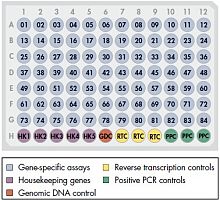
The Human Hippo Signaling Pathway RT² Profiler PCR Array profiles the expression of 84 genes involved in the Hippo signal transduction cascade. The evolutionarily conserved Hippo pathway was discovered by analyzing Drosophila mutations with overgrown tissues, and mammalian homologues of its components have since been identified and characterized at a molecular level. The Hippo cascade regulates organ size and stem cell properties by governing cell proliferation, apoptosis, and contact inhibition. Alterations of this pathway are frequently found associated with cell overgrowth and tumorigenesis. The Hippo pathway can be divided into upstream regulatory components, the Hippo core kinase components, and the downstream transcriptional machinery for modulating target gene expression. Multiple proteins, some of which mediate cell-cell or cell-ECM adhesion, feed into the core of the Hippo pathway. Upstream regulators such as WWC1, SCRIB, Crumbs complex, cadherins, FAT, and Dachsous modulate the Hippo pathway by activating the core kinase cassette. There, autophosphorylated MST1/2 catalyzes the phosphorylation and activation of LATS1/2 that in turn catalyzes the phosphorylation of the transcriptional co-activators YAP1 and TAZ. In their unphosphorylated states, YAP1 and TAZ freely enter the nucleus and function as transcriptional co-activators. However upon phosphorylation, YAP1 and TAZ instead bind the 14-3-3 family of scaffolding proteins, sequestering them in the cytosol. Upstream regulators can also circumvent the core kinase cassette by sequestering the co-activators at cell-cell junctions instead. This array profiles genes involved in upstream regulation, the core kinase complex, and downstream mediation of the Hippo pathway. A set of controls present on each array enables data analysis using the ΔΔCT method of relative quantification and assessment of reverse transcription performance, genomic DNA contamination, and PCR performance. Using real-time PCR, research studies can easily and reliably analyze components of the Hippo signaling pathway with this array.
| Product | Species | Technology | Cat. No. |
| Drug Metabolism PCR Array | Human | Gene Expression | PAHS-002Z |
| Drug Metabolism PCR Array | Mouse | Gene Expression | PAMM-002Z |
| Drug Metabolism PCR Array | Rat | Gene Expression | PARN-002Z |
Upstream Regulators: ACTG1, AMOT, AMOTL1, AMOTL2, CASP3, CRB1, CRB2, CRB3, CSNK1D, CSNK1E, DCHS1, DCHS2, DIAPH2, DLG1, DVL2, FAT1, FAT2, FAT3, FAT4, FJX1, JUB, LIMD1, LIX1L, LLGL1, LLGL2, LPP, NF2, RASSF4, SCRIB, WTIP, WWC1, ZDHHC18.
Hippo Core Kinase Complex: LATS2, MOBKL1A, MOBKL1B, SAV1, STK3, STK4, TAZ, YAP1, MST1, WWTR1.
Downstream Mediators: HIPK2, MAPK10, MEIS1, PRKCI, PRKCZ, SMAD1, TEAD1, TEAD2, TEAD3, TEAD4, TP63, TSHZ1, TSHZ2, TSHZ3, WNT1.
Target Genes: CASP3, CCNE1, CCNE2, MYC, PPP2CB, PPP2R1A, PPP2R2D, PTPN14, RERE.
Contact Inhibition: NF2, TAZ, YAP1.
Cell Polarity: CRB1, CRB2, CRB3, DCHS1, DCHS2, FAT1, FAT2, FAT3, FAT4, LATS1, LATS2, MST1, SCRIB, STK3, STK4, GPC5, HMCN1, POTEE, POTEI, TAOK1, TAOK2, TAOK3, TJP1, TJP2, MPDZ, MPP5, NPHP4, PARD3, PARD6G.
Scaffolding Proteins: YWHAB, YWHAE, YWHAQ, YWHAZ.
风险提示:丁香通仅作为第三方平台,为商家信息发布提供平台空间。用户咨询产品时请注意保护个人信息及财产安全,合理判断,谨慎选购商品,商家和用户对交易行为负责。对于医疗器械类产品,请先查证核实企业经营资质和医疗器械产品注册证情况。
 文献和实验
文献和实验提供的PCR Array产品举例 订制的PCR芯片 如果现有的产品无法满足研究者的特定需要,SuperArray还可以提供从设计到芯片生产的完整服务,为研究者提供使用先进的PCR芯片的便捷服务。客户订制芯片服务为研究者提供以下便利:1)在使用表达谱基因组芯片后,对从基因组水平筛选出来的一组基因进行验证;2)在现有产品的基础上作适当调整以适应特殊需要;3)完全从头设计,适用于在现有的预设计PCR芯片中尚未包括的某个信号通路或者一组基因。若研究基因数目少于84个,还可以将96孔PCR芯片进一步分成
视频要点如下: 1. 荧光定量的基础介绍 2.什么是PCR array 3.PCR array 数据解读
Nature 深度剖析:管坤良与 Alj 组研究成果为何截然相反,Hippo 通路调控乳腺癌的两面性
了 Hippo 与 ERα 的关系。YAP1/TEAD4 可以作为 ERα 的辅因子,促进 ERα 相关增强子的激活,从而促进 ERα 下游信号通路的激活及 ER + 乳腺癌的进展 [5]。ERα 亦对 Hippo 通路有影响:ER + 乳腺癌中,CRABP2 可以结合 LATS1 并抑制其泛素化降解,从而抑制 YAP/TAZ 的核转位;但 ER - 乳腺癌中,CRABP2 反而促进 LATS1 泛素化降解,促进 YAP/TAZ 的活化,但具体机制尚不明确 [6]。这些研究成果说明,ER + 乳
 技术资料
技术资料需要更多技术资料 索取更多技术资料
资料下载:
Drug Metabolism PCR Array药物代谢PCR芯片.docx 附 (下载 0 次)
请 [登录] 后再下载,该资料由上海英拜生物科技有限公司提供,您的下载记录将同步给资料所有人,用于资料服务和业务跟进。

