- 询价
- BIO-RAD

- MCA2200D550
- 2025年10月17日
- F *, IF, WB
- Human

企业认证
相关产品推荐更多 >
万千商家帮你免费找货
0 人在求购买到急需产品
- 详细信息
- 文献和实验
- 技术资料
- 免疫原:
Synthetic peptide sequence corresponding to the C-terminal region (residues 408-439) of human c-myc conjugated to keyhole limpet hemocyanin.
- 亚型:
IgG1
- 形态:
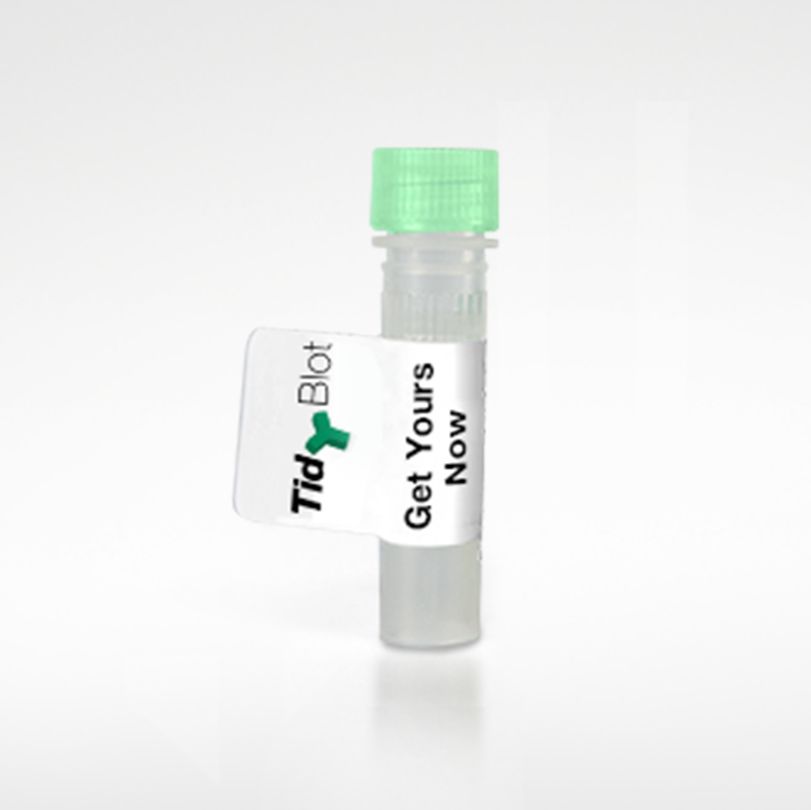
Purified IgG conjugated to DyLight® 550 - liquid
- 克隆性:
Monoclonal Antibody
- 标记物:
DyLight®550
- 适应物种:
Human
- 保质期:
自发货之日起 12 个月
- 目录编号:
9E10
- 供应商:
伯乐生命医学产品(上海)有限公司
- 应用范围:
F *, IF, WB
- 浓度:
IgG concentration 1.0 mg/ml
- 抗体名:
c-Myc antibody | 9E10
- 规格:
0.1 mg
Mouse anti c-myc antibody, clone 9E10 detects the p62c-myc proto-oncogene protein, which is involved in the regulation of the cell cycle and cell growth. C-myc is primarily located to the cell nucleus, but has also been shown to localized to the cytoplasm in several cell lines (Craig et al. 1993). Overexpression of c-myc has been reported in a wide variety of human cancers (
Nesbit
et al. 1999).
Mouse anti c-myc antibody, clone 9E10 recognizes the sequence EQKLISEEDL and may be used to detect proteins and peptides labelled with molecular tags containing this sequence ( Hilpert et al. 2001).
Mouse anti c-myc antibody, clone 9E10 recognizes the sequence EQKLISEEDL and may be used to detect proteins and peptides labelled with molecular tags containing this sequence ( Hilpert et al. 2001).
储存信息
This product is shipped at ambient temperature. It is recommended to aliquot and store at -20°C on receipt. When thawed, aliquot the sample as needed. Keep aliquots at 2-8°C for short term use (up to 4 weeks) and store the remaining aliquots at -20°C.
Avoid repeated freezing and thawing as this may denature the antibody. Storage in frost-free freezers is not recommended.
Avoid repeated freezing and thawing as this may denature the antibody. Storage in frost-free freezers is not recommended.
应用
This product has been reported to work in the following applications. This information is derived from testing within our laboratories, peer-reviewed publications or personal communications from the originators. Please refer to references indicated for further information. For general protocol recommendations, please visit the antibody protocols page.
| Application Name | Verified | Min Dilution | Max Dilution |
|---|---|---|---|
| Flow Cytometry 1 | ✓ | Neat | |
| Immunofluorescence | ✓ | Neat | 1/10 |
| Western Blotting | ✓ | 1/1,000 | 1/2,000 |
- 1 Membrane permeabilization is required for this application. The use of Leucoperm (Product Code BUF09) is recommended for this purpose.
Where this product has not been tested for use in a particular technique this does not necessarily exclude its use in such procedures. Suggested working dilutions are given as a guide only. It is recommended that the user titrates the product for use in their own system using appropriate negative/positive controls.
- Flow Cytometry
- Use 10μl of the suggested working dilution to label 1x10⁶ cells in 100μl
风险提示:丁香通仅作为第三方平台,为商家信息发布提供平台空间。用户咨询产品时请注意保护个人信息及财产安全,合理判断,谨慎选购商品,商家和用户对交易行为负责。对于医疗器械类产品,请先查证核实企业经营资质和医疗器械产品注册证情况。
 文献和实验
文献和实验该产品被引用文献
References for c-Myc antibody
- Evan, G.I. et al. (1985) Isolation of monoclonal antibodies specific for human c-myc proto-oncogene product.
Mol Cell Biol. 5 (12): 3610-6. - Spandidos, D.A. et al. (1987) Elevated expression of the myc gene in human benign and malignant breast lesions compared to normal tissue.
Anticancer Res. 7 (6): 1299-304. - Borodina, I. et al. (2010) Display of wasp venom allergens on the cell surface of Saccharomyces cerevisiae.
Microb Cell Fact. 9: 74. - Groeger, G. et al. (2007) Co-operative Cdc42 and Rho signalling mediates ephrinB-triggered endothelial cell retraction.
Biochem J. 404: 23-9. - Hilpert, K. et al. (2001) Anti-c-myc antibody 9E10: epitope key positions and variability characterized using peptide spot synthesis on cellulose.
Protein Eng. 14: 803-6. - Gohlke, S. et al. (2017) In Vitro and In Vivo Studies on the Structural Organization of Chs3 from Saccharomyces cerevisiae.
Int J Mol Sci. 18 (4): pii: E702. - Gray, P. et al. (2010) Identification of a novel human MD-2 splice variant that negatively regulates Lipopolysaccharide-induced TLR4 signaling.
J Immunol. 184: 6359-66. - Duriseti, S. et al. (2010) Antagonistic anti-urokinase plasminogen activator receptor (uPAR) antibodies significantly inhibit uPAR-mediated cellular signaling and migration.
J Biol Chem. 285: 26878-88.
Further Reading
- Nesbit, C. et al. (1999) MYC oncogenes and human neoplastic disease.
Oncogene. 18: 3004-16. - Krauß, N. et al. (2008) The structure of the anti-c-myc antibody 9E10 Fab fragment/epitope peptide complex reveals a novel binding mode dominated by the heavy chain hypervariable loops.
Proteins. 73: 552-65.
 技术资料
技术资料暂无技术资料 索取技术资料
文献支持
Mouse anti c-Myc:DyLight®550,clone 9E10
询价