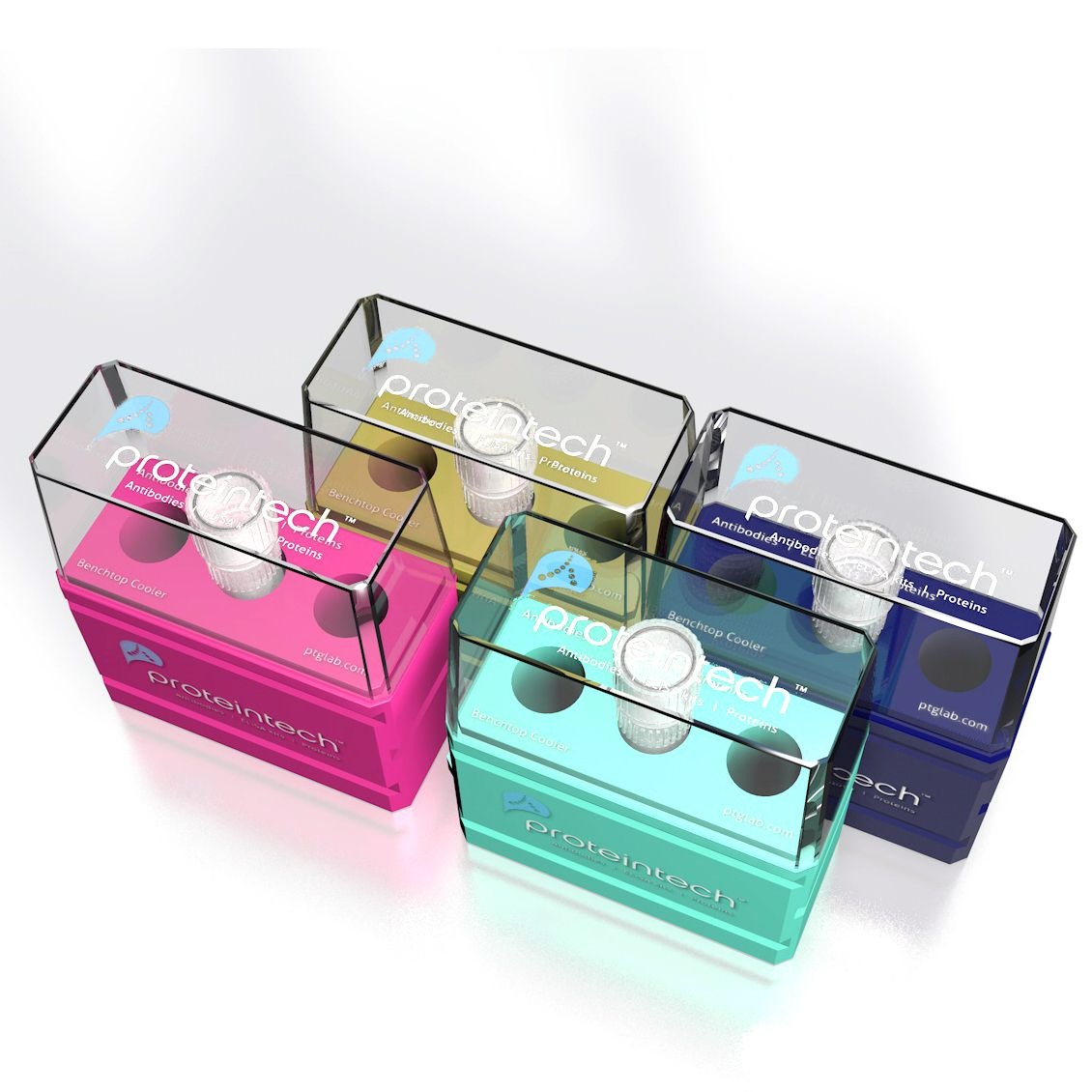
- ¥5800
- Proteintech

- 80805-3-PBS
- 2025年10月09日
- WB, Cytometric bead array, Indirect ELISA
- Rabbit
- human, mouse, rat

企业认证
相关产品推荐更多 >
万千商家帮你免费找货
0 人在求购买到急需产品
- 详细信息
- 文献和实验
- 技术资料
- 亚型:
IgG
- 保存条件:
Store at -80°C.
- 克隆性:
Recombinant
- 标记物:
Unconjugated
- 适应物种:
human, mouse, rat
- 宿主:
Rabbit
- 应用范围:
WB, Cytometric bead array, Indirect ELISA
- 靶点:
TGFBI/BIGH3
- 抗体英文名:
TGFBI/BIGH3 Recombinant monoclonal antibody, PBS Only (Capture)
- 抗体名:
TGFBI/BIGH3 Recombinant monoclonal antibody, PBS Only (Capture)
- 规格:
100ug
产品信息
80805-3-PBS targets TGFBI/BIGH3 as part of a matched antibody pair:
MP02279-1: 80805-3-PBS capture and 80805-2-PBS detection (validated in Cytometric bead array)
Unconjugated rabbit recombinant monoclonal antibody in PBS only (BSA and azide free) storage buffer at a concentration of 1 mg/mL, ready for conjugation. Created using Proteintech’s proprietary in-house recombinant technology. Recombinant production enables unrivalled batch-to-batch consistency, easy scale-up, and future security of supply.
This conjugation ready format makes antibodies ideal for use in many applications including: ELISAs, multiplex assays requiring matched pairs, mass cytometry, and multiplex imaging applications.Antibody use should be optimized by the end user for each application and assay.
| 经测试应用 | WB, Cytometric bead array, Indirect ELISA |
| 经测试反应性 | human, mouse, rat |
| 免疫原 |
CatNo: Eg1233 Product name: recombinant human beta IG-H3/TGFBI protein Source: mammalian cells-derived, pHZ-KIsec-C-6*HIS Tag: C-6*HIS Domain: 24-683 aa of NM_000358.3 Sequence: GPAKSPYQLVLQHSRLRGRQHGPNVCAVQKVIGTNRKYFTNCKQWYQRKICGKSTVISYECCPGYEKVPGEKGCPAALPLSNLYETLGVVGSTTTQLYTDRTEKLRPEMEGPGSFTIFAPSNEAWASLPAEVLDSLVSNVNIELLNALRYHMVGRRVLTDELKHGMTLTSMYQNSNIQIHHYPNGIVTVNCARLLKADHHATNGVVHLIDKVISTITNNIQQIIEIEDTFETLRAAVAASGLNTMLEGNGQYTLLAPTNEAFEKIPSETLNRILGDPEALRDLLNNHILKSAMCAEAIVAGLSVETLEGTTLEVGCSGDMLTINGKAIISNKDILATNGVIHYIDELLIPDSAKTLFELAAESDVSTAIDLFRQAGLGNHLSGSERLTLLAPLNSVFKDGTPPIDAHTRNLLRNHIIKDQLASKYLYHGQTLETLGGKKLRVFVYRNSLCIENSCIAAHDKRGRYGTLFTMDRVLTPPMGTVMDVLKGDNRFSMLVAAIQSAGLTETLNREGVYTVFAPTNEAFRALPPRERSRLLGDAKELANILKYHIGDEILVSGGIGALVRLKSLQGDKLEVSLKNNVVSVNKEPVAEPDIMATNGVVHVITNVLQPPANRPQERGDELADSALEIFKQASAFSRASQRSVRLAPVYQKLLERMKH |
| 宿主/亚型 | Rabbit / IgG |
| 抗体类别 | Recombinant |
| 产品类型 | Antibody |
| 全称 | transforming growth factor, beta-induced, 68kDa |
| 别名 | TGFBI, TGFBI / BIGH3, Beta ig h3, Beta ig-h3, BIGH3 |
| 计算分子量 | 75kDa |
| 观测分子量 | 68 kDa |
| GenBank蛋白编号 | NM_000358.3 |
| 基因名称 | TGFBI |
| Gene ID (NCBI) | 7045 |
| ENSEMBL Gene ID | ENSG00000120708 |
| 偶联类型 | Unconjugated |
| 形式 | Liquid |
| 纯化方式 | Protein A purification |
| UNIPROT ID | Q15582 |
| 储存缓冲液 | PBS only, pH 7.3. |
| 储存条件 | Store at -80°C. The product is shipped with ice packs. Upon receipt, store it immediately at -80°C |
背景介绍
TGFBI, also named as BIGH3, Kerato-epithelin and RGD-CAP, binds to type I, II, and IV collagens. TGFBI is an adhesion protein which may play an important role in cell-collagen interactions. In cartilage, it may be involved in endochondral bone formation. TGFBI is an extracellular matrix adaptor protein, it has been reported to be differentially expressed in transformed tissues. TGFBI is a predictive factor of the response to chemotherapy, and suggest the use of TGFBI-derived peptides as possible therapeutic adjuvants for the enhancement of responses to chemotherapy.(PMID:20509890) Defects in TGFBI are the cause of epithelial basement membrane corneal dystrophy (EBMD). Defects in TGFBI are the cause of corneal dystrophy Groenouw type 1 (CDGG1). Defects in TGFBI are the cause of corneal dystrophy lattice type 1 (CDL1). Defects in TGFBI are a cause of corneal dystrophy Thiel-Behnke type (CDTB). Defects in TGFBI are the cause of Reis-Buecklers corneal dystrophy (CDRB). Defects in TGFBI are the cause of lattice corneal dystrophy type 3A (CDL3A). Defects in TGFBI are the cause of Avellino corneal dystrophy (ACD).
风险提示:丁香通仅作为第三方平台,为商家信息发布提供平台空间。用户咨询产品时请注意保护个人信息及财产安全,合理判断,谨慎选购商品,商家和用户对交易行为负责。对于医疗器械类产品,请先查证核实企业经营资质和医疗器械产品注册证情况。
 文献和实验
文献和实验1. 杂交瘤阳性克隆的筛选与克隆化 在HAT培养基中生长的杂交瘤细胞,只有少数是分泌预定特异性单克隆抗体的细胞,因此,必须进行筛选和克隆化。通常采用有限稀释法进行杂交瘤细胞的克隆化培养。采用灵敏、快速、特异的免疫学方法,筛选出能产生所需单克隆抗体的阳性杂交瘤细胞,并进行克隆扩增。经过全面鉴定其所分泌单克隆抗体的免疫球蛋白类型、亚类、特异性、亲和力、识别抗原的表位及其分子量后,及时进行冻存。2. 单克隆抗体的大量制备 单克隆抗体的大量制备重要采用动物体内诱生法和体外培养法。
. For primary antibody use anti-GST at 1:1000 and anti-actin at 1:1000. For secondary use HRP conjugated IgG at 1:10,000. Actin Capture Assay Reagants Binding Buffer: 1X PBS pH 7.2 (Lane Recipe) + 10% Glycerol + 1mMMgCl2 + 0.2mM ATP + 0.1% BSA
液,加入6ml DMEM完全培养基,37℃孵育过夜,再换液。 7、培养过程中观察细胞生长情况。约2周后可观察到细胞病变(CPE)出现(如用pAdTrack-CMV质粒,由于含GFP,可观察到绿色荧光)。四、重组病毒鉴定 1、转导10-14d后,收集细胞沉淀,加入2ml灭菌的PBS混悬,冻融细胞,离心后收集上清保存于-80℃。 2、取30-50% 步骤1中上清,感染50-70%饱和度的25cm2方瓶中293细胞。2-3d后出现明显细胞病变。 3、感染后3-5d,当1/3-1/2细胞漂浮时
 技术资料
技术资料暂无技术资料 索取技术资料