

- ¥1600
- Sciencell
- B-2101
- 美国
- 2025年08月01日
企业认证
相关产品推荐更多 >
万千商家帮你免费找货
0 人在求购买到急需产品
相关阅读
细胞污染识别与处理全攻略:5 种常见类型+关键误区Cytoscape 教程来了!快速实现顶刊同款通路网络图五大应用案例:Mustang Q 膜层析应用全解析1 个小工具,一次性搞定流程图、质粒图谱和信号通路图- 详细信息
- 文献和实验
- 技术资料
- 库存:
100
- 供应商:
上海酶研生物科技有限公司
- 英文名:
KM (Kerotinocyte Medium)
- 规格:
500ml/T
|
货号 |
2101 |
|
产地 |
美国 |
|
缩写 |
KM |
|
规格 |
500ml |
|
用途 |
科研 |
|
储存 |
4度,-20度 |
|
运输 |
胶冰 |
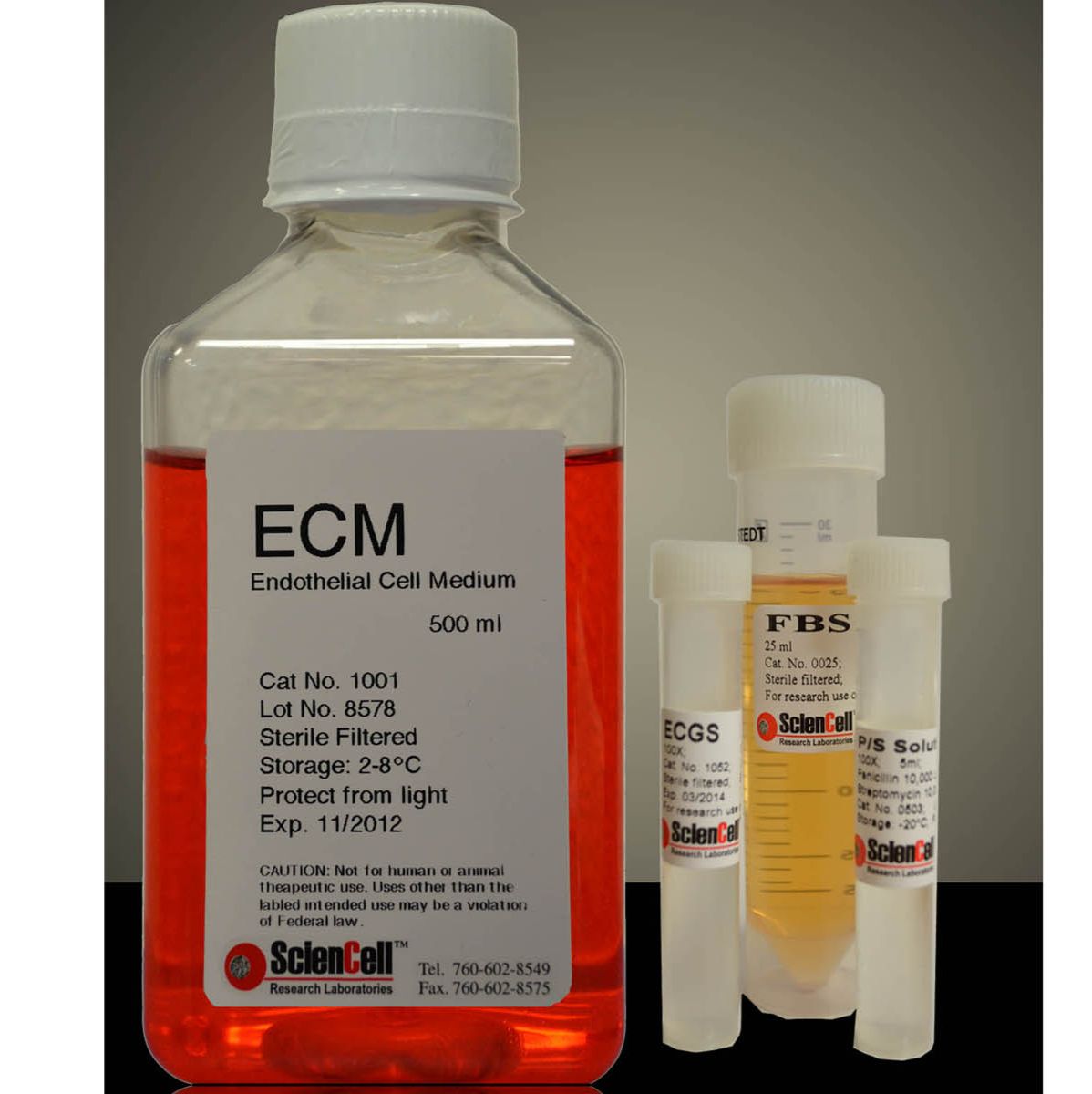
角质细胞培养基是为正常人类角质细胞体外培养设计的适于其生长的培养基。无血清培养基是无菌的、液体培养基,包含必需和非必需氨基、维生素、有机和无机化合物、激素、生长因子、微量矿物质。该培养基不含血清。该培养基含碳酸氢盐缓冲体系,在5%二氧化碳/95%空气培养箱中平衡时PH值为7.4。该培养基在数量上和质量上都保证理想的营养平衡状态,选择性促进体外正常人类角质细胞的生长。
成分
角质细胞培养基包含500 ml基础培养基,5 ml角质细胞生长添加物,(KGS,目录编号2152)和5 ml青霉素/链霉素溶液(P/S,目录编号0503)
3. Yang YC, Fu HC, Wu CY, Wei KT, Huang KE, Kang HY. (2013) 'Androgen Receptor Accelerates Premature Senescence of Human Dermal Papilla Cells in Association with DNA Damage.'
The dermal papilla, located in the hair follicle, expresses androgen receptor and plays an important role in hair growth. Androgen/Androgen receptor actions have been implicated in the pathogenesis of androgenetic alopecia, but the exact mechanism is not well known. Recent studies suggest that balding dermal papilla cells exhibit premature senescence, upregulation of p16(INK4a), and nuclear expression of DNA damage markers. To investigate whether androgen/AR signaling influences the premature senescence of dermal papilla cells, we first compared frontal scalp dermal papilla cells of androgenetic alopecia patients with matched normal controls and observed that premature senescence is more prominent in the dermal papilla cells of androgenetic alopecia patients. Exposure of androgen induced premature senescence in dermal papilla cells from non-balding frontal and transitional zone of balding scalp follicles but not in beard follicles. Overexpression of the AR promoted androgen-induced premature senescence in association with p16(INK4a) upregulation, whereas knockdown of the androgen receptor diminished the effects of androgen. An analysis of γ-H2AX expression in response to androgen/androgen receptor signaling suggested that DNA damage contributes to androgen/androgen receptor-accelerated premature senescence. These results define androgen/androgen receptor signaling as an accelerator of premature senescence in dermal papilla cells and suggest that the androgen/androgen receptor-mediated DNA damage-p16(INK4a) axis is a potential therapeutic target in the treatment of androgenetic alopecia. Less
4. Yang YC, Fu HC, Wu CY, Wei KT, Huang KE, Kang HY. (2013) "Androgen Receptor Accelerates Premature Senescence of Human Dermal Papilla Cells in Association with DNA Damage." PLOS ONE. 8: e79434.
The dermal papilla, located in the hair follicle, expresses androgen receptor and plays an important role in hair growth. Androgen/Androgen receptor actions have been implicated in the pathogenesis of androgenetic alopecia, but the exact mechanism is not well known. Recent studies suggest that balding dermal papilla cells exhibit premature senescence, upregulation of p16(INK4a), and nuclear expression of DNA damage markers. To investigate whether androgen/AR signaling influences the premature senescence of dermal papilla cells, we first compared frontal scalp dermal papilla cells of androgenetic alopecia patients with matched normal controls and observed that premature senescence is more prominent in the dermal papilla cells of androgenetic alopecia patients. Exposure of androgen induced premature senescence in dermal papilla cells from non-balding frontal and transitional zone of balding scalp follicles but not in beard follicles. Overexpression of the AR promoted androgen-induced premature senescence in association with p16(INK4a) upregulation, whereas knockdown of the androgen receptor diminished the effects of androgen. An analysis of γ-H2AX expression in response to androgen/androgen receptor signaling suggested that DNA damage contributes to androgen/androgen receptor-accelerated premature senescence. These results define androgen/androgen receptor signaling as an accelerator of premature senescence in dermal papilla cells and suggest that the androgen/androgen receptor-mediated DNA damage-p16(INK4a) axis is a potential therapeutic target in the treatment of androgenetic alopecia. Less
风险提示:丁香通仅作为第三方平台,为商家信息发布提供平台空间。用户咨询产品时请注意保护个人信息及财产安全,合理判断,谨慎选购商品,商家和用户对交易行为负责。对于医疗器械类产品,请先查证核实企业经营资质和医疗器械产品注册证情况。
 文献和实验
文献和实验
1.) Yang YC, Fu HC, Wu CY, Wei KT, Huang KE, Kang HY. (2013) 'Androgen Receptor Accelerates Premature Senescence of Human Dermal Papilla Cells in Association with DNA Damage.'
2.) Yang YC, Fu HC, Wu CY, Wei KT, Huang KE, Kang HY. (2013) "Androgen Receptor Accelerates Premature Senescence of Human Dermal Papilla Cells in Association with DNA Damage." PLOS ONE. 8: e79434.
植物地上器官(如茎、叶等)的表面的一层脂肪性物质。它是由表皮细胞所分泌的。在叶子的表面最明显;嫩枝、花、果实和幼根的表皮外层也常具有这种结构。其功能主要起保护作用,它不仅可以限制植物体内水分的散失,而且可以抵抗微生物的侵袭等各种不良影响。组成角质层的重要化学成分是角质,它是一种含16~ 18个碳的羟基脂肪酸。角质层常分两层,紧靠表皮细胞外壁,是由角质和纤维素组成的角化层;细胞壁外面是一层较薄的,由角质或与蜡质混合组成的角质层。角质层的厚度受环境影响较大,在干旱、阳光充足条件下生长的叶片
陆生脊椎动物皮肤表面特有的 1种鳞。由表皮的角质层形成,有保护和防止体内水分散失的作用。如爬行类(蛇类、蜥蜴等)最为常见。此外,鸟类、哺乳类体表的局部区域也有,如鸟类的足部和嘴的基部,鼠类的尾部等。鸟嘴外面的角质套是角质鳞的变形物,穿山甲的体表和尾部都具有明显的角质鳞。
为植物角质层的主要成分。它不是单一的物质,而是不饱和度很高的高级脂肪酸类(羟基 C18 脂肪酸)的聚合物。角质的组成成分可因植物的种类而有很大的差别。角质是角质层的骨架物质,一般在茎、叶表面以层状存在,此外在组织内还存在于与空气接触的叶肉细胞等的游离表面。覆盖于角质层外侧的角质,氧化聚合程度较高,并渗入相当多的蜡质。与此相反,层内分子的排列方向显有明显的极性。有这种极性的某些部位可靠氢键与水结合,在不带极性的碳氢链中仅靠非常弱的范德华力而吸水。这对角质层的表面,即对植
 技术资料
技术资料暂无技术资料 索取技术资料

