

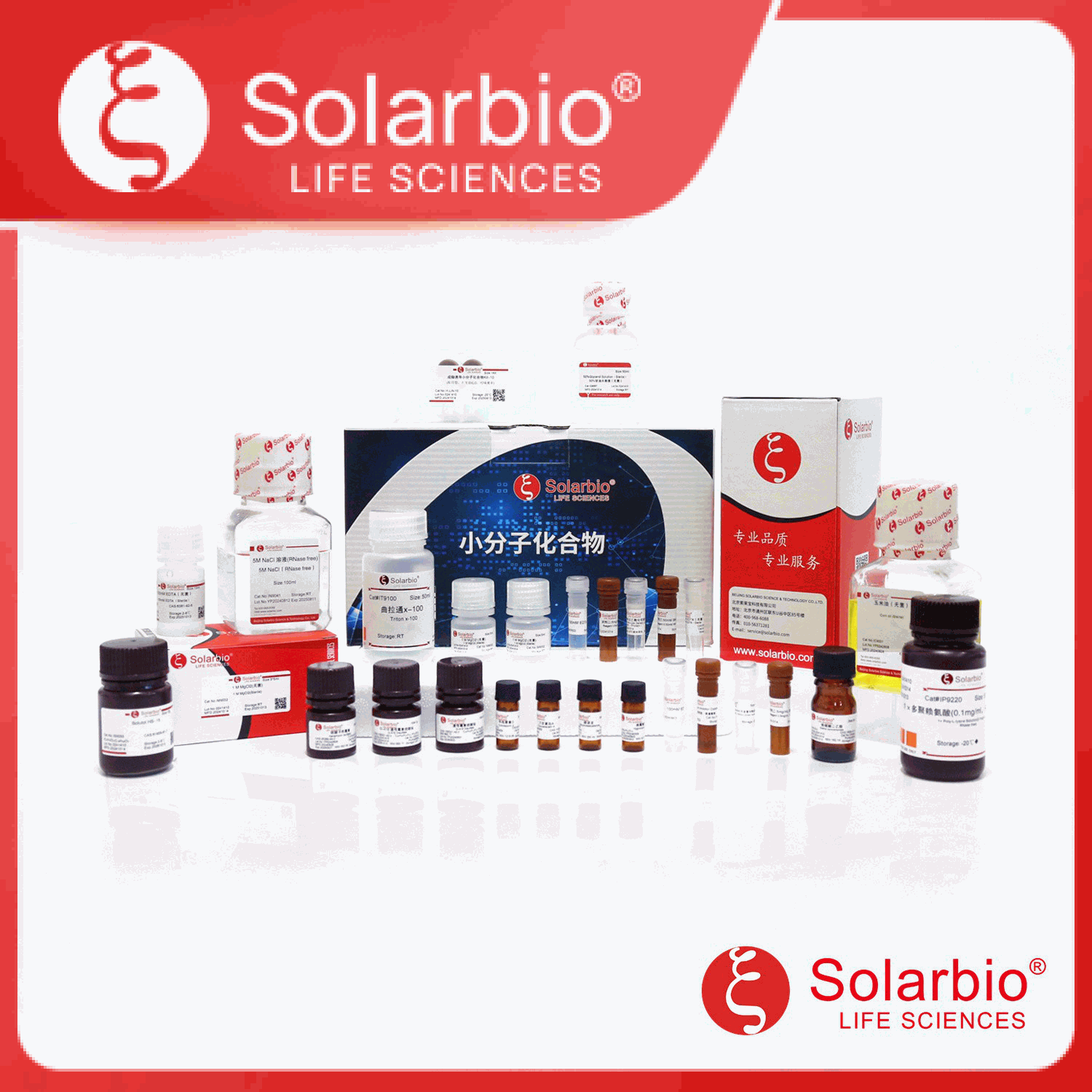
- ¥990
- Solarbio

- 北京
- IH2770
- 2026年08月14日

企业认证
相关产品推荐更多 >
万千商家帮你免费找货
0 人在求购买到急需产品
相关阅读
Dove 医学期刊 APC 折后约 1.95w,中国大陆作者专享Cytoscape 教程来了!快速实现顶刊同款通路网络图五大应用案例:Mustang Q 膜层析应用全解析1 个小工具,一次性搞定流程图、质粒图谱和信号通路图- 详细信息
- 文献和实验
- 技术资料
- 保存条件:
Powder:2-8℃,2 years;Insolvent(母液):-20℃,6 months;-80℃,1 year
- 保质期:
Powder:2-8℃,2 years;Insolvent(母液):-20℃,6 months;-80℃,1 year
- 英文名:
HSF1A
- 库存:
999
- 供应商:
北京索莱宝科技有限公司
- CAS号:
1196723-93-9
- 规格:
2mg
| CAS | 1196723-93-9 |
| 英文名称 | HSF1A |
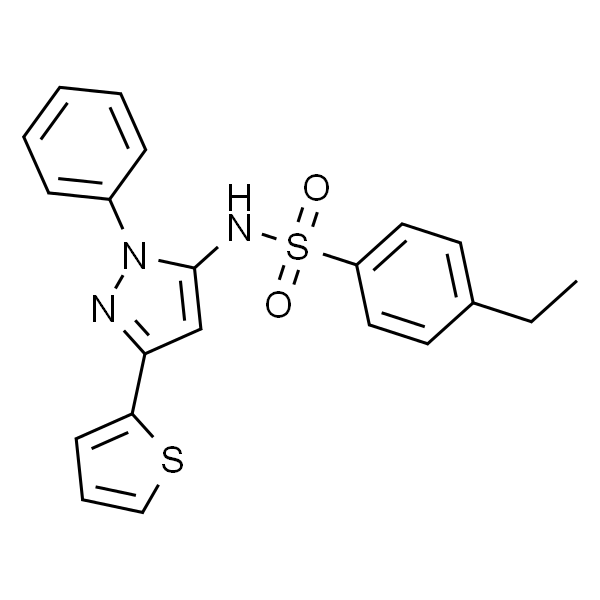
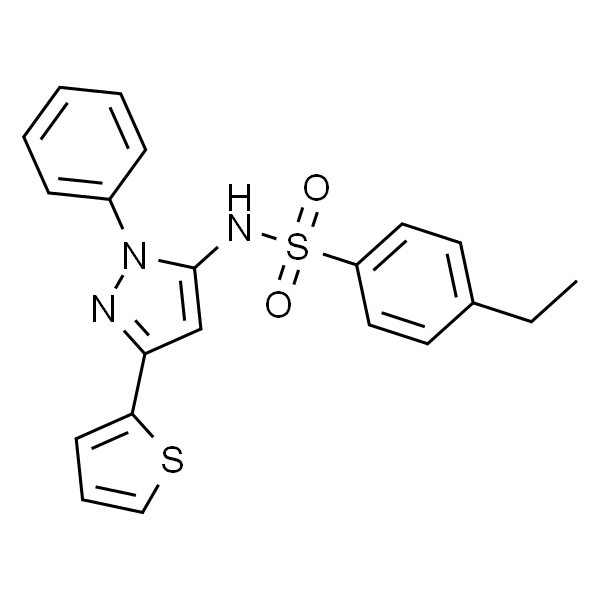
| 分子式 | C21H19N3O2S2 |
| 分子量 | 409.52 |
| 规格 | 2mg |
| 溶解性 | Soluble in DMSO ≥15mg/mL(Need ultrasonic) |
| 纯度 | ≥98% |
| 级别 | Cell Culture |
| 外观(性状) | White to off-white Solid |
| 储存条件 | Powder:2-8℃,2 years;Insolvent(母液):-20℃,6 months;-80℃,1 year |
| 运输条件 | 冷藏运输 |
| MDL | MFCD22580417 |
| SMILES | CCC1=CC=C(C=C1)S(=O)(=O)NC2=CC(=NN2C3=CC=CC=C3)C4=CC=CS4 |
| InChIKey | KJTITGSAONQVPY-UHFFFAOYSA-N |
| InChI | InChI=1S/C21H19N3O2S2/c1-2-16-10-12-18(13-11-16)28(25,26)23-21-15-19(20-9-6-14-27-20)22-24(21)17-7-4-3-5-8-17/h3-15,23H,2H2,1H3 |
| PubChem CID | 44472508 |
| 靶点 | HSF1 |
| 通路 | Cell Cycle;Metabolic Enzyme&Protease |
| 背景说明 | HSF1A 是一种热休克转录因子1 (HSF1) 活化剂。 |
| 生物活性 | HSF1A is a cell-permeable activator of heat shock transcription factor 1 (HSF1). HSF1A also acts as a specific inhibitor of TRiC/CCT. Chaperonin TCP-1 ring complex (TRiC)/chaperonin containing TCP-1 (CCT) plays a pivotal role in toxin translocation and/or refolding.[1-4] |
| In Vitro | HSF1A protects cells from stress-induced apoptosis, binds TRiC subunits and inhibits TRiC activity without perturbation of ATP hydrolysis. Genetic inactivation or depletion of the TRiC complex results in human HSF1 activation and HSF1A inhibits the direct interaction between purified TRiC and HSF1 in vitro. Moreover, fluorescence anisotropy experiments using FITC coupled to HSF1A demonstrates that HSF1A-FITC binds to a purified Tcp1 subunit of TRiC with an affinity of approximately 600 nM. This is validated qualitatively via titration of purified Tcp1 into binding reactions containing 500 nM Biotin or HSF1A-Biotin[1]. Quantification by counting the number of cell containing aggregates as a function of the total number of cells reveals that at HSF1A concentrations as low as 2 μM, a reduced number of aggregate-containing cells are observed. The fraction of cells containing aggregates continued to decrease in a dose-dependent manner such that pretreatment with 12 μM HSF1A resulta in ~20% of the cells exhibiting aggregates visible by fluorescence microscopy[2]. |
| In Vivo | HSF1A enhances HSF1 activity, stabilizes HSF1 expression and minimizes Doxorubicin (DOX)-induced cardiac damage. WKY rats are challenged with DOX (accumulated dose: 30?mg/kgw), and DOX combined with HSF1A (100?mg/kgw/day). Supplementation with HSF1A significantly elevates cardiac functions back to the levels of the control group. HSF1A has been shown to stimulate human HSF1 nuclear translocation, elevate protein chaperone expression and ameliorate protein misfolding and cell death in a neurodegenerative disease model. The echocardiographic results show that HSF1A also alleviates DOX-induced failures in cardiac function[3]. |
| 细胞实验 | PC12 cells seeded into a 96-well plate (5×10⁴ cells/well) are treated with increasing concentrations of HSF1A (2, 4, 8 and 12 μM) for 15 h, at which time httQ74-GFP expression is stimulated by incubation in the presence of 1 μg/mL Doxycycline for 5 d. Cell viability is assessed via the XTT viability assay[2]. |
| 动物实验 | Rats[3] Ten-week-old Wistar Kyoto rats (WKY) are used. The rats are housed at a constant temperature (22°C) on a 12-h light/dark cycle with food and tap water. The animals are arranged into three groups: WKY rats (the control group), DOX rats and DOX rats treated with HSF1A. Each group contain five animals. The DOX group is injected with DOX (5?mg/kg) for 6 consecutive weeks intraperitoneal injection to achieve a cumulative dose of 30?mg/kg, which has been well documented to achieve cardiotoxicity. The small molecular HSF1 activator HSF1A (100?mg/kg/day) is injected intraperitoneally. |
| 激酶实验 | Protein extracts are generated from mammalian, yeast and E. coli cultures using biotin-binding buffer (20 mM HEPES, 5 mM MgCl2, 1 mM EDTA, 100 mM KCl, 0.03% NP-40) supplemented with 1% Trition-X100 and protease inhibitors. Approximately 0.5 mg of protein extract is incubated with 100 μM HSF1A-Biotin for 4 h at 4°C and HSF1A-Biotin associated proteins captured by with NeutrAvidin Agarose Resin. After washing in biotin binding buffer proteins are eluted using 50 μL biotin elution buffer (100 mM Tris, 150 mM NaCl, 0.1 mM EDTA, 2 mM D-biotin), resolved on a 4-20% SDS-PAGE, and immunoblotted. For purified TRiC and Hsp70 analyses, 5 nM protein is incubated in biotin-binding buffer+0.5% Triton X-100 with 100 μM biotin or 100 μM HSF1A-Biotin for 4 h at 4°C and captured with NeutrAvidin Resin. For NiNTA purified yeast Tcp1, different concentrations of Tcp1 0.5 μM, 1 mM, 2 mM, 3 mM and 4 mM in 25 mM Hepes pH 7.5, 150 mM NaCl are incubated with 0.5 μM Biotin or HSF1A-Biotin for 4 h at 4°C and captured with NeutrAvidin Resin[1]. |
| 数据来源文献 | [1]. Neef DW, et al. A direct regulatory interaction between chaperonin TRiC and stress-responsive transcription factor HSF1. Cell Rep. 2014 Nov 6;9(3):955-66. [2]. Neef DW, et al. Modulation of heat shock transcription factor 1 as a therapeutic target for small molecule intervention in neurodegenerative disease. PLoS Biol. 2010 Jan 19;8(1):e1000291. [3]. Huang CY, et al. Doxorubicin attenuates CHIP-guarded HSF1 nuclear translocation and protein stability to trigger IGF-IIR-dependent cardiomyocyte death. Cell Death Dis. 2016 Nov 3;7(11):e2455. [4]. Marcus Steinemann, et al. The chaperonin TRiC/CCT is essential for the action of bacterial glycosylating protein toxins like Clostridium difficile toxins A and B. Proc Natl Acad Sci U S A. 2018 Sep 18;115(38):9580-9585. |
| 单位 | 瓶 |
| 表格1 | |*|1mg|5mg|10mg|$$|1mM|2.4419mL|12.2094mL|24.4188mL|$$|5mM|0.4884mL|2.4419mL|4.8838mL|$$|10mM|0.2442mL|1.2209mL|2.4419mL| |
风险提示:丁香通仅作为第三方平台,为商家信息发布提供平台空间。用户咨询产品时请注意保护个人信息及财产安全,合理判断,谨慎选购商品,商家和用户对交易行为负责。对于医疗器械类产品,请先查证核实企业经营资质和医疗器械产品注册证情况。
 文献和实验
Targeted Deletion of Hsf1, 2, and 4 Genes in Mice
Heat-shock transcription factors (Hsfs) regulate transcription of heat-shock proteins as well as other genes whose promoters contain heat-shock elements. There are at least five Hsfs in mammalian cells, Hsf1, Hsf2, Hsf3, Hsf4, and Hsfy
【第98期】前沿靶点速递 | LAG3、FGF21、HSF1等9项重磅研究进展
06 靶点:HSF1 应用:糖尿病合并肿瘤的潜在治疗靶点 来源:The microenvironment dictates glyco-immune surveillance via HSF1-mediated metabolism. Sci Adv, 2026 Aug 7 Kevin M. Tharp等在Science Advances发表了一篇研究,揭示高血糖通过激活热休克因子1(HSF1)信号通路,促使肿瘤细胞表面糖萼增厚,帮助癌
躺平减肥要成真了!中国团队发现局部热疗可激活米色脂肪助力安全减肥,登顶 Cell 封面
杂志上发表了题为 Local Hyperthermia Therapy Induces Browning of White Fat and Treats Obesity 的研究论文,他们系统研究了米色脂肪局部热疗在产热和脂肪代谢中的作用,并阐明了其可通过 HSF1-A2b1 转录轴发挥作用的分子机制,这一研究成果将为治疗肥胖和代谢性疾病提供新的策略。 图片来源:Cell 主要研究内容 热疗在体外和体内诱导产热 为了测试米色脂肪细胞是否能够以细胞自主的方式感知高温,他们将米色脂肪细胞置于
 技术资料
暂无技术资料 索取技术资料