

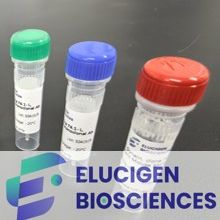
- ¥860
- Elucigen Biosciences
- ERB0062
- 2025年08月13日
- WB
- Rabbit
- Human (predict all species)


相关产品推荐更多 >


万千商家帮你免费找货
0 人在求购买到急需产品
- 详细信息
- 询价记录
- 文献和实验
- 技术资料
- 免疫原:
KLH-conjugated library of random peptides containing non-hydrolyzable phosphohistidine analogue 1-pTza.
- 亚型:
IgG
- 形态:
Liquid
- 保存条件:
-20°C
- 克隆性:
Monoclonal
- 标记物:
Unconjugated
- 适应物种:
Human (predict all species)
- 保质期:
12 months from the shipping date of the product.
- 抗原来源:
Human
- 目录编号:
ERB0062
- 级别:
Primary Antibodies
- 库存:
Available
- 供应商:
Elucigen Biosciences
- 宿主:
Rabbit
- 应用范围:
WB
- 浓度:
0.5 mg/mL
- 靶点:
NA
- 抗体英文名:
Anti-N1-Phosphohistidine (1-pHis), clone SC50-3 Recombinant Rabbit Monoclonal Ab
- 抗体名:
Anti-N1-Phosphohistidine (1-pHis), clone SC50-3 Recombinant Rabbit Monoclonal Ab
- 规格:
25μg/100μg/500μg
| 规格: | 25μg | 产品价格: | ¥860.0 |
|---|---|---|---|
| 规格: | 100μg | 产品价格: | 询价 |
| 规格: | 500μg | 产品价格: | 询价 |
N1-phosphohistidine (1-pHis) is a post-translational modification where a phosphate group is added to the nitrogen atom at the 1-position of the histidine imidazole ring. This modification is a type of histidine phosphorylation and, like N3-phosphohistidine (3-pHis), plays a role in cellular signaling and protein regulation. Although less studied compared to phosphorylation on serine, threonine, and tyrosine residues, 1-pHis is involved in signal transduction and enzyme regulation in both prokaryotes and eukaryotes. It is thought to modulate protein activity, protein-protein interactions, and metabolic pathways. The specific role and mechanisms of N1-phosphohistidine are still under investigation, but it is increasingly recognized as an important modification for cellular communication, particularly in the context of histidine kinase systems and other signal transduction networks.
N1-phosphohistidine (1-pHis) is a post-translational modification where a phosphate group is added to the nitrogen atom at the 1-position of the histidine imidazole ring. This modification is a type of histidine phosphorylation and, like N3-phosphohistidine (3-pHis), plays a role in cellular signaling and protein regulation. Although less studied compared to phosphorylation on serine, threonine, and tyrosine residues, 1-pHis is involved in signal transduction and enzyme regulation in both prokaryotes and eukaryotes. It is thought to modulate protein activity, protein-protein interactions, and metabolic pathways. The specific role and mechanisms of N1-phosphohistidine are still under investigation, but it is increasingly recognized as an important modification for cellular communication, particularly in the context of histidine kinase systems and other signal transduction networks.
N1-phosphohistidine (1-pHis) is a post-translational modification where a phosphate group is added to the nitrogen atom at the 1-position of the histidine imidazole ring. This modification is a type of histidine phosphorylation and, like N3-phosphohistidine (3-pHis), plays a role in cellular signaling and protein regulation. Although less studied compared to phosphorylation on serine, threonine, and tyrosine residues, 1-pHis is involved in signal transduction and enzyme regulation in both prokaryotes and eukaryotes. It is thought to modulate protein activity, protein-protein interactions, and metabolic pathways. The specific role and mechanisms of N1-phosphohistidine are still under investigation, but it is increasingly recognized as an important modification for cellular communication, particularly in the context of histidine kinase systems and other signal transduction networks.
风险提示:丁香通仅作为第三方平台,为商家信息发布提供平台空间。用户咨询产品时请注意保护个人信息及财产安全,合理判断,谨慎选购商品,商家和用户对交易行为负责。对于医疗器械类产品,请先查证核实企业经营资质和医疗器械产品注册证情况。
- 作者
- 内容
- 询问日期
 文献和实验
文献和实验该产品被引用文献
Fuhs, S. R. et al. (2015) Cell 162:198
 技术资料
技术资料暂无技术资料 索取技术资料
文献支持
Anti-N1-Phosphohistidine (1-pHis), clone SC50-3 Recombinant Rabbit Monoclonal Ab
¥860

