- ¥600 - 3200
- 上海莼试
- CS-01Y74805
- 国产
- 2025年07月15日

8 年钻石会员
企业认证
相关产品推荐更多 >

万千商家帮你免费找货
0 人在求购买到急需产品
- 详细信息
- 技术资料
- 库存:
36
- 英文名:
PAP-1
- CAS号:
870653-45-5
- 供应商:
上海莼试
- 保存条件:
Store at -20°C
- 规格:
10mM*1mL in DMSO 5mg 10mg 25mg 50mg 100mg
使用方法:
1.本蛋白酶抑制剂混合物为100×的储存液,使用时按照1:100的比例加入到裂解液中(例如,1ml裂解液中加入10μl蛋白酶抑制剂混合物),混匀后即可使用。根据需要,0.5M的EDTA也按照1:100的比例加入到裂解液中(如用于检测金属蛋白酶活性,则不宜添加EDTA)。含有蛋白酶抑制剂混合物的裂解液宜现用现配,不宜配制后冻存待后续使用。
2. 待所需的抑制剂添加完毕混匀后,就可以开始进行哺乳动物组织的裂解和蛋白提取。
商品属性:
产品描述:
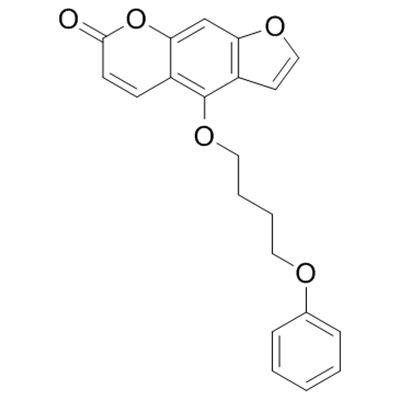
分子式:C21H18O5
分子量:350.36
溶解度:DMSO: 50 mg/mL (142.71 mM); H2O: < 0.1 mg/mL (insoluble)
储存条件:Store at -20°C
General tips:For obtaining a higher solubility , please warm the tube at 37 ℃ and shake it in the ultrasonic bath for a while.
Shipping Condition:Evaluation sample solution : ship with blue ice All other available size: ship with RT , or blue ice upon request
PAP-1 is a selective inhibitor of Kv1.3, voltage-gated K+ channel. PAP-1 (EC50=2 nM) potently inhibits human T effector memory cell proliferation and delayed hypersensitivity. IC50 value: 2 nM (EC50) [1]in vitro: blocks Kv1.3 in a use-dependent manner, with a Hill coefficient of 2 and an EC50 of 2 nM, by preferentially binding to the C-type inactivated state of the channel. PAP-1 is 23-fold selective over Kv1.5, 33- to 125-fold selective over other Kv1-family channels, and 500- to 7500-fold selective over Kv2.1, Kv3.1, Kv3.2, Kv4.2, HERG, calcium-activated K+ channels, Na+,Ca2+, and Cl- channels [1]. The blockade of Kv1.3 results in membrane depolarization and inhibition of TEM proliferation and function. In this study, the in vitro effects of PAP-1 on T cells and the in vivo toxicity and pharmacokinetics (PK) were examined in rhesus macaques (RM) with the ultimate aim of utilizing PAP-1 to define the role of TEMs in RM infected with simian immunodeficiency virs (SIV). Electrophysiologic studies on T cells in RM revealed a Kv1.3 expression pattern similar to that in human T cells. Thus, PAP-1 effectively suppressed TEM proliferation in RM [2].in vivo: PAP-1 does not exhibit cytotoxic or phototoxic effects, is negative in the Ames test, and affects cytochrome P450-dependent enzymes only at micromolar concentrations. PAP-1 potently inhibits the proliferation of human TEM cells and suppresses delayed type hypersensitivity, a TEM cell-mediated reaction, in rats [1]. When administered intravenously, PAP-1 showed a half-life of 6.4 hrs; the volume of distribution suggested extensive distribution into extravascular compartments. When orally administered, PAP-1 was efficiently absorbed. Plasma concentrations in RM undergoing a 30-day, chronic dosing study indicated that PAP-1 levels suppressive to TEMs in vitro can be achieved and maintained in vivo at a non-toxic dose [2].[1]. Schmitz A, et al. Design of PAP-1, a selective small molecule Kv1.3 blocker, for the suppression of effector memory T cells in autoimmune diseases. Mol Pharmacol. 2005 Nov;68(5):1254-70. [2]. Pereira LE, et al. Pharmacokinetics, toxicity, and functional studies of the selective Kv1.3 channel blocker 5-(4-phenoxybutoxy)psoralen in rhesus macaques. Exp Biol Med (Maywood). 2007 Nov;232(10):1338-54.
注意事项:
抗逆滴加序列
每次向板内滴加抗原时,移液器滴头要与平面45度悬空,不要触碰到孔内的液体,由后向前依次滴加(即浓度由低往高滴加)。
抗感染反应期
抗原抗体在室温20~25℃下,必须反应30min以上,若环境温度低于室温,可将微量反应板置于恒温培养箱中,使二者充分反应。
旅游温度
磷酸盐缓冲液的pH值要在高压灭菌后进行滴定,往往在高压后pH值会有所改变,所以高压后再调一次pH值更为准确。磷酸盐缓冲液一经使用保存期不要超过3周。当pH<5.8时,红细胞会产生自凝现象;当pH>7.8时,图形洗脱加快,易造成肉眼观察产生误差;p H=7.2时,红细胞沉降最充分,图形最清晰。
当滴注 1%红细胞悬液时,应经常摇晃红细胞悬液,使红细胞均匀地分布在磷酸缓冲液中,以防止红细胞下降。
反应时间及温度
加入鸡红血球之后,反应板在室温(20~25℃)静置30~40min,对照孔血球下沉于孔底,即可判定结果。若室温达不到实验要求,需相应调整反应时间。当环境温度低于4℃时,红细胞发生自凝;高于37℃时,会发生反应物分离和红细胞溶血。
公司正在出售的产品:
1.本蛋白酶抑制剂混合物为100×的储存液,使用时按照1:100的比例加入到裂解液中(例如,1ml裂解液中加入10μl蛋白酶抑制剂混合物),混匀后即可使用。根据需要,0.5M的EDTA也按照1:100的比例加入到裂解液中(如用于检测金属蛋白酶活性,则不宜添加EDTA)。含有蛋白酶抑制剂混合物的裂解液宜现用现配,不宜配制后冻存待后续使用。
2. 待所需的抑制剂添加完毕混匀后,就可以开始进行哺乳动物组织的裂解和蛋白提取。
商品属性:
| 货号 | CS-01Y74805 | 规格 | 10mM*1mL in DMSO 5mg 10mg 25mg 50mg 100mg |
| CAS号 | 870653-45-5 | 分子量 | 350.36 |
| 含量 | >98.00% | 别名 | N/A |
| 分子式 | C21H18O5 | 化学名 | N/A |
| 产地 | 国产 | 用途 | 仅供科研研究实验 |
分子式:C21H18O5
分子量:350.36
溶解度:DMSO: 50 mg/mL (142.71 mM); H2O: < 0.1 mg/mL (insoluble)
储存条件:Store at -20°C
General tips:For obtaining a higher solubility , please warm the tube at 37 ℃ and shake it in the ultrasonic bath for a while.
Shipping Condition:Evaluation sample solution : ship with blue ice All other available size: ship with RT , or blue ice upon request
PAP-1 is a selective inhibitor of Kv1.3, voltage-gated K+ channel. PAP-1 (EC50=2 nM) potently inhibits human T effector memory cell proliferation and delayed hypersensitivity. IC50 value: 2 nM (EC50) [1]in vitro: blocks Kv1.3 in a use-dependent manner, with a Hill coefficient of 2 and an EC50 of 2 nM, by preferentially binding to the C-type inactivated state of the channel. PAP-1 is 23-fold selective over Kv1.5, 33- to 125-fold selective over other Kv1-family channels, and 500- to 7500-fold selective over Kv2.1, Kv3.1, Kv3.2, Kv4.2, HERG, calcium-activated K+ channels, Na+,Ca2+, and Cl- channels [1]. The blockade of Kv1.3 results in membrane depolarization and inhibition of TEM proliferation and function. In this study, the in vitro effects of PAP-1 on T cells and the in vivo toxicity and pharmacokinetics (PK) were examined in rhesus macaques (RM) with the ultimate aim of utilizing PAP-1 to define the role of TEMs in RM infected with simian immunodeficiency virs (SIV). Electrophysiologic studies on T cells in RM revealed a Kv1.3 expression pattern similar to that in human T cells. Thus, PAP-1 effectively suppressed TEM proliferation in RM [2].in vivo: PAP-1 does not exhibit cytotoxic or phototoxic effects, is negative in the Ames test, and affects cytochrome P450-dependent enzymes only at micromolar concentrations. PAP-1 potently inhibits the proliferation of human TEM cells and suppresses delayed type hypersensitivity, a TEM cell-mediated reaction, in rats [1]. When administered intravenously, PAP-1 showed a half-life of 6.4 hrs; the volume of distribution suggested extensive distribution into extravascular compartments. When orally administered, PAP-1 was efficiently absorbed. Plasma concentrations in RM undergoing a 30-day, chronic dosing study indicated that PAP-1 levels suppressive to TEMs in vitro can be achieved and maintained in vivo at a non-toxic dose [2].[1]. Schmitz A, et al. Design of PAP-1, a selective small molecule Kv1.3 blocker, for the suppression of effector memory T cells in autoimmune diseases. Mol Pharmacol. 2005 Nov;68(5):1254-70. [2]. Pereira LE, et al. Pharmacokinetics, toxicity, and functional studies of the selective Kv1.3 channel blocker 5-(4-phenoxybutoxy)psoralen in rhesus macaques. Exp Biol Med (Maywood). 2007 Nov;232(10):1338-54.
注意事项:
抗逆滴加序列
每次向板内滴加抗原时,移液器滴头要与平面45度悬空,不要触碰到孔内的液体,由后向前依次滴加(即浓度由低往高滴加)。
抗感染反应期
抗原抗体在室温20~25℃下,必须反应30min以上,若环境温度低于室温,可将微量反应板置于恒温培养箱中,使二者充分反应。
旅游温度
磷酸盐缓冲液的pH值要在高压灭菌后进行滴定,往往在高压后pH值会有所改变,所以高压后再调一次pH值更为准确。磷酸盐缓冲液一经使用保存期不要超过3周。当pH<5.8时,红细胞会产生自凝现象;当pH>7.8时,图形洗脱加快,易造成肉眼观察产生误差;p H=7.2时,红细胞沉降最充分,图形最清晰。
当滴注 1%红细胞悬液时,应经常摇晃红细胞悬液,使红细胞均匀地分布在磷酸缓冲液中,以防止红细胞下降。
反应时间及温度
加入鸡红血球之后,反应板在室温(20~25℃)静置30~40min,对照孔血球下沉于孔底,即可判定结果。若室温达不到实验要求,需相应调整反应时间。当环境温度低于4℃时,红细胞发生自凝;高于37℃时,会发生反应物分离和红细胞溶血。
公司正在出售的产品:
| Recombnant Moue beta-NGF proten ,No Tag | 辣根过氧化物酶标记的SARS-CoV-2 N蛋白 |
| 锚蛋白重复结构域47封闭多肽 | CDKN3 Antibody Blocking Peptide |
| 信号转导和转录激活因子7封闭多肽 | QPRT Antibody Blocking Peptide |
| 肌动蛋白辅助蛋白类样蛋白封闭多肽 | PHYHIP Antibody Blocking Peptide |
| N-乙酰神经氨酸合酶封闭多肽 | SOCS5 Antibody Blocking Peptide |
| 酰基辅酶A结合结构域蛋白6封闭多肽 | APOL3 Antibody Blocking Peptide |
| 驱动蛋白家族成员26A封闭多肽 | MED24 Antibody Blocking Peptide |
| 磷酸化白介素-1受体相关激酶4封闭多肽 | FAAP24蛋白封闭多肽 |
| 细胞周期蛋白依赖性激酶抑制蛋白3封闭多肽 | phospho-IRAK4 (Thr345) Antibody Blocking Peptide |
| 酸磷酸核糖基转移酶封闭多肽 | KIF26A Antibody Blocking Peptide |
| 信号转导和转录激活因子5封闭多肽 | ACBD6 Antibody Blocking Peptide |
| 植烷酰辅酶A羟化酶2相互作用蛋白封闭多肽 | NANS Antibody Blocking Peptide |
| 载脂蛋白L3封闭多肽 | PAP-1COTL1 Antibody Blocking Peptide |
| TRAP100蛋白封闭多肽 | SOCS7 Antibody Blocking Peptide |
| Recombinant SARS-Cov-2 N protein, His / HRP | KANK3 Antibody Blocking Peptide |
风险提示:丁香通仅作为第三方平台,为商家信息发布提供平台空间。用户咨询产品时请注意保护个人信息及财产安全,合理判断,谨慎选购商品,商家和用户对交易行为负责。对于医疗器械类产品,请先查证核实企业经营资质和医疗器械产品注册证情况。
 技术资料
技术资料暂无技术资料 索取技术资料
PAP-1
¥600 - 3200