

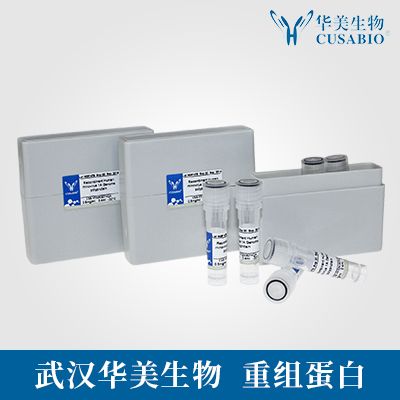
ATP5D/ATP5D蛋白Recombinant Human
ATP synthase subunit delta, mitochondrial (ATP5D)重组蛋白F-ATPase delta subunit蛋白- ¥1500 - 12060
- CUSABIO

- CN
- CSB-YP002355HU
- 2025年07月12日

企业认证
相关产品推荐更多 >
小鼠Sting1重组蛋白mSTING(Endoplasmic reticulum interferon stimulator)(ERIS)(Mediator of IRF3 activation)(Transmembrane protein 173)(Eris)(Mita)(Mpys)(Sting)Mouse Stimulator of interferon genes protein(Sting1)蛋白
¥9720
小鼠Phb重组蛋白B-cell receptor-associated protein 32(BAP 32)Mouse Prohibitin(Phb)蛋白
¥2328
Recombinant-Human-Lipid-phosphate-phosphohydrolase-2PPAP2CLipid phosphate phosphohydrolase 2 EC= 3.1.3.4 Alternative name(s): PAP2-gamma; PAP2-G Phosphatidate phosphohydrolase type 2c Phosphatidic acid phosphatase 2c; PAP-2c Short n
¥11340
Recombinant-Chicken-NADH-ubiquinone-oxidoreductase-chain-3MT-ND3NADH-ubiquinone oxidoreductase chain 3 EC= 1.6.5.3 Alternative name(s): NADH dehydrogenase subunit 3
¥9814Recombinant-Rickettsia-felis-Succinate-dehydrogenase-hydrophobic-membrane-anchor-subunitsdhDSuccinate dehydrogenase hydrophobic membrane anchor subunit
¥9842
万千商家帮你免费找货
0 人在求购买到急需产品
- 详细信息
- 文献和实验
- 技术资料
- 保存条件:
Store at -20°C/-80°C upon receipt, aliquoting is necessary for mutiple use. Avoid repeated freeze-thaw cycles.
- 保质期:
Generally, the shelf life of liquid form is 6 months at -20℃/-80℃. The shelf life of lyophilized form is 12 months at -20℃/-80℃.
- 英文名:
Recombinant Human ATP synthase subunit delta, mitochondrial (ATP5D)
- 库存:
200
- 供应商:
武汉华美生物工程有限公司
- 规格:
1mg/100μg/20μg
| 规格: | 1mg | 产品价格: | ¥12060.0 |
|---|---|---|---|
| 规格: | 100μg | 产品价格: | ¥2820.0 |
| 规格: | 20μg | 产品价格: | ¥1500.0 |
纯度:
Greater than 90% as determined by SDS-PAGE.基因名:
ATP5DUniprot No.:
P30049别名:
F-ATPase delta subunit种属:
Homo sapiens (Human)蛋白长度:
Full Length of Mature Protein来源:
Yeast分子量:
17 kDa表达区域:
23-168aa氨基酸序列:
AEAAAAPAAASGPNQMSFTFASPTQVFFNGANVRQVDVPTLTGAFGILAAHVPTLQVLRPGLVVVHAEDGTTSKYFVSSGSIAVNADSSVQLLAEEAVTLDMLDLGAAKANLEKAQAELVGTADEATRAEIQIRIEANEALVKALE蛋白标签:
N-terminal 6xHis-tagged产品提供形式:
Liquid or Lyophilized powder缓冲液:
If the delivery form is liquid, the default storage buffer is Tris/PBS-based buffer, 5%-50% glycerol. If the delivery form is lyophilized powder, the buffer before lyophilization is Tris/PBS-based buffer, 6% Trehalose, pH 8.0.货期:
25-35 business days注意事项:
Repeated freezing and thawing is not recommended. Store working aliquots at 4℃ for up to one week.功能:
Mitochondrial membrane ATP synthase (F1F0 ATP synthase or Complex V) produces ATP from ADP in the presence of a proton gradient across the membrane which is generated by electron transport complexes of the respiratory chain. F-type ATPases consist of two structural domains, F1 - containing the extramembraneous catalytic core, and F0 - containing the membrane proton channel, linked together by a central stalk and a peripheral stalk. During catalysis, ATP turnover in the catalytic domain of F1 is coupled via a rotary mechanism of the central stalk subunits to proton translocation. Part of the complex F1 domain and of the central stalk which is part of the complex rotary element. Rotation of the central stalk against the surrounding alpha3beta3 subunits leads to hydrolysis of ATP in three separate catalytic sites on the beta subunits内毒素:
Not test.SDS-PAGE:
(Tris-Glycine gel) Discontinuous SDS-PAGE (reduced) with 5% enrichment gel and 15% separation gel.LC-MS Image Description/Western Blot:
/Product types:
Developed ProteinBiological_Activity:
/Research Areas:
MetabolismReconstitution:
We recommend that this vial be briefly centrifuged prior to opening to bring the contents to the bottom. Please reconstitute protein in deionized sterile water to a concentration of 0.1-1.0 mg/mL.We recommend to add 5-50% of glycerol (final concentration) and aliquot for long-term storage at -20℃/-80℃. Our default final concentration of glycerol is 50%. Customers could use it as reference.Reference:
"The status, quality, and expansion of the NIH full-length cDNA project: the Mammalian Gene Collection (MGC)." The MGC Project Team Genome Res. 14:2121-2127(2004)Function:
Mitochondrial membrane ATP synthase (F(1)F(0) ATP synthase or Complex V) produces ATP from ADP in the presence of a proton gradient across the membrane which is generated by electron transport complexes of the respiratory chain. F-type ATPases consist of two structural domains, F(1) - containing the extramembraneous catalytic core, and F(0) - containing the membrane proton channel, linked together by a central stalk and a peripheral stalk. During catalysis, ATP turnover in the catalytic domain of F(1) is coupled via a rotary mechanism of the central stalk subunits to proton translocation. Part of the complex F(1) domain and of the central stalk which is part of the complex rotary element. Rotation of the central stalk against the surrounding alpha(3)beta(3) subunits leads to hydrolysis of ATP in three separate catalytic sites on the beta subunits.风险提示:丁香通仅作为第三方平台,为商家信息发布提供平台空间。用户咨询产品时请注意保护个人信息及财产安全,合理判断,谨慎选购商品,商家和用户对交易行为负责。对于医疗器械类产品,请先查证核实企业经营资质和医疗器械产品注册证情况。
 文献和实验
文献和实验Analysis of Human Mitochondrial DNA Mutations
their own genetic material—mitochondrial DNA (mtDNA)-mitochondria are unique mammalian organelles. Normal human mtDNA is a 16,569 base-pair (bp), double-stranded, circular molecule ( 1 ). The molecules contain tightly compacted genes for 22 transfer (
Identification of Mutations in mtDNA from Patients Suffering Mitochondrial Diseases
The human mitochondrial genome. The structural genes for the mtDNA-encoded 12S and 16S ribosomal RNAs, the subunits of NADH-coenzyme Q oxidoreductase (ND), cytochrome-c oxidase (COX), cytochrome-b (Cyt b), and ATP synthase (A), and 22 tRNAs, are shown
(ubiquinol cytochrome c oxido reductase or bc1 complex), IV (cytochrome c oxidase), and V (ATP synthase). These respiratory complexes are conserved from the yeast Saccharomyces cerevisiae to human with the exception of complex I, which is replaced
 技术资料
技术资料暂无技术资料 索取技术资料

