

- 询价
- kilby
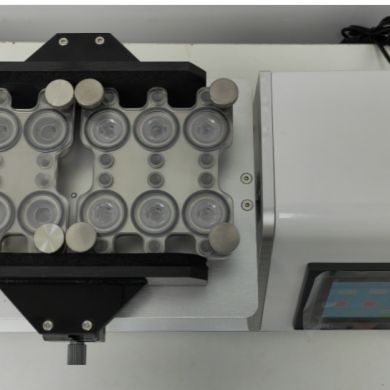
- 类器官摇摆灌注仪
- 2026年04月29日

企业认证
相关产品推荐更多 >


万千商家帮你免费找货
0 人在求购买到急需产品
- 详细信息
- 文献和实验
- 技术资料
3D细胞培养技术以其独特的优势已广泛应用于药物筛选、疾病研究、组织工程等多个领域,展现了其巨大潜力和价值。
(一)功能应用
搭配自重力器官芯片,为其提供培养条件;对器官芯片内的液体,可以设置摇摆模式、时间、间隔、摇摆角度。通过实现持续灌流和恒定剪切力,可以研究类器官或疾病细胞与正常细胞之间的差异,探索疾病的发病机制,为新的治疗方法提供依据。
(二)产品特点及优势
(1) 自由设置摇摆角度和摇摆速度; (2) 提供连续摇摆功能和间隔摇摆; (3) 角度控制范围0.5°~ 30°; (4) 支持多个器官芯片同时灌注培养; (5) 可放置在95%以上湿度的培养箱内长期(连续)使用。
3D细胞培养系统能够更好地模拟生物体内细胞存活的自然环境,保持细胞间相互作用和更逼真的生化和生理反应。即使在简单的球体模型中,也能形成氧气、营养物质、代谢物和可溶信号的梯度,形成多样化的细胞群体。由于3D细胞培养更接近真实生理状态,因此研究结果更贴近实际情况,提高了实验的可靠性和准确性。它能够更好地模拟细胞之间的相互作用、细胞的形态和功能,以及药物对细胞的影响。
3D细胞培养系统可以更好地模拟人体对药物的反应,从而提高药物筛选的效率。通过3D培养,可以更准确地评估药物的毒性、药效和代谢过程,为新药研发提供更有价值的参考依据
风险提示:丁香通仅作为第三方平台,为商家信息发布提供平台空间。用户咨询产品时请注意保护个人信息及财产安全,合理判断,谨慎选购商品,商家和用户对交易行为负责。对于医疗器械类产品,请先查证核实企业经营资质和医疗器械产品注册证情况。
 文献和实验
文献和实验approaches have been applied to ensure proper medium supply, namely orbital shaking,11 spinning flasks6 and mini-bioreactors.10 However, applying fluidic systems (micro- or millifluidic) have not been considered, so far. In case of the hMOs, we hypothesize that keeping organoids under continuous orbital shaking as per published protocols5 might not be sufficient to ensure a proper supply of nutrients and oxygen. Therefore, to improve the quality of hMOs we investigated the effects of applying a continuous medium flow during culture. In this study we used the “Quasi Vivo” (QV, Kirkstall, UK) millifluidic system rather than a microfluidic device14 for a number of reasons. First, following the concept of allometry, the size of an organoid should range between approximately 0.5 to 2 mm in order to exhibit physiologically scaled metabolism (oxygen consumption).15,16 In addition, millifluidic systems such as the QV allow the application of relatively high flow rates ensuring proper nutrient and oxygen supply without exposing the organoid to a high shear force due to the flow itself. This is due to a well-like design in which the medium inlet and outlet are located in the chamber lid whereas the organoid is placed a variable distance from the medium inlet.17,18 Finally, given their high volume to surface ratio, millifluidic systems do not require frequent media changes, thus organoid manipulation is reduced to a minimum during culture. Besides various applications in 2D cultures, the QV millifluidic system has been successfully used to culture liver organoids13,19 and 3D cardiac constructs20 derived from human (adult) stem cells. In this study, we established a stable midbrain organoid culture under millifluidic conditions and compared it to the state-of-the-art procedure of continuous orbital shaking using both a computational fluid dynamics (CFD) and an experimental approach. The CFD analysis was performed to determine if differences in calculated oxygen profiles in the two experimental set-ups could be used to expla
 技术资料
技术资料暂无技术资料 索取技术资料

