

- ¥1280 - 1980
- YLKBIO
- YLK-KT2140D
- 国产/进口
- 2026年01月13日
- WB=1:100-500 ELISA=1:500-1000 IP=1:20-100 IHC-P=1:100-500 IHC-F=1:100-500 IF=1:100-500
- 兔
- /

企业认证
相关产品推荐更多 >




万千商家帮你免费找货
0 人在求购买到急需产品
- 详细信息
- 文献和实验
- 技术资料
- 供应商:
优利科(上海)生命科学有限公司
- 库存:
100
- 靶点:
详询
- 级别:
科研
- 目录编号:
/
- 克隆性:
多克隆
- 抗原来源:
详见说明书
- 保质期:
1年
- 抗体英文名:
Anti-ID4
- 抗体名:
ID4抗体
- 标记物:
详询
- 宿主:
兔
- 适应物种:
/
- 免疫原:
KLH conjugated synthetic peptide derived from human ID4
- 亚型:
IgG
- 形态:
Lyophilized or Liquid
- 应用范围:
WB=1:100-500 ELISA=1:500-1000 IP=1:20-100 IHC-P=1:100-500 IHC-F=1:100-500 IF=1:100-500
- 保存条件:
-20℃
- 浓度:
1mg/ml
- 规格:
详询

| 英文名称 Anti-ID4 |
| 中文名称 DNA结合抑制因子4抗体 |
| 别 名 bHLHb27; Class B basic helix-loop-helix protein 27; DNA binding protein inhibitor ID 4; DNA binding protein inhibitor ID4; DNA-binding protein inhibitor ID-4; ID 4; Id4; ID4_HUMAN; IDB4; Inhibitor of DNA binding 4; Inhibitor of DNA binding 4 dominant negative helix loop helix protein. |
| 浓 度 1mg/1ml |
| 规 格 0.1ml/100μg 0.2ml/200μg |
| 抗体来源 Rabbit |
| 克隆类型 polyclonal |
| 交叉反应 Human, Mouse, Rat, Dog, Pig |
| 产品类型 一抗 |
研究领域 细胞生物 信号转导 干细胞 表观遗传学 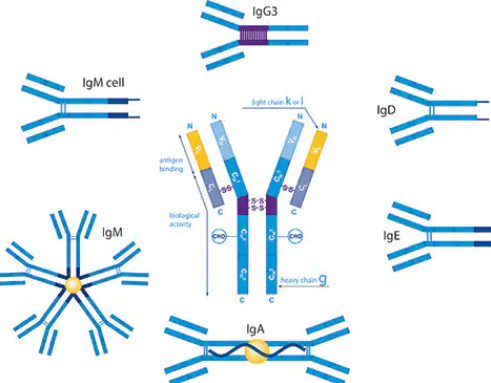 |
| 蛋白分子量 predicted molecular weight: 18kDa |
| 性 状 Lyophilized or Liquid |
| 免 疫 原 KLH conjugated synthetic peptide derived from human ID4 |
| 亚 型 IgG |
| 纯化方法 affinity purified by Protein A |
| 储 存 液 Preservative: 15mM Sodium Azide, Constituents: 1% BSA, 0.01M PBS, pH 7.4 |
| 产品应用 WB=1:100-500 ELISA=1:500-1000 IP=1:20-100 IHC-P=1:100-500 IHC-F=1:100-500 IF=1:100-500 |
| (石蜡切片需做抗原修复) |
| not yet tested in other applications. |
| optimal dilutions/concentrations should be determined by the end user. |
保存条件 Store at -20 °C for one year. Avoid repeated freeze/thaw cycles. The lyophilized antibody is stable at room temperature for at least one month and for greater than a year when kept at -20°C. When reconstituted in sterile pH 7.4 0.01M PBS or diluent of antibody the antibody is stable for at least two weeks at 2-4 °C. 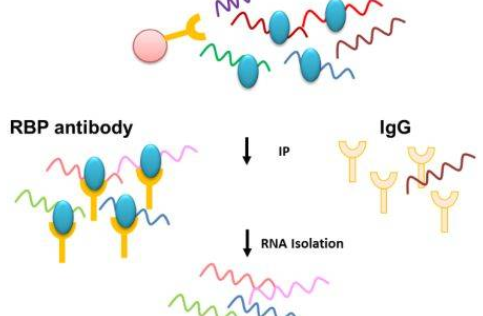 |
| Important Note This product as supplied is intended for research use only, not for use in human, therapeutic or diagnostic applications. |
| 产品介绍 Members of the Id family of basic helix-loop-helix (bHLH) proteins include Id1 (1–3), Id2 (4), Id3 and Id4 (5). They are ubiquitously expressed and dimerize with members of the class A and B HLH proteins (1–5). Due to the absence of the basic region, the resulting heterodimers cannot bind DNA. The Id-type proteins thus appear to negatively regulate DNA binding of bHLH proteins. Since Id1 inhibits DNA binding of E12 and Myo D, it apparently functions to inhibit muscle-specific gene expression. Under conditions that facilitate muscle cell differentiation, the Id protein levels fall, allowing E12 and/or E47 to form heterodimers with Myo D and myogenin, which in turn activate myogenic differentiation. It has been shown that expression of each of the Id proteins is strongly dependent on growth factor activation and that reduction of Id mRNA levels by antisense oligonucleotides leads to a delayed reentry of arrested cells into the cell cycle following growth factor stimulation. |
| Function : ID (inhibitor of DNA binding) HLH proteins lack a basic DNA-binding domain but are able to form heterodimers with other HLH proteins, thereby inhibiting DNA binding. |
| Subcellular Location : Nucleus. |
Similarity : Contains 1 basic helix-loop-helix (bHLH) domain. |
| Anti-Nm23-H1 (nucleoside dIPhosphatase kinase A) 肿瘤抑制基因抗体 |
| Anti-Nm23-H2 (nucleoside dIPhosphatase kinase B) 肿瘤抑制基因抗体 |
| Anti-Nociceptin 孤菲肽/痛敏肽抗体 |
| Anti-Nociceptin receptor 孤菲肽受体/痛敏肽受体抗体 |
| Anti-Nogo R/NGR 轴索过度生长抑制因子受体/Nogo受体抗体 |
| Anti-Nogo-A 轴索过度生长抑制因子-A抗体 |
| Anti-Nogo-B 轴索过度生长抑制因子-B抗体 |
| Anti-NOS-1/bNOS/neuronal NOS/nNOS(Nitric Oxide synthase-1) 一氧-化氮合成酶-1抗体(神经型) |
| Anti-NOS-2/iNOS (Nitric Oxide Synthase,Inducible) 一氧-化氮合成酶-2抗体(诱导型) |
| Anti-NOS-3/eNOS (endotheli cell NOS) 一氧-化氮合成酶-3抗体(内皮型) |
| Anti-Nox-4/NADH(NADPH oxidase 4) NADPH氧化酶4抗体 |
| Anti-NPPC (pro-natriuretic peptide) 促尿钠排泄肽前体C抗体 |
| Anti-NPY Neuropeptide Y) 神经肽 Y抗体 |
| Anti-NPY1R (neuropeptide Y1 receptor) 神经肽Y1受体抗体 |
| Anti-NR1/NMDAR1(N-Methyl-d-Asprtate receptor 1) 谷氨酸受体1抗体 |
风险提示:丁香通仅作为第三方平台,为商家信息发布提供平台空间。用户咨询产品时请注意保护个人信息及财产安全,合理判断,谨慎选购商品,商家和用户对交易行为负责。对于医疗器械类产品,请先查证核实企业经营资质和医疗器械产品注册证情况。
 文献和实验
文献和实验体外抗原抗体反应又称血清学反应(serologic reaction),因抗体主要存在于血清中,试验时一般都采用血清标本,故名。但抗原抗体反应亦常用于细胞免疫测定,如对淋巴细胞表面分化抗原的鉴定。因此,血清学一词已被广义的抗原抗体反应所取代。 抗原与抗体在体外结合时,可因抗原的物理性状不同或参与反应的成分不同而出现各种反应,例如凝集、沉淀、补体结合及中和反应等。在此基础上进行改进,又衍生出许多快速而灵敏的抗原抗体反应,例如从凝集
抗原与抗体-微珠基质的结合 虽然使抗原有效地结合到免疫亲和柱上的方法很多,因为抗体是通过共价键交联在微珠上,而不是游离于溶液中,所以交联在微珠上的抗体与抗原结合所需的时间比抗体和抗原二者以游离状态在溶液中所需的时间要长得多,因此,选用的方法应使抗原与交联的抗体达到最大程度的结合。推荐使用两种结合方法:将抗原溶液加入呈糊状的抗体-微珠内,不断混和均匀;或将抗原溶液流经抗体-微珠层析柱,保持抗原与抗体尽可能长时间的接触。一般情况下,应首先选择在抗体-微珠层析
尽管研究基因组的技术已经相当先进,科学家们还在致力不断的创新和改造技术使之更为强大。现代分子生物学两个划时代的技术——DNA芯片和RNAi (RNA-mediated interference) ,正在掀开生物医药的新篇章。 RNAi,通过双链RNA引发目标靶基因沉默的一项强大的新技术,专一性强,可大规模操作,重复性高,应用前景极为广阔。 另一方面,DNA芯片技术可以提供特定条件下一个细胞中所有基因表达情况的全景图,同样具有无可比拟的优势。那么这两种技术结合起来会怎么样?在信号


