

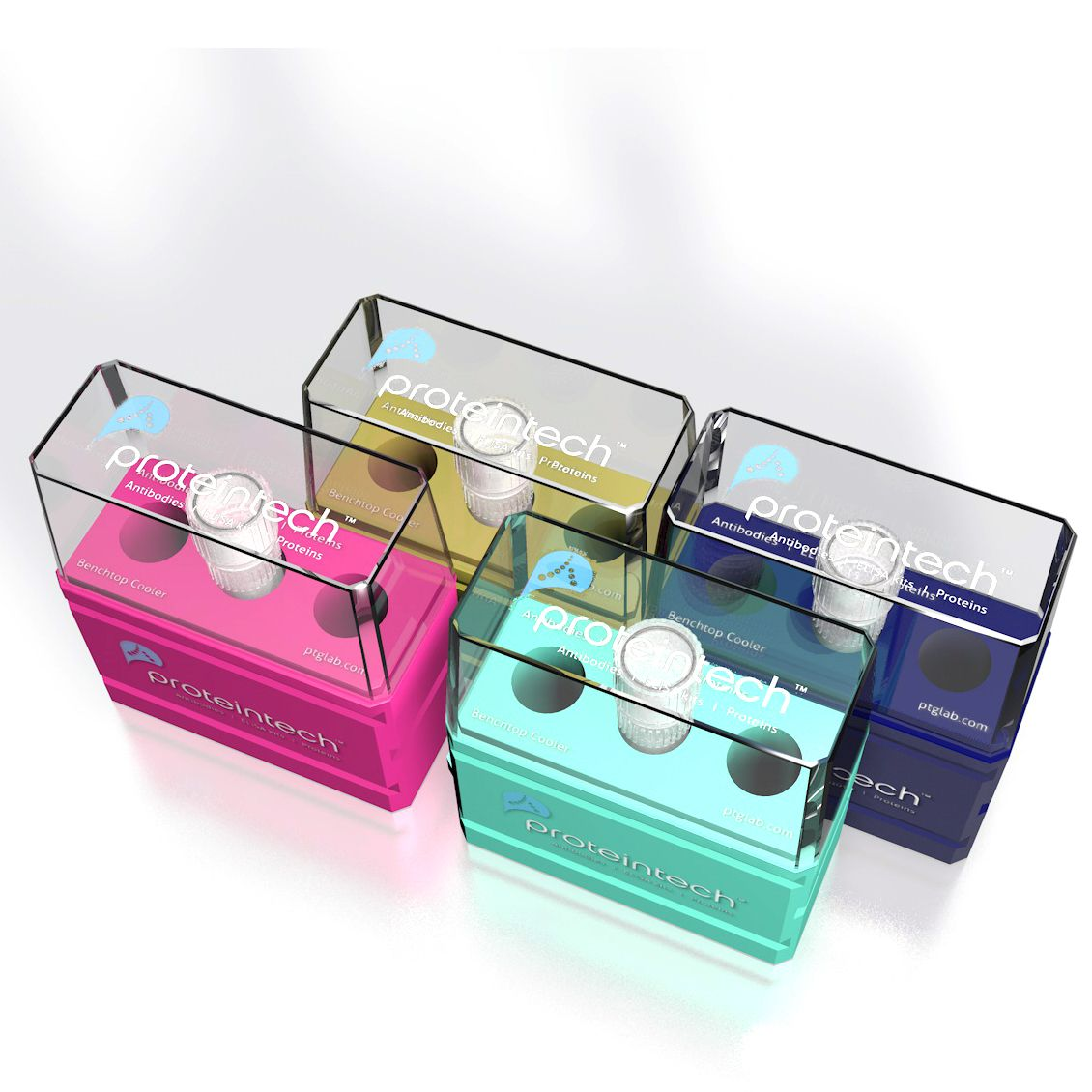
- ¥2800
- Proteintech

- CL594-60143
- 2025年10月13日
- IF-P
- Mouse
- human

企业认证
相关产品推荐更多 >
万千商家帮你免费找货
0 人在求购买到急需产品
- 详细信息
- 文献和实验
- 技术资料
- 免疫原:
None
- 亚型:
IgG2a
- 保存条件:
Store at -20°C. Avoid exposure to light. Stable for one year after shipment.
- 克隆性:
Monoclonal
- 标记物:
CoraLite®594 Fluorescent Dye
- 适应物种:
human
- 保质期:
详见产品包装
- 库存:
充足
- 宿主:
Mouse
- 应用范围:
IF-P
- 靶点:
CD206
- 抗体英文名:
CoraLite®594-conjugated CD206 Monoclonal antibody
- 抗体名:
CoraLite®594-conjugated CD206 Monoclonal antibody
- 规格:
100ul
经过测试的应用
| Positive IF-P detected in | human lung cancer tissue |
推荐稀释比
| 应用 | 推荐稀释比 |
|---|---|
| Immunofluorescence (IF)-P | IF-P : 1:50-1:500 |
| It is recommended that this reagent should be titrated in each testing system to obtain optimal results. | |
| Sample-dependent, Check data in validation data gallery. | |
产品信息
CL594-60143 targets CD206 in IF-P applications and shows reactivity with human samples.
| 经测试应用 | IF-P |
| 文献引用应用 | IF |
| 经测试反应性 | human |
| 免疫原 |
fusion protein |
| 宿主/亚型 | Mouse / IgG2a |
| 抗体类别 | Monoclonal |
| 产品类型 | Antibody |
| 全称 | mannose receptor, C type 1 |
| 别名 | hMR, C-type lectin domain family 13 member D-like, C-type lectin domain family 13 member D, CLEC13DL, CLEC13D |
| 计算分子量 | 166 kDa |
| GenBank蛋白编号 | NM_002438 |
| 基因名称 | CD206 |
| Gene ID (NCBI) | 4360 |
| RRID | AB_2883426 |
| 偶联类型 | CoraLite®594 Fluorescent Dye |
| 最大激发/发射波长 | 588 nm / 604 nm |
| 形式 | Liquid |
| 纯化方式 | Protein A purification |
| UNIPROT ID | P22897 |
| 储存缓冲液 | PBS with 50% glycerol, 0.05% Proclin300, 0.5% BSA, pH 7.3. |
| 储存条件 | Store at -20°C. Avoid exposure to light. Stable for one year after shipment. Aliquoting is unnecessary for -20oC storage. |
背景介绍
Background
CD206 (macrophage mannose receptor 1) is a lectin-type endocytic receptor expressed on selected macrophages, dendritic cells, and non-vascular endothelium and plays a role in antigen processing and presentation, phagocytosis, and intracellular signaling.
1. What is the molecular weight of CD206?
The molecular size of full-length CD206 is 170-180 kDa, depending on the exact tissue-specific glycosylation pattern (PMID: 19427834). Additionally, CD206 can be cleaved off and a soluble form (sMR) lacking the tail, with a slightly lower molecular weight, can be released to the cell medium (PMID: 9722572).
2. What is the subcellular localization of CD206?
CD206 is a type I membrane protein composed of a large extracellular multidomain, a transmembrane domain, and a short cytoplasmic tail. It is present at the plasma membrane and in endosomes, as CD206 undergoes constant recycling between the plasma membrane and endosomal compartment.
3. Is CD206 post-translationally modified?
CD206 undergoes quite extensive post-translational modifications, predominantly N-linked glycosylation that affects ligand binding recognition and affinity (PMID: 22966131).
4. Can CD206 marker be used as a marker of M2 macrophages?
The activation of macrophages with various stimuli leads to their polarization into classical (M1) or alternatively activated (M2) subtypes spectrums and both subtypes differ in their regulatory and effector functions (PMID: 24669294). Pathogens and IFN-γ promote M1 polarization, while IL-4 released during parasite infections and allergen response promotes M2 polarization. Classically, the markers of M2 macrophages include CD206, as well as arginase-1 (ARG1; https://www.ptglab.com/products/ARG1-Antibody-16001-1-AP.htm), CD163 (https://www.ptglab.com/products/CD163-Antibody-16646-1-AP.htm), and thrombospondin 1 (TSP1/ THBS1; https://www.ptglab.com/products/TSP1-Antibody-18304-1-AP.htm).
5. How can you polarize macrophages into M2 direction?
One of the most commonly used methods is stimulation by the addition of IL-4 cytokine. We recommend using our animal-free human IL-4 (https://www.ptglab.com/products/recombinant-human-il-4.htm).
风险提示:丁香通仅作为第三方平台,为商家信息发布提供平台空间。用户咨询产品时请注意保护个人信息及财产安全,合理判断,谨慎选购商品,商家和用户对交易行为负责。对于医疗器械类产品,请先查证核实企业经营资质和医疗器械产品注册证情况。
 文献和实验
文献和实验| Species | Application | Title |
|---|---|---|
| IF | PeerJ Cirsilineol improves anesthesia/surgery-induced postoperative cognitive dysfunction through attenuating oxidative stress and modulating microglia M1/M2 polarizationAuthors - Junli Du |
以单克隆抗体为基础的免疫治疗 第1代单抗诞生于1975年,来源于小鼠的B细胞杂交瘤,称为鼠源单抗。但人的免疫系统会识针对此类识别单抗产生人抗鼠抗体,将其清除出体外而限制了它的应用。随后研制了人源化单抗,并于1988年进行了第1次商业性的临床试验。人源化单抗与鼠源单抗相比,具有以下的优点:特异性较强;不易发生过敏反应及免疫复合性疾病;在人体内维持的时间较长;可制备用于人的抗独特型抗体。制备人源化单抗可以采用人―鼠杂交瘤技术、人―人杂交瘤技术、EB病毒转化技术、EB病毒转化
CD85g/CD85h/CD85i/CD85j/CD85k/CD85l/CD85m分子
CD85g/CD85h/CD85i/CD85j/CD85k/CD85l/CD85m 分子 CD85g 常用单克隆抗体或代号:ILT7 CD85h 常用单克隆抗体或代号:ILT1/LIR7 CD85i 常用单克隆抗体或代号:LIR6 CD85j 常用单克隆抗体或代号:ILT2/LIRl,MIR7 主要表达细胞:NK.M,K,,B,T, 分子质量(kDa)和结构
CD66a/CD66b/CD66c/CD66d/CD66e/CD66f/CD67分子
CD66a/CD66b/CD66c/CD66d/CD66e/CD66f/CD67 分子 CD66a 常用单克隆抗体或代号: BGP- 1 主要表达细胞: G,En [M] 分子质量(kDa)和结构: gp180- 200(胆汁糖蛋白- 1)(IgSF) 功 能: 嗜同性结合,也可识别CD62E CD66b 常用单克隆抗体或代号: MF25.1;(P100,原CD67,CGM6) 主要表达
 技术资料
技术资料暂无技术资料 索取技术资料

