

- ¥3360
- Calbiotech
- 1-25 ng/ml
- 美国
- IME00044
- 2026年09月27日

企业认证
相关产品推荐更多 >




万千商家帮你免费找货
0 人在求购买到急需产品
相关阅读
AJE 润色服务限时 8 折起,权威机构信任 15+ 年Cytoscape 教程来了!快速实现顶刊同款通路网络图五大应用案例:Mustang Q 膜层析应用全解析1 个小工具,一次性搞定流程图、质粒图谱和信号通路图- 详细信息
- 文献和实验
- 技术资料
- 库存:
10
- 供应商:
广东固康生物科技有限公司
- 检测范围:
1-25 ng/ml
- 检测方法:
酶联免疫法
- 应用:
——
- 适应物种:
人
- 标记物:
——
- 样本:
血清
- 规格:
96人份(复孔检测样本:40个)/盒
【产品名称】
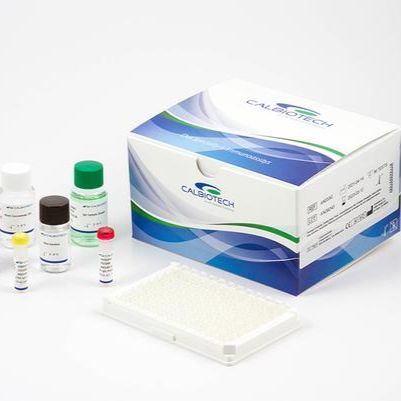
通用名称:游离前列腺特异抗原检测试剂盒(酶联免疫法)
英文名称:Free PSA ELISA
【预期用途】
游离前列腺特异抗原检测试剂盒用于定量测定人血清中游离前列腺特异抗原的含量。仅供科研使用,不用于体外诊断。
【背景知识】
人前列腺特异性抗原(PSA)是一种33kD的丝氨酸蛋白酶,在人血清中与α1-抗胸腺三肽(PSA-ACT)和α2-巨球蛋白(PSAAMG)呈还原性结合。还可以发现与PSA结合的微量α1-抗胰蛋白酶和α间胰蛋白酶抑制剂。任何剩余的PSA均为游离形式(f-PSA)。
目前筛查男性前列腺癌的方法利用检测主要PSA-ACT形式。4.0 ng/ml或更高水平是前列腺癌可能性的有力指标。4然而,血清PSA水平升高也可归因于良性前列腺增生和前列腺炎,导致大量假阳性筛查结果。该问题的潜在解决方案包括测定游离PSA水平。初步研究表明,前列腺癌患者的游离PSA百分比低于良性前列腺增生患者。游离血清PSA与总PSA的联合测量可提高选定的总血清PSA水平升高的男性前列腺癌筛查的特异性,从而减少不必要的前列腺活检,对癌症检出率的影响最小。
【包装规格】
规格:96人份(复孔检测样本:40个)/盒
测试次数:96(40份样本一式两份)
样本量:50µl
灵敏度:1 ng/ml
保存温度:2-8℃

参考文献:
1. Christensson A, Bjork T, Nilsson O, et al. Serum Prostate Specific Antigen Complexed to α1-Antichymotrypsin As An Indicator of Prostate Cancer. J. of Urol. 150:100-105; 1993.
2. Lilja H, Christensson A, Dahlen U, et al. Prostate-specific antigen in serum occurs predominantly in complex with α-1-antichymotrypsin. Clin Chem 37:1618-1625, 1991.
3. Stenman U-H, Leinonen J, Alfthan H, Rannikko S, Tuhkanen K, Alfthan O. A complex between prostate-specific antigen and α-1-antichymotrypsin is the major form of prostate-specific antigen in serum of patients with prostate cancer: assay of the complex improves clinical sensitivity for cancer. Cancer Res. 51:222-226, 1991.
4. Catalona WJ, Smith DS, Ratliff TL, Basler JW. Detection of organ-confined prostate cancer is increased through prostate-specific antigen-based screening. JAMA. 270:948-954, 1993. 5. Stamey TA, Yang N Hay AR, McNeal JE, Freiha, FS, Redwine E. Prostate-specific antigen as a serum marker for adenocarcinoma of the prostate. N Engl J Med. 317-: 909-916, 1987.
6. Junker R, Brandt B, Zechel C, and Assmann, G. Comparison of Prostate-specific antigen (PSA) measured by four combinations of free-PSA and total PSA assays. Clinical Chemistry 43:1588-1594, 1997.
7. Luderer AA, Chen Y-T, Soriano TF, et al. Measurements of the proportion of free to total prostate-Specific antigen improves diagnostic performance of prostate-specific antigen in the diagnostic gray zone of total prostate-specific antigen. Urology 46:187-194, 1995.
8. Carter HB, Pearson JD, Metter J, et al. Longitudinal evaluation of prostate-specific antigen levels in men with and without prostate disease. JAMA. 267:2215-2220, 1992.
9. Smith DS, Catalona WJ. Rate of change in serum prostate-specific antigen levels as a method for prostate cancer detection. J Urol. 152:1163-1167, 1994
10. Benson MC, Whang IS, Pantuck A, et al. Prostate specific antigen density: a means of distinguishing benign prostatic hypertrophy and prostate cancer. J Urol. 147:815-816, 1992.
11. Catalona WJ, Hudson MA, and Scardino PT, et al. Selection of optimal prostate specific antigen cut-offs for early detection of prostate cancer: receiver operating characteristic curves. J Urol. 152:2037-2042, 1994.
12. Smith DS, Catalona WJ. The nature of prostate cancer detected through prostate specific antigen based screening. J Urol. 152:1732-1736, 1994.
13. Catalona, et al. Evaluation of Percentage of Free Serum Prostate-Specific Antigen to Improve Specificity of Prostate Cancer Screening. JAMA 274:1214, 1995.
14. Vashi AR, Wojno KJ, Henricks W, et al: Determination of the “reflex range” and appropriate cutpoints for percent free-PSA in 413 men referred for prostatic evaluation using the AxSYM system. Urology 49:19-27, 1997.
15. Bangma, CH, Kranse R, Blijenberg B, et al: The value of screening tests in the detection of prostate cancer. Part I: Results of a retrospective evaluation of 1726 men. Urol. 46:773-778, 1995.
16. Yemoto CM, Nolley R, Prestigiacomo AF, et al: Free (f) and total (t) PSA density in patients with prostate cancer (CaP) and benign prostatic hyperplasia (BPH). J Urol 155:347A, 1996. 17. Bangma, CH, Kranse R, Blijenberg B, et al: The value of screening tests in the detection of prostate cancer. Part II: Retrospective analysis of free-total prostate-specific analysis ration, age-specific reference ranges, and PSA density. Urol 46:779-785, 1995.
风险提示:丁香通仅作为第三方平台,为商家信息发布提供平台空间。用户咨询产品时请注意保护个人信息及财产安全,合理判断,谨慎选购商品,商家和用户对交易行为负责。对于医疗器械类产品,请先查证核实企业经营资质和医疗器械产品注册证情况。
 文献和实验
文献和实验大鼠尿微量白蛋白 (ALB) 酶联免疫吸附测定试剂盒 使用说明书 本试剂盒仅供体外研究使用 ! 预期应用 ELISA 法定量测定大鼠尿液或其它相关生物液体中 ALB 含量。 实验原理 用纯化的抗体包被微孔板,制成固相载体,往包被抗 ALB 抗体的微孔中依次加入标本或标准品、生物素化的抗 ALB 抗体、 HRP 标记的 亲和素 ,经过彻底洗涤后用底物 TMB 显色
针对同一指标,生化试剂盒和 ELISA 试剂盒的检测结果趋势是一致的吗?
一、两种方法检测原理 两种方法的基本原理都是朗伯-比尔定律,但是具体形成过程和检测的方法不一样的。 1) 生化试剂盒检测原理 生化试剂盒检测的本质就是某物质化学变化的显色反应,其反应过程可以划分为四个区:延迟区、等速区、过渡区和平衡区,以时间为横坐标、吸光度为纵坐标作图,如下所示: 延迟区:无规律可寻。 等速区:对应的是速率法,一般应用于酶活力的检测。 过渡区:对应的是固定时间法,目的是解决某些化学反应的非特异性问题,提高准确度。 平衡区:对应的是终点法,主要是测定某物质在样本中的含量。 目前
抗血清作为妊娠诊断试剂检定尿液中 hCG,只能用于 hCG 浓度较高的试验,否则妇女生理性排泄入尿液中的微量 LH 将与之发生交叉反应。因此在作为早孕诊断(敏感度应达到 50 mIu/ml hCG)的实验中必须应用只对 hCG 特异的抗 β-hCG,以避免与其它激素的交叉反应的发生。 4. 敏感性 在测定血清中某一物质的含量时,化学比色法的敏感度为 mg/ml 水平,酶反应测定法的敏感度约为 5~10 μg/ml,免疫测定中凝胶扩散法和浊度法的敏感度与酶反应法相仿。标记的免疫测定的敏感
 技术资料
技术资料需要更多技术资料 索取更多技术资料

