- ¥20
- 伊塔生物
- 中国/进口
- YT1160
- 2025年10月06日

企业认证
相关产品推荐更多 >

万千商家帮你免费找货
0 人在求购买到急需产品
- 详细信息
- 文献和实验
- 技术资料
- 保存条件:
ITTABIO
- 保质期:
3年
- 英文名:
Indole-3-butyricacid
- 库存:
55
- 供应商:
北京伊塔生物科技有限公司
- CAS号:
133-32-4
- 规格:
1g
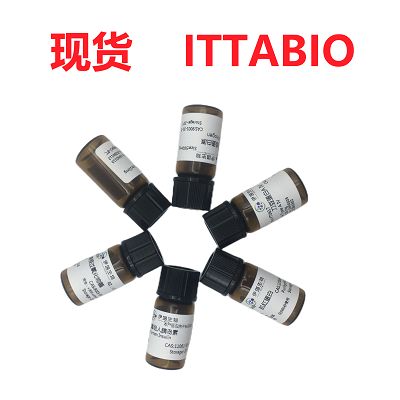
IBA 133-32-4 IBA 133-32-4 名称:IBA 133-32-4 IBA 133-32-4 货号:YT1160 英文名称:Indole-3-butyricacid 品牌:伊塔生物 CAS:133-32-4 规格:1g,
|
别名
|
氮茚基丁酸;4-(3-吲哚基)丁酸;4-(3-Indolyl)butanoic acid;4-(3-Indolyl)butyric acid IBA
|
|
英文名称
|
Indole-3-butyric acid
|
|
CAS
|
133-32-4
|
|
分子式
|
C12H13NO2
|
|
分子量
|
203.24
|
|
储存条件
|
2-8℃,避光
|
|
规格
|
1g ; 5g
|
|
外观(性状)
|
白色至浅褐色粉末
|
|
级别
|
plant cell culture tested
|
|
纯度
|
Purity≥98%
|
|
溶解性
|
50mg/ml EtOH
|
|
单位
|
瓶
|
|
有效期
|
3年
|
用途:
吲哚丁酸为一种植物生长调节剂,植物生长调节剂是人工合成的具有生理活性,类似植物激素并能调节植物的生理过程、控制植物的生长和繁殖的有机化合物,吲哚丁酸(IBA)与萘乙酸(NAA)是两种常用的插枝生根的植物生长调节剂,其中以吲哚丁酸效果最好,因它在植物体内运转较少,容易保留在使用部位附近。此外,如将一种促根生长调节剂与另一有利于生长调节剂发挥作用的物质混合使用,则可表现出增效或加合作用,可能使难以生根的植物得到较满意的效果。吲哚丁酸促进生根作用强,但产生的不定根细而长,而萘乙酸(NAA)的促根作用是根少而粗,因此,将两者混合使用,往往可获得更好的效果。
吲哚丁酸(IBA)是一种广谱的吲哚类植物生长调节剂,是良好的生根剂,可促进草本和木本观赏植物插枝的生根。还可用于瓜果的座果,提高座果率。
风险提示:丁香通仅作为第三方平台,为商家信息发布提供平台空间。用户咨询产品时请注意保护个人信息及财产安全,合理判断,谨慎选购商品,商家和用户对交易行为负责。对于医疗器械类产品,请先查证核实企业经营资质和医疗器械产品注册证情况。
 文献和实验
文献和实验«Inhibitory effects of aan aqueous extract from Cortex Phellodendri on the growth and replication of broad-spectrum of viruses in vitro and in vivo»作者Jae-Hoon Kim 影响因子PMID: 27484768PMCID: PMC4970287DOI: 10.1186/s12906-016-1206-x Faecalicatena absiaana sp. nov., an obligately anaerobic bacterium from a pig farm faeces dump.作者Shin Y, Paek J, Kim H, Kook JK, Chang YH.Int J Syst Evol Microbiol. 2022 Feb;72(2). 影响因子doi: 10.1099/ijsem.0.005238.PMID: 35159617
Prospective Identification of Cancer Stem Cells with the Surface Antigen CD133
Cancer cells do not share equal tumor-initiating potential. Only cancer stem cells (CSCs) can initiate cancer, which is important clinically because they should be eradicated to treat cancer patients. The purpose of experimental methods
Induced Pluripotent Stem Cells (iPSC) from Cord Blood CD133+ Cells Using Oct4 and Sox2
fibroblasts and keratinocytes, neural stem cells, hepatocytes, and blood cells, it is still under debate on what is the best source for generating iPSCs. In this chapter, we discuss how to generate human iPSCs from cord blood (CB) CD133+ cells using
combining with marker CD133 was used to detect the purity of FLSPCs and evaluate the isolating effects of the three-step method.
 技术资料
技术资料需要更多技术资料 索取更多技术资料