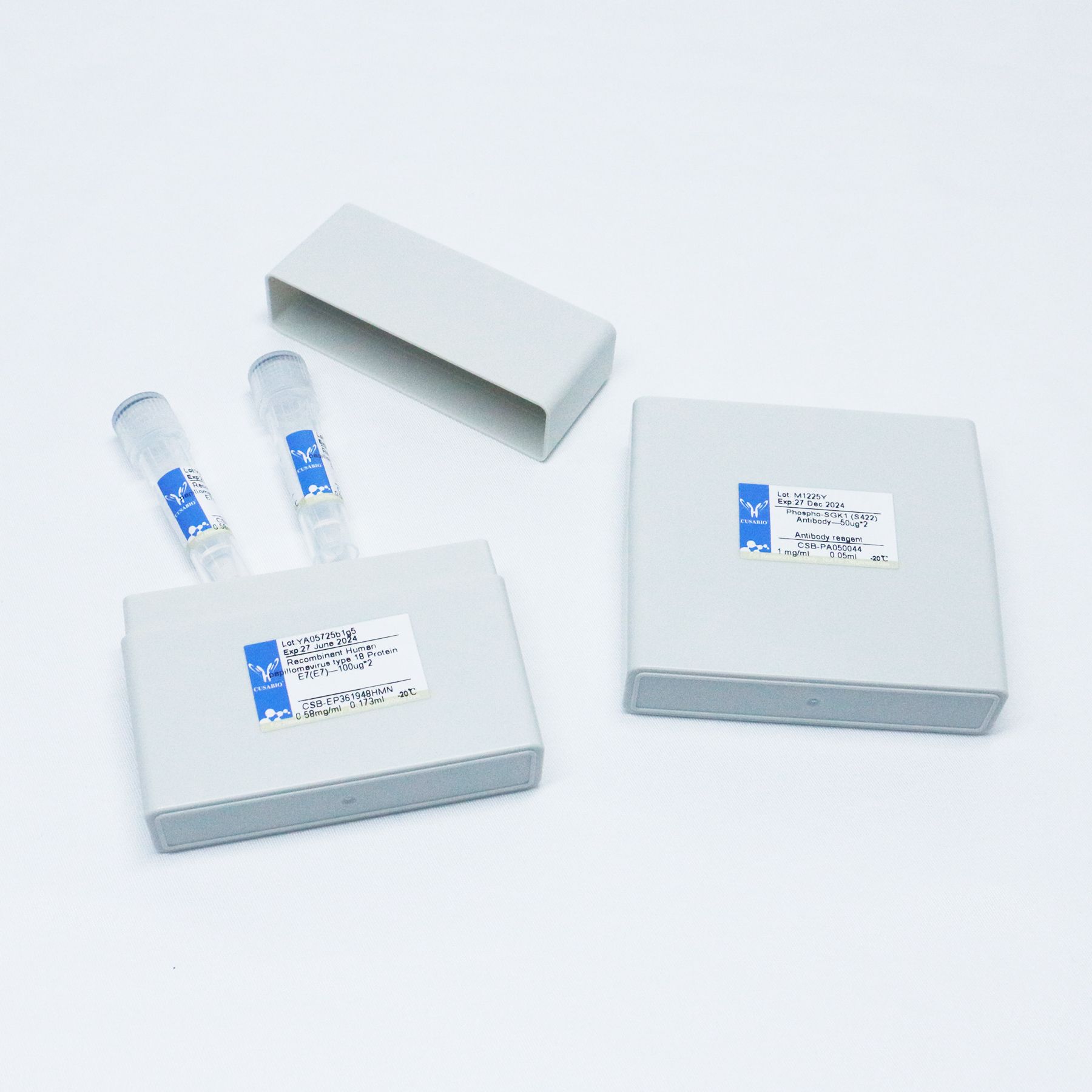
小鼠Hspa1b重组蛋白Heat shock 70KDA p
rotein 1 Short name: HSP70.1Mouse Heat shock 70KDA protein 1B(Hspa1b)蛋白- ¥1836
- CUSABIO

- CN
- CSB-EP010822MO
- 2026年01月20日

企业认证
相关产品推荐更多 >

人POLM重组蛋白Terminal transferaseHuman DNA-directed DNA/RNA polymerase mu(POLM)蛋白
¥3168
Recombinant-Burkholderia-glumae-Lipase-chaperonelifOLipase chaperone Alternative name(s): Lipase activator protein Lipase foldase Lipase helper protein Lipase modulator
¥11914
/CECD重组蛋白CECDCecropin-DBombyx mori Cecropin-D(CECD)蛋白
¥5268
Recombinant-Staphylococcus-epidermidis-Monofunctional-glycosyltransferasemgtMonofunctional glycosyltransferase; MGT EC= 2.4.-.- Alternative name(s): Peptidoglycan TGase
¥11172
Recombinant-Bacillus-subtilis-Uncharacterized-protein-ynfCynfCUncharacterized protein ynfC
¥9996
万千商家帮你免费找货
0 人在求购买到急需产品
- 详细信息
- 文献和实验
- 技术资料
- 保存条件:
We recommend to add 5-50% of glycerol (final concentration) and aliquot for long-term storage at -20℃/-80℃.
- 保质期:
Generally, the shelf life of liquid form is 6 months at -20℃/-80℃. The shelf life of lyophilized form is 12 months at -20℃/-80℃.
- 英文名:
Recombinant Mouse Heat shock 70KDA protein 1B (Hspa1b)
- 库存:
200
- 供应商:
武汉华美生物工程有限公司
- 规格:
20μg
英文名称:
Recombinant Mouse Heat shock 70KDA protein 1B (Hspa1b)品名简称:
Recombinant Mouse Hspa1b protein货号:
CSB-EP010822MO规格:
20μg价格:
1836LC-MS/Western Blot:
/SDS-PAGE:
(Tris-Glycine gel) Discontinuous SDS-PAGE (reduced) with 5% enrichment gel and 15% separation gel.纯度:
Greater than 90% as determined by SDS-PAGE.内毒素:
Not test生物活性:
/基因名:
Hspa1bUniprot No.:
P17879别名:
Heat shock 70KDA protein 1 Short name: HSP70.1种属:
Mus musculus (Mouse)蛋白长度:
Full Length of Mature Protein来源:
E.coli分子量:
86 kDa表达区域:
2-642aa氨基酸序列:
AKNTAIGIDLGTTYSCVGVFQHGKVEIIANDQGNRTTPSYVAFTDTERLIGDAAKNQVALNPQNTVFDAKRLIGRKFGDAVVQSDMKHWPFQVVNDGDKPKVQVNYKGESRSFFPEEISSMVLTKMKEIAEAYLGHPVTNAVITVPAYFNDSQRQATKDAGVIAGLNVLRIINEPTAAAIAYGLDRTGKGERNVLIFDLGGGTFDVSILTIDDGIFEVKATAGDTHLGGEDFDNRLVSHFVEEFKRKHKKDISQNKRAVRRLRTACERAKRTLSSSTQASLEIDSLFEGIDFYTSITRARFEELCSDLFRGTLEPVEKALRDAKMDKAQIHDLVLVGGSTRIPKVQKLLQDFFNGRDLNKSINPDEAVAYGAAVQAAILMGDKSENVQDLLLLDVAPLSLGLETAGGVMTALIKRNSTIPTKQTQTFTTYSDNQPGVLIQVYEGERAMTRDNNLLGRFELSGIPPAPRGVPQIEVTFDIDANGILNVTATDKSTGKANKITITNDKGRLSKEEIERMVQEAERYKAEDEVQRDRVAAKNALESYAFNMKSAVEDEGLKGKLSEADKKKVLDKCQEVISWLDSNTLADKEEFVHKREELERVCSPIISGLYQGAGAPGAGGFGAQAPPKGASGSGPTIEEVD蛋白标签:
N-terminal 6xHis-SUMO-tagged产品提供形式:
Liquid or Lyophilized powder缓冲液:
If the delivery form is liquid, the default storage buffer is Tris/PBS-based buffer, 5%-50% glycerol. If the delivery form is lyophilized powder, the buffer before lyophilization is Tris/PBS-based buffer, 6% Trehalose, pH 8.0.储存条件:
We recommend that this vial be briefly centrifuged prior to opening to bring the contents to the bottom. Please reconstitute protein in deionized sterile water to a concentration of 0.1-1.0 mg/mL.We recommend to add 5-50% of glycerol (final concentration) and aliquot for long-term storage at -20℃/-80℃. Our default final concentration of glycerol is 50%. Customers could use it as reference.保质期:
The shelf life is related to many factors, storage state, buffer ingredients, storage temperature and the stability of the protein itself. Generally, the shelf life of liquid form is 6 months at -20℃/-80℃. The shelf life of lyophilized form is 12 months at -20℃/-80℃.货期:
13-23 business days注意事项:
Repeated freezing and thawing is not recommended. Store working aliquots at 4℃ for up to one week.功能1:
In cooperation with other chaperones, Hsp70s stabilize preexistent proteins against aggregation and mediate the folding of newly translated polypeptides in the cytosol as well as within organelles. These chaperones participate in all these processes through their ability to recognize nonnative conformations of other proteins. They bind extended peptide segments with a net hydrophobic character exposed by polypeptides during translation and membrane translocation, or following stress-induced damage. Essential for STUB1-mediated ubiquitination and degradation of FOXP3 in regulatory T-cells (Treg) during inflammation.功能2:
Molecular chaperone implicated in a wide variety of cellular processes, including protection of the proteome from stress, folding and transport of newly synthesized polypeptides, activation of proteolysis of misfolded proteins and the formation and dissociation of protein complexes. Plays a pivotal role in the protein quality control system, ensuring the correct folding of proteins, the re-folding of misfolded proteins and controlling the targeting of proteins for subsequent degradation. This is achieved through cycles of ATP binding, ATP hydrolysis and ADP release, mediated by co-chaperones. The co-chaperones have been shown to not only regulate different steps of the ATPase cycle, but they also have an individual specificity such that one co-chaperone may promote folding of a substrate while another may promote degradation. The affinity for polypeptides is regulated by its nucleotide bound state. In the ATP-bound form, it has a low affinity for substrate proteins. However, upon hydrolysis of the ATP to ADP, it undergoes a conformational change that increases its affinity for substrate proteins. It goes through repeated cycles of ATP hydrolysis and nucleotide exchange, which permits cycles of substrate binding and release. The co-chaperones are of three types文献:
"Characterization and sequence of a mouse hsp70 gene and its expression in mouse cell lines."Hunt C., Calderwood S.Gene 87:199-204(1990)研究领域:
Others请点击“在线询价”找客服索取产品说明书及引用文献目录,产品实时更新参数、价格信息、更多文献信息可以查看cusabio官网
风险提示:丁香通仅作为第三方平台,为商家信息发布提供平台空间。用户咨询产品时请注意保护个人信息及财产安全,合理判断,谨慎选购商品,商家和用户对交易行为负责。对于医疗器械类产品,请先查证核实企业经营资质和医疗器械产品注册证情况。
 文献和实验
文献和实验Preparation of a Heat-Shock Protein 70-Based Vaccine from DCTumor Fusion Cells
We have developed an enhanced molecular chaperone-based vaccine through rapid isolation of heat-shock protein 70 peptide complexes (Hsp70.PC) after the fusion of tumor and dendritic cells (DCs) (Hsp70.PC-F). In this approach, the tumor
Purification of the Eucaryotic Heat-Shock Proteins Hsp70 and gp96
Heat-shock proteins (HSPs), highly conserved across species, are generally considered as intracellular proteins that have protective functions in situations of cellular stress. A wide variety of stressful stimuli like heat shock, ultraviolet
Hsp70: Anti-apoptotic and Tumorigenic Protein
Heat shock protein 70 (Hsp70) is a powerful chaperone whose expression is induced in response to a wide variety of physiological and environmental insults, including anticancer chemotherapy, thus allowing the cell to survive to lethal
 技术资料
技术资料暂无技术资料 索取技术资料