


- ¥1580 - 2480
- gelatins
- jlcR6124
- 国内
- 2025年07月08日
- WB,ELISA等
- 人/动物/植物

企业认证
相关产品推荐更多 >
万千商家帮你免费找货
0 人在求购买到急需产品
相关阅读
源叶现货试剂/标准品,库存足,周末发货Cytoscape 教程来了!快速实现顶刊同款通路网络图五大应用案例:Mustang Q 膜层析应用全解析1 个小工具,一次性搞定流程图、质粒图谱和信号通路图- 详细信息
- 文献和实验
- 技术资料
- 供应商:
江西江蓝纯生物试剂有限公司
- 库存:
139
- 克隆性:
单克隆
- 保质期:
1年
- 抗体英文名:
p95 NBS1
- 抗体名:
细胞周期调节蛋白P95抗体
- 适应物种:
人/动物/植物
- 应用范围:
WB,ELISA等
- 浓度:
1mg/ml
- 保存条件:
-20 °
- 规格:
100ul/200ul
| 规格: | 100ul | 产品价格: | ¥1580.0 |
|---|---|---|---|
| 规格: | 200ul | 产品价格: | ¥2480.0 |
英文名称 : p95 NBS1
中文名称 : 细胞周期调节蛋白P95抗体
别 名 : p95/NBS1; p95; Nijmegen breakage syndrome 1; Nijmegen breakage syndrome 1 (nibrin); AT V1; AT V2; ATV; Cell cycle regulatory protein p95; FLJ10155; MGC87362; MGC93174; NBN; NBS 1; NBS; NBS1; Nibrin; Nijmegen breakage syndrome; Nijmegen breakage syndrome protein 1; NBN_HUMAN; Nibrin; Nijmegen breakage syndrome protein 1; Cell cycle regulatory protein p95.
研究领域 : 肿瘤 细胞生物 细胞周期蛋白
抗体来源 : Rabbit
克隆类型 : Polyclonal
交叉反应 : Human, Mouse, Rat, Chicken, Dog, Cow, Horse, Rabbit,
产品应用 : ELISA=1:500-1000 IHC-P=1:400-800 IHC-F=1:400-800 IF=1:100-500 (石蜡切片需做抗原修复)
not yet tested in other applications.
optimal dilutions/concentrations should be determined by the end user.
分 子 量 : 85kDa
细胞定位 : 细胞核
性 状 : Lyophilized or Liquid
浓 度 : 1mg/ml
免 疫 原 : KLH conjugated synthetic peptide derived from human NBS1:641-754/754
亚 型 : IgG
纯化方法 : affinity purified by Protein A
储 存 液 : 0.01M TBS(pH7.4) with 1% BSA, 0.03% Proclin300 and 50% Glycerol.
保存条件 : Store at -20 °C for one year. Avoid repeated freeze/thaw cycles. The lyophilized antibody is stable at room temperature for at least one month and for greater than a year when kept at -20°C. When reconstituted in sterile pH 7.4 0.01M PBS or diluent of antibody the antibody is stable for at least two weeks at 2-4 °C.
PubMed : PubMed
产品介绍background:
Component of the MRE11/RAD50/NBN (MRN complex) which plays a critical role in the cellular response to DNA damage and the maintenance of chromosome integrity. The complex is involved in double-strand break (DSB) repair, DNA recombination, maintenance of telomere integrity, cell cycle checkpoint control and meiosis. The complex possesses single-strand endonuclease activity and double-strand-specific 3'-5' exonuclease activity, which are provided by MRE11A. RAD50 may be required to bind DNA ends and hold them in close proximity. NBN modulate the DNA damage signal sensing by recruiting PI3/PI4-kinase family members ATM, ATR, and probably DNA-PKcs to the DNA damage sites and activating their functions. It can also recruit MRE11 and RAD50 to the proximity of DSBs by an interaction with the histone H2AX. NBN also functions in telomere length maintenance by generating the 3' overhang which serves as a primer for telomerase dependent telomere elongation. NBN is a major player in the control of intra-S-phase checkpoint and there is some evidence that NBN is involved in G1 and G2 checkpoints. The roles of NBS1/MRN encompass DNA damage sensor, signal transducer, and effector, which enable cells to maintain DNA integrity and genomic stability.
Function:
Component of the MRE11-RAD50-NBN (MRN complex) which plays a critical role in the cellular response to DNA damage and the maintenance of chromosome integrity. The complex is involved in double-strand break (DSB) repair, DNA recombination, maintenance of telomere integrity, cell cycle checkpoint control and meiosis. The complex possesses single-strand endonuclease activity and double-strand-specific 3'-5' exonuclease activity, which are provided by MRE11A. RAD50 may be required to bind DNA ends and hold them in close proximity. NBN modulate the DNA damage signal sensing by recruiting PI3/PI4-kinase family members ATM, ATR, and probably DNA-PKcs to the DNA damage sites and activating their functions. It can also recruit MRE11 and RAD50 to the proximity of DSBs by an interaction with the histone H2AX. NBN also functions in telomere length maintenance by generating the 3' overhang which serves as a primer for telomerase dependent telomere elongation. NBN is a major player in the control of intra-S-phase checkpoint and there is some evidence that NBN is involved in G1 and G2 checkpoints. The roles of NBS1/MRN encompass DNA damage sensor, signal transducer, and effector, which enable cells to maintain DNA integrity and genomic stability. Forms a complex with RBBP8 to link DNA double-strand break sensing to resection.
Subunit:
Component of the MRN complex composed of two heterodimers RAD50/MRE11A associated with a single NBN. Component of the BASC complex, at least composed of BRCA1, MSH2, MSH6, MLH1, ATM, BLM, RAD50 and MRE11A (By similarity). Interacts with histone H2AFX this requires phosphorylation of H2AFX on 'Ser-139'. Interacts with HJURP, INTS3, KPNA2 and TERF2. Interacts with RBBP8; the interaction links the role of the MRN complex in DNA double-strand break sensing to resection. Interacts with SP100; recruits NBN to PML bodies.
Subcellular Location:
Nucleus. Nucleus, PML body. Chromosome, telomere. Note=Localizes to discrete nuclear foci after treatment with genotoxic agents.
Tissue Specificity:
Ubiquitous. Expressed at high levels in testis.
Post-translational modifications:
Phosphorylated by ATM in response of ionizing radiation, and such phosphorylation is responsible intra-S phase checkpoint control and telomere maintenance.
DISEASE:
Nijmegen breakage syndrome (NBS) [MIM:251260]: A disorder characterized by chromosomal instability, radiation sensitivity, microcephaly, growth retardation, immunodeficiency and predisposition to cancer, particularly to lymphoid malignancies. Note=The disease is caused by mutations affecting the gene represented in this entry.
Breast cancer (BC) [MIM:114480]: A common malignancy originating from breast epithelial tissue. Breast neoplasms can be distinguished by their histologic pattern. Invasive ductal carcinoma is by far the most common type. Breast cancer is etiologically and genetically heterogeneous. Important genetic factors have been indicated by familial occurrence and bilateral involvement. Mutations at more than one locus can be involved in different families or even in the same case. Note=Disease susceptibility is associated with variations affecting the gene represented in this entry.
Aplastic anemia (AA) [MIM:609135]: A form of anemia in which the bone marrow fails to produce adequate numbers of peripheral blood elements. It is characterized by peripheral pancytopenia and marrow hypoplasia. Note=Disease susceptibility may be associated with variations affecting the gene represented in this entry.
Note=Defects in NBN might play a role in the pathogenesis of childhood acute lymphoblastic leukemia (ALL).
Similarity:
Contains 1 BRCT domain.
Contains 1 FHA domain.
SWISS:
O60934
Gene ID:
4683
Important Note:
This product as supplied is intended for research use only, not for use in human, therapeutic or diagnostic applications.
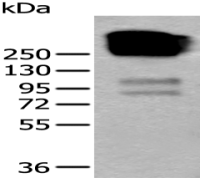
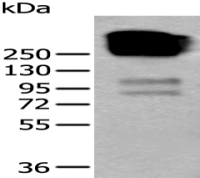
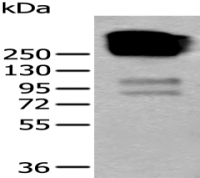
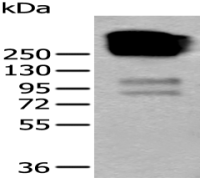
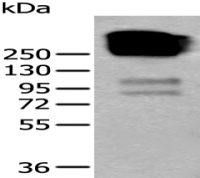
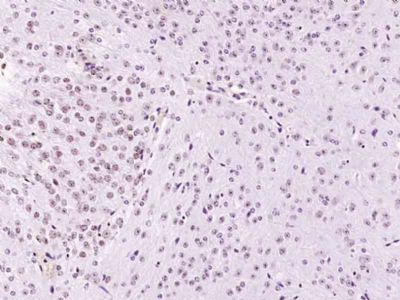
产品图片 :
风险提示:丁香通仅作为第三方平台,为商家信息发布提供平台空间。用户咨询产品时请注意保护个人信息及财产安全,合理判断,谨慎选购商品,商家和用户对交易行为负责。对于医疗器械类产品,请先查证核实企业经营资质和医疗器械产品注册证情况。
 文献和实验
文献和实验【求助】P53的翻译后修饰都有哪些? 怎样验证其修饰后与靶标启动子的结合活性的变化?
xiaozhangwei2 P53的翻译后修饰都有哪些?听说有磷酸化和乙酰化。还有其他的吗? 怎样找出P53是发生了哪种修饰变化? 如何设计实验验证P53修饰后,与靶标启动子结合时,有没有产生结合活性的变化啊? 谢谢! 大鹏鸟 p53的修饰 正常细胞在非应激状态下p53的水平和活性都较低,受到应激作用时,p53通过一系列的翻译后修饰被活化,并能结合特异的DNA序列。翻译后修饰是调节蛋白
人 游离血栓调节蛋白(sTM) 酶联免疫 分析( ELISA ) 试剂 盒使用说明书 本试剂仅供研究使用 目的:本试剂盒用于测定人血清,血浆及相关液体样本中 游离血栓调节蛋白(sTM) 的 含量。 实验原理 : 本试剂盒应用双抗体夹心法测定 标本 中 人 游离血栓调节蛋白(sTM) 水平。用纯化的 人 游离血栓调节蛋白(sTM) 抗体包被微孔板,制成固相抗体,往包被单抗的微孔中依次加入 游离血栓调节蛋白(sTM), 再与HRP 标记
尿苷 (Brdurd) 单克隆抗体能发现渗入到细胞 DNA 内的溴脱氧尿苷。 将此种荧光抗体技术与测定细胞 DNA 含量相结合,是研究 DNA 合成和细胞周期的一种非常有用的技术。此外,流式细胞术还可测定细胞群体同步化的程度和所处的时期,鉴别死细胞和活细胞,利用荧光标记配体,还可定量测定细胞表面和内部的受体等。 遗传学研究 用流式细胞术测定染色体 DNA 含量,可得到染色体频率分布图,称为流式染色体核型分析。同类型染色体出现一个峰,峰的面积代表这种类型染色体的丰度。流式染色体核型分析技术不仅能快速
 技术资料
技术资料暂无技术资料 索取技术资料

