


- ¥1580 - 2480
- gelatins
- jlcR4846
- 国内
- 2025年07月03日
- WB,ELISA等
- 人/动物/植物

企业认证
相关产品推荐更多 >

万千商家帮你免费找货
0 人在求购买到急需产品
- 详细信息
- 文献和实验
- 技术资料
- 供应商:
江西江蓝纯生物试剂有限公司
- 库存:
174
- 克隆性:
单克隆
- 保质期:
1年
- 抗体英文名:
Factor VII heavy chain
- 抗体名:
凝血因子7抗体
- 适应物种:
人/动物/植物
- 应用范围:
WB,ELISA等
- 浓度:
1mg/ml
- 保存条件:
-20 °
- 规格:
100ul/200ul
| 规格: | 100ul | 产品价格: | ¥1580.0 |
|---|---|---|---|
| 规格: | 200ul | 产品价格: | ¥2480.0 |
英文名称 : Factor VII heavy chain
中文名称 : 凝血因子7抗体
别 名 : Factor VII heavy chain; coagulation factor VII (serum prothrombin conversion accelerator); Coagulation factor VII; Eptacog alfa; F7; FA7_HUMAN; Factor VII; Factor VII light chain; FVII coagulation protein; OTTHUMP00000018733; OTTHUMP00000018734; Proconvertin; Serum prothrombin conversion accelerator; SPCA.
研究领域 : 心血管 细胞生物 免疫学
抗体来源 : Rabbit
克隆类型 : Polyclonal
交叉反应 : Human,
产品应用 : WB=1:500-2000 ELISA=1:500-1000 IHC-P=1:400-800 IHC-F=1:400-800 IF=1:50-200 (石蜡切片需做抗原修复)
not yet tested in other applications.
optimal dilutions/concentrations should be determined by the end user.
分 子 量 : 17/28kDa
细胞定位 : 分泌型蛋白
性 状 : Lyophilized or Liquid
浓 度 : 1mg/ml
免 疫 原 : KLH conjugated synthetic peptide derived from human Factor VII heavy chain:301-400/466
亚 型 : IgG
纯化方法 : affinity purified by Protein A
储 存 液 : 0.01M TBS(pH7.4) with 1% BSA, 0.03% Proclin300 and 50% Glycerol.
保存条件 : Store at -20 °C for one year. Avoid repeated freeze/thaw cycles. The lyophilized antibody is stable at room temperature for at least one month and for greater than a year when kept at -20°C. When reconstituted in sterile pH 7.4 0.01M PBS or diluent of antibody the antibody is stable for at least two weeks at 2-4 °C.
PubMed : PubMed
产品介绍 : Initiates the extrinsic pathway of blood coagulation. Serine protease that circulates in the blood in a zymogen form. Factor VII is converted to factor VIIa by factor Xa, factor XIIa, factor IXa, or thrombin by minor proteolysis. In the presence of tissue factor and calcium ions, factor VIIa then converts factor X to factor Xa by limited proteolysis. Factor VIIa will also convert factor IX to factor IXa in the presence of tissue factor and calcium.
Function:
Initiates the extrinsic pathway of blood coagulation. Serine protease that circulates in the blood in a zymogen form. Factor VII is converted to factor VIIa by factor Xa, factor XIIa, factor IXa, or thrombin by minor proteolysis. In the presence of tissue factor and calcium ions, factor VIIa then converts factor X to factor Xa by limited proteolysis. Factor VIIa will also convert factor IX to factor IXa in the presence of tissue factor and calcium.
Subunit:
Heterodimer of a light chain and a heavy chain linked by a disulfide bond.
Subcellular Location:
Secreted.
Tissue Specificity:
Plasma.
Post-translational modifications:
The vitamin K-dependent, enzymatic carboxylation of some glutamate residues allows the modified protein to bind calcium.
The iron and 2-oxoglutarate dependent 3-hydroxylation of aspartate and asparagine is (R) stereospecific within EGF domains.
DISEASE:
Defects in F7 are the cause of factor VII deficiency (FA7D) [MIM:227500]. A hemorrhagic disease with variable presentation. The clinical picture can be very severe, with the early occurrence of intracerebral hemorrhages or repeated hemarthroses, or, in contrast, moderate with cutaneous-mucosal hemorrhages (epistaxis, menorrhagia) or hemorrhages provoked by a surgical intervention. Finally, numerous subjects are completely asymptomatic despite very low factor VII levels.
Similarity:
Belongs to the peptidase S1 family.
Contains 2 EGF-like domains.
Contains 1 Gla (gamma-carboxy-glutamate) domain.
Contains 1 peptidase S1 domain.
SWISS:
P08709
Gene ID:
2155
Important Note:
This product as supplied is intended for research use only, not for use in human, therapeutic or diagnostic applications.
凝血因子7是肝脏合成的一种维生素K依赖性的单链糖蛋白,由4 0 6个氨基酸残基组成,分子量约45kD。 凝血因子Ⅶ的半衰期短(4~6h),血浆含量较低(0.5~2mg/L),故可作为肝病患者蛋白质合成功能减退的早期诊断指标。在慢性肝病患者通过肝活检组织原位杂交的方法检测到凝血因子Ⅶ的表达与肝纤维化的分级呈负相关,可作为预测纤维化程度的指标。凝血因子Ⅶ活性还与预后有着密切的联系,经研究认为:凝血因子Ⅶ活性<34%的肝硬化患者93%在随访10月内死亡,故认为它是肝硬化患者预后坏的早期预测指标,可更识别肝移植候选人。肝硬化患者凝血因子Ⅶ活性可明显下降,凝血因子Ⅶ缺乏可导致血小板活性的改变,结合血小板计数减少使出血时间延长,因此对有创诊断与治疗的肝硬化患者,还应该用凝血因子Ⅶ活性进行出血危险度的评估,而不能仅看血小板计数。除诊断之外,重组凝血因子Ⅶ可以有效地纠正肝病患者凝血异常,有利于有创性检查的进行。
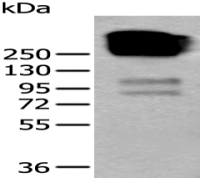
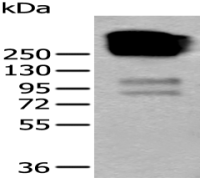
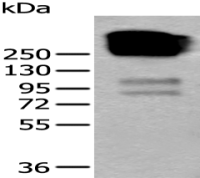
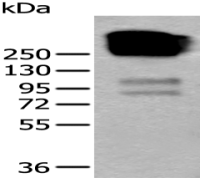
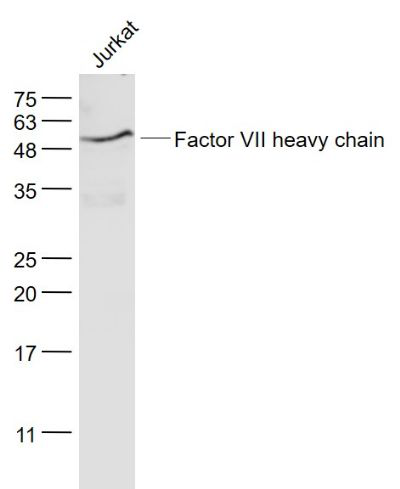
产品图片
风险提示:丁香通仅作为第三方平台,为商家信息发布提供平台空间。用户咨询产品时请注意保护个人信息及财产安全,合理判断,谨慎选购商品,商家和用户对交易行为负责。对于医疗器械类产品,请先查证核实企业经营资质和医疗器械产品注册证情况。
 文献和实验
文献和实验相关专题 蛋白质的结构与功能作用 凝血因子 凝血因子是参与血液凝固过程的各种蛋白质组 分。它的生理作用是,在血管出血时被激活,和血小板粘连在一起并且补塞血管上的漏口。这个过程被称为凝血。它们部分由肝生成。可以为香豆素所抑制。为统一命名,世界卫生组织按其被发现的先后次序用罗马数字编号, 有凝血因子Ⅰ,Ⅱ,Ⅲ,Ⅳ,Ⅴ,Ⅶ,Ⅷ,Ⅸ,Ⅹ,Ⅺ,Ⅻ,Ⅻi等,因子XIII以后被发现的凝血因子,经过多年验证,认为对于凝血
抗体的结构决定了其对应的功能,同一抗体的V区和C区的氨基酸组成和顺序不同,决定了其功能上的差异。V区和C区的组成和结构,决定了抗体的生物学功能。 图1:抗体的主要功能(图片来源:Abbas et al: Cellular and Molecular Immunology, 7e.) 1、特异性识别功能 抗体可以通过其结构上的可变区域与抗原结合,同时,具有极高的特异性。这种特异性识别功能可以使抗体识别和结合到感染的病原体,肿瘤细胞等不同种类的分子,帮助免疫系统识别并定位到这些分子,进而启动
按国际命名法,将参与血液凝固过程的凝血因子按发现时间的先后次序,以罗马数字统一命名,作为国际上通用的名称。从因子 Ⅰ 到 Ⅻ ,如表 5-2 所示。其中因子 Ⅵ 是因子 Ⅴ 的激活物,不是一个独立的凝血因子,已被取消。故目前凝血因子实际只有 12 个,其中,除因子 Ⅳ 为 Ca2 外,其余都是蛋白质。因子 Ⅲ 由组织细胞产生,存在于细胞组织中,故亦称为组织因子。其余因子均存在于血浆中,它们大多数是在肝脏内合成的。有些凝血因子,在血浆中并无活性,须经过水解作用,在其肽链的一定部位切
 技术资料
技术资料暂无技术资料 索取技术资料

