

28S ribosomal protein S9, mito
chondrial, Mrps9 ELISA KIT/ Mouse 28S ribosomal protein S9, mitochondrial, Mrps9 ELISA试剂盒- ¥2980
- LSM Bio
- 78-5000pg/ml
- 46.9pg/ml
- 进口
- ELI-41254m
- 2026年05月21日

企业认证
相关产品推荐更多 >

万千商家帮你免费找货
0 人在求购买到急需产品
相关阅读
细胞污染识别与处理全攻略:5 种常见类型+关键误区Cytoscape 教程来了!快速实现顶刊同款通路网络图五大应用案例:Mustang Q 膜层析应用全解析1 个小工具,一次性搞定流程图、质粒图谱和信号通路图- 详细信息
- 文献和实验
- 技术资料
- 灵敏度:
46.9pg/ml
- 库存:
50
- 供应商:
LSM Bio
- 检测范围:
78-5000pg/ml
- 检测方法:
夹心法ELISA
- 应用:
检测 小鼠样本28S ribosomal protein S9, mitochondrial, Mrps9 蛋白浓度
- 适应物种:
小鼠
- 标记物:
28S ribosomal protein S9, mitochondrial, Mrps9
- 样本:
小鼠血清,血浆,组织匀浆
- 规格:
96T
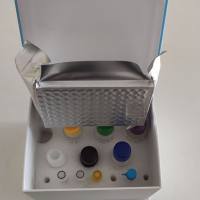
Mouse MRPS9 ELISA KIT
Packing 96Tests
FOR RESEARCH USE ONLY; NOT FOR THERAPEUTIC OR DIAGNOSTIC APPLICATIONS! PLEASE READ ENTIRE PROCEDURE!
Gene Name MRPS9
Protein Name 28S ribosomal protein S9, mitochondrial
Alternative Name
Mouse MRPS9 ELISA KIT , Mouse MRP-S9 ELISA KIT ,Mouse RPMS9 ELISA KIT ,Mouse S9mt ELISA KIT ,Mouse 28S ribosomal protein S9 mitochondrial ELISA KIT ,Mouse mitochondrial small ribosomal subunit protein uS9m ELISA KIT ,Mouse mitochondrial ribosomal protein S9 ELISA KIT
Intended use
Mouse MRPS9 ELISA KIT allows for the in vitro quantitative determination of MRPS9 concentrations in serum, plasma, tissue homogenates, cell culture supernates or other biological fluids.
|
Reagent |
Quantity |
|
Assay plate |
1 |
|
Standard |
2 |
|
Sample Diluent |
1 × 20mL |
|
Assay Diluent A |
1 × 10mL |
|
Assay Diluent B |
1 × 10mL |
|
Detection Reagent A |
1 × 120μL |
|
Detection Reagent B |
1 × 120μL |
|
Wash Buffer(25 x concentrate) |
1 × 30mL |
|
Substrate |
1 × 10mL |
|
Stop Solution |
1 × 10mL |
|
Plate sealer |
5 |
Test principle
The microtiter plate provided in Mouse MRPS9 ELISA KIT has been pre-coated with an MRPS9 antibody specific to MRPS9. Standards or samples are then added to the appropriate microtiter plate wells with a biotin-conjugated antibody preparation specific for MRPS9 and then avidin conjugated to Horseradish Peroxidase (HRP) is added to each microplate well and incubated. Then a TMB substrate solution is added to each well. Only those wells that contain MRPS9, biotin-conjugated antibody and enzyme-conjugated Avidin will exhibit a change in color. The enzyme-substrate reaction is terminated by the addition of a sulphuric acid solution and the color change is measured spectrophotometrically at a wavelength of 450 nm ± 2 nm. The concentration of MRPS9 in the samples is then determined by comparing the O.D. of the samples to the standard curve.
Sample collection and storage
Serum - Use a serum separator tube (SST) and allow samples to clot for 30 minutes before centrifugation for 15 minutes at approximately 1000 × g. Remove serum and assay immediately or aliquot and store samples at -20鈩?/p>
or -80鈩?.
Plasma - Collect plasma using EDTA or heparin as an anticoagulant. Centrifuge samples for 15 minutes at 1000 × g at 2鈩? 8鈩?nbsp; within 30 minutes of collection. Store samples at -20鈩?nbsp; or -80鈩?.
Tissue homogenates - The preparation of tissue homogenates will vary depending upon tissue type. For this assay, tissue was rinsed with ice-cold 1×PBS to remove excess blood, homogenized in ice-cold 1×PBS and stored overnight at ≤-20鈩?. In most cases, 10% homogenate (eg.1g of tissue in 10mL of ice-cold 1×PBS) is recommended. After two freeze-thaw cycles were performed to break the cell membranes, the homogenates were centrifuged
for 5 minutes at 5000 x g. Remove the supernate and assay immediately or aliquot and store at ≤-20鈩?nbsp; .
Cell culture supernates and Other biological fluids - Remove particulates by centrifugation and assay immediately or aliquot and store samples at -20鈩?or -80鈩?.
Fresh samples are first choice. If not, avoid freeze-thaw of samples.
Reagent preparation
Standard - Please refer to the Data Sheet inserting in the ELISA kit.
Detection Reagent A and B - Dilute to the working concentration using Assay Diluent A and B (1:100), respectively.
Wash Buffer - If crystals have formed in the concentrate, warm to room temperature and mix gently until the crystals have completely dissolved. Dilute 30mL of Wash Buffer Concentrate into deionized or distilled water to prepare 750 mL of Wash Buffer.
Assay procedure
Allow all reagents to reach room temperature (Please do not dissolve the reagents at 37鈩?directly). All the reagents should be mixed thoroughly by gently swirling before pipetting. Avoid foaming. Keep appropriate numbers
of strips for 1 experiment and remove extra strips from microtiter plate. Removed strips should be resealed and stored at -20鈩?until the kits expiry date. Prepare all reagents, working standards and samples as directed in the
previous sections. Please predict the concentration before assaying. If values for these are not within the range of the standard curve, users must determine the optimal sample dilutions for their particular experiments.
1. Add 100 μL of Standard, Blank, or Sample per well. Cover with the Plate sealer. Incubate for 2 hours at 37鈩?
2. Remove the liquid of each well, don’t wash. Add 100μL of Detection
Reagent A working solution to each well. Cover with the Plate sealer. Incubate for 1 hour at 37鈩? Detection Reagent A working solution may appear cloudy. Warm to room temperature and mix gently until solution
appears uniform.
3. Aspirate each well and wash, repeating the process three times for a total of three washes. Wash by filling each well with Wash Buffer (approximately 400 μL) using a squirt bottle, multi-channel pipette, manifold dispenser or autowasher, and let it sit for 1~2 minutes. Complete removal of liquid at each step is essential for good performance. After the last wash, remove any remaining Wash Buffer by aspirating or decanting. Invert the plate and blot it against clean paper towels.
4. Add 100μL of Detection Reagent B working solution to each well. Cover with a new Plate sealer. Incubate for 1 hour at 37鈩?
5. Repeat the aspiration/wash process for 5 times as conducted in step 3.
6. Add 90μL of Substrate Solution to each well. Cover with a new Plate sealer. Incubate within 15-30 minutes at 37鈩? Protect from light.
7. Add 50μL of Stop Solution to each well. If color change does not appear
uniform, gently tap the plate to ensure thorough mixing.
8. Determine the optical density of each well at once, using a microplate reader set to 450 nm.
Calculation of results
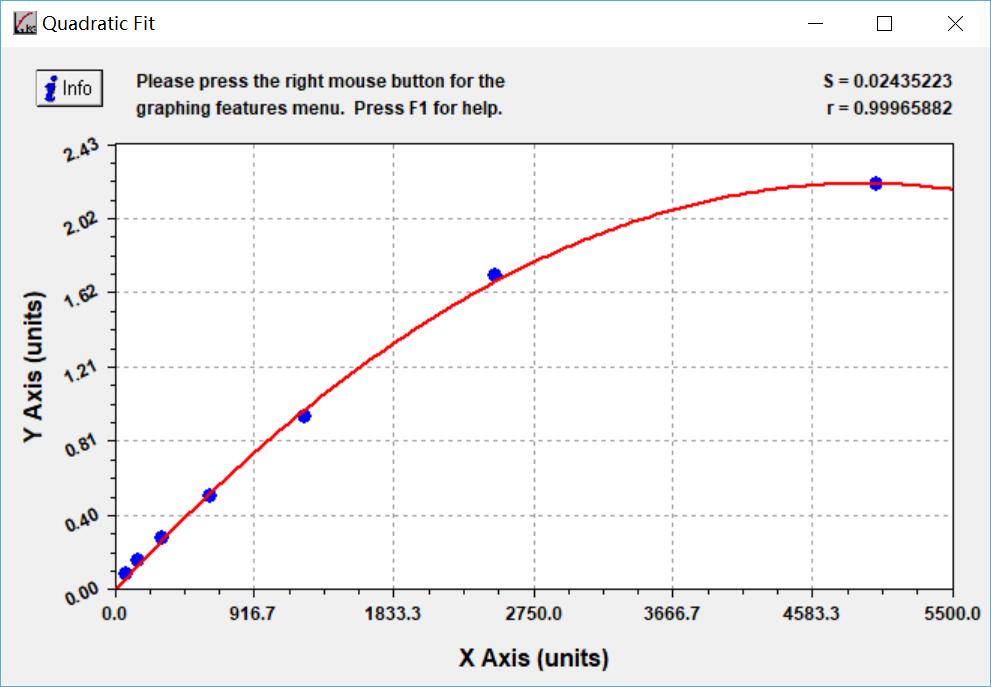
Average the duplicate readings for each standard, control, and sample and sample, then subtract the average zero standard optical density. Create a standard curve by reducing the data using computer software capable of
generating a four parameter logistic (4-PL) curve-fit. As an alternative, construct a standard curve by plotting the mean absorbance for each standard on the x-axis against the concentration on the y-axis and draw a best fit curve through the points on the graph. The data may be linearized by plotting the log of the MRPS9 concentrations versus the log of the O.D. and the best fit line can be determined by regression analysis. It is recommended to use professional software to do this calculation, such as CurveExpert. This procedure will produce an adequate but less precise fit of the data. If samples have been diluted, the concentration read from the standard curve must be multiplied by the dilution factor.
Important note
1. Please carefully reconstitute Standards or working Detection Reagent A and B according to the instruction, and avoid foaming and mix gently until the crystals have completely dissolved. The reconstituted Standards, Detection Reagent A and B can be used only once.
2. To ensure accurate results, proper adhesion of plate sealers during incubation steps is necessary. Do not allow wells to sit uncovered for extended periods between incubation steps. Once reagents have been added to the well strips, DO NOT let the strips DRY at any time during the assay.
3. To avoid cross-contamination, change pipette tips between additions of each standard level, between sample additions, and between reagent additions. Also, use separate reservoirs for each reagent.
4. The wash procedure is critical. Insufficient washing will result in poor precision and falsely elevated absorbance readings.
5. Substrate Solution is easily contaminated. Please protect it from light.
6. ELISA Kits from different batches may be a little different in detection range, sensitivity and color developing time.Please perform the experiment exactly according to printed instruction inside in the kit while electronic ones from our website is for reference only.
7. Do not substitute reagents from one lot to another. Use only the reagents in the same kit supplied by manufacturer.
8. Even the same operator might get different results in two separate experiments. In order to get better reproducible results, the operation of every step in the assay should be controlled. Furthermore, a preliminary experiment before assay for each batch is recommended.
9. Each ELISA kit has been strictly passed QC test. However, results from end users might be inconsistent with our in-house data due to some unexpected transportation conditions or different lab equipments. Intra-assay variance among kits from different batches might arise from above factors, too.
10. ELISA Kits from different manufacturers for the same item might produce different results, since we haven’t compared our products with other manufacturers.
11. Period of validity: six months.
Precaution
The Stop Solution provided with Mouse MRPS9 ELISA KIT is an acid solution. Wear eye, hand, face, and clothing protection when using this material.
风险提示:丁香通仅作为第三方平台,为商家信息发布提供平台空间。用户咨询产品时请注意保护个人信息及财产安全,合理判断,谨慎选购商品,商家和用户对交易行为负责。对于医疗器械类产品,请先查证核实企业经营资质和医疗器械产品注册证情况。
 文献和实验
文献和实验Article: Quercetin and lithium chloride potentiate the protective effects of carvedilol against renal ischemia-reperfusion injury in high-fructose, high-fat diet-fed swiss albino mice independent of renal lipid signaling
Author:Asmaa M.RezkabIslam A.A.E.-H.IbrahimaMona F.MahmoudaAmr A.A.Mahmouda1
Received 6 September 2020, Revised 12 October 2020, Accepted 28 October 2020, Available online 4 November 2020.
Chemico-Biological Interactions
Available online 4 November 2020, 109307
doi: doi.org/10.1016/j.cbi.2020.109307
[资源] 所有的看家基因(housekeeping genes)列表+引物设计服务
acyltransferase, alpha) (AGPAT1), mRNA 742 NM_021134 Homo sapiens mitochondrial ribosomal protein L23 (MRPL23), mRNA 771 NM_021974 Homo sapiens polymerase (RNA) II (DNA directed) polypeptide F (POLR2F), mRNA 1169 NM_006808 Homo sapiens protein
ribosom e-in-pieces: binding of elongation factor E F -G to oligoribonucleotides th a t mimic th e sarcin / ricin and th io strep to n domains o f 23S ribosomal RN A . Proc. NatL Acad. Sci. USA 9 4 ,12280-12284. 15. E
 技术资料
技术资料
