

- ¥980
- LSM Bio
- CHC00085
- 2025年07月17日

企业认证
相关产品推荐更多 >
BJ5183-AD-1 感受态细胞(电转)/ BJ5183-AD-1 Electro Competent Cells
¥1180Ar A4 感受态细胞(化转)/ Ar A4 chemically Agrobacterium Express Competent Cells
¥980Tuner (DE3) 感受态细胞(化转)/ Tuner (DE3) chemically E.coli Express Competent Cells
¥980Ar qual 感受态细胞(化转)/ Ar qual chemically Agrobacterium Express Competent Cells
¥980OverExpressC43(DE3) 感受态细胞(化转)/ OverExpressC43(DE3) chemically Competent Cells
¥980
万千商家帮你免费找货
0 人在求购买到急需产品
- 详细信息
- 文献和实验
- 技术资料
- 保存条件:
负80摄氏度
- 保质期:
6month
- 英文名:
BL21(AI) chemically Competent Cells
- 库存:
货源充足
- 供应商:
LSM Bio
- 规格:
0.1ml*10
BL21(AI) chemically Competent Cells
BL21(AI) Chemically Competent Cell Components
BL21(AI)锛?nbsp; 100μl/tube
pUC19 (control vector锛?0pg/μl): 10μl
Storage at -80鈩冿紙6month锛?/span>
BL21(AI) Chemically Competent Cell Genotype
F- ompT hsdSB(rB-mB-) gal dcm araB::T7RNAP-tetA
BL21(AI) Chemically Competent Cell Description
BL21 (AI) is a strain of Escherichia coli B/r (E.coli B/r). BL21 (AI) was derived from BL21 strain, which was a defective strain of Lon protease and extracellular protease OMPT. The deletion of these two enzymes effectively prevented the degradation of heterologous protein in Escherichia coli. The addition of L- Arabia sugar in the medium can induce the expression of T7RNA polymerase in the downstream of araBAD promoter to promote the expression of the target protein. Adding glucose to the medium could inhibit the expression of T7RNA polymerase in the downstream of araBAD promoter and then inhibit the expression of the target protein. BL21 (AI) receptive cells are suitable for any expression vector based on the promoter of T7, which can be used to express the high level of recombinant protein. Because strains can efficiently regulate the level of T7 RNA polymerase in vivo, BL21 (AI) competent cells can express toxic or inhibitory growth proteins to other BL21 cells. The yield of common recombinant protein in BL21 (AI) strain is the same as that of other BL21 strains. The yield of most toxic protein in BL21 (AI) strain is higher than that of BL21 (DE3) pLysS strain or BL21 (DE3) strain. The BL21 (AI) receptive cells were made by special technology, and the conversion efficiency of pUC19 plasmid was as high as 108cfu/ mu g DNA.
BL21(AI) Chemically Competent Cell Transformation Protocol
1. Please store BL21(AI) Chemically Competent Cell in -80°C for late use.
Take it then insert the tube in the ice immediately for 5 minutes.
2. Add your plasmid DNA (vector) to the cell mixture. Carefully flick the tube 4–5 times to mix cells and DNA. Do not vortex.Place the mixture on ice for 25 minutes,Do not mix.
3. Place it in the 42°C water for 45 seconds,then immediately transfer the tube back into ice for 2min. Do not mix.
4. Add 700ul LB or 2YT liquid nutrient medium (No antibiotic). then put on the Constant temperature shaker (200 rpm) for 1 hours at 37°C.
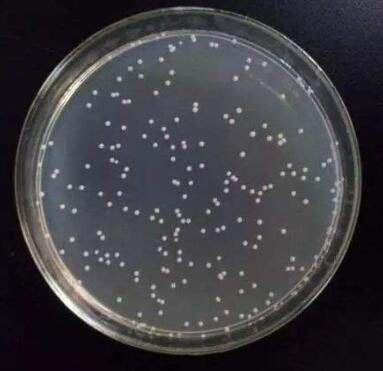
5.Pellet the mixture by centrifugation at 5000rpm/min for 1min. Pour off about 100ul of cell supernatant, then resuspend the cell pellet in the remaining medium by gently vortexing the tube. Spread the cell on the LB or 2YT Resistance plates by antibiotic, then inverted and Incubate overnight at 37°C.(bule white selection should place the plate at 37°C for 14 hours or more).
Caution锛?/span>
1. Brian Caliendo (Voigt lab)reported that PCP20 plasmids are difficult to be transformed into this receptive cell, and the transformation of pCP20 into other strains is normal, but the cause is unknown.
2. Without glucose, the downstream expression level of araBAD promoter in BL21 (AI) cells is still very low. After glucose addition, it can further reduce the expression level of background protein.
Sample Induction Protocol (for reference only)
1. Pick 3-4 transformants for overnight culture in 5 mL LB medium containing antibiotic to select for your expression plasmid. Grow overnight at 37°C with shaking until the OD600 reaches 0.6-1.0.
2.Use the overnight cultures to inoculate fresh LB medium containing antibiotic to an OD600 of 0.05-0.1 (~1:20 dilution of the overnight culture). This dilution allows the cells to quickly return to logarithmic growth and reach the appropriate cell density. Use a volume appropriate for taking time points, if desired.
3.Use the remainder of each overnight culture to create glycerol stocks. Once you have identified the clone that best expresses your protein, you can use the glycerol stock to perform additional expression experiments.
4.Grow the cultures until they reach mid-log phase (OD600 ~0.4; 2 to 3 hours).
5.Induce the cultures (see below), and culture for an additional 2-3 hours. You may also take time points to analyze for optimal expression of your protein.
For T7 expression vector containing the lacI gene (e.g. Invitrogen’s pET vectors), induce by adding L-arabinose to a final concentration of 0.2% AND IPTG to a final concentration of 1 mM.
For T7 expression vector with no lacI gene (e.g. Invitrogen’s pCR®T7 vectors), induce by adding L-arabinose to a final concentration of 0.2%. Culture for an additional 2-3 hours.
6.Place the culture on ice for 10 minutes. Harvest cells by centrifugation at 5,000×g for 10 minutes at 4鈩?
7. Remove the supernatant and store the cell pellet at -20鈩?(storage at lower temperatures is also acceptable). IPTG
Prepare a 1 M solution of IPTG (Isopropyl-β-D-thiogalactoside / thiogalactopyranoside) by dissolving 2.38 g of IPTG in dd water and adjust the final volume to 10 ml. Filter sterilize before use.
Caution
1., The competent cells are best to melt slowly in the ice, and insert the target DNA into the ice for 8 minutes. They cannot be placed in the ice for too long. Long time storage will reduce the conversion efficiency.
2. Should be softly manipulate when mixed with plasmids.
3. Transformation of high concentration plasmids could reduce the amount of bacteria that were eventually used for coated plates.
4. When induction, the concentration of IPTG is optional (0.1-2mM).
5. In order to obtain the required amount of protein, the optimum induction time, temperature, and IPTG concentration should be optimized.
Suggestion Expression Condition锛?/span>
1. Protein expression was performed using T7 promoter (high or low copies).
2. When other BL21 strains were used to express protein, the inhibitory effects of bacterial growth were observed.
3. Expressed a known toxic protein.
风险提示:丁香通仅作为第三方平台,为商家信息发布提供平台空间。用户咨询产品时请注意保护个人信息及财产安全,合理判断,谨慎选购商品,商家和用户对交易行为负责。对于医疗器械类产品,请先查证核实企业经营资质和医疗器械产品注册证情况。
 文献和实验
文献和实验TOP10 chemically competent cells
Overview This protocol is a variant of the Hanahan protocol [1] using CCMB80 buffer for DH10B, TOP10 and MachI strains. It builds on Example 2 of the Bloom05 patent as well. This protocol has been tested on TOP10, MachI and BL21(DE3) cells
(rk-,mk+),phoA,supE44,λ-,thi-1,gyrA96,relA1 2:BL21(DE3) 菌株 该菌株用于高效表达克隆于含有噬菌体T7启动子的表达载体(如pET系列)的基因。T7噬菌体RNA聚合酶位于λ 噬菌体DE3区,该区整合于BL21的染色体上。该菌适合表达非毒性蛋白。 基因型:F-,ompT, hsdS(rBB-mB-),gal, dcm(DE3
【交流】转载:JM109,DH5a,BL21这些感受态有何区别
1:DH5a菌株 DH5a是一种常用于质粒克隆的菌株。E.coli DH5a在使用pUC系列质粒载体转化时,可与载体编码的β-半乳糖苷酶氨基端实现α-互补。可用于蓝白斑筛选鉴别重组菌株。 基因型:F-,φ80dlacZΔM15,Δ(lacZYA-argF)U169,deoR,recA1,endA1,hsdR17(rk-,mk+),phoA,supE44,λ-,thi-1,gyrA96,relA1 2:BL21(DE3) 菌株 该菌株用于高效表达克隆于含有噬菌体T7启动
 技术资料
技术资料暂无技术资料 索取技术资料

