

- 询价
- 雅吉生物
- 中国
- RE59737
- 2025年07月11日

相关产品推荐更多 >

万千商家帮你免费找货
0 人在求购买到急需产品
相关阅读
细胞污染识别与处理全攻略:5 种常见类型+关键误区Cytoscape 教程来了!快速实现顶刊同款通路网络图五大应用案例:Mustang Q 膜层析应用全解析1 个小工具,一次性搞定流程图、质粒图谱和信号通路图- 详细信息
- 文献和实验
- 技术资料
- 库存:
100
- 组织来源:
细胞系
- 物种来源:
ATCC/sciencell/上海细胞库/自建细胞库
- 运输方式:
顺丰快递
- 年限:
第三代
- 生长状态:
贴壁/悬浮
- 规格:
1*106/T25瓶
| Synonyms: | HMT-3522 S1(人类乳腺上皮细胞) |
| Background: | HMT-3522 S1, also known as HMT-3522/wt, is a subline that has been derived from HMT-3522. The parent line was established from a benign breast tumour of a 48 year old woman and has undergone spontaneous malignant transformation. It was grown on collagen in serum-free media without antibiotics from explantation onwards. A mutation at codon 179 of the p53 gene was detected during establishment of the parent line. HMT-3522 S1 is a continuation of this line from passage 34 and is grown without collagen. It is near-diploid, but an evolution of karyotype has been observed by regular chromosomal analyses. The expression of cytokeratin 13, 14, 17 and 18 and vimentin has been reported. Expression of EGF-R, c-erb-B2, N-myc, c-ras-Ha1, c-ras-Ki2 and N-ras was shown to fluctuate slightly with passage number. The cells have tested negative for estrogen receptor, c-erbA1, c-erb-A2, int-2 or hst-1. During propagation growth factor requirements decreased simultaneously with amplification and overexpression of c-myc protooncogene. In a three-dimensional basement membrane culture assay the phenotypic characteristics of normal breast tissue in vivo are recapitulated. This cell line has remained non-tumorigenic for more than 400 passages. Publications using this cell line must refer to the original paper (Briand et al., In Vitro Cell Dev Biol 1987; 23:181). Any sublines created must include the name HMT-3522 in the designation, but a short name may be used in the same paper. Subline HMT-3522 S2 (ECACC catalogue no. 98102211) has been isolated by culturing S1 cells from passage 118 in serum-free media without epidermal growth factor (EGF). This cell line grows on collagen-treated flasks. The third subline, HMT-3522 T4-2 (ECACC catalogue no. 98102212) was established from S2 at passage 238 and is the only tumorigenic line in nude mice out of the 3 sublines. This cell line grows on collagen-treated flasks. |
| Species: | human (Homo sapiens) |
| Tissue: | Breast |
| Disease: | Human Caucasian breast epithelial |
| Gender: | N/A |
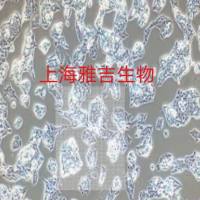
| Morphology: | Epithelial-like |
| Growth Mode: | Adherent |
| Doubling Time: | N/A |
| DNA Profile: | Amelogenin: X CSF1PO: 11 D13S317: 9,13 D16S539: 14 D5S818: 11,12 D7S820: 11,13 THO1: 8,9.3 TPOX: 8,9 vWA: 14,17 Cell Line Authentication Service |
| Culture Medium: | DMEM / Ham's F12 (1:1) + 2mM Glutamine + 250ng/ml insulin + 10µg/ml transferrin +10E-8M sodium selenite + 10E-10M 17 beta-estradiol + 0.5µg/ml hydrocortisone + 5µg/ml ovine prolactin + 10ng/ml EGF We strongly suggest to purchase the complete medium. |
| Cryopreservation medium: | 90%FBS+10%DMSO |
| Karyotype: | 45,XX,1p-,-6,8q+-,12p+,14q+,17q+ |
| Subculture Routine: | If starting from a frozen ampoule the cryoprotectant should be removed. Add thawed cells to a conical based centrifuge tube e.g. 15ml tube. Slowly add 4 ml of culture medium and re-suspend cells, taking a sample of the cell suspension, e.g. 100μl, to count. Centrifuge the cell suspension at low speed i.e. 100 - 150 x g for a maximum of 5 minutes. Split sub-confluent cultures using 0.25% trypsin or trypsin/EDTA; 5% CO2; 37°C. Cells are slow to detach from the flask. Add the same volume of trypsin inhibitor as trypsin used, centrifuge and reseed cells at 2-4 x10, 000 cells/cm². Medium is serum-free, therefore trypsin inhibitor is essential. S1cells can be slow in spreading out after subculture and may take 2-3 days to attach. Good growth occurs 5-7 days after subculture. Cells should be frozen in (45% conditioned media: 45% fresh media) with 10% DMSO. |
风险提示:丁香通仅作为第三方平台,为商家信息发布提供平台空间。用户咨询产品时请注意保护个人信息及财产安全,合理判断,谨慎选购商品,商家和用户对交易行为负责。对于医疗器械类产品,请先查证核实企业经营资质和医疗器械产品注册证情况。
 文献和实验
文献和实验造血干细胞(haematopoietic stem cells, HSC)具有无限复制自身并分化成人体内各种血细胞的能力。几十年来,医生们一直在用捐献者骨髓和新生儿脐带内的造血干细胞进行移植,以治疗血液病和免疫系统疾病。然而,由于缺乏匹配的供体,且脐带血中干细胞数量较少,这些治疗也受到了限制。 研究人员试图利用人类多能干细胞在体外诱导生成造血干细胞,从而克服供体的局限性。然而,目前却依然无法实现,部分原因在于现阶段科学家只能将实验室培养的细胞分化成短寿命的造血祖细胞,而不是具有自我更新能力
他们用人类心脏细胞造了一只「鱼」,可持续游动 108 天!哈佛新研究登上 Science
导读 心脏就像一台不知疲倦的永动机,生命不息跳动不止。但是心脏规律的跳动并不是由大脑发出的指令,而是心脏中的心肌细胞控制着整个心脏的跳动。然而,控制该过程的机制尚不完全清楚。 2022 年 2 月 11 日,受到斑马鱼的形态和运动姿势的启发,来自哈佛大学和埃默里大学的研究团队首次利用人类干细胞来源的心肌细胞培育出了完全自主的生物杂交鱼,以题为 An autonomously swimming biohybrid fish designed with human cardiac
利用 MACSQuant Tyto 细胞分选实现帕金森病的首次人类 iPSC 衍生多巴胺能祖细胞临床移植试验
位于日本京都 CiRA (Center for iPS Cell Research and Application)的著名实验室,Jun Takahashi 教授团队正在使用 MACSQuant® Tyto® 细胞分选仪对 iPSC 衍生的多巴胺能祖细胞进行符合 GMP 的细胞分选,用于帕金森病细胞移植。 该团队目前的临床试验旨在利用 iPSC 衍生的多巴胺能神经元治疗帕金森病患者,该试验源自 2017 年 8 月发表在《自然》杂志上的灵长类动物模型研究。实际上,正是开创性工作的定义,人体
 技术资料
技术资料需要更多技术资料 索取更多技术资料

