

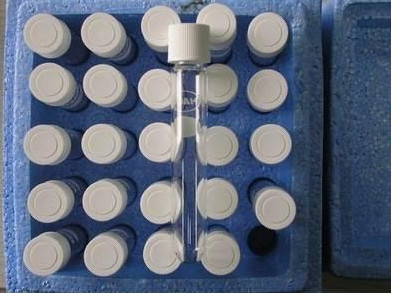
- ¥700 - 1500
- 进口
- 进口
- PRO-554
- 2025年08月02日

企业认证
相关产品推荐更多 >
万千商家帮你免费找货
0 人在求购买到急需产品
- 详细信息
- 文献和实验
- 技术资料
- 保存条件:
2-8度
- 保质期:
1年
- 英文名:
Component C1q
- 库存:
999
- 供应商:
上海淳麦
- 规格:
/5ug/20ug/1mg
Human Complement Component C1q
英文简称:
Component C1q
中文名称:
人补体C1q
背景资料:
C1q is the first component of the classical pathway of complement activation. C1q along with the enzymatically active components C1r and C1s forms the C1 complex. When C1 binds to immunoglobulins in the form of immune complexes, it leads to activation of C1r and C1s proteases and a further activates the classical pathway of complement. C1q is a glycoprotein that belongs to the collectin family, having a molecular weight of about 410-462 kDa. C1q is a hexamer composed of globular heads attached to collagen-like triple-helix tails. The globular heads of C1q exclusively bind to the CH2 domain of IgG molecules or the CH3 domain of IgM. Each heavy chain of the immunoglobulin molecule contains a single binding site for C1q. Given that C1q must bind to no less than two heavy chains in order to alter its conformation and activate C1r and C1s, its activation follows only after binding to immunoglobulins in the form of immune complexes bound to multivalent antigens. C1q’s main physiological role is in the clearance of immune complexes and apoptotic bodies from the organism. Interruption of this process may lead to development of autoimmunity. Individuals with genetic deficiencies of C1q or other components of the classical pathway are at risk to develop SLE. C1q specifically binds to apoptotic bodies of human keratinocytes, vascular endothelial cells and lymphocytes. Complement components C1q and bound C3 mediate the clearance of apoptotic bodies. Hence, C1q may advance the clearance of autoantigens, avoiding stimulation of the immune system. Nonetheless, an extended exposition of the immune system to the neoepitope exposed on C1q molecules bound to immune complexes or apoptotic bodies could ultimately lead to an autoimmune response against C1q itself and to an altered complement function. C1q deficiency may also lead to disruption of the negative selection of autoreactive B cells. C1q along with other specific recognition proteins bind to the highly conserved lupus antigens (dsDNA and nuclear proteins) and activate the complement system. Autoantibodies against C1q (anti-C1q) are found in a number of autoimmune and infectious diseases like glomerulonephritis (GN) and lupus erythematosus (SLE), these antibodies are significant in clinical practice due to their negative predictive value.
产品描述:
Human Complement Component C1q produced in Human plasma having a molecular mass of 410 kDa.
来源宿主:
人血浆中提取纯化
序列:
溶解建议:
Sterile Filtered White lyophilized (freeze-dried) powder. Lyophilized from 0.01M Na2 EDTA solution containing 0.3M NaCl pH 7.5. It is recommended to reconstitute the lyophilized C1q in sterile 18MΩ-cm H2O.
保存建议:
Human C1q although stable at room temperature for 3 weeks, should be stored between 2-8℃.
其他简介:
ProSpec是一家全球著名细胞因子蛋白及相关抗体生产和研发品牌。ProSpec的生产和研发工厂位于以色列,专注于蛋白(重组及合成)生产研发,其独有的细菌和哺乳动物表达和蛋白折叠技术使其能在17年内成长为国际一流的科研级蛋白供应商。目前ProSpec可以提供细胞因子,生长因子,激素,信号蛋白,病毒抗原等近800种重组蛋白和100多种抗体,是世界上提供蛋白品种最多的公司之一,领先的生产工艺和规模使其可以提供毫克到克级蛋白,价格优于同类公司。绝大部分产品是天然成熟型蛋白,而不含有标签蛋白。考虑到大部分研究者希望能更灵活地配制蛋白溶液,ProSpec-Tany绝大部分产品没有添加保护剂或盐,这就对工艺提出了更高的要求。同时,ProSpec-Tany绝大部分产品为冻干粉,因此易于运输和保存。
上海淳麦生物为ProSpec国内代理销售经销商,详细的产品信息请和我们联系:免费热线:4006815880 微信电话 13770640776
风险提示:丁香通仅作为第三方平台,为商家信息发布提供平台空间。用户咨询产品时请注意保护个人信息及财产安全,合理判断,谨慎选购商品,商家和用户对交易行为负责。对于医疗器械类产品,请先查证核实企业经营资质和医疗器械产品注册证情况。
 文献和实验
文献和实验The classical complement pathway (CCP) activation is a multimolecular complex, composed of three subcomponents namely C1q, C1r, and C1s. C1q is the recognition subunit of this complex and its binding to the specific targets leads
Lipid Component Quantitation by Thin Layer Chromatography
This chapter describes a thin layer chromatography (TLC) method for the quantitation of various lipids (such as phospholipids, sphingolipids, acylglycerols, and fatty acids) in lipid-based nanoparticle formulations such as liposomes
The Split-Ubiquitin System for the Analysis of Three-Component Interactions
Protein–protein interactions are vital to all living cells. Many different in vivo and in vitro approaches are published which enable detection and determination of interactions between two proteins. However, most of these techniques
 技术资料
技术资料暂无技术资料 索取技术资料

