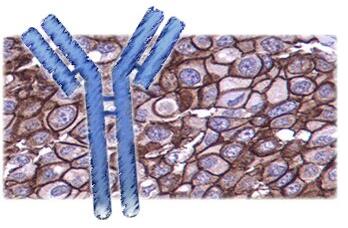
- ¥2980
- LMAI Bio
- LM-12569R-FITC
- 中国/美国/欧洲
- 2025年07月16日
- ICC=1:50-200 IF=1:50-200
- Human, Dog,
- Human, Dog,

9 年钻石会员
企业认证
相关产品推荐更多 >


万千商家帮你免费找货
0 人在求购买到急需产品
- 详细信息
- 技术资料
- 供应商:
上海联迈生物工程有限公司
- 库存:
大量
- 靶点:
详见说明书
- 级别:
1
- 目录编号:
LM-12569R-FITC
- 克隆性:
多克隆
- 抗原来源:
Rabbit
- 保质期:
1年
- 抗体英文名:
Anti-phospho-Band3 (Tyr21)/FITC
- 抗体名:
Anti-phospho-Band3 (Tyr21)/FITC
- 标记物:
FITC标记
- 宿主:
Human, Dog,
- 适应物种:
Human, Dog,
- 免疫原:
详见说明书
- 亚型:
IGg
- 形态:
粉末、液体、冻干粉
- 应用范围:
ICC=1:50-200 IF=1:50-200
- 浓度:
1mg/ml
- 保存条件:
-20 °C
- 规格:
100ul
FITC标记的磷酸化红细胞阴离子交换蛋白1抗体
| 英文名称 | Anti-phospho-Band3 (Tyr21)/FITC |
| 中文名称 | FITC标记的磷酸化红细胞阴离子交换蛋白1抗体 |
| 别 名 | Band 3 (phospho Y21); p-Band 3 (phospho Y21); Solute carrier family 4 anion exchanger member 1; Solute carrier family 4 member 1; AE 1; AE1; Anion exchange protein 1; Anion exchanger 1; B3AT_HUMAN; Band 3; Band 3 anion transport protein; BND3; CD233; DI; Diego blood group; EMPB3; EPB3; Erythrocyte membrane protein band 3; Erythroid anion exchange protein; FR antibod; Froese blood group; RTA1A; SLC4A1; Solute carrier family 4 member 1; SW antibody; Swann blood group; Waldner blood group; WD antibody; WD1; WR antibody; Wright blood group. |
| 规格价格 | 100ul/2980元 购买 大包装/询价 |
| 说 明 书 | 100ul |
| 产品类型 | 磷酸化抗体 |
| 研究领域 | 心血管 细胞生物 |
| 抗体来源 | Rabbit |
| 克隆类型 | Polyclonal |
| 交叉反应 | Human, Dog, |
| 产品应用 | ICC=1:50-200 IF=1:50-200 not yet tested in other applications. optimal dilutions/concentrations should be determined by the end user. |
| 分 子 量 | 102kDa |
| 细胞定位 | 细胞膜 |
| 性 状 | Lyophilized or Liquid |
| 浓 度 | 1mg/ml |
| 免 疫 原 | KLH conjugated synthesised phosphopeptide derived from human Band3 around the phosphorylation site of Tyr21 |
| 亚 型 | IgG |
| 纯化方法 | affinity purified by Protein A |
| 储 存 液 | 0.01M TBS(pH7.4) with 1% BSA, 0.03% Proclin300 and 50% Glycerol. |
| 保存条件 | Store at -20 °C for one year. Avoid repeated freeze/thaw cycles. The lyophilized antibody is stable at room temperature for at least one month and for greater than a year when kept at -20°C. When reconstituted in sterile pH 7.4 0.01M PBS or diluent of antibody the antibody is stable for at least two weeks at 2-4 °C. |
| 产品介绍 | background: Band 3, also designated AE1, is an erythrocyte membrane glycoprotein that contributes to cell stuctural integrity and mediates exchange of chloride and bicarbonate across the phospholipid bilayer. The diverse functions of the approximately 900 amino acid protein are mediated by two distinct domains. The amino terminal domain, also known as cdb3 for cytoplasmic domain of erthrocyte membrane band 3, acts as an attachment site for the erythrocyte skeleton by binding ankyrin. The carboxy-terminal, membrane-associated domain carries out exchange transport of anions. Degradation of band 3 can generate an aging antigen known as senescent cell antigen, or SCA, which is expressed on old cells and marks them for removal by the immune system. An isoform of band 3, which lacks the first 65 amino acids and does not bind ankryin, is expressed in kidney. Function: Band 3 is the major integral glycoprotein of the erythrocyte membrane. Band 3 has two functional domains. Its integral domain mediates a 1:1 exchange of inorganic anions across the membrane, whereas its cytoplasmic domain provides binding sites for cytoskeletal proteins, glycolytic enzymes, and hemoglobin. Subcellular Location: Membrane. Post-translational modifications: Phosphorylated on Tyr-8 and Tyr-21 most likely by SYK. PP1-resistant phosphorylation that precedes Tyr-359 and Tyr-904 phosphorylation. Phosphorylated on Tyr-359 and Tyr-904 most likely by LYN. PP1-inhibited phosphorylation that follows Tyr-8 and Tyr-21 phosphorylation. DISEASE: Defects in SLC4A1 are the cause of elliptocytosis type 4 (EL4) [MIM:109270]. EL4 is a Rhesus-unlinked form of hereditary elliptocytosis, a genetically heterogeneous, autosomal dominant hematologic disorder. It is characterized by variable hemolytic anemia and elliptical or oval red cell shape. Defects in SLC4A1 are the cause of spherocytosis type 4 (SPH4) [MIM:612653]; also known as hereditary spherocytosis type 4 (HS4). Spherocytosis a hematologic disorder leading to chronic hemolytic anemia and characterized by numerous abnormally shaped erythrocytes which are generally spheroidal. Defects in SLC4A1 are the cause of autosomal dominant distal renal tubular acidosis (AD-dRTA) [MIM:179800]. This disease is characterized by reduced ability to acidify urine, variable hyperchloremic hypokalemic metabolic acidosis, nephrocalcinosis, and nephrolithiasis. Defects in SLC4A1 are the cause of autosomal recessive distal renal tubular acidosis (AR-dRTA) [MIM:611590]. Similarity: Belongs to the anion exchanger (TC 2.A.31) family. Database links: Entrez Gene: 6521 Human Omim: 109270 Human SwissProt: P02730 Human Unigene: 443948 Human Important Note: This product as supplied is intended for research use only, not for use in human, therapeutic or diagnostic applications. |
风险提示:丁香通仅作为第三方平台,为商家信息发布提供平台空间。用户咨询产品时请注意保护个人信息及财产安全,合理判断,谨慎选购商品,商家和用户对交易行为负责。对于医疗器械类产品,请先查证核实企业经营资质和医疗器械产品注册证情况。
 技术资料
技术资料暂无技术资料 索取技术资料
FITC标记的磷酸化红细胞阴离子交换蛋白1抗体
¥2980