

- 询价
- 上海一研
- EY-1015K
- 进口/国产
- 2025年07月15日
- 产品应用 WB=1:100-500 ELISA=1:500-1000 IP=1:20-100 IHC-P=1:100-500 IHC-F=1:100-500 IF=1:50-200
- 详见说明书
- 详见说明书

企业认证
万千商家帮你免费找货
0 人在求购买到急需产品
- 详细信息
- 文献和实验
- 技术资料
- 抗体名:
磷酸化细胞核因子p50/k基因结合核因子抗体
- 抗体英文名:
Anti-Phospho-NFKB1(Ser373)
- 靶点:
详见说明书
- 浓度:
1mg/1ml
- 应用范围:
产品应用 WB=1:100-500 ELISA=1:500-1000 IP=1:20-100 IHC-P=1:100-500 IHC-F=1:100-500 IF=1:50-200
- 宿主:
详见说明书
- 供应商:
上海一研
- 库存:
32
- 级别:
详见说明书
- 目录编号:
详见说明书
- 抗原来源:
Rabbit
- 保质期:
详见说明书
- 适应物种:
详见说明书
- 标记物:
详见说明书
- 克隆性:
多克隆
- 保存条件:
Store at -20 °C
- 形态:
详见说明书
- 亚型:
IgG
- 免疫原:
KLH conjugated Synthesised phosphopeptide derived from human NF-κB p105 around the phosphorylation site of Ser373
- 规格:
0.1ml/100μg
中文名称 磷酸化细胞核因子p50/k基因结合核因子抗体
别 名 Phospho-NFKB1(Ser373); NFKB1(phospho S373); NF kappa B; NFKB 1; NFKB p105; NFKB p50; NFKB1; Nuclear factor kappa B DNA binding subunit; Nuclear factor NF kappa B p105 subunit; Nuclear factor NF kappa B p50 subunit; Nuclear factor of kappa light polypeptide gene enhancer in B cells 1; DKFZp686C01211; DNA binding factor KBF1; DNA binding factor KBF1 EBP1; EBP 1; EBP1; KBF1; MGC54151; nuclear factor of kappa light polypeptide gene enhancer in B-cells 1; Nfkb1; NF-kappaB; NF-kappaB1; NF-KB1; p105; p50; p50/p105; DKFZp686C01211; EBP-1; KBF1; MGC54151; Nf kappa b DNA binding subunit; NF-KAPPAB; NF-KAPPAB1; NFKB; NFKB SUBUNIT P105/P50; NFKB-p105; NFKB1; NUCLEAR FACTOR KAPPA B DNA BINDING SUBUNIT; p105 Nfkb;p50 NF-kappa B;p50NFKB.
浓 度 1mg/1ml
规 格 0.1ml/100μg
抗体来源 Rabbit
克隆类型 polyclonal
交叉反应 Human, Mouse, Rat, Pig, Cow, Horse, Sheep
产品类型 一抗 磷酸化抗体
研究领域 肿瘤 细胞生物 免疫学 信号转导 细胞凋亡 转录调节因子 激酶和磷酸酶
蛋白分子量 predicted molecular weight:
105kDa
性 状 Lyophilized or Liquid
免 疫 原 KLH conjugated Synthesised phosphopeptide derived from human NF-κB p105 around the phosphorylation site of Ser373
亚 型 IgG
纯化方法 affinity purified by Protein A
储 存 液 Preservative: 15mM Sodium Azide, Constituents: 1% BSA, 0.01M PBS, pH 7.4
产品应用 WB=1:100-500 ELISA=1:500-1000 IP=1:20-100 IHC-P=1:100-500 IHC-F=1:100-500 IF=1:50-200
(石蜡切片需做抗原修复)
not yet tested in other applications.
optimal dilutions/concentrations should be determined by the end user.
保存条件 Store at -20 °C for one year. Avoid repeated freeze/thaw cycles. The lyophilized antibody is stable at room temperature for at least one month and for greater than a year when kept at -20°C. When reconstituted in sterile pH 7.4 0.01M PBS or diluent of antibody the antibody is stable for at least two weeks at 2-4 °C.
Important Note This product as supplied is intended for research use only, not for use in human, therapeutic or diagnostic applications.
产品介绍 This gene encodes a 105 kD protein which can undergo cotranslational processing by the 26S proteasome to produce a 50 kD protein. The 105 kD protein is a Rel protein-specific transcription inhibitor and the 50 kD protein is a DNA binding subunit of the NF-kappa-B (NFKB) protein complex. NFKB is a transcription regulator that is activated by various intra- and extra-cellular stimuli such as cytokines, oxidant-free radicals, ultraviolet irradiation, and bacterial or viral products. Activated NFKB translocates into the nucleus and stimulates the expression of genes involved in a wide variety of biological functions. Inappropriate activation of NFKB has been associated with a number of inflammatory diseases while persistent inhibition of NFKB leads to inappropriate immune cell development or delayed cell growth. Two transcript variants encoding different isoforms have been found for this gene. [provided by RefSeq, Sep 2009].
Function :
NF-kappa-B is a pleiotropic transcription factor present in almost all cell types and is the endpoint of a series of signal transduction events that are initiated by a vast array of stimuli related to many biological processes such as inflammation, immunity, differentiation, cell growth, tumorigenesis and apoptosis. NF-kappa-B is a homo- or heterodimeric complex formed by the Rel-like domain-containing proteins RELA/p65, RELB, NFKB1/p105, NFKB1/p50, REL and NFKB2/p52 and the heterodimeric p65-p50 complex appears to be most abundant one. The dimers bind at kappa-B sites in the DNA of their target genes and the individual dimers have distinct preferences for different kappa-B sites that they can bind with distinguishable affinity and specificity. Different dimer combinations act as transcriptional activators or repressors, respectively. NF-kappa-B is controlled by various mechanisms of post-translational modification and subcellular compartmentalization as well as by interactions with other cofactors or corepressors. NF-kappa-B complexes are held in the cytoplasm in an inactive state complexed with members of the NF-kappa-B inhibitor (I-kappa-B) family. In a conventional activation pathway, I-kappa-B is phosphorylated by I-kappa-B kinases (IKKs) in response to different activators, subsequently degraded thus liberating the active NF-kappa-B complex which translocates to the nucleus. NF-kappa-B heterodimeric p65-p50 and RelB-p50 complexes are transcriptional activators. The NF-kappa-B p50-p50 homodimer is a transcriptional repressor, but can act as a transcriptional activator when associated with BCL3. NFKB1 appears to have dual functions such as cytoplasmic retention of attached NF-kappa-B proteins by p105 and generation of p50 by a cotranslational processing. The proteasome-mediated process ensures the production of both p50 and p105 and preserves their independent function, although processing of NFKB1/p105 also appears to occur post-translationally. p50 binds to the kappa-B consensus sequence 5'-GGRNNYYCC-3', located in the enhancer region of genes involved in immune response and acute phase reactions. In a complex with MAP3K8, NFKB1/p105 represses MAP3K8-induced MAPK signaling; active MAP3K8 is released by proteasome-dependent degradation of NFKB1/p105.
Subunit :
Component of the NF-kappa-B p65-p50 complex. Component of the NF-kappa-B p65-p50 complex. Homodimer; component of the NF-kappa-B p50-p50 complex. Component of the NF-kappa-B p105-p50 complex. Component of the NF-kappa-B p50-c-Rel complex. Component of a complex consisting of the NF-kappa-B p50-p50 homodimer and BCL3. Also interacts with MAP3K8. NF-kappa-B p50 subunit interacts with NCOA3 coactivator, which may coactivate NF-kappa-B dependent expression via its histone acetyltransferase activity. Interacts with DSIPI; this interaction prevents nuclear translocation and DNA-binding. Interacts with SPAG9 and UNC5CL. NFKB1/p105 interacts with CFLAR; the interaction inhibits p105 processing into p50. NFKB1/p105 forms a ternary complex with MAP3K8 and TNIP2. Interacts with GSK3B; the interaction prevents processing of p105 to p50. NFKB1/p50 interacts with NFKBIE. NFKB1/p50 interacts with NFKBIZ. Nuclear factor NF-kappa-B p50 subunit interacts with NFKBID. Directly interacts with MEN1. Interacts with HIF1AN.
Subcellular Location :
Nucleus. Cytoplasm. Note=Nuclear, but also found in the cytoplasm in an inactive form complexed to an inhibitor (I-kappa-B).
Post-translational modifications :
While translation occurs, the particular unfolded structure after the GRR repeat promotes the generation of p50 making it an acceptable substrate for the proteasome. This process is known as cotranslational processing. The processed form is active and the unprocessed form acts as an inhibitor (I kappa B-like), being able to form cytosolic complexes with NF-kappa B, trapping it in the cytoplasm. Complete folding of the region downstream of the GRR repeat precludes processing.
Phosphorylation at 'Ser-903' and 'Ser-907' primes p105 for proteolytic processing in response to TNF-alpha stimulation. Phosphorylation at 'Ser-927' and 'Ser-932' are required for BTRC/BTRCP-mediated proteolysis.
Polyubiquitination seems to allow p105 processing.
S-nitrosylation of Cys-61 affects DNA binding.
The covalent modification of cysteine by 15-deoxy-Delta12,14-prostaglandin-J2 is autocatalytic and reversible. It may occur as an alternative to other cysteine modifications, such as S-nitrosylation and S-palmitoylation.
Similarity :
Contains 7 ANK repeats.
Contains 1 death domain.
Contains 1 RHD (Rel-like) domain.
Database links : UniProtKB/Swiss-Prot: P19838.2
磷酸化细胞核因子p50/k基因结合核因子抗体抗体的生物素化标记实验要点:
1.如在反应混合液中有叠氮钠或游离氨基存在,会抑制标记反应。因此,蛋白质在反应前要对 0.1mol/L碳酸氢钠缓冲液或0.5mol/L缓冲液充分透析;
2.所用的NHSB及待生物素化蛋白质之间的分子比按蛋白质表面的ε-氨基的密度会有所不同,选择不当则影响标记的效率,应先用几个不同的分子比来筛选最适条件;
3.用NHSB量过量也是不利的,抗原的结合位点可能因此被封闭,导致抗体失活;
4.由于抗体的氨基不易接近可能造成生物素化不足,此时可加入去污剂如 Triton x-100, Tween20等;
5.当游离ε-氨基(赖氨酸残基的氨基)存在于抗体的抗原结合位点时,或位于酶的催化位点时,生物素化会降低或损伤抗体蛋白的结合力或活性;
6.生物素还可能与不同的功能基团,如羰基、氨基、巯基、异咪唑基及基,也可与糖基共价结合;
7.交联反应后,应充分透析,否则,残余的生物素会对生物素化抗体与亲和素的结合产生竞争作用;
8.在细胞的荧光标记实验中,中和亲和素的本底低,但由于链霉亲和素含有少量正电荷,故对某些细胞可导致高本底。
磷酸化细胞核因子p50/k基因结合核因子抗体抗体的鉴定:
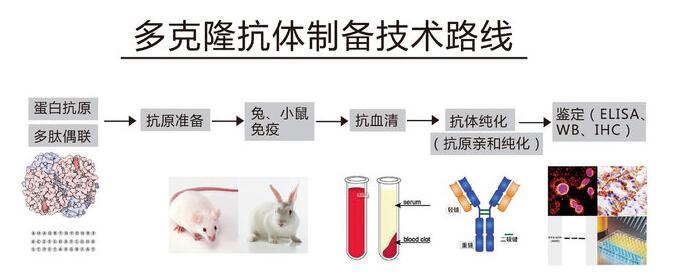
1)抗体的效价鉴定:不管是用于诊断还是用于治疗,制备抗体的目的都是要求较高效价。不同的抗原制备的抗体,要求的效价不一。鉴定效价的方法很多,包括有试管凝集反应,琼脂扩散试验,酶联免疫吸附试验等。常用的抗原所制备的抗体一般都有约成的鉴定效价的方法,以资比较。如制备抗抗体的效价,一般就采用琼脂扩散试验来鉴定。
2)抗体的特异性鉴定:抗体的特异性是指与相应抗原或近似抗原物质的识别能力。抗体的特异性高,它的识别能力就强。衡量特异性通常以交叉反应率来表示。交叉反应率可用竞争抑制试验测定。以不同浓度抗原和近似抗原分别做竞争抑制曲线,计算各自的结合率,求出各自在IC50时的浓度,并按公式计算交叉反应率。
如果所用抗原浓度IC50浓度为pg/管,而一些近似抗原物质的IC50浓度几乎是无穷大时,表示这一抗血清与其他抗原物质的交叉反应率近似为0,即该血清的特异性较好。
3)抗体亲和力:是指抗体和抗原结合的牢固程度。亲和力的高低是由抗原分子的大小,抗体分子的结合位点与抗原决定簇之间立体构型的合适度决定的。有助于维持抗原抗体复合物稳定的分子间力有氢键,疏水键,侧链相反电荷基因的库仑力,范德华力和空间斥力。亲和力常以亲和常数K表示,K的单位是L/mol。抗体亲和力的测定对抗体的筛选,确定抗体的用途,验证抗体的均一性等均有重要意义。
phospho-PLB(Ser16) 磷酸化心脏磷蛋白抗体 特价促销
ADM2 中介素抗体 特价促销
CATSPER 阳离子通道相关蛋白1抗体 特价促销
Vitamin D Receptor/VDR 维生素D3受体抗体 特价促销
Mitofusin 2/MFN2 线粒体融合蛋白Mfn2抗体 特价促销
ABL2 ABL2蛋白抗体 特价促销
ABI1 ABI1/SSH3BP1蛋白抗体 特价促销
ACADS 酰基辅酶A脱氢酶短链抗体 特价促销
ABP/SHBG 雄激素结合蛋白抗体 特价促销
ACADM/MCAD 酰基辅酶A脱氢酶中链抗体 特价促销
ACADL 酰基辅酶A脱氢酶长链抗体 特价促销
ACADVL 酰基辅酶A脱氢酶很长链抗体 特价促销
磷酸化细胞核因子p50/k基因结合核因子抗体AFP / alpha-fetoprotein 抗體, 鼠單抗 现货促销
AFP / alpha-fetoprotein 抗體, 兔單抗 现货促销
AFP / alpha-fetoprotein 抗體, 兔單抗 现货促销
AFP / alpha-fetoprotein 抗體, 兔多抗 现货促销
AFP / alpha-fetoprotein 抗體, 兔多抗 现货促销
AFP / alpha-fetoprotein 抗體, 兔多抗, 抗原親和純化 现货促销
AFP / alpha-fetoprotein 抗體, 兔多抗, 抗原親和純化 现货促销
磷酸化细胞核因子p50/k基因结合核因子抗体技术外包服务:
★分子生物学:质粒抽提、PCR、Q-PCR、RT-PCR、分子生物学:基因合成、引物合成、基因测序、载体构建等
★蛋白工程:原核、哺乳动物蛋白表达系统等
★病毒包装:腺病毒、慢病毒等
★抗体工程:磁珠分选、病理染色、WB、ELISA、IP、IF、IHC、FACS、Confocal等等
★细胞工程:细胞表型分析(凋亡、增殖、周期、迁移、侵袭、修复、克隆形成)、细胞培养、细胞膜制备、稳定细胞株构建、细胞RNAi技术等等。
风险提示:丁香通仅作为第三方平台,为商家信息发布提供平台空间。用户咨询产品时请注意保护个人信息及财产安全,合理判断,谨慎选购商品,商家和用户对交易行为负责。对于医疗器械类产品,请先查证核实企业经营资质和医疗器械产品注册证情况。
 文献和实验
文献和实验-AT主要参与T细胞的活化。上面已经提到,胞质中无活性状态的NF-AT以磷酸化的形式存在,称为NF-ATp,钙调磷酸酶作用后使其脱磷酸化而被激活并发生转位。而钙调磷酸酶能发挥作用,是信号转导的结果。 2.NF-κB NF含义同上。κB指B细胞x链,由两个亚单位p50和p65组成,其发现和定名是因为参与B细胞活化。现知它是一种分布广泛和十分重要的转录因子。通常,NF-κB在胞质中和抑制因子LxB以复合物的形式存在。PKC可使I-κB发生磷酸化造成该复合物解离,从而解除了I-κB对NF-κB
表观遗传是指 DNA 序列不发生变化但基因表达却发生了可遗传的改变,即基因型未发生变化而表型却发生了改变。换言之,这是一种 DNA 序列外的遗传方式。因素如 DNA 甲基化、组蛋白修饰和 miRNA 是对环境刺激因素变化的反映,这些表观遗传学因素相互作用以调节基因表达,控制细胞表型,所有这些表观遗传学因素都是维持机体内环境稳定所必需的,有助于正常生理功能的发挥。 组蛋白的翻译后修饰不仅与染色体的重塑和功能紧密相关,而且在决定细胞命运、细胞生长以及致癌作用的过程中发挥着重要的作用,如组蛋白磷酸化
【求助】新手 请问western-blot测NF-KB、FLT3是用总蛋白提取试剂盒吗
1 为什么要用细胞总蛋白做p65,而不用胞核蛋白呢?这样胞浆的IKBα的水平和胞核NF-κB的水平是不是也可以的? 2 有些因子是通过促进P65核转位(自IkB解离,而IkB量并不变),就是说IKB自解离,那实际上在NF-κB入核的过程中,胞浆的IKB用western做是不是也应该增加啊? 还是说在IKB没解离前,一抗就能和IKBα结合? 1 测NFkB活性变化,对于非磷酸化抗体,必须做核蛋白的western或EMSA,这是反映NFkB有无功能改变;如果核蛋白有变
 技术资料
技术资料暂无技术资料 索取技术资料

