

- ¥600 - 2000
- ATCC
- XY-XB-2146
- 中国/美国
- 2025年08月05日

企业认证
相关产品推荐更多 >
万千商家帮你免费找货
0 人在求购买到急需产品
- 详细信息
- 文献和实验
- 技术资料
- 库存:
100
- 细胞类型:
科研
- 品系:
详情请咨询我司客服
- 组织来源:
详情请咨询我司客服
- 物种来源:
鼠/人/其它
- 细胞形态:
上皮样/成纤维样/其它
- 器官来源:
详情请咨询我司客服
- 运输方式:
常温运输/干冰运输
- 年限:
详情请咨询我司客服
- 生长状态:
贴壁/悬浮
- 英文名:
SPC-A1
产品简介:
[品系] ……………………Human
[组织来源]………………详情请咨询
[生长状态]………………贴壁/悬浮
[细胞类型]………………详情请咨询
[疾病] ……………………正常
[应用] ……………………科研
生物安全:
不含有 HIV-1、 HBV、HCV、支原体、细菌、酵母和真菌等。
产品包装:
提供新鲜或者冻存的细胞
使用方法:
如是新鲜细胞,客户收到细胞后应立即将其放入CO2细胞培养箱内静置3-4个小时,再进行后续的实验操作;如是冻存细胞, 客户收到细胞后应立即将其放入液氮、-80℃冰箱或立即进行复苏。
细胞培养 :
(1)Getting Started with an ATCC Cell Line:
ATCC cell lines and hybridomas are shipped frozen on dry ice in cryopreservation vials or as growing
cultures in flasks at ambient temperature. Upon receipt of frozen cells, it is important to immediately revive
them by thawing and removing the DMSO and placing them into culture. If this is not possible, store the
cells in liquid nitrogen vapor (below −130°C). Do not store frozen cells at temperatures above −130°C as
their viability will decline rapidly.
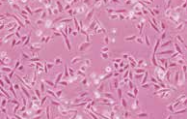
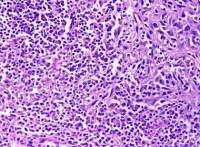
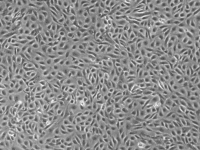
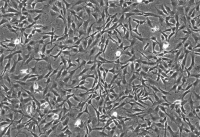
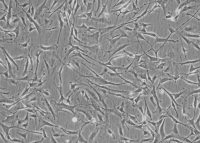
(2)细胞图片:

(3)Initiating Frozen Cultures:
1. Prepare a culture vessel so that it contains the recommended volume
of the appropriate culture medium as listed on the Product Sheet,
equilibrated for temperature and pH (CO₂).
2. Thaw the vial by gentle agitation in a water bath at 37°C or the normal growth temperature for that cell
line. Thawing should be rapid, approximately 2 minutes or until ice crystals have melted.
3. Remove the vial from the water bath and decontaminate it by dipping in or spraying with 70% ethanol.
Follow strict aseptic conditions in a laminar flow tissue culture hood for all further manipulations.
4. Unscrew the top of the vial and transfer the contents to a sterile
centrifuge tube containing 9 mL of the recommended medium.
Remove the cryoprotectant agent (DMSO) by gentle centrifugation (10
minutes at 125 × g). Discard the supernatant, and resuspend the cells
in 1 or 2 mL of complete growth medium. Transfer the cell suspension
into the culture vessel containing the complete growth medium and
mix thoroughly by gentle rocking.
Some ATCC cell, are shipped as growing cultures in culture vessels. These vessels are seeded with cells,
incubated to ensure cell growth and then filled completely with medium for shipping.
Upon receiving a flask culture, visually examine the medium for macroscopic evidence of microbial contamination. This includes
unusual pH shifts (yellow or purple color from the phenol red),
turbidity, or particles. With an inverted microscope at low power
(100×) check the medium for evidence of microbial contamination
as well as the morphology of the cells. See page 6 for more details
on examining cell cultures.
烜雅生物发布
质量可靠,售后有保障
如运输过程中导致细胞污染或者死亡,我们将无条件补发收货后十个工作日内有其他问题提供照片可半价重发
人肺腺癌细胞_SPC-A1相关产品:
| LTEP-a-2 | 肺腺癌 |
| MM96L | 黑色素瘤 |
| SH-77 | 小细胞肺癌 |
| J-111 | 单核细胞白血病 |
| NCI-H446 | 小细胞肺癌 |
| Dami | 巨核细胞 |
| SPC-A-1 | 肺腺癌 |
| CHMas | 肥大细胞白血病 |
| SGC-7901 | 胃腺癌 |
| HEL | 红细胞白血病 (Erythroleukemia) |
| BGC-823 | 低分化胃腺癌 |
| HL-60 | 原髓细胞白血病 (Promyelocytic lenukemia) |
| LoVo | 结肠腺癌 |
| Hut-78 | 皮肤T细胞淋巴瘤 |
| Ls-174-T | 结肠腺癌 |
风险提示:丁香通仅作为第三方平台,为商家信息发布提供平台空间。用户咨询产品时请注意保护个人信息及财产安全,合理判断,谨慎选购商品,商家和用户对交易行为负责。对于医疗器械类产品,请先查证核实企业经营资质和医疗器械产品注册证情况。
 文献和实验
文献和实验都是贴壁细胞,在消化传代过程中,步骤如下:倒尽旧的培养液->用无血清的培养基清洗一两次->加入一定量的胰酶,置于37度培养箱中5--10分钟,使细胞悬浮->显微镜下观察,待细胞大部分变圆时,回到超静台->加入一定量的含血清的新培养液,以终止胰酶作用->反复吹打细胞->再置显微镜下观察,直到细胞全部悬浮起来->吸出一部分加入新的培养瓶中->最后再补充加入一定量新的培养液。注意: 1、吹细胞时尽量多吹边角儿,此处细胞生长的多。2、吸出细胞前要混匀,可以剧烈震荡培养瓶。3、我们用的是DMEM
为了逃避免疫攻击,癌细胞又出新招!Cancer Cell 发现连胶原蛋白也「叛变」了……
蛋白 I 型胶原蛋白是体内最丰富的蛋白质,由成纤维细胞产生,主要存在于骨骼、肌腱和皮肤中。在其正常形式中,胶原蛋白是由两条 α1 链(Col1a1)和一条 α2 链(Col1a2)组成的异源三聚体,它们组装形成三螺旋结构,作为细胞外基质的一部分。然而,在研究人类胰腺癌细胞系时,研究人员发现这些细胞会产生非典型形式的胶原蛋白。 他们发现这些细胞仅表达编码 α1 链的基因(Col1a1),而成纤维细胞则同时表达这两种基因。进一步分析表明,癌细胞通过表观遗传高甲基化使编码 α2 的基因(Col1a2)沉默
显示有些 PD-L1 诊断抗体并不特异[6],作者分别使用 PD-L1 28-8 和 C 公司 PD-L1 诊断抗体,对野生型和敲除的人肺腺癌细胞系 L2987 和人卵巢透明细胞癌细胞系 ES-2 的石蜡切片进行了 IHC 染色:在其他条件保持一致的情况下, 两种抗体(2 ug/mL)在 L2987 的 KO 细胞中均未检出信号(图 1A-D);28-8(3 ug/mL)在 ES-2 的 KO 细胞中未检测到信号,但 C 公司 PD-L1 诊断抗体(2 ug/mL)却呈现了非特异的胞浆染色(图 1E
 技术资料
技术资料暂无技术资料 索取技术资料

