

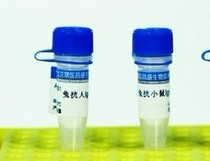
- 询价
- 上海谷研
- GOY-K347
- 进口/国产
- 2025年07月14日
- WB=1:100-500 ELISA=1:500-1000 IP=1:20-100 IHC-P=1:100-500 IHC-F=1:100-500 IF=1:100-500
- 详见说明书
- 详见说明书

企业认证
相关产品推荐更多 >

万千商家帮你免费找货
0 人在求购买到急需产品
相关阅读
香烟烟雾如何加速声带纤维化?CD44-透明质酸轴是关键通路Takara 秋促来袭,提取+反转录+定量套装仅 1200 元abinScience 体内级抗体 全年锁价 低至 ¥1200阿拉丁 22万+ 科研级产品现货速发,品质严控、科研无忧- 详细信息
- 文献和实验
- 技术资料
- 抗体名:
磷酸化低密度脂蛋白受体相关蛋白6抗体
- 抗体英文名:
Anti-Phospho-LRP6(Thr1479)
- 靶点:
详见说明书
- 浓度:
1mg/1ml
- 应用范围:
WB=1:100-500 ELISA=1:500-1000 IP=1:20-100 IHC-P=1:100-500 IHC-F=1:100-500 IF=1:100-500
- 宿主:
详见说明书
- 供应商:
上海谷研
- 库存:
36
- 级别:
详见说明书
- 目录编号:
详见说明书
- 抗原来源:
Rabbit
- 保质期:
详见说明书
- 适应物种:
详见说明书
- 标记物:
详见说明书
- 克隆性:
多克隆
- 保存条件:
Store at -20 °C
- 形态:
详见说明书
- 亚型:
IgG
- 免疫原:
KLH conjugated Synthesised phosphopeptide derived from human LRP6 around the phosphorylation site of Thr1479
- 规格:
0.1ml/100μg
第一抗体就是平常所说的抗体,即能和抗原特异性结合。
第二抗体是能和抗体结合的,即抗体的抗体。主要用于检测抗体的存在。
一抗是针对抗原的抗体,二抗是针对一抗的抗体。即抗体也可以充当抗原刺激机体产生抗体。也就是说,抗原进入机体刺激机体免疫系统产生免疫应答,由B细胞可以产生与相应抗原发生特异性结合的特殊蛋白质。
一抗二抗都是一种可以特异结合别的物质的基团,而且一抗可以至少结合两种其他基团(底物和二抗)。
一抗:可以特异结合底物,就是识别出我们想要检测的东西。一抗和底物结合与否用肉眼是看不出来的。
二抗:可以和一抗结合,并带有可以被检测出的标记(如带荧光、放射性、化学发光或显色基团),作用是检测一抗。 如果一抗自己带有可以被检测出的标记(如带荧光、放射性、化学发光或显色基团),则不需要二抗。但这样成本很高,因为一种一抗只识别一种底物。所以如今的设计一般是二抗带上可检测标记,再来检测一抗。而一抗识别底物。这样,当一抗结合到底物上,就可以通过二抗检测出来。
磷酸化低密度脂蛋白受体相关蛋白6抗体0.1ml/100μg详细说明如下:
英文名称 Anti-Phospho-LRP6(Thr1479)
中文名称 磷酸化低密度脂蛋白受体相关蛋白6抗体0.1ml/100μg
别 名 LRP6 (Phospho-Thr1479); LRP6 (Phospho-T1479); p-LRP6 (Thr1479); p-LRP6 (T1479); ADCAD2; C030016K15Rik; Cd; FLJ90062; FLJ90421; Low density lipoprotein receptor related protein 6; LRP6_HUMAN; Low-density lipoprotein receptor-related protein 6; low-density lipoprotein receptor-related protein 6 precursor; LRP-6.

浓 度 1mg/1ml
规 格 0.1ml/100μg
抗体来源 Rabbit
克隆类型 polyclonal
交叉反应 Human, Mouse, Dog, Pig, Cow, Horse, Rabbit, Guinea Pig
产品类型 一抗 磷酸化抗体
研究领域 肿瘤 心血管 免疫学 神经生物学 信号转导 合成与降解
蛋白分子量 predicted molecular weight:175kDa
性 状 Lyophilized or Liquid
免 疫 原 KLH conjugated Synthesised phosphopeptide derived from human LRP6 around the phosphorylation site of Thr1479
亚 型 IgG
纯化方法 affinity purified by Protein A
储 存 液 0.01M PBS, pH 7.4 with 10 mg/ml BSA and 0.1% Sodium azide

磷酸化低密度脂蛋白受体相关蛋白6抗体0.1ml/100μg产品应用 WB=1:100-500 ELISA=1:500-1000 IP=1:20-100 IHC-P=1:100-500 IHC-F=1:100-500 IF=1:100-500
(石蜡切片需做抗原修复)
not yet tested in other applications.
optimal dilutions/concentrations should be determined by the end user.
保存条件 Store at -20 °C for one year. Avoid repeated freeze/thaw cycles. The lyophilized antibody is stable at room temperature for at least one month and for greater than a year when kept at -20°C. When reconstituted in sterile pH 7.4 0.01M PBS or diluent of antibody the antibody is stable for at least two weeks at 2-4 °C.
Important Note This product as supplied is intended for research use only, not for use in human, therapeutic or diagnostic applications.
产品介绍 This gene encodes a member of the low density lipoprotein (LDL) receptor gene family. LDL receptors are transmembrane cell surface proteins involved in receptor-mediated endocytosis of lipoprotein and protein ligands. The protein encoded by this gene functions as a receptor or, with Frizzled, a co-receptor for Wnt and thereby transmits the canonical Wnt/beta-catenin signaling cascade. Through its interaction with the Wnt/beta-catenin signaling cascade this gene plays a role in the regulation of cell differentiation, proliferation, and migration and the development of many cancer types. This protein undergoes gamma-secretase dependent RIP- (regulated intramembrane proteolysis) processing but the precise locations of the cleavage sites have not been determined.[provided by RefSeq, Dec 2009].
Function :
Component of the Wnt-Fzd-LRP5-LRP6 complex that triggers beta-catenin signaling through inducing aggregation of receptor-ligand complexes into ribosome-sized signalsomes. Cell-surface coreceptor of Wnt/beta-catenin signaling, which plays a pivotal role in bone formation. The Wnt-induced Fzd/LRP6 coreceptor complex recruits DVL1 polymers to the plasma membrane which, in turn, recruits the AXIN1/GSK3B-complex to the cell surface promoting the formation of signalsomes and inhibiting AXIN1/GSK3-mediated phosphorylation and destruction of beta-catenin. Required for posterior patterning of the epiblast during gastrulation.
Subunit :
Homodimer; disulfide-linked. Forms phosphorylated oligomer aggregates on Wnt-signaling. Forms a WNT-signaling complex formed of a WNT protein, a FZD protein and LRP5 or LRP6. Interacts (via the extracellular domain) with WNT1; the interaction is enhanced by prior formation of the Wnt/Fzd complex. Interacts (via the beta-propeller regions 3 and 4) with WNT3A. Interacts (via the beta-propeller regions 1 and 2) with WNT9B. Interacts with FZD5; the interaction forms a coreceptor complex for Wnt signaling and is inhibited by DKK1 and C1orf187. Interacts (via beta propeller regions 3 and 4) with DKK1; the interaction inhibits FZD5/LRP6 complex formation. Interacts with DKK2. Interacts with C1orf187/DRAXIN; the interaction inhibits Wnt signaling. Interacts (via the phosphorylated PPPSP motifs) with AXIN1; the interaction recruits the AXIN1/GSK3B complex to cell surface LRP6 signalsomes. Interacts with GRB10; the interaction prevents AXIN1 binding, thus negatively regulating the Wnt signaling pathway. Interacts (via the extracellular domain) with RSPO1; the interaction activates Wnt/beta-catenin signaling. Interacts (via the extracellular domain) with RSPO3 (via the cysteine rich domain); the interaction activates Wnt/beta-catenin signaling. Interacts (via the beta-propeller regions 1 and 2) with SOST; the interaction competes with DKK1 for binding for inhibiting beta-catenin signaling. Interacts with MESD; the interaction prevents the formation of LRP6 aggregates and targets LRP6 to the plasma membrane. Interacts (via the cytoplasmic domain) with CSNKIE; the interaction phosphorylates LRP6, binds AXIN1 and inhibits AXIN1/GSK3B-mediated phosphorylation of beta-catenin. Interacts with MACF1.
Subcellular Location :
Membrane; Single-pass type I membrane protein. Endoplasmic reticulum. Note=On Wnt signaling, undergoes a cycle of caveolin- or clathrin-mediated endocytosis and plasma membrane location. Released from the endoplasmic reticulum on palmitoylation. Mono-ubiquitination retains it in the endoplasmic reticulum in the absence of palmitoylation. On Wnt signaling, phosphorylated, aggregates and colocalizes with AXIN1 and GSK3B at the plasma membrane in LRP6-signalsomes. Chaperoned to the plasma membrane by MESD.

磷酸化低密度脂蛋白受体相关蛋白6抗体0.1ml/100μg抗体的多样性:
抗体的异质性。抗体的组成极为复杂,是由成千上万、多种多样的免疫球蛋白(Ig)分子所组成。这些Ig分子在形状、大小、结构以及氨基酸的组成和排列上,既相似,又有差别。由于有差别,它们的电泳活性就有很大的变化。
因为抗体具有与抗原决定簇相对应的结合部位(抗原结合簇),所以抗体与抗原的结合具有特异性。另一方面,抗体本身是一种蛋白质,具有本身的氨基酸组成、排列和立体结构,对异种动物来说,它又是抗原。各类Ig都具有可用血清学方法检出的抗原特异性,它们表现出不同的血清学类型。
磷酸化低密度脂蛋白受体相关蛋白6抗体0.1ml/100μg抗体的生活习性:
(1)结合特异性抗原:抗体与其他免疫球蛋白分子区别,就在于抗体能与相应抗原发生特异性结合,在体内导致生理或病理效应;在体外产生各种直接或间接的可见的抗原抗体结合反应。抗体是靠其分子上的特殊的结合部位与抗原结合的。
(2)激活补体:抗体与相应抗原结合后,借助暴露的补体结合点去激活补体系统、激发补体的溶菌、溶细胞等免疫作用。
(3)结合细胞:不同类别的免疫球蛋白,可结合不同种的细胞,产生不同的疚,参与免疫应答。
(4)可通过胎盘及粘膜:免疫球蛋白G(IgG)能通过胎盘进入胎儿血流中,使胎儿形成自然被动免疫。免疫球蛋白A(IgA)可通过消化道及呼吸道粘膜,是粘膜局部抗感染免疫的主要因素。
(5)具有抗原性:抗体分子是一种蛋白质,也具有刺激机体产生免疫应答的性能。不同的免疫球蛋白分子,各具有不同的抗原性。
(6)抗体对理化因子的抵抗力与一般球蛋白相同:不耐热,60~70℃即被破坏。各种酶及能使蛋白质凝固变性的物质,均能破坏抗体的作用。抗体可被中性盐类沉淀。在生产上常可用硫酸铵或硫酸钠从免疫血清中沉淀出含有抗体的球蛋白,再经透析法将其纯化。
公司,由具有资深行业背景和丰富市场经验的专业人士组成,致力于为生命科学研究领域提供优质产品,为广大科研工作者提供最优质服务。既能满足研发类客户对产品种类、包装、纯度的特殊要求,也能满足生产型企业从小试、中试到规模化生产各个阶段的综合需求。

C2ORF25 2号染色体开放阅读框25抗体 特价促销
C2orf60 2号染色体开放阅读框抗体 特价促销
C2orf68 2号染色体开放阅读框68抗体 特价促销
C2ORF47 2号染色体开放阅读框47抗体 特价促销
TCF9/GCF 转录因子9抗体 特价促销
EGFR5/CLEC14A 表皮生长因子受体5抗体 特价促销
C2orf44 2号染色体开放阅读框44抗体 特价促销
C2orf42 2号染色体开放阅读框42抗体 特价促销
C2orf43 2号染色体开放阅读框43抗体 特价促销
C2orf55 2号染色体开放阅读框55抗体 特价促销
磷酸化低密度脂蛋白受体相关蛋白6抗体0.1ml/100μg人骨成型蛋白2(BMP-2)ELISA试剂盒 现货供应 0.156-10 ng/mL
人骨成型蛋白4(BMP-4)ELISA试剂盒 现货供应 31.2-2000 pg/mL
人骨成型蛋白7(BMP-7)ELISA试剂盒 现货供应 78-5000 pg/mL
人骨成型蛋白受体1A(BMPR-1A)ELISA试剂盒 现货供应 31.2-2000 pg/mL
人骨钙素/骨谷氨酸蛋白(OC/BGP)ELISA试剂盒 现货供应 78-5000 pg/mL
人骨骼肌肌动蛋白α1(ACTα1)ELISA试剂盒 现货供应 0.156-10 ng/mL
人骨骼肌快肌肌钙蛋白T Ⅲ型(TNNT3)ELISA试剂盒 现货供应 15.6-1000 pg/mL
人骨骼肌特异性受体酪氨酸激酶(MUSK)ELISA试剂盒 现货供应 0.156-10 ng/mL
人骨骼型兰尼定受体1(RYR1)ELISA试剂盒 现货供应 0.156-10 ng/mL
人骨膜蛋白(POSTN)ELISA试剂盒 现货供应 0.156-10 ng/mL
风险提示:丁香通仅作为第三方平台,为商家信息发布提供平台空间。用户咨询产品时请注意保护个人信息及财产安全,合理判断,谨慎选购商品,商家和用户对交易行为负责。对于医疗器械类产品,请先查证核实企业经营资质和医疗器械产品注册证情况。
 文献和实验
文献和实验能和 FcγR Ⅲ/Ⅱ结合,封闭非特异性染色,使阴性细胞的背景荧光降至未标记细胞的水平。加入 0.5-1μg 纯的抗小鼠 CD16/32 单克隆抗体,室温孵育 10min。 对于人和大鼠,可直接使用过量的与荧光抗体相同来源和亚型的纯化 Ig 或者与目标种属相同来源血清进行阻断,或者用商业化的 Fc 受体阻断剂。 五、细胞表面抗体孵育 根据实验设计,除空白对照外,对应的单染管、全染管加入相应的抗体 5μL,混匀,4℃ 避光孵育 30min。 六、固定破膜 按照说明书稀释固定破膜液。 每管加入
的作用是调控基因表达。例如组蛋白甲基化多导致基因沉默,去甲基化则相反;乙酰化一般是转录激活,去乙酰化则相反。当然,也可在此基础上产生复杂的生物学效应。例如组蛋白去乙酰化酶 HDAC 可影响免疫系统;H3K4me3、H3K9me2 能够调控记忆的形成, 而且 H3K 甲基化与 X 染色体失活、基因组印记和异染色质形成有关;H3 乙酰化通过多种机制调控以来 ATP 的染色质重塑 ,并参与炎症反应;H2A、H2B 泛素化则与 DNA 损害反应有关;而 H3S28 磷酸化与 H3K27 乙酰化可激活转录
抗[E-AB-F0997A]进行封闭:往 100 μL(细胞数1×10⁶)细胞悬液中加入 1 μg 纯抗,室温封闭 15 min,直接加入流式抗体进行后续实验。 巨噬细胞检测应尽量避免使用含花青素的流式抗体(如 PE-Cy7),会增加非特异性染色。若为非巨噬细胞检测,使用含花青素的流式抗体(如 PE-Cy7)时也需要封闭。
 技术资料
技术资料暂无技术资料 索取技术资料

