- 询价
- 上海谷研
- GOY-K002
- 进口/国产
- 2025年07月08日
- WB=1:100-500 ELISA=1:500-1000 IP=1:20-100 IHC-P=1:100-500 IHC-F=1:100-500 ICC=1:100-500 IF=1:100-500
- 详见说明书
- 详见说明书

企业认证
相关产品推荐更多 >


万千商家帮你免费找货
0 人在求购买到急需产品
- 详细信息
- 文献和实验
- 技术资料
- 抗体名:
磷酸化上皮细胞癌转化蛋白2抗体
- 抗体英文名:
Anti-phospho-ECT2 (Ser370)
- 靶点:
详见说明书
- 浓度:
1mg/1ml
- 应用范围:
WB=1:100-500 ELISA=1:500-1000 IP=1:20-100 IHC-P=1:100-500 IHC-F=1:100-500 ICC=1:100-500 IF=1:100-500
- 宿主:
详见说明书
- 供应商:
上海谷研
- 库存:
21
- 级别:
详见说明书
- 目录编号:
详见说明书
- 抗原来源:
Mouse
- 保质期:
详见说明书
- 适应物种:
详见说明书
- 标记物:
详见说明书
- 克隆性:
多克隆
- 保存条件:
Store at -20 °C
- 形态:
详见说明书
- 亚型:
IgG
- 免疫原:
KLH conjugated synthesised phosphopeptide derived from human ECT2 around the phosphorylation site of Ser370
- 规格:
0.1ml/200μg
英文名称 Anti-phospho-ECT2 (Ser370)
中文名称 磷酸化上皮细胞癌转化蛋白2抗体 0.1ml/200μg
别 名 ECT2 (phospho S370); ECT2 (phospho Ser370); p-ECT2 (Ser370); ECT 2; ECT2; ECT-2; ECT2 protein; Epithelial cell transforming sequence 2; Epithelial cell transforming sequence 2 oncogene; Epithelial cell transforming sequence 2 oncogene protein; FLJ10461; MGC138291; Protein ECT2; ECT2_HUMAN; Epithelial cell-transforming sequence 2 oncogene.

浓 度 1mg/1ml
规 格 0.1ml/200μg
抗体来源 Rabbit
克隆类型 polyclonal
交叉反应 Human
产品类型 一抗 磷酸化抗体
研究领域
性 状 Lyophilized or Liquid
免 疫 原 KLH conjugated synthesised phosphopeptide derived from human ECT2 around the phosphorylation site of Ser370
亚 型 IgG
纯化方法 affinity purified by Protein A
储 存 液 Preservative: 15mM Sodium Azide, Constituents: 1% BSA, 0.01M PBS, pH 7.4

磷酸化上皮细胞癌转化蛋白2抗体 0.1ml/200μg 产品应用 WB=1:100-500 ELISA=1:500-1000 IP=1:20-100 IHC-P=1:100-500 IHC-F=1:100-500 ICC=1:100-500 IF=1:100-500
(石蜡切片需做抗原修复)
not yet tested in other applications.
optimal dilutions/concentrations should be determined by the end user.
保存条件 Store at -20 °C for one year. Avoid repeated freeze/thaw cycles. The lyophilized antibody is stable at room temperature for at least one month and for greater than a year when kept at -20°C. When reconstituted in sterile pH 7.4 0.01M PBS or diluent of antibody the antibody is stable for at least two weeks at 2-4 °C.
Important Note This product as supplied is intended for research use only, not for use in human, therapeutic or diagnostic applications.
产品介绍 The protein encoded by this gene is a transforming protein that is related to Rho-specific exchange factors and yeast cell cycle regulators. The expression of this gene is elevated with the onset of DNA synthesis and remains elevated during G2 and M phases. In situ hybridization analysis showed that expression is at a high level in cells undergoing mitosis in regenerating liver. Thus, this protein is expressed in a cell cycle-dependent manner during liver regeneration, and is thought to have an important role in the regulation of cytokinesis. [provided by RefSeq].
Function : Guanine nucleotide exchange factor (GEF) that catalyzes the exchange of GDP for GTP. Promotes guanine nucleotide exchange on the Rho family members of small GTPases, like RHOA, RHOC, RAC1 and CDC42. Required for signal transduction pathways involved in the regulation of cytokinesis. Component of the centralspindlin complex that serves as a microtubule-dependent and Rho-mediated signaling required for the myosin contractile ring formation during the cell cycle cytokinesis. Regulates the translocation of RHOA from the central spindle to the equatorial region. Plays a role in the control of mitotic spindle assembly; regulates the activation of CDC42 in metaphase for the process of spindle fibers attachment to kinetochores before chromosome congression. Involved in the regulation of epithelial cell polarity; participates in the formation of epithelial tight junctions in a polarity complex PARD3-PARD6-protein kinase PRKCQ-dependent manner. Plays a role in the regulation of neurite outgrowth. Inhibits Phenobarbital (PB)-induced NR1I3 nuclear translocation. Stimulates the activity of RAC1 through its association with the oncogenic PARD6A-PRKCI complex in cancer cells, thereby acting to coordinately drive tumor cell proliferation and invasion. Also stimulates genotoxic stress-induced RHOB activity in breast cancer cells leading to their cell death.
Subunit : Interacts with NR1I3 (By similarity). Homodimer. Homooligomer. Found in the centralspindlin complex. Interacts (Thr-359 phosphorylated form) with PARD6A; the interaction is observed in cancer cells. Interacts (Thr-359 phosphorylated form) with PRKCI; the interaction is observed in cancer cells. Interacts with PKP4; the interaction is observed at the midbody. Interacts with RACGAP1; the interaction is direct, occurs in a microtubule-dependent manner, is inhibited in metaphase by phosphorylation of ECT2 on Thr-373 and is stimulated in early anaphase by dephosphorylation of ECT2 probably on Thr-373 through CDK1 activity. Interacts with PLK1; the interaction is stimulated upon its phosphorylation on Thr-444. Associates with RACGAP1 at anaphase and during cytokinesis. Interacts with KIF23, PARD3, PARD6A, PARD6B and PRKCQ.
Subcellular Location : Nucleus. Cytoplasm. Cytoplasm, cytoskeleton, spindle. Cleavage furrow. Midbody. Cell junction. Cell junction, tight junction. Note=Sequestered within the nucleus during interphase. Dispersed throughout the cytoplasm upon breakdown of the nuclear envelope during mitosis. Colocalizes with the centralspindlin complex to the mitotic spindles during anaphase/metaphase, the cleavage furrow during telophase and at the midbody at the end of cytokinesis. Colocalized with RhoA at the midbody. Its subcellular localization to tight junction is increased by calcium. Localized predominantly in the cytoplasm of numerous carcinoma cells.
Tissue Specificity : Expressed in lung epithelial cells (at protein level). Expressed in squamous cell carcinoma, primary non-small cell lung cancer tumors and lung adenocarcinoma. [INDUCTION] Up-regulated by calcium in cells forming cell-cell contact sites. Up-regulated by DNA damaging agents like H(2)O(2) or ionizing radiation (IR).
Post-translational modifications : Phosphorylated by PLK1 in vitro. Hyperphosphorylated during the G2 phase of the cell cycle. Phosphorylation at Thr-373 occurs during the G2/M phase, relieves its auto-inhibition status and stimulates its GEF activity. Phosphorylation at Thr-444 in G2/M phase is required for subsequent binding with PLK1 and Rho exchange activation. Dephosphorylated at the time of cytokinesis. Phosphorylation at Thr-359 is required for its transformation activity in cancer cells.
Similarity : Contains 2 BRCT domains.
Contains 1 DH (DBL-homology) domain.
Contains 1 PH domain.
Database links : UniProtKB/Swiss-Prot: Q9H8V3.4
磷酸化上皮细胞癌转化蛋白2抗体 0.1ml/200μg 抗体的多样性:
抗体的异质性。抗体的组成极为复杂,是由成千上万、多种多样的免疫球蛋白(Ig)分子所组成。这些Ig分子在形状、大小、结构以及氨基酸的组成和排列上,既相似,又有差别。由于有差别,它们的电泳活性就有很大的变化。
因为抗体具有与抗原决定簇相对应的结合部位(抗原结合簇),所以抗体与抗原的结合具有特异性。另一方面,抗体本身是一种蛋白质,具有本身的氨基酸组成、排列和立体结构,对异种动物来说,它又是抗原。各类Ig都具有可用血清学方法检出的抗原特异性,它们表现出不同的血清学类型。
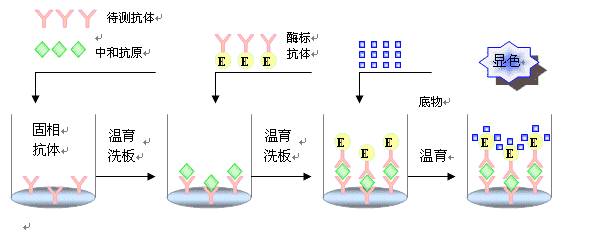
腺样癌特异性相关抗原EMC1抗体0.1ml/100μg ⑶实验步骤
① 滴加0.01mol/L,pH7.4的PBS于待检标本片上,10min后弃去,使标本保持一定湿度。
② 滴加适当稀释的荧光标记的抗体溶液,使其完全覆盖标本,置于有盖搪瓷盒内,保温一定时间(参考:30min)。
③ 取出玻片,置玻片架上,先用0.01mol/L,pH7.4的PBS冲洗后,再按顺序过0.01mol/L,pH7.4的PBS三缸浸泡,每缸3-5 min,不时振荡。
④ 取出玻片,用滤纸吸去多余水分,但不使标本干燥,加一滴缓冲甘油,以盖玻片覆盖。
⑤ 立即用荧光显微镜观察。观察标本的特异性荧光强度,一般可用“+”表示:
(-)无荧光;(±)极弱的可疑荧光;(+)荧光较弱,但清楚可见;(++)荧光明亮;(+++ --++++)荧光闪亮。待检标本特异性荧光染色强度达“++”以上,而各种对照显示为(±)或(-),即可判定为阳性。
⑷注意事项
1)对荧光标记的抗体的稀释,要保证抗体的蛋白有一定的浓度,一般稀释度不应超过1:20,抗体浓度过低,会导致产生的荧光过弱,影响结果的观察。
2)染色的温度和时间需要根据各种不同的标本及抗原而变化,染色时间可以从10 min到数小时,一般30 min已足够。染色温度多采用室温(25℃左右),高于37℃可加强染色效果,但对不耐热的抗原(如流行性乙型脑炎病毒)可采用0-2℃的低温,延长染色时间。低温染色较37℃30 min效果好的多。
3)为了保证荧光染色的正确性,首次试验时需设置下述对照,以排除某些非特异性荧光染色的干扰。
① 标本自发荧光对照:标本加1-2滴0.01mol/L,pH7.4的PBS。
② 特异性对照(抑制试验):标本加未标记的特异性抗体,再加荧光标记的特异性抗体。
③ 阳性对照:已知的阳性标本加荧光标记的特异性抗体。
如果标本自发荧光对照和特异性对照呈无荧光或弱荧光,阳性对照和待检标本呈强荧光,则为特异性阳性染色。
4)一般标本在高压汞灯下照射超过3min,就有荧光减弱现象,经荧光染色的标本zui好在当天观察,随着时间的延长,荧光强度会

动物组织氧化应激活性氧 ROS 光泽精化学发光法定量检测试剂盒 库存19 免疫测定
真菌/酵母细胞内氧化应激活性氧 ROS 光泽精化学发光法定量检测试剂盒 库存20 免疫测定
精液组分氧化应激活性氧 ROS 光泽精化学发光法定量检测试剂盒 库存21 免疫测定
精子细胞氧化应激活性氧 ROS 光泽精化学发光法定量检测试剂盒 库存22 免疫测定
细胞培养悬液氧化应激活性氧 ROS 光泽精化学发光法定量检测试剂盒 库存23 免疫测定
动物细胞氧化应激活性氧 ROS 光泽精化学发光法定量检测试剂盒 库存24 免疫测定
体液氧化应激活性氧 ROS 鲁米诺化学发光法定量检测试剂盒 库存25 免疫测定
血液氧化应激活性氧 ROS 鲁米诺化学发光法定量检测试剂盒 库存26 免疫测定
细胞样品细胞色素C氧化酶活性染色试剂盒 库存27 免疫测定
冰冻切片乙酰胆碱脂酶活性染色试剂盒 库存28 免疫测定
细胞乙酰胆碱脂酶活性染色试剂盒 库存29 免疫测定
全组织蔗糖酶活性染色试剂盒 库存30 免疫测定
冰冻切片蔗糖酶活性染色试剂盒 库存31 免疫测定
细胞蔗糖酶活性染色试剂盒 库存32 免疫测定
特殊石蜡切片磷脂尼罗红 NileRed 间接荧光染色试剂盒 库存33 免疫测定
冰冻切片甘油三脂脂酶法格莫瑞 Gomori 染色试剂盒 库存34 免疫测定
特殊石蜡切片甘油三脂脂酶法格莫瑞 Gomori 直接染色试剂盒 库存35 免疫测定
特殊石蜡切片甘油三脂脂酶法格莫瑞 Gomori 间接染色试剂盒 库存36 免疫测定
细胞甘油三脂脂酶法格莫瑞 Gomori 染色试剂盒 库存37 免疫测定
冰冻切片总胆固醇 酯酶法 菲律宾 FILIPIN 荧光染色试剂盒 库存38 免疫测定
特殊石蜡切片总胆固醇 酯酶法 菲律宾 FILIPIN 荧光直接染色试剂盒 库存39 免疫测定
特殊石蜡切片总胆固醇 酯酶法 菲律宾 FILIPIN 荧光间接染色试剂盒 库存40 免疫测定
细胞总胆固醇 酯酶法 菲律宾 FILIPIN 荧光染色试剂盒 库存41 免疫测定
冰冻切片总游离胆固醇菲律宾 FILIPIN 荧光染色试剂盒 库存42 免疫测定
特殊石蜡切片总游离胆固醇菲律宾 FILIPIN 荧光直接染色试剂盒 库存43 免疫测定
丽春红染色液(可提供标记服务)
NP-40裂解液(可提供标记服务)
考马斯亮蓝染色脱色液(常规法)(可提供标记服务)
SDS-PAGE凝胶转膜缓冲液(10x)(可提供标记服务)
蛋白示踪上样缓冲液(还原,5×)(可提供标记服务)
SDS裂解液(可提供标记服务)
G250蛋白快速染色试剂(可提供标记服务)
1.5M Tris-Cl (pH8.8)(可提供标记服务)
AuraStain SP兔IHC试剂盒(可提供标记服务)
蛋白示踪上样缓冲液(非还原,5×)(可提供标记服务)
0.5M Tris-Cl (pH6.8)(可提供标记服务)
Western Blot转膜液(粉剂)(可提供标记服务)
30% Acr-Bis (29:1)(可提供标记服务)
1M Tris-Cl (pH8.0)(可提供标记服务)
Biotin标记山羊抗鼠IgG(IHC工作液)(可提供标记服务)
Western Blot一抗稀释液(可提供标记服务)
细胞浆/核/膜蛋白抽提试剂盒(可提供标记服务)
SDS-PAGE浓缩胶缓冲液(4×)(可提供标记服务)
磷酸化上皮细胞癌转化蛋白2抗体 0.1ml/200μg Tween 20(可提供标记服务)
Biotin标记山羊抗兔IgG(IHC工作液)(可提供标记服务)
Western Blot封闭液1(BSA, pH7.5)(可提供标记服务)
细菌蛋白抽提试剂(可提供标记服务)
SDS-PAGE分离胶缓冲液(4×)(可提供标记服务)
Biotin标记山羊抗兔/鼠IgG(IHC工作液)(可提供标记服务)
Western Blot封闭液2(奶粉,pH7.5)(可提供标记服务)
磷酸化上皮细胞癌转化蛋白2抗体 0.1ml/200μg 具有全、新、优、品、好四大特点:
全:公司提供上万种产品,涵盖了生物试剂,elisa试剂盒,标准品,培养基,原装耗材,抗体、培养基、ATCC细胞等,基本上各种科研所需产品在我司都能找到。
新:产品更新速度较快,基本上每周都有新产品出现。
优:产品质量好,投诉比较少。
好:我公司具有优质的技术团队,产品一旦售出,实验过程中遇到困难可提供在线技术咨询。使您使用产品时没有任何的后顾之忧。
风险提示:丁香通仅作为第三方平台,为商家信息发布提供平台空间。用户咨询产品时请注意保护个人信息及财产安全,合理判断,谨慎选购商品,商家和用户对交易行为负责。对于医疗器械类产品,请先查证核实企业经营资质和医疗器械产品注册证情况。
 文献和实验
文献和实验Nature 深度剖析:管坤良与 Alj 组研究成果为何截然相反,Hippo 通路调控乳腺癌的两面性
磷酸化水平降低,发生核转位,结合转录因子 TEAD1-4,调控一系列下游基因的表达。 哺乳动物 Hippo 通路示意图 [2] Hippo 通路的失调常见于多种肿瘤,YAP/TAZ 的异常活化不仅促进肿瘤发生,更调控上皮 - 间质转化(EMT)、肿瘤干细胞干性维持、对化疗和多种靶向疗法的耐药、免疫逃逸等肿瘤病理过程 [2,3]。业已发现,在 ER + 乳腺癌中,Hippo 通路的失活使 YAP/TAZ 活化并上调 CDK4/6 的表达,从而介导对 CDK4/6 靶向药的耐药性 [4]。阐明
激活,肿瘤浸润巨噬细胞向促炎表型转化。 究其原因,研究者发现,肿瘤特有的肝细胞能促进炎性细胞因子分泌(TNF-α,IL-1β, IL-6 等)和相关基因表达,驱动肿瘤浸润的巨噬细胞向促炎表型倾斜,巨噬细胞受其驱动,IL-1β, IL-6 的基因表达上调,促炎性细胞因子增加并驱动了 HCC 中的炎症。对炎性巨噬细胞消除处理(GdCl3)后,小鼠肝脏/体重比、最大肿瘤直径有所恢复。 Miz1 抑制肿瘤发生机制在于:1.Miz1 与 RelA 竞争结合癌蛋白 MTDH。2.抑制IKK 酶活性降低
3 篇 Nature 连发,解决世纪难题,周期蛋白的毁灭调控蕴含癌症患者的新生
在 cyclin D 上,被泛素化标记的 cyclin D 将会被蛋白酶体降解。此外研究还发现,AMBRA1 缺失会导致 cyclin D 和 MYC 蛋白水平升高。cyclin D 与 CDK4/6 结合,使 RB1 蛋白磷酸化。磷酸化 RB1 释放 E2F 转录因子来驱动细胞周期进程所需基因的表达。在 AMBRA1 缺失的细胞中,cyclin D 也能与 CDK2 激酶形成复合物,使癌细胞能够抵抗 CDK4/6 抑制剂的治疗。高水平的 cyclin D 会促进细胞增殖,从而导致 DNA 损伤、复制应激
 技术资料
技术资料暂无技术资料 索取技术资料