

- ¥50000 - 100000
- 玉研仪器

- 大小鼠血氧、呼吸、体温、脉搏测量仪
- CHINA
- 2026年10月24日

企业认证
相关产品推荐更多 >
万千商家帮你免费找货
0 人在求购买到急需产品
相关阅读
源叶生物 十万种现货试剂速发,品质稳、品类全,实验不再等!Takara 秋促来袭,提取+反转录+定量套装仅 1200 元abinScience 体内级抗体 全年锁价 低至 ¥1200阿拉丁 22万+ 科研级产品现货速发,品质严控、科研无忧- 详细信息
- 询价记录
- 文献和实验
- 技术资料
- 库存:
100
- 国食药监械注册号:
无
- 保修期:
12个月
- 现货状态:
10天
- 供应商:
玉研仪器公司
- 规格:
敬请来电咨询
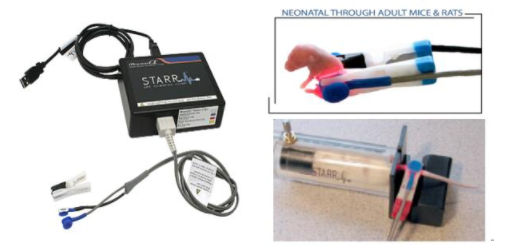
玉研仪器公司作为Mouse Ox Plus 小动物脉搏血氧仪产品的中国区总代理,该仪器适用于小鼠、大鼠、豚鼠、兔子等动物,可以在清醒或麻醉状态下测量动物的脉搏、血氧、呼吸、体温等多种生理参数。
· 小动物脉搏血氧仪可用于多参数数据的采集或手术监护,可拓展多通道大鼠、小鼠的生理信号测量仪;
· 以无创的方式测量小动物(幼鼠,小鼠,大鼠,豚鼠,兔, 等)的血氧饱和度、脉搏频率、呼吸频率、脉搏幅度、呼吸幅度和体温;
· 除体温外,所有测量都是通过一个无创的感应器。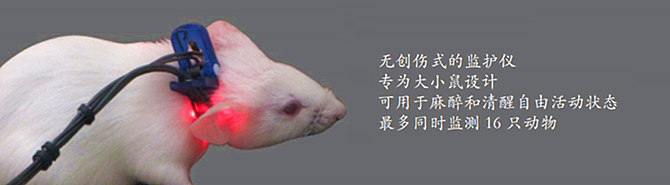
所有测量都是通过一个无创的感应器完成,准确、方便、高效。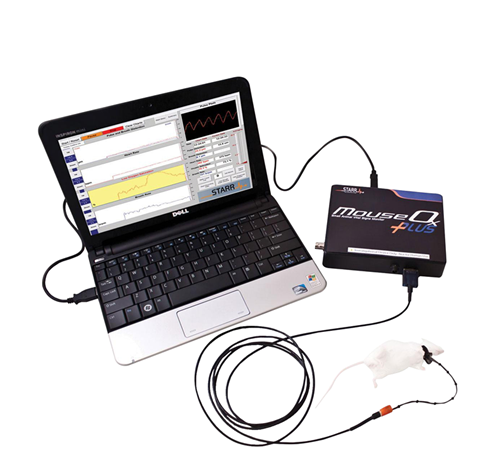
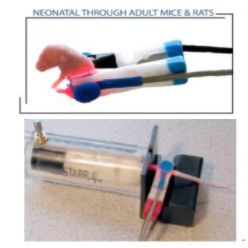
型号:MouseOx 正在对麻醉状态下的小鼠进行测试
有多种探头可供选择:
· 根据实验需求:可选择大鼠型探头、小鼠型探头;
· 根据动物状态:可选择清醒活动状态连续测量和麻醉(或手术)状态测量探头;
· 根据动物数量:有多通道适配器可供选择,同时检测多只动物的生命体征;
· 根据使用环境:可选择核磁环境适用的无磁探头;
主要功能:
· 小动物手术术中监测(保证适当的麻醉深度,防止手术中缺氧)
· 一个无创传感器获得多个生命信号 (动脉血氧饱和度,心率,呼吸频率,脉搏幅度,呼吸幅度)
· 心肺功能参数记录
· 输出模拟数据
经过验证的准确度:
使用有创血气采样测量结果与无创 MouseOx 测量结果的比较, 对比表明, 两者具有很好的线性关系。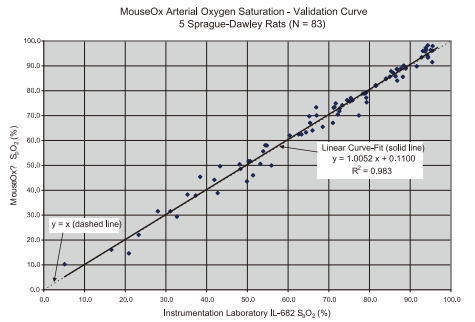
脉搏、血氧、呼吸等心肺监测参数:
· 脉波频率在90到900BPM范围内监测 (每分钟心跳, Beat per minutes, BPM)
· 血氧饱和度监测范围:0% 到100% 动脉血氧饱和度;
· 血氧饱和度监测误差:<1.5% 横跨整个监测范围;
· 血氧饱和度监测反应时间:实时报告动脉血氧饱和度, 在每次心跳以后0.72秒屏幕刷新;
· 呼吸频率监测范围:每分钟 25到450 次;
· 监测反应时间:呼吸率每1.7秒向用户报告, 移动报告的值是10次呼吸的的平均数;
· 无创伤监测脉搏充盈度以估量血流量的变化;
· 脉搏监测范围:内径0到800微米的徽小血管;
· 监测误差:< 2.4%横跨整个监测范围;
· 监测反应时间:脉搏充盈度实时向用户报告, 在每次心跳以后,0.72秒屏幕刷新,刷新屏幕显示被测量的所有脉搏充盈度;
· 无创伤监测动物呼吸幅度的变化;
· 呼吸幅度监测范围:每分钟25到450次;
· 呼吸幅度监测反应时间:呼吸率每1.7秒向用户报告, 移动报告的值是10次呼吸的的平均数;
多钟测试探头可选:
根据需要,可选择老鼠清醒状态下使用的颈部探头,麻醉状态下使用的足部探头和大腿探头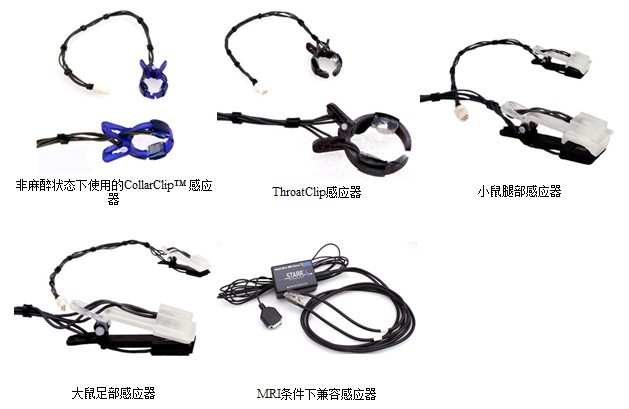
以下是使用有创血气采样测量结果与无创MouseOx测量结果的比较
可实现大鼠、小鼠清醒活动状态下进行测量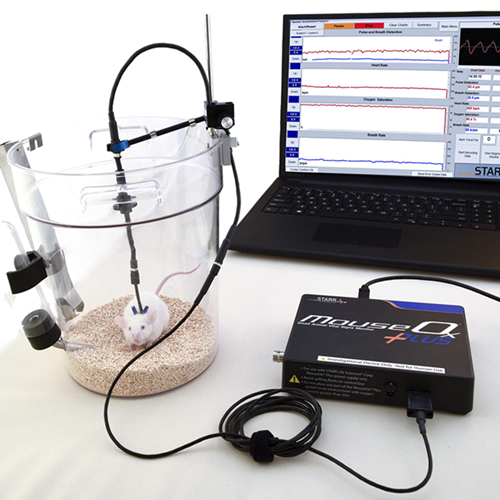
软件界面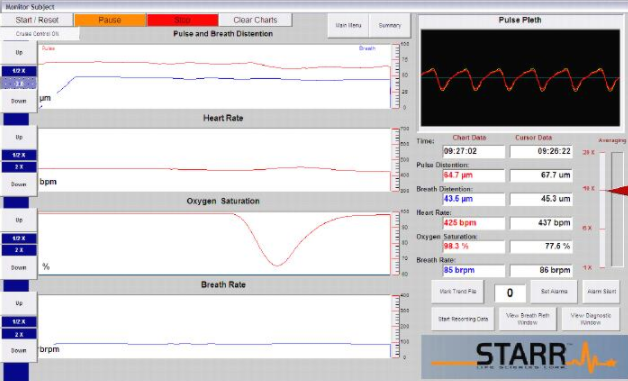
小动物脉搏血氧监护仪的部分参考文献:
1. Albéri, L., Lintas, A., Kretz, R., Schwaller, B., & Villa, A. E. (2013). The calcium-binding protein parvalbumin modulates the firing 1 properties of the reticular thalamic nucleus bursting neurons. Journal of neurophysiology, 109(11), 2827-2841.
2. Sonati, T., Reimann, R. R., Falsig, J., Baral, P. K., O’Connor, T., Hornemann, S., Aguzzi, A. (2013). The toxicity of antiprion antibodies is mediated by the flexible tail of the prion protein. Nature, 501(7465), 102-106.
3. Ali, I., O’Brien, P., Kumar, G., Zheng, T., Jones, N. C., Pinault, D., O’Brien, T. J. (2013). Enduring Effects of Early Life Stress on Firing Patterns of Hippocampal and Thalamocortical Neurons in Rats: Implications for Limbic Epilepsy. PLOS ONE, 8(6), e66962.
4. Bell, L. A., Bell, K. A., & McQuiston, A. R. (2013). Synaptic Muscarinic Response Types in Hippocampal CA1 Interneurons Depend on Different Levels of Presynaptic Activity and Different Muscarinic Receptor Subtypes. Neuropharmacology.
5. Bolzoni, F., Bączyk, M., & Jankowska, E. (2013). Subcortical effects of transcranial direct current stimulation (tDCS) in the rat. The Journal of Physiology.
6. Bolzoni, F., Bączyk, M., & Jankowska, E. (2013). Subcortical effects of transcranial direct current stimulation (tDCS) in the rat. The Journal of Physiology.
7. Babaei, P., Tehrani, B. S., & Alizadeh, A. (2013). Effect of BDNF and adipose derived stem cells transplantation on cognitive deficit in Alzheimer model of rats. Journal of Behavioral and Brain Science, 3, 156-161.
8. Gilmartin, M. R., Miyawaki, H., Helmstetter, F. J., & Diba, K. (2013). Prefrontal Activity Links Nonoverlapping Events in Memory. The Journal of Neuroscience, 33(26), 10910-10914.
9. Feng, L., Sametsky, E. A., Gusev, A. G., & Uteshev, V. V. (2012). Responsiveness to nicotine of neurons of the caudal nucleus of the solitary tract correlates with the neuronal projection target. Journal of Neurophysiology, 108(7), 1884-1894.
10. Clarner, T., Diederichs, F., Berger, K., Denecke, B., Gan, L., Van der Valk, P., Kipp, M. (2012). Myelin debris regulates inflammatory responses in an experimental demyelination animal model and multiple sclerosis lesions. Glia, 60(10), 1468-1480.
11. Girardet, C., Bonnet, M. S., Jdir, R., Sadoud, M., Thirion, S., Tardivel, C., Troadec, J. D. (2011). Central inflammation and sickness-like behavior induced by the food contaminant deoxynivalenol: A PGE2-independent mechanism.Toxicological Sciences, 124(1), 179-191.
12. Hruška-Plocháň, M., Juhas, S., Juhasova, J., Galik, J., Miyanohara, A., Marsala, M., Motlik, J. (2010). A27 Expression of the human mutant huntingtin in minipig striatum induced formation of EM48+ inclusions in the neuronal nuclei, cytoplasm and processes. Journal of Neurology, Neurosurgery & Psychiatry, 81(Suppl 1), A9-A9.
13. Brooks, S., Jones, L., & Dunnett, S. B. (2010). A29 Frontostriatal pathology in the (C57BL/6J) YAC128 mouse uncovered by the operant delayed alternation task. Journal of Neurology, Neurosurgery & Psychiatry, 81(Suppl 1), A9-A10.
14. Yu, L., Metzger, S., Clemens, L. E., Ehrismann, J., Ott, T., Gu, X., Nguyen, H. P. (2010). A28 Accumulation and aggregation of human mutant huntingtin and neuron atrophy in BAC-HD transgenic rat. Journal of Neurology, Neurosurgery & Psychiatry, 81(Suppl 1), A9-A9.
15. Baxa, M., Juhas, S., Pavlok, A., Vodicka, P., Juhasova, J., Hruška-Plocháň, M., Motlik, J. (2010). A26 Transgenic miniature pig as an animal model for Huntington’s disease. Journal of Neurology, Neurosurgery & Psychiatry, 81(Suppl 1), A8-A9.
敬请关注玉研仪器微信号:
风险提示:丁香通仅作为第三方平台,为商家信息发布提供平台空间。用户咨询产品时请注意保护个人信息及财产安全,合理判断,谨慎选购商品,商家和用户对交易行为负责。对于医疗器械类产品,请先查证核实企业经营资质和医疗器械产品注册证情况。
 询价记录
询价记录 暂无询价记录
 文献和实验
文献和实验· Calibration and Validation of the MouseOx® Small-Animal Pulse Oximeter
Kingman P. Strohl* MD, David Baekey* PhD, Susan Dase** MS and Bernie Hete** PhD.
*Department of Pulmonary and Critical Care Medicine, Case Western Reserve University
**Department of Engineering, STARR Life Sciences Corp.
· Transfusion-related Acute Lung Injury
Chelsea A. Sheppard, MDa, Lennart E. Lo¨ gdberg, MD, PhDa, James C. Zimring, MD, PhDa, Christopher D. Hillyer, MDb,
aDepartment of Pathology and Laboratory Medicine, Room D-655, Emory University School of Medicine, 1364 Clifton Road, NE, Atlanta, GA 30322, USA
bDepartment of Pathology and Laboratory Medicine, Transfusion Medicine Program, Room D-655, Emory University Hospital, 1364 Clifton Road, NE, Atlanta, GA 30322, USAHEMATOLOGY/ONCOLOGY CLINICS OF NORTH AMERICA
· Epidermal Sensing of Oxygen Is Essential for Systemic Hypoxic Response
Adam T. Boutin,1 Alexander Weidemann,1 Zhenxing Fu,5 Lernik Mesropian,1
Katarina Gradin,2 Colin Jamora,1 Michael Wiesener,3 Kai-Uwe Eckardt,3 Cameron J. Koch,4 Lesley G. Ellies,5
Gabriel Haddad,5 Volker H. Haase,4 M. Celeste Simon,4 Lorenz Poellinger,2 Frank L. Powell,5 and Randall S. Johnson1
1Molecular Biology Section, Division of Biological Sciences, UC San Diego, La Jolla, CA 92093, USA
2Karolinska Institute, Stockholm S-17177, Sweden
3University of Erlangen, Erlangen D-91054, Germany
4University of Pennsylvania Medical School, Philadelphia, PA 19104, USA
5Departments of Medicine, Pediatrics, and Pathology, UC San Diego School of Medicine, La Jolla 92093 CA, USA
· Age-related cardiac muscle sarcopenia: Combining experimental
and mathematical modeling to identify mechanisms
Jing Lin a,b, Elizabeth F. Lopez a,c, Yufang Jin f, Holly Van Remmen d,e, Terry Bauch a, Hai-Chao Han g, Merry L. Lindsey a,b,d,e
aDivision of Cardiology, Department of Medicine, The University of Texas Health Science Center at San Antonio (UTHSCSA),
7703 Floyd Curl Dr., MC-7872, San Antonio, TX 78229, USA
bThe Janey Briscoe Center of Excellence in Cardiovascular Research, UTHSCSA, USA
cJohn Jay Science and Engineering Academy, UTHSCSA, USA
dThe Barshop Institute for Longevity and Aging Studies, UTHSCSA, USA
eDepartment of Cellular and Structural Biology, UTHSCSA, USA
fDepartment of Electrical Engineering, UTSA, USA
gDepartment of Mechanical Engineering, UTSA, USA
· Post infection A77-1726 blocks pathophysiologic sequelae of respiratory syncytial virus infection
Ian C. Davis1, Eduardo R. Lazarowski2, Fu-Ping Chen3, Judy M. Hickman-Davis1, Wayne M. Sullender3,4, and Sadis Matalon1,4,5
1 Department of Anesthesiology, University of Alabama at Birmingham, Birmingham, AL 35233, USA
2 Department of Medicine, UNC, Chapel Hill, NC, USA
3 Department of Pediatrics, University of Alabama at Birmingham, Birmingham, AL 35233, USA
4 Department of Microbiology, University of Alabama at Birmingham, Birmingham, AL 35233, USA
5 Physiology and Biophysics, University of Alabama at Birmingham, Birmingham, AL 35233, USA
小动物脉搏血氧监护仪的部分参考文献:
1. Albéri, L., Lintas, A., Kretz, R., Schwaller, B., & Villa, A. E. (2013). The calcium-binding protein parvalbumin modulates the firing 1 properties of the reticular thalamic nucleus bursting neurons. Journal of neurophysiology, 109(11), 2827-2841.
2. Sonati, T., Reimann, R. R., Falsig, J., Baral, P. K., O’Connor, T., Hornemann, S., Aguzzi, A. (2013). The toxicity of antiprion antibodies is mediated by the flexible tail of the prion protein. Nature, 501(7465), 102-106.
3. Ali, I., O’Brien, P., Kumar, G., Zheng, T., Jones, N. C., Pinault, D., O’Brien, T. J. (2013). Enduring Effects of Early Life Stress on Firing Patterns of Hippocampal and Thalamocortical Neurons in Rats: Implications for Limbic Epilepsy. PLOS ONE, 8(6), e66962.
4. Bell, L. A., Bell, K. A., & McQuiston, A. R. (2013). Synaptic Muscarinic Response Types in Hippocampal CA1 Interneurons Depend on Different Levels of Presynaptic Activity and Different Muscarinic Receptor Subtypes. Neuropharmacology.
5. Bolzoni, F., Bączyk, M., & Jankowska, E. (2013). Subcortical effects of transcranial direct current stimulation (tDCS) in the rat. The Journal of Physiology.
6. Bolzoni, F., Bączyk, M., & Jankowska, E. (2013). Subcortical effects of transcranial direct current stimulation (tDCS) in the rat. The Journal of Physiology.
7. Babaei, P., Tehrani, B. S., & Alizadeh, A. (2013). Effect of BDNF and adipose derived stem cells transplantation on cognitive deficit in Alzheimer model of rats. Journal of Behavioral and Brain Science, 3, 156-161.
8. Gilmartin, M. R., Miyawaki, H., Helmstetter, F. J., & Diba, K. (2013). Prefrontal Activity Links Nonoverlapping Events in Memory. The Journal of Neuroscience, 33(26), 10910-10914.
9. Feng, L., Sametsky, E. A., Gusev, A. G., & Uteshev, V. V. (2012). Responsiveness to nicotine of neurons of the caudal nucleus of the solitary tract correlates with the neuronal projection target. Journal of Neurophysiology, 108(7), 1884-1894.
10. Clarner, T., Diederichs, F., Berger, K., Denecke, B., Gan, L., Van der Valk, P., Kipp, M. (2012). Myelin debris regulates inflammatory responses in an experimental demyelination animal model and multiple sclerosis lesions. Glia, 60(10), 1468-1480.
11. Girardet, C., Bonnet, M. S., Jdir, R., Sadoud, M., Thirion, S., Tardivel, C., Troadec, J. D. (2011). Central inflammation and sickness-like behavior induced by the food contaminant deoxynivalenol: A PGE2-independent mechanism.Toxicological Sciences, 124(1), 179-191.
12. Hruška-Plocháň, M., Juhas, S., Juhasova, J., Galik, J., Miyanohara, A., Marsala, M., Motlik, J. (2010). A27 Expression of the human mutant huntingtin in minipig striatum induced formation of EM48+ inclusions in the neuronal nuclei, cytoplasm and processes. Journal of Neurology, Neurosurgery & Psychiatry, 81(Suppl 1), A9-A9.
13. Brooks, S., Jones, L., & Dunnett, S. B. (2010). A29 Frontostriatal pathology in the (C57BL/6J) YAC128 mouse uncovered by the operant delayed alternation task. Journal of Neurology, Neurosurgery & Psychiatry, 81(Suppl 1), A9-A10.
14. Yu, L., Metzger, S., Clemens, L. E., Ehrismann, J., Ott, T., Gu, X., Nguyen, H. P. (2010). A28 Accumulation and aggregation of human mutant huntingtin and neuron atrophy in BAC-HD transgenic rat. Journal of Neurology, Neurosurgery & Psychiatry, 81(Suppl 1), A9-A9.
15. Baxa, M., Juhas, S., Pavlok, A., Vodicka, P., Juhasova, J., Hruška-Plocháň, M., Motlik, J. (2010). A26 Transgenic miniature pig as an animal model for Huntington’s disease. Journal of Neurology, Neurosurgery & Psychiatry, 81(Suppl 1), A8-A9.
1、腹腔给药麻醉多用于大小鼠和豚鼠,较大的动物如兔、狗等则多用静脉给药进行麻醉。2、戊巴比妥钠 狗、兔静脉缓慢30mg/kg ,腹腔给药40~50mg/kg ,常用浓度3% ,2~4小时中途加上1/5 量,可维持1小时以上。3、静脉注射必须缓慢,同时观察肌肉紧张性、角膜反射和对皮肤夹捏的反应,当这些活动明显减弱或消失时,立即停止注射。4、麻醉期间,动物的体温调节机能往往受到抑制,出现体温下降,可影响实验的准确性。此时常需采取保温措施。保温的方法有:实验桌内装灯,电褥,台灯照射等。5、用大动
♀180~250 寿命(年) 2~4 3~5 染色体 2n=40 2n=42 体温(℃) 37~37.5 37.8~38.7 呼吸频率 163 85.5 (次/分) (84~230) (66~114) 心率 625 475 (次/分) (470~780) (370~580
(一) 酸中毒β-羟丁酸、乙酰乙酸以及蛋白质分解产生的有机酸增加,循环衰竭、肾脏排出酸性代谢产物减少导致酸中毒。酸中毒可使胰岛素敏感性降低;组织分解增加,钾从细胞内逸出;抑制组织氧利用和能量代谢。严重酸中毒使微循环功能恶化,降低心肌收缩力,导致低体温和低血压。当血pH降至7.2以下时,刺激呼吸中枢引起呼吸加深加快;低至7.1~7.0时,可抑制呼吸中枢和中枢神经功能、诱发心律失常。 (二)严重失水严重高血糖、高血酮和各种酸性代谢产物引起渗透压性利尿,大量酮体从肺排出又带走大量水分
 技术资料
技术资料资料下载:
玉研仪器.png 附 (下载 0 次)
MouseOx_Full_Sy.png 附 (下载 0 次)
请 [登录] 后再下载,该资料由上海玉研科学仪器有限公司提供,您的下载记录将同步给资料所有人,用于资料服务和业务跟进。

