
- ¥1380 - 2200
- 康朗生物
- kl-7533R
- 中国/美国/德国
- 2025年12月11日
- ELISA=1:500-1000 IHC-P=1:400-800 IHC-F=1:400-800 IF=1:100-500
- Rabbit
- Human, Mouse, Rat, Dog, Pig, Cow, Rabbit, Goose, Sheep, Chimpanzee,

11 年钻石会员
企业认证
相关产品推荐更多 >
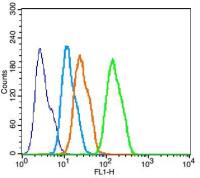

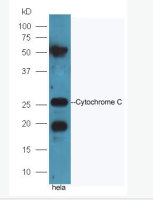
万千商家帮你免费找货
0 人在求购买到急需产品
- 详细信息
- 技术资料
- 供应商:
上海康朗生物科技有限公司
- 库存:
大量
- 目录编号:
kl-7533R
- 克隆性:
多克隆
- 抗原来源:
Rabbit
- 保质期:
12个月
- 抗体英文名:
Lipin 1 antibody
- 抗体名:
磷脂酸磷酸酯酶LPIN1抗体
- 宿主:
Rabbit
- 适应物种:
Human, Mouse, Rat, Dog, Pig, Cow, Rabbit, Goose, Sheep, Chimpanzee,
- 免疫原:
KLH conjugated synthetic peptide derived from human Lipin 1:501-600/890
- 亚型:
IgG
- 形态:
冻干粉或液体
- 应用范围:
ELISA=1:500-1000 IHC-P=1:400-800 IHC-F=1:400-800 IF=1:100-500
- 浓度:
1mg/ml
- 保存条件:
-20 °C
- 规格:
100ul 200ul
Lipin 1 antibody
| 中文名称 | 磷脂酸磷酸酯酶LPIN1抗体 |
| 别 名 | KIAA0188; LPIN1; PAP1; Phosphatidate phosphatase LPIN1; LPIN1_HUMAN. |
| 规格价格 | 100ul/1380元 购买 200ul/2200元 购买 大包装/询价 |
| 说 明 书 | 100ul 200ul |
| 研究领域 | 心血管 细胞生物 信号转导 细胞周期蛋白 糖尿病 |
| 抗体来源 | Rabbit |
| 克隆类型 | Polyclonal |
| 交叉反应 | Human, Mouse, Rat, Dog, Pig, Cow, Rabbit, Goose, Sheep, Chimpanzee, |
| 产品应用 | ELISA=1:500-1000 IHC-P=1:400-800 IHC-F=1:400-800 IF=1:100-500 (石蜡切片需做抗原修复) not yet tested in other applications. optimal dilutions/concentrations should be determined by the end user. |
| 分 子 量 | 99 kDa |
| 细胞定位 | 细胞核 细胞浆 细胞膜 |
| 性 状 | Lyophilized or Liquid |
| 浓 度 | 1mg/ml |
| 免 疫 原 | KLH conjugated synthetic peptide derived from human Lipin 1:501-600/890 |
| 亚 型 | IgG |
| 纯化方法 | affinity purified by Protein A |
| 储 存 液 | 0.01M TBS(pH7.4) with 1% BSA, 0.03% Proclin300 and 50% Glycerol. |
| 保存条件 | Store at -20 °C for one year. Avoid repeated freeze/thaw cycles. The lyophilized antibody is stable at room temperature for at least one month and for greater than a year when kept at -20°C. When reconstituted in sterile pH 7.4 0.01M PBS or diluent of antibody the antibody is stable for at least two weeks at 2-4 °C. |
| PubMed | PubMed |
| 产品介绍 | background: Lipin 1 is a member of the Lipin family of nuclear proteins. This family contains three members: Lipin 1, Lipin 2 and Lipin 3, all of which contain a nuclear signal sequence, a highly conserved amino-terminal (NLIP) domain and a carboxy-terminal (CLIP) domain. LPIN1 (Lipin 1) is crucial for normal adipose tissue development and metabolism. LPIN1 selectively activates a subset of PGC1 alpha target pathways, including fatty acid oxidation and mitochondrial oxidative phosphorylation by inducing expression of the nuclear receptor PPARalpha. LPIN1 also inactivates the lipogenic program and suppresses circulating lipid levels. An abundance of LPIN1 promotes fat accumulation and insulin sensitivity, whereas a deficiency in LPIN1 may deter normal adipose tissue development, resulting in insulin resistance and lipodystrophy, a heterogeneous group of disorders characterized by loss of body fat, fatty liver, hypertriglyceridemia and insulin resistance. Function: Plays important roles in controlling the metabolism of fatty acids at differents levels. Acts as a magnesium-dependent phosphatidate phosphatase enzyme which catalyzes the conversion of phosphatidic acid to diacylglycerol during triglyceride, phosphatidylcholine and phosphatidylethanolamine biosynthesis in the reticulum endoplasmic membrane. Acts also as a nuclear transcriptional coactivator for PPARGC1A/PPARA to modulate lipid metabolism gene expression (By similarity). Is involved in adipocyte differentiation. May also be involved in mitochondrial fission by converting phosphatidic acid to diacylglycerol (By similarity). Subunit: Interacts (via LXXIL motif) with PPARA (By similarity). Interacts with PPARGC1A (By similarity). Interaction with PPARA and PPARGC1A leads to the formation of a complex that modulates gene transcription (By similarity). Interacts with MEF2C (By similarity). Subcellular Location: Nucleus membrane (By similarity). Cytoplasm, cytosol (By similarity). Endoplasmic reticulum membrane (By similarity). Tissue Specificity: Specifically expressed in skeletal muscle. Also abundant in adipose tissue. Lower levels in some portions of the digestive tract. Post-translational modifications: Phosphorylated at multiple sites in response to insulin. Phosphorylation is controlled by the mTOR signaling pathway. Phosphorylation is decreased by epinephrine. Phosphorylation may not directly affect the catalytic activity but may regulate the localization. Dephosphorylated by the CTDNEP1-CNEP1R1 complex (By similarity). Sumoylated (By similarity). DISEASE: Defects in LPIN1 are a cause of autosomal recessive acute recurrent myoglobinuria (ARARM) [MIM:268200]; also known as acute recurrent rhabdomyolysis. Recurrent myoglobinuria is characterized by recurrent attacks of rhabdomyolysis (necrosis or disintegration of skeletal muscle) associated with muscle pain and weakness and followed by excretion of myoglobin in the urine. Renal failure may occasionally occur. Onset is usually in early childhood under the age of 5 years. Similarity: Belongs to the lipin family. SWISS: Q14693 Gene ID: 23175 Database links: Entrez Gene: 23175 Human Entrez Gene: 14245 Mouse Entrez Gene: 313977 Rat Omim: 605518 Human SwissProt: Q14693 Human SwissProt: Q91ZP3 Mouse Unigene: 467740 Human Unigene: 153625 Mouse Important Note: This product as supplied is intended for research use only, not for use in human, therapeutic or diagnostic applications. |
风险提示:丁香通仅作为第三方平台,为商家信息发布提供平台空间。用户咨询产品时请注意保护个人信息及财产安全,合理判断,谨慎选购商品,商家和用户对交易行为负责。对于医疗器械类产品,请先查证核实企业经营资质和医疗器械产品注册证情况。
 技术资料
技术资料暂无技术资料 索取技术资料
Lipin 1 antibody
¥1380 - 2200