


- ¥1380 - 2200
- LMAI Bio
- LM-10602R
- 进口/国产
- 2026年05月11日
- WB=1:500-2000 ELISA=1:500-1000 IHC-P=1:400-800 IHC-F=1:400-800 Flow-Cyt=5μg/Test ICC=1:100-500 IF=1:100-500 (石蜡切片需做抗原修复)
- Rabbit
- Rat

企业认证
相关产品推荐更多 >

万千商家帮你免费找货
0 人在求购买到急需产品
相关阅读
源叶生物 十万种现货试剂速发,品质稳、品类全,实验不再等!Takara 秋促来袭,提取+反转录+定量套装仅 1200 元abinScience 体内级抗体 全年锁价 低至 ¥1200阿拉丁 22万+ 科研级产品现货速发,品质严控、科研无忧- 详细信息
- 文献和实验
- 技术资料
- 供应商:
上海联迈生物工程有限公司
- 库存:
大量
- 目录编号:
LM-10602R
- 克隆性:
多克隆
- 抗原来源:
Rabbit
- 保质期:
1年
- 抗体英文名:
CD45
- 抗体名:
白细胞共同抗原抗体
- 宿主:
Rabbit
- 适应物种:
Rat
- 免疫原:
KLH conjugated synthetic peptide derived from Rat CD45:131-230/1273 <Extracellular>
- 亚型:
IgG
- 形态:
Lyophilized or Liquid
- 应用范围:
WB=1:500-2000 ELISA=1:500-1000 IHC-P=1:400-800 IHC-F=1:400-800 Flow-Cyt=5μg/Test ICC=1:100-500 IF=1:100-500 (石蜡切片需做抗原修复)
- 浓度:
1mg/ml
- 保存条件:
Store at -20 °C
- 规格:
100ul 200ul
| 英文名称 | CD45 |
| 中文名称 | 白细胞共同抗原抗体 |
| 别 名 | B220; CD 45; CD-45; CD45; cd45 antigen; ec3.1.3.48; CD45R; GP180; GP180; GP 180; L CA; LCA; L-CA; Leukocyte common antigen; LY5; Ly-5 glycoprotein; Protein tyrosine phosphatase receptor type C; Protein tyrosine phosphatase receptor type c polypeptide; protein tyrosine phosphatase, receptor type, C; Receptor-type tyrosine-protein phosphatase C; PTPRC; PTPRC_RAT; SCID due to PTPRC deficiency; T200; T200 glycoprotein; T200 leukocyte common antigen; Human homolog of severe combined immunodeficiency due to PTPRC deficiency. |
| 规格价格 | 100ul/1380元 购买 200ul/2200元 购买 大包装/询价 |
| 说 明 书 | 100ul 200ul |
| 研究领域 | 细胞生物 免疫学 神经生物学 信号转导 干细胞 转录调节因子 细胞膜受体 细胞表面分子 糖蛋白 细胞类型标志物 自然杀伤细胞 淋巴细胞 t-淋巴细胞 b-淋巴细胞 细胞膜蛋白 |
| 抗体来源 | Rabbit |
| 克隆类型 | Polyclonal |
| 交叉反应 | Rat, |
| 产品应用 | WB=1:500-2000 ELISA=1:500-1000 IHC-P=1:400-800 IHC-F=1:400-800 Flow-Cyt=5μg/Test ICC=1:100-500 IF=1:100-500 (石蜡切片需做抗原修复) not yet tested in other applications. optimal dilutions/concentrations should be determined by the end user. |
| 分 子 量 | 143kDa |
| 细胞定位 | 细胞膜 |
| 性 状 | Lyophilized or Liquid |
| 浓 度 | 1mg/ml |
| 免 疫 原 | KLH conjugated synthetic peptide derived from Rat CD45:131-230/1273 <Extracellular> |
| 亚 型 | IgG |
| 纯化方法 | affinity purified by Protein A |
| 储 存 液 | 0.01M TBS(pH7.4) with 1% BSA, 0.03% Proclin300 and 50% Glycerol. |
| 保存条件 | Store at -20 °C for one year. Avoid repeated freeze/thaw cycles. The lyophilized antibody is stable at room temperature for at least one month and for greater than a year when kept at -20°C. When reconstituted in sterile pH 7.4 0.01M PBS or diluent of antibody the antibody is stable for at least two weeks at 2-4 °C. |
| PubMed | PubMed |
| 产品介绍 | background: The protein encoded by this gene is a member of the protein tyrosine phosphatase (PTP) family. PTPs are known to be signaling molecules that regulate a variety of cellular processes including cell growth, differentiation, mitotic cycle, and oncogenic transformation. This PTP contains an extracellular domain, a single transmembrane segment and two tandem intracytoplasmic catalytic domains, and thus belongs to receptor type PTP. This gene is specifically expressed in hematopoietic cells. This PTP has been shown to be an essential regulator of T- and B-cell antigen receptor signaling. It functions through either direct interaction with components of the antigen receptor complexes, or by activating various Src family kinases required for the antigen receptor signaling. This PTP also suppresses JAK kinases, and thus functions as a regulator of cytokine receptor signaling. Four alternatively spliced transcripts variants of this gene, which encode distinct isoforms, have been reported. [provided by RefSeq, Jul 2008]. Function: Protein tyrosine-protein phosphatase required for T-cell activation through the antigen receptor. Acts as a positive regulator of T-cell coactivation upon binding to DPP4. The first PTPase domain has enzymatic activity, while the second one seems to affect the substrate specificity of the first one. Upon T-cell activation, recruits and dephosphorylates SKAP1 and FYN. Dephosphorylates LYN, and thereby modulates LYN activity. Subunit: Binds GANAB and PRKCSH. Interacts with SKAP1. Interacts with DPP4; the interaction is enhanced in a interleukin-12-dependent manner in activated lymphocytes. Contains 2 tyrosine-protein phosphatase domains. Subcellular Location: Membrane; Single-pass type I membrane protein. Membrane raft. Note=Colocalized with DPP4 in membrane rafts. Post-translational modifications: Heavily N- and O-glycosylated. DISEASE: Defects in PTPRC are a cause of severe combined immunodeficiency autosomal recessive T-cell-negative/B-cell-positive/NK-cell-positive (T(-)B(+)NK(+) SCID) [MIM:608971]. A form of severe combined immunodeficiency (SCID), a genetically and clinically heterogeneous group of rare congenital disorders characterized by impairment of both humoral and cell-mediated immunity, leukopenia, and low or absent antibody levels. Patients present in infancy recurrent, persistent infections by opportunistic organisms. The common characteristic of all types of SCID is absence of T-cell-mediated cellular immunity due to a defect in T-cell development. Genetic variations in PTPRC are involved in multiple sclerosis susceptibility (MS) [MIM:126200]. MS is a neurodegenerative disorder characterized by the gradual accumulation of focal plaques of demyelination particularly in the periventricular areas of the brain. Peripheral nerves are not affected. Onset usually in third or fourth decade with intermittent progression over an extended period. The cause is still uncertain. Similarity: Belongs to the protein-tyrosine phosphatase family. Receptor class 1/6 subfamily. Contains 2 fibronectin type-III domains. Contains 2 tyrosine-protein phosphatase domains. SWISS: P08575 Gene ID: 24699 Database links: Entrez Gene: 5788 Human Entrez Gene: 19264 Mouse Entrez Gene: 24699 Rat Omim: 151460 Human SwissProt: P08575 Human SwissProt: P06800 Mouse SwissProt: P04157 Rat Unigene: 654514 Human Unigene: 391573 Mouse Unigene: 90166 Rat Important Note: This product as supplied is intended for research use only, not for use in human, therapeutic or diagnostic applications. |
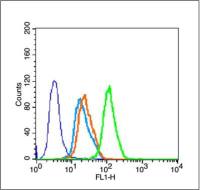
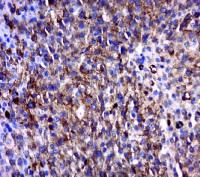
| 产品图片 |  Blank control(blue): Rat blood cells(fixed with 2% paraformaldehyde (10 min) , then permeabilized with 90% ice-cold methanol for 30 min on ice). Primary Antibody:Rabbit Anti-CD45 antibody(bs-10602R), Dilution: 1μg in 100 μL 1X PBS containing 0.5% BSA; Isotype Control Antibody: Rabbit IgG(orange) ,used under the same conditions ); Secondary Antibody: Goat anti-rabbit IgG-PE(white blue), Dilution: 1:200 in 1 X PBS containing 0.5% BSA. |
风险提示:丁香通仅作为第三方平台,为商家信息发布提供平台空间。用户咨询产品时请注意保护个人信息及财产安全,合理判断,谨慎选购商品,商家和用户对交易行为负责。对于医疗器械类产品,请先查证核实企业经营资质和医疗器械产品注册证情况。
 文献和实验
文献和实验CD45 由一类结构相似、分子量较大的跨膜蛋白组成,广泛存在于白细胞表面。CD45 分子在所有白细胞上都有表达,是细胞膜上信号传导的关键分子,在淋巴细胞的发育成熟,功能调节及信号传递中具有重要意义,其分布可作为某些 T 细胞亚群的分类标志。 图一:CD45/SSC-H与FSC-H/SSC-H分群对比 ❖ 如左图所示,通过 CD45 与 SSC-H,可以非常快速地圈出淋巴细胞亚群。 ❖ 如右图所示,使用 FSC-H 与 SSC-H 确定细胞群分布时,如果不染 CD45,加上有时红细胞
蛋白分子 以 CD45+白细胞样本为例,在排除了死细胞和粘连体后,未进行染色、也未进行 Fc 受体阻断的空白样本,各通道荧光处于低水平。如图所示: 染同型对照后,背景荧光增强。 针对这种因 FcR 导致的强背景,建议可以添加 FcR 封闭剂,如下图所示: 阻断 FcR 后,染同型对照,背景荧光恢复到与空白相似。 #03 什么时候需要做同型对照? (1)对于阴阳性分群明显的指标,不需要同型对照即可设门,例如 CD3、CD4、CD8 等用于 T 细胞的检测指标。对于阴阳性分群不清楚的指标,例如 CD25、CD
除这些非细胞结构,为后续分析清扫“战场”。 死活染料:实体组织的死细胞极易非特异性结合抗体,产生强背景噪音。推荐使用菲恩生物的死活染料,即使经过固定破膜也能精准识别并剔除死细胞。 单细胞门:细胞粘连会导致荧光信号异常失真。通过绘制FSC-H对FSC-A散点图,沿对角线圈出主群体,能有效排除粘连体,确保分析对象的真实性。 CD45设门:作为白细胞的通用标志物,CD45能将所有免疫细胞与组织中不表达该抗原的内皮、上皮等结构性细胞彻底分离,为后续的精细分型提供纯净起点。 标志物及应用 “净化门”是一种
 技术资料
技术资料暂无技术资料 索取技术资料

