


- ¥1380 - 2200
- 康朗生物
- kl-12496R
- 中国/美国/德国
- 2025年07月09日
- WB=1:500-2000 ELISA=1:500-1000 IHC-P=1:400-800 IHC-F=1:400-800 ICC=1:100-500 IF=1:100-500
- Rabbit
- Human, Mouse, Rat, Dog,

企业认证
相关产品推荐更多 >
万千商家帮你免费找货
0 人在求购买到急需产品
- 详细信息
- 文献和实验
- 技术资料
- 供应商:
上海康朗生物科技有限公司
- 库存:
大量
- 目录编号:
kl-12496R
- 克隆性:
多克隆
- 抗原来源:
Rabbit
- 保质期:
12个月
- 抗体英文名:
Apolipoprotein CI/APOC1 antibody
- 抗体名:
WB=1:500-2000 ELISA=1:500-1000 IHC-P=1:400-800 IHC-F=1:400-800 ICC=1:100-500 IF=1:100-500
- 宿主:
Rabbit
- 适应物种:
Human, Mouse, Rat, Dog,
- 免疫原:
KLH conjugated synthetic peptide derived from human Apolipoprotein CI/APOC1:27-83/83
- 亚型:
IgG
- 形态:
冻干粉或液体
- 应用范围:
WB=1:500-2000 ELISA=1:500-1000 IHC-P=1:400-800 IHC-F=1:400-800 ICC=1:100-500 IF=1:100-500
- 浓度:
1mg/ml
- 保存条件:
-20 °C
- 规格:
100ul 200ul
| 中文名称 | 载脂蛋白C1抗体 |
| 别 名 | APO C1; Apo CI; Apo-CIB; Apo-CIB'; apoC-I ; APOC 1; ApoC I; ApoC-IB; ApoC-IB'; APOC1; APOC1B; Apolipoprotein C I; Apolipoprotein C-I; Apolipoprotein CI; ApolipoproteinC I; ApolipoproteinCI; Truncated apolipoprotein C-I; APOC1_HUMAN. |
| 规格价格 | 100ul/1380元 购买 200ul/2200元 购买 大包装/询价 |
| 说 明 书 | 100ul 200ul |
| 研究领域 | 肿瘤 细胞生物 信号转导 新陈代谢 |
| 抗体来源 | Rabbit |
| 克隆类型 | Polyclonal |
| 交叉反应 | Human, Mouse, Rat, Dog, |
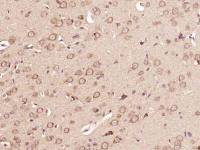
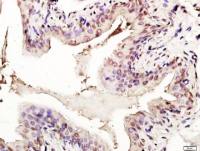
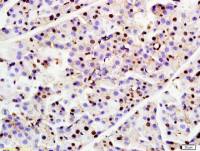
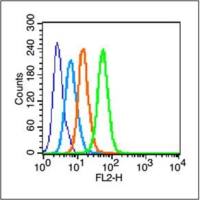
| 产品应用 | WB=1:500-2000 ELISA=1:500-1000 IHC-P=1:400-800 IHC-F=1:400-800 ICC=1:100-500 IF=1:100-500 (石蜡切片需做抗原修复) not yet tested in other applications. optimal dilutions/concentrations should be determined by the end user. |
| 分 子 量 | 7kDa |
| 细胞定位 | 分泌型蛋白 |
| 性 状 | Lyophilized or Liquid |
| 浓 度 | 1mg/ml |
| 免 疫 原 | KLH conjugated synthetic peptide derived from human Apolipoprotein CI/APOC1:27-83/83 |
| 亚 型 | IgG |
| 纯化方法 | affinity purified by Protein A |
| 储 存 液 | 0.01M TBS(pH7.4) with 1% BSA, 0.03% Proclin300 and 50% Glycerol. |
| 保存条件 | Store at -20 °C for one year. Avoid repeated freeze/thaw cycles. The lyophilized antibody is stable at room temperature for at least one month and for greater than a year when kept at -20°C. When reconstituted in sterile pH 7.4 0.01M PBS or diluent of antibody the antibody is stable for at least two weeks at 2-4 °C. |
| PubMed | PubMed |
| 产品介绍 | background: Apolipoproteins are protein components of plasma lipoproteins. The apolipoprotein C gene family encodes four homologous proteins designated apoC-I to -IV, which specifically modulate the metabolism of triglyceride-rich lipoproteins. The human apoC-I gene maps to chromosome 19q13.2 and is expressed primarily in the liver where it is activated when monocytes differentiate into macrophages. The human apoC-II gene maps to chromosome 19q13.2 and encodes a 79 amino acid single chain protein that is a necessary cofactor for the activation of lipoprotein lipase, the enzyme that hydrolyzes triglycerides in plasma and transfers the fatty acids to tissues. The human apoC-III gene maps to chromosome 11q23 and encodes a protein that may delay catabolism of triglyceride-rich particles by inhibiting lipoprotein lipase and hepatic lipase. The human apoC-IV gene maps to chromosome 19q13.2 and encodes a 127 amino acid protein that is primarily expressed in the liver. Function: The protein encoded by this gene is a member of the apolipoprotein C1 family. This gene is expressed primarily in the liver, and it is activated when monocytes differentiate into macrophages. A pseudogene of this gene is located 4 kb downstream in the same orientation, on the same chromosome. This gene is mapped to chromosome 19, where it resides within a apolipoprotein gene cluster. Alternatively spliced transcript variants have been found for this gene, but the biological validity of some variants has not been determined. Apolipoprotein C-I appears to modulate the interaction of APOE with beta migrating VLDL and inhibit binding of beta VLDL to the LDL receptor related protein. At least 9 distinct polymorphic forms of apolipoproteins are known. The apolipoproteins act as stabilizers of the intact lipoprotein particles. Quantitative measurements of HDL, LDL and VLDL particles in human serum are often used to estimate an individuals' relative risk of coronary heart disease. In addition, quantitative immunological measurements of certain apolipoproteins (especially A1 and B) have been suggested to be more accurate estimators of coronary heart disease than measurements of lipoprotein particles (especially HDL and LDL). Subcellular Location: Secreted Tissue Specificity: Synthesized mainly in liver and to a minor degree in intestine. Secreted in plasma. Similarity: Belongs to the apolipoprotein C1 family. SWISS: P02654 Gene ID: 341 Database links: Entrez Gene: 341 Human Omim: 107710 Human SwissProt: P02654 Human Unigene: 110675 Human Important Note: This product as supplied is intended for research use only, not for use in human, therapeutic or diagnostic applications. |
风险提示:丁香通仅作为第三方平台,为商家信息发布提供平台空间。用户咨询产品时请注意保护个人信息及财产安全,合理判断,谨慎选购商品,商家和用户对交易行为负责。对于医疗器械类产品,请先查证核实企业经营资质和医疗器械产品注册证情况。
 文献和实验
文献和实验secondary antibody review -- data from 99 publications
cytometry used as a control to detect cell responses targeted antigen 7 Alexa Fluor 488 7 Cy3 8 goat IgG Alexa Fluor 488 1:2000 detect antibody binding in human embryonic kidney 293T cells Invitrogen 9 donkey
domesticus x Mus spretus] F1 DNA). In the analysis of the antibody bound (B) and unbound (U) fractions (right panel), the bands representing the maternal and paternal alleles are indicated.MATERIALS Reagents100-bp DNA step ladder (for duplex PCR
Dissociated Retina Immunohistochemistry
Medium 45% HAMS F-12 (Gibco #11765-054) 45% DME (Gibco #10313-021) 10% FCS (HyClone) Insulin (5 mg/ml 1000X stock in H2 O with HCl) (10 ml/liter) L-glutamine (200 mM, Cellgro # 25-005-CI) (10 ml/liter) Penn/Strep (Cellgro #30-002
 技术资料
技术资料暂无技术资料 索取技术资料

