


- $467
- KAMIYA BIOMEDICAL COMPANY
- KT-1292
- 美国加利福尼
- 2025年07月13日

企业认证
相关产品推荐更多 >
万千商家帮你免费找货
0 人在求购买到急需产品
- 详细信息
- 文献和实验
- 技术资料
- 库存:
50
- 英文名:
Granzyme A ELISA
- 保质期:
12个月
- 供应商:
钰博生物
- 保存条件:
-20°C
- 规格:
1 kit
| For quantitative detection of human Granzyme A in cell culture supernates, serum, and plasma (heparin, EDTA). Assay Range: 15.6 - 1,000 pg/mL. | (no photo available) | 1 kit | $467 | KT-1292 |
| Reagents | Quantity |
| Pre-coated, ready to use 96-well strip plate | 1 |
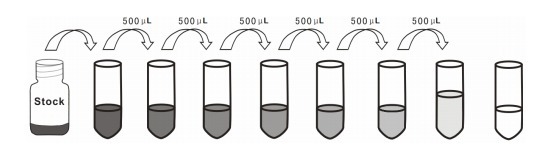
| Calibrator | 2 |
| Calibrator Diluent | 1 × 20 mL |
| Detection Reagent A | 1 × 120 uL |
| Detection Reagent B | 1 × 120 uL |
| Assay Diluent A | 1 × 12 mL |
| Assay Diluent B | 1 × 12 mL |
| TMB Substrate | 1 × 9 mL |
| Stop Solution | 1 × 6 mL |
| Wash Buffer (30X concentrate) | 1 × 20 mL |
| Plate sealer for 96 wells | 4 |
- Microplate reader with 450 ± 10 nm filter.
- Precision single or multi-channel pipettes and disposable tips.
- Eppendorf Tubes for diluting samples.
- De-ionized or distilled water.
- Absorbent paper for blotting the microtiter plate.
- Container for Wash Solution. STORAGE All the reagents should be kept according to the labels on vials. The Calibrator, Detection Reagent A, Detection Reagent B and the 96-well strip plate should be stored at -20°C upon being received while the others should be at 4°C. The unused strips should be kept in a sealed bag with the desiccant provided to minimize exposure to damp air. Opened test kits will remain stable for 1 month, provided it is stored as prescribed above.
Plasma
Collect plasma using 3.8% sodium citrate (sodium citrate:blood = 1:9) as an anticoagulant. Centrifuge samples for 15 minutes at 1000 × g at 4°C within 30 minutes of collection. Remove plasma and assay immediately or store
samples in aliquot at -20°C or -80°C for later use. Avoid repeated freeze/thaw cycles. Note:
- Samples to be used within 5 days may be stored at 4°C, otherwise samples must be stored at -20°C (≤1 month) or -80°C (≤2 months) to avoid loss of bioactivity and contamination.
- When performing the assay slowly bring samples to room temperature. 3. Sample hemolysis will influence the result, so hemolytic specimen can not be detected.
Bring all kit components and samples to room temperature (18-25°C) before use.
Detection Reagent A and B
Briefly spin or centrifuge the stock Detection Reagent A and Detection Reagent B before use. Dilute to the working concentration with Assay Diluent A or B, respectively (1:100).
Wash Solution
Dilute 20 mL of Wash Solution concentrate (30X) with 580 mL of de-ionized or distilled water to prepare 600 mL of Wash Solution (1X).
ASSAY PROCEDURE SUMMARY
- Prepare all reagents, samples and calibrators;
- Add 100 µL calibrator or sample to each well. Incubate 2 hours at 37°C;
- Add 100 µL prepared Detection Reagent A. Incubate 1 hour at 37°C;
- Aspirate and wash 3 times;
- Add 100 µL prepared Detection Reagent B. Incubate 30 minutes at 37°C;
- Aspirate and wash 5 times;
- Add 90 µL Substrate Solution. Incubate 15-25 minutes at 37°C;
- Add 50 µL Stop Solution. Read at 450 nm immediately.
1. The final experimental results will be closely related to operation skills of the end users and theexperimental environments. Please make sure that sufficient samples are available.
2. Kits from different batches may be a little different in detection range, sensitivity and color developingtime. Please perform the experiment exactly according to the instruction attached in kit whileelectronic ones from our website (www.k-assay.com) is only for information.
3. Do not mix or substitute reagents from one kit lot to another. Use only the reagents supplied bymanufacturer.
4. Protect all reagents from strong light during storage and incubation. All the bottle caps of reagentsshould be covered tightly to prevent the evaporation and contamination of microorganism.
5. There may be some foggy substance in the wells when the plate is opened at the first time. It will nothave any effect on the final assay results. Do not remove microtiter plate from the storage bag untilneeded.
6. Wrong operations during the reagents preparation and loading, as well as incorrect parameter settingfor the plate reader may lead to incorrect results. A microplate plate reader with a bandwidth of 10 nmor less and an optical density range of 0-3 O.D. or greater at 450 ± 10 nm wavelength is acceptablefor use in absorbance measurement. Please read the instruction carefully and adjust the instrumentprior to the experiment.
7. Even the same operator might get different results in two separate experiments. In order to get betterreproducible results, the operation of every step in the assay should be controlled. Furthermore, apreliminary experiment before assay for each batch is recommended.
8. Each kit has been strictly passed Q.C. test. However, results from end users might be inconsistentwith our in-house data due to some unexpected transportation conditions or different lab equipments.
Intra-assay variance among kits from different batches might arise from above factors, too.
9. Kits from different manufacturers for the same item might produce different results, since we haven’tcompared our products with other manufacturers.
10. The Stop Solution suggested for use with this kit is an acid solution. Wear eye, hand, face, andclothing protection when using this material.
风险提示:丁香通仅作为第三方平台,为商家信息发布提供平台空间。用户咨询产品时请注意保护个人信息及财产安全,合理判断,谨慎选购商品,商家和用户对交易行为负责。对于医疗器械类产品,请先查证核实企业经营资质和医疗器械产品注册证情况。
 文献和实验
文献和实验ELISPOT Assays Visualize the Secretory Product of Individual Cells
in the supernatant, captured by receptors of adjacent cells, or degraded. This makes ELISPOT assays much more sensitive than conventional ELISA measurements. Chronically stimulated T cells downregulate their TCR zeta-chain while maintaining unaltered levels
ELISPOT (Enzyme-linked ImmunoSPOT) 实验方法步骤
of cytokine-producing cells at the single cell level. The method employs the sandwich assay approach of the enzyme-linked immunosorbent assay (ELISA), with some variations. The ELISPOT capture antibody is coated aseptically onto a polyvinylidene difluoride
ELISPOT (Enzyme-linked ImmunoSPOT)
of cytokine-producing cells at the single cell level. The method employs the sandwich assay approach of the enzyme-linked immunosorbent assay (ELISA), with some variations. The ELISPOT capture antibody is coated aseptically onto a polyvinylidene difluoride
 技术资料
技术资料暂无技术资料 索取技术资料

