

- ¥300 - 500
- Agilent
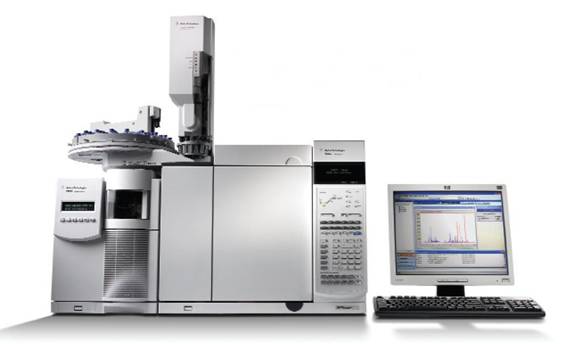
- Agilent 7890A/5975C
- 2025年07月16日


万千商家帮你免费找货
0 人在求购买到急需产品
- 详细信息
- 询价记录
- 文献和实验
- 技术资料
| 产品描述: |
5975C MSD Details
Built on a solid foundation of industry leadership, reliability and performance, the Agilent 5975C Series GC/MSD with the Triple-Axis Detector incorporates significant product enhancements to improve analytical performance and take your lab to the next level of productivity.
High temperature, solid inert ion source boost productivity The proprietary inert source fulfills three fundamental requirements. Inertness minimizes loss of active, neutral molecules from the GC. High temperature (350 ˚C) supports excellent peak shapes even for high boiling compounds and minimizes contamination from high boiling matrices. A novel lens element extends into the quadrupole to optimally transfer ions into the center of the RF/DC field for the highest S/N in the industry. Gold standard quadrupole design and performance The unique quadrupole has unsurpassed performance and reliability. This true hyperbolic quartz structure will give lower field errors, better resolution and superb mass axis stability, regardless of operating temperature. In fact, the remarkable stability of the monolithic quartz allows analyzer temperatures up to 200 ˚C to ensures analyzer cleanliness throughout the life of the MSD. Triple-Axis Detector The triple-axis orientation places the HED-EM doubly off-axis from the axis of the transmission quadrupole. This evolutionary change allows ion collection to be maximized (increased signal) and neutral noise to be reduced below off-axis detector designs. The detector also introduces a triple-channel multiplier with increased amplification and longer life. Agilent’s Gain Normalized optimization of the EM ensures the optimal balance between ion count, linearity and EM life expectancy. Furthermore, Gain Normalization means consistent sensitivity during the aging of the EM and consistent ion counts between multiple GC/MSD systems. Trace Ion Detection and the second generation of Deconvolution Reporting Software (DRS) delivers a real performance improvement for trace analysis in complex matrices Trace Ion Detection digitally filters noise from baselines, peaks and spectra to improve detection with or without DRS. For coelution problems found in the most complex samples, the deconvolution power of NIST AMDIS is the ultimate tool for trace analysis by GC/MS. After deconvolution, “cleaned” spectra provide better library search results, and quantification based upon deconvoluted peaks reduces the errors in MS target ions. The ChemStation fully integrates AMDIS results into QEdit and report functions so the analyst can quickly compare standard and deconvoluted results. With Trace Ion Detection and DRS, method detection limits (MDL) and limits of quantitation (LOQ) are lower. False positives and false negatives are reduced for the highest confidence in the data. High-Performance Selected Ion Monitoring (SIM) and Full Scan Synchronous SIM/Scan functionality captures SIM data and full scan data in the same acquisition, with no compromise in analytical performance. SIM dwell times can be set in from over 100 msec to 1 msec in 1 msec increments. AutoSIM automatically converts scan data into SIM or SIM/scan acquisition parameters—saving setup time for methods with many peaks. Capillary Flow Technologies that improve productivity, lower costs and increase analytical power 5th generation EPC with inert, low-mass, low-dead volume devices and leak-free, in-oven connections have created numerous GC configurations that enhance capabilities and performance. For GC/MS analyses of complex samples with late eluting matrix peaks, backflush is an essential tool. Shorter analyses, less source cleaning and longer column life are valuable benefits for any laboratory. Capillary splitters and Deans switching simplify and improve the reliability of complementary detection schemes such as MSD-ECD and heart-cutting methods. With ChemStation control, these functions can be used as routinely as the simplest GC/MSD method. GC/MS software helps you make the most of every run, and every workday Agilent MSD Productivity ChemStation software makes it easy even for non-expert operators to take advantage of all the power of the Agilent 5975C GC/MSD. Advanced capabilities include:
Maintenance and Reliability Features Modular analyzer assembly offers complete access to the filament ion source, and electron multiplier for faster routine maintenance. Front glass window provides simple source identification, as well as a complete view of critical connections. High-reliability vacuum system assures maximum long-term performance; available oil-free pumping systems virtually eliminate pump maintenance, reduce noise, and can be used with corrosive gases such as ammonia. The complete 5975C lineup with the Triple-Axis Detector includes:
主要特点: |
风险提示:丁香通仅作为第三方平台,为商家信息发布提供平台空间。用户咨询产品时请注意保护个人信息及财产安全,合理判断,谨慎选购商品,商家和用户对交易行为负责。对于医疗器械类产品,请先查证核实企业经营资质和医疗器械产品注册证情况。
- 作者
- 内容
- 询问日期
 文献和实验
文献和实验仪器名称:气相色谱质谱联用仪仪器型号:Agilent GC6890-5975I MS生产厂家:美国Agilent公司使用方法:气相配有顶空进样器、FID检测器;质谱为最新四极杆质量分析器。具体使用方法:一、开、关机顺序:开机:通氮气→开电源→设置温度(柱箱、汽化)→加热→通空气、氢气→点火→调准基线→进样关机:关氢气、空气→关掉加热器→通者氮气降温至室温→关电源→关氮气二、温度设定1、柱温设定(范围:-99℃~399℃) 例如:设置温度为50℃,命令如下 COL/AUX
长春吉大・小天鹅仪器有限公司 2009最受关注十大国外仪器: 获奖仪器 公司名称 7890A气相色谱仪 安捷伦科技有限公司 7890A/5975C气-质
果实 2.仪器 气相色谱-质谱-计算机联用仪(Agilent 6890N-5973N型)、KD浓缩器、同时蒸馏萃取装置(SDE)、电热恒温水浴锅、套式恒温加热装置等。 3.试剂 二氯甲烷、无水硫酸钠(AR)、3-壬酮等。 二、方法步骤 1.果实芳香物质的提取 采用同时蒸馏萃取法,装置见下图。A瓶中装有样品和蒸馏水,B瓶中装有二氯甲烷或其他有机溶剂,两部分加热后,各自的蒸汽在装置的顶部混合,并通过冷凝管冷却,在EF段分层,有机层从D端返回B瓶,水层从C端返回A瓶,这样便
 技术资料
技术资料暂无技术资料 索取技术资料

