

- ¥550 - 8000
- biosyn
- 美国
- biosyn-10-2
- 2025年08月14日

企业认证
相关产品推荐更多 >


万千商家帮你免费找货
0 人在求购买到急需产品
- 详细信息
- 文献和实验
- 技术资料
- 保存条件:
-20℃
- 保质期:
2-4年
- 英文名:
Keyhole Limpet Hemocyanin
- 库存:
一定库存
- 供应商:
biosyn
- 规格:
10mg、100mg
KLH说明书(http://biosyncorp.com/klh/)
促销价格
| 产品 | 规格 | 品牌 | 价格 |
| KLH | 10mg | biosyn | 550元 |
| KLH | 50mg | biosyn | 2000元 |
| KLH | 100mg | biosyn | 3000元 |
| KLH | 500mg | biosyn | 8000元 |
| KLH | 1g | biosyn |
Biosyn公司简介及产品介绍 
Biosyn公司于1995年创立于美国加州,是一家专业研发和生产高质量的科研级别和临床/GMP血蓝蛋白的生物医药公司。目前biosyn公司生产的血蓝蛋白在大型国际医药公司中有约30%的市场占有率。血蓝蛋白来源于大锁孔帽贝(透孔螺)的血淋巴,也被叫做匙孔血蓝蛋白,是具有高度免疫原性的蛋白大分子,也是一种多功能蛋白,它不仅具有输氧功能,而且还与能量的贮存、渗透压的维持及蜕皮过程的调节有关,还具有酚氧化物酶活性和抗菌功能,被认为是节肢动物和软体动物中的一种重要的免疫分子。
KLH用于疫苗的生产,免疫原的制备。KLH广泛作为载体蛋白应用,交联于半抗原和其他抗原,使它们具有更强的免疫原性以用于抗体的制备。由于其质量大,复杂性高,与其他载体蛋白相比KLH会引出更强的免疫应答。因为此蛋白来源于软体动物,它在系统发生上远离哺乳动物物种,在测定过程中产生会与典型靶点样品发生交叉反应的抗体的可能性较小。作为大的蛋白质,KLH含有上百个伯胺和羧基基团可以成为与戊二醛,N-羟基琥珀酰亚胺酯和EDC等交联试剂交联的靶点。
biosyn Native KLH
| Product |
Grade |
Uses |
|---|---|---|
| Native KLH in Phosphate buffer low endotoxin, tested for biological safety, viral clearance and metal ions |
GMP |
For further processing in KLH-conjugate vaccine manufacture for human and animal use |
| Native KLH in Phosphate buffer, or other buffers low endotoxin |
RG |
Routine immunological and antibody studies and antibody production, initial product development activity for conjugate vaccine. Preparation of Research Grade activated KLH |
| Native KLH in Phosphate buffer or other buffers. No endotoxin testing |
RG |
Low cost research grade material for research uses |
RG=Research Grade
biosyn hemocyanin products
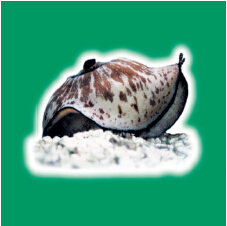
biosyn is a world leader in the manufacture of high quality, clinical/GMP and research grade hemocyanin products derived from the hemolymph of the sea snail, Meghathura crenulata, also commonly known as the Giant Keyhole Limpet.

.biosyn hemocyanin - first hemocyanin product for the treatment of bladder cancer
.biosyn hemocyanin and immunocyanin, KLH subunits, as a preferred carrier protein of the conjugate vaccine
.immunocyanin - high quality - GMP/Clinical grade - Drug Master File
.biosyn hemocyanin products are eco-friendly
.Recombinant technology development

KLH: Keyhole Limpet Hemocyanin - biosyn native KLH
The hemocyanin produced from the hemolymph sera of the marine mollusk Giant Keyhole Limpet, Megathura crenulata, has been in use and marketed as a crude or partially purified product for over 40 years by some chemical companies. This molecule is well recognized and commonly abbreviated as KLH. The crude research grade KLH is used in antibody production in animals against antigens. The animal sera containing the antibody for the antigen are further processed and used as immunological reagents or in immunological assays. The partially purified product has also been used in early human trials for immune status evaluation.
KLH structure
The native KLH is a cylindrical copper containing blue protein with a molecular mass ranging from 8-32 MDa (Million Dalton). Electron microscopy structural studies reveal presence of two oligomeric forms:
.Didecamers with a molecular mass of 8 MDa, are present in the form of hollow cylinders. They are approximately 35 nm in diameter and 40 nm in length.
.Multidecamers with a molecular mass of 12-32 MDa, present as stacked decamers (multidecamers) of varying length, added on one or both sides of a "nucleating" didecamer. Single decamers exhibit rectangular side views.

Prof. Dr. Jürgen Markl, Direktor Zoologisches Institut der Johannes Gutenberg-Universität Mainz, Germany
The didecamer consists of 20 subunits and occurs in two different Isoforms named KLH1 and KLH2. The subunits are biochemically and immunologically distinct. Analysis of KLH by native-PAGE gives two characteristic bands, one corresponding to KLH1 with an apparent molecular mass of about 390 kDa (kilo Dalton) and the other corresponding to KLH2 with an apparent molecular mass of 350 kDa.
Each subunit of both Isoforms, KLH1 and KLH2, consists of eight paralogous functional units (FU), named 'a' to 'h', whereby the FUs a-f form the wall of the cylinder and g-h build up the collar-complex of the molecule. The molecular mass of the functional units is about 50 kDa. Based on this information it is expected that the molecular masses of the KLH1 and KLH2 subunits are approximately 400 kDa. The functional unit (FU) within the subunit contains a binuclear copper binding site that reversibly binds molecular oxygen.
The copper is in the cuprous [Cu(I)] state, and oxygen-binding generates light absorbance in the near ultraviolet around 343 nm and imparts the characteristic blue color to the molecule. The deoxygenated molecule is colorless.
Peptide sequence
The peptide sequence surrounding the two copper-binding sites is highly conserved, with three copper-liganding histidines in both cases. The active site geometry and molecular architecture of the mollusk hemocyanin differ from those of arthropod hemocyanin.
Removal of second copper from mollusk hemocyanin by cyanide ions is both slower and more difficult compared to arthropod hemocyanin, where all the copper comes off readily. Further differences between the two hemocyanin subunits are revealed by hydrogen peroxide treatments.
3、KLH / biosyn native
KLH biosyn native KLH, low enodoxin content
The high molecular weight, native KLH, is extensively used and has been used over the last several years. Native KLH has been manufactured and supplied by some chemical suppliers.
However, most available KLH formulations are not of the required quality and consistency suitable for use in human clinical trials. Typically, the endotoxin content in such products is very high as the hemolymph sera production is done by cutting open the animals or extraction from frozen animals. The product characteristics are also not very good and could lead to precipitation during reconstitution of lyophilized KLH. It is well documented that either freezing or lyophilization of native KLH leads to loss in activity.
Characterization of native KLH is also an issue as the large molecular weight of 8-32 MDa does not allow use of standard biochemical methods for routine quality control, which is further complicated by the use of excessive metal ions like calcium and magnesium, presumably to stabilize the molecule.
Right from the start of the hemocyanin development work in 1985, biosyn had identified these to be critical issues and developed appropriate strategies to overcome these limitations. To achieve the desired safety, quality and consistency of native KLH, biosyn has developed the non-lethal hemolymph sera collection procedure from live animals and instituted necessary animal handling and quarantine techniques. Quality control methodologies for routine production of this critical raw material has been developed.
The end result of these technology developments in the animal handling, bleeding and manufacturing process was the production of biosyn low endotoxin and high concentration native KLH of consistent high quality in a phosphate buffer.
The biosyn native KLH is supplied as High Purity Grade and Research Grade (no endotoxin testing). The GMP grade material is ideally suited for use as a carrier protein in the manufacture of vaccines for human use. It is tested for biological safety, viral clearance and heavy metal ions.
The Research Grade material is suited for use in vaccine product development activities and also for routine immunological studies, antibody production, production of activated KLH and other developmental activities. The native KLH formulations currently available from biosyn are listed in the table.
| Product |
Grade |
Uses |
|---|---|---|
| Native KLH in Phosphate buffer low endotoxin, tested for biological safety, viral clearance and metal ions |
GMP |
For further processing in KLH-conjugate vaccine manufacture for human and animal use |
| Native KLH in Phosphate buffer, or other buffers low endotoxin |
RG |
Routine immunological and antibody studies and antibody production, initial product development activity for conjugate vaccine. Preparation of Research Grade activated KLH |
| Native KLH in Phosphate buffer or other buffers. No endotoxin testing |
RG |
Low cost research grade material for research uses |
Biosyn公司网址: http://biosyncorp.com/klh/
中国独家授权代理:
深圳市华拓生物科技有限公司(www.otwobiotech.com)
相关产品:血蓝蛋白抗体
风险提示:丁香通仅作为第三方平台,为商家信息发布提供平台空间。用户咨询产品时请注意保护个人信息及财产安全,合理判断,谨慎选购商品,商家和用户对交易行为负责。对于医疗器械类产品,请先查证核实企业经营资质和医疗器械产品注册证情况。
 文献和实验
文献和实验)。4.培养时间。200ul的培养液对于10的4~5次方的增殖期细胞来说,很难维持68h,如果营养不够的话,细胞会由增殖期渐渐趋向G0期而趋于静止,影响结果,我们是在48h换液的。5.MTT法只能测定细胞相对数和相对活力,不能测定细胞绝对数。做MTT时,尽量无菌操作,因为细菌也可以导致MTT比色OD值的升高。6.理论未必都是对的。要根据自己的实际情况调整。7.实验时应设置调零孔,对照孔,加药孔。调零孔加培养基、MTT、二甲基亚砜。对照孔和加药孔都要加细胞、培养液、MTT、二甲基亚砜,不同的是对照孔加溶解
子物质,具有将免疫原性传递给耦联的半抗原能力。 – 常用的载体有钥孔血蓝蛋白(keyhole limpet hemocyanin,KLH)、牛血清白蛋白(bovine serum albumin, BSA)、卵白蛋白(Ovalbumin,OVA)等。 – 用戊二醛或碳化二亚胺作为交联剂通过功能基团-NH 2 、-COOH等将半抗原结合到载体上。结合比例为5kDa结合5~25个分子的小肽。 (三)抗体 (antibody, Ab
亲和素连接生物化大分子反应体系,称BA法,或标记亲和素生物素法(LAB)。第二类以亲和素两端分别连接生物素化大分子反应体系和标记生物素,称为BAB法,或桥联亲和素-生物素法(BRAB)。第三类是将亲和素与酶标生物素共温形成亲和素-生物素-过氧化物酶复合物,再与生物素化的抗抗体接触时,将抗原 -抗体反应体系与ABC标记体系连成一体,称为ABC法。尽管方法很多,但在目前国内主要还是BAS-ELISA法。特别是其中的BA法和ABC法用得较多。至于其它标记材料(如荧光素、铁蛋白和血蓝蛋白等) 的BAS


