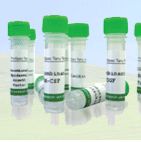
- ¥1080 - 101430
- PROSPEC
- 以色列
- cyt-547
- 2025年07月18日

企业认证
相关产品推荐更多 >

万千商家帮你免费找货
0 人在求购买到急需产品
- 详细信息
- 文献和实验
- 技术资料
- 保存条件:
for future use below -18°C
- 保质期:
See instructions
- 英文名:
APOD
- 库存:
部分小规格有备货
- 供应商:
上海经科化学科技有限公司
- CAS号:
无
- 规格:
2ug/10ug/1mg
| 规格: | 2ug | 产品价格: | ¥1080.0 |
|---|---|---|---|
| 规格: | 10ug | 产品价格: | ¥2415.0 |
| 规格: | 1mg | 产品价格: | ¥101430.0 |

CATALOGUE NUMBER
CYT-547
SYNONYMS
INTRODUCTION
Apolipoprotein-D is expressed in numerous tissues having high levels of expression in spleen, testes and brain. Apolipoprotein-D is present at high concentrations in the cyst fluid of women with gross cystic disease of the breast, a condition associated with increased risk of breast cancer. Apolipoprotein-D accumulates in regenerating peripheral nerves and in the cerebrospinal fluid of patients with neurodegenerative conditions, such as Alzheimer's disease. Apolipoprotein-D participates in maintenance and repair within the central and peripheral nervous systems. Apolipoprotein-D is a multi-ligand, multi-functional transporter and transports a ligand from 1 cell to another within an organ, scavenge a ligand within an organ for transport to the blood or could transport a ligand from the circulation to specific cells within a tissue.
DESCRIPTION
The protein a.a sequence corresponds to the UniProtKB/Swiss-Prot entry P05090.
The Following gene modifications were made:
Trp99His, Cys116Ser, Ile118Ser, Leu120Ser amino acids exchanges were introduced at the surface of Apolipoprotein-D to enhance the protein’s solubility and another three Leu23Pro, Pro133Val, Asn134Ala amino acids exchanges which facilitate its genetic manipulation. The Apolipoprotein-D is purified by proprietary chromatographic techniques.
SOURCE
PHYSICAL APPEARANCE
FORMULATION
SOLUBILITY
STABILITY
PURITY
Greater than 90% as determined by SDS-PAGE.
AMINO ACID SEQUENCE
SAFETY DATA SHEET
SDS
USAGE
BACKGROUND
Apolipoprotein-D Human Recombinant: Illuminating the Role of a Multifaceted Lipid-Binding Protein
Abstract:
Apolipoprotein-D (ApoD), a multifunctional lipid-binding protein, has emerged as a fascinating player in lipid metabolism and neuroprotection. This research paper aims to provide an insightful overview of ApoD human recombinant, exploring its physiological functions, production methods, and potential therapeutic applications. By unraveling the complexities of ApoD, we gain valuable insights into its role in lipid homeostasis and its potential as a therapeutic target for neurodegenerative diseases. This article presents a concise yet comprehensive analysis of ApoD, humanizing its significance in the context of human health.
Introduction:
Understanding the intricate mechanisms underlying lipid metabolism and neuroprotection is crucial for the development of novel therapeutic strategies. ApoD, a versatile protein expressed in various tissues, offers unique insights into these areas. This paper delves into the multifaceted nature of ApoD, shedding light on its significance in lipid homeostasis and neuronal health.
Structure and Function of Apolipoprotein-D:
ApoD exhibits a complex molecular structure, comprising distinct domains that facilitate its binding to lipids and other biomolecules. It engages in diverse functions, including lipid transport, antioxidant defense, and modulation of neuroinflammatory responses. The versatility of ApoD underscores its pivotal role in maintaining cellular and tissue integrity.
Regulation of Apolipoprotein-D Expression:
The expression of ApoD is subject to intricate regulatory mechanisms influenced by hormonal and environmental cues. Understanding the factors governing ApoD expression provides valuable insights into its physiological roles and potential therapeutic applications.
Apolipoprotein-D and Neurodegenerative Diseases:
Growing evidence implicates ApoD in neuroprotection, particularly in the context of neurodegenerative diseases. ApoD exhibits neuroprotective properties by modulating oxidative stress, lipid peroxidation, and inflammatory responses, making it an intriguing target for therapeutic interventions.
Production of Apolipoprotein-D Human Recombinant:
Advanced biotechnological approaches, including recombinant DNA technology and protein expression systems, enable the production of ApoD human recombinant. These methods facilitate large-scale production, purification, and characterization of ApoD, paving the way for potential therapeutic applications.
Therapeutic Potential of Apolipoprotein-D Human Recombinant:
Targeting ApoD holds promise for the development of therapeutics aimed at neurodegenerative diseases. Modulating ApoD expression or function may provide neuroprotection, enhance neuronal survival, and mitigate the progression of neurodegenerative disorders.
Conclusion:
Apolipoprotein-D human recombinant represents a captivating area of research, bridging the fields of lipid metabolism and neurodegeneration. Understanding the intricate interplay between ApoD, lipid homeostasis, and neuroprotection is crucial for unraveling its full therapeutic potential. Continued investigation into the functions and mechanisms of ApoD will likely lead to novel therapeutic strategies for neurodegenerative diseases.
风险提示:丁香通仅作为第三方平台,为商家信息发布提供平台空间。用户咨询产品时请注意保护个人信息及财产安全,合理判断,谨慎选购商品,商家和用户对交易行为负责。对于医疗器械类产品,请先查证核实企业经营资质和医疗器械产品注册证情况。
 文献和实验
文献和实验Apolipoprotein-D Human Recombinant His Tag fusion protein at C-terminus (7 highlighted a.a.) produced in E.Coli is a single, non-glycosylated, Polypeptide chain containing 174 amino acids and having a molecular mass of 19.82kDa.
The protein a.a sequence corresponds to the UniProtKB/Swiss-Prot entry P05090.
Apolipoprotein E Expression and Purification
Since the discovery of the association of apolipoprotein E (apoE) 4 with Alzheimer’s disease 17 years ago, numerous in vitro experiments with the apoE isoforms (apoE2, apoE3, and apoE4) have been performed to try to understand the basis
Purification of Rat Hepatic Lipase Essentially Free of Apolipoprotein E and Apolipoprotein B
subfractions. In isolated, perfused rat livers inhibition of hepatic lipase with antibodies or removal of HL by heparin perfusion reduces the uptake of chylomicron remnants (13 ). Finally, recent studies with cultured hepatoma cells over-expressing human HL
Construction of Recombinant Human Cytomegalovirus
The use of reverse genetics to generate recombinant viruses allows the researcher to investigate the exact functional significance of particular viral genes during the virus life cycle, by means of their deletion or modification in the viral
 技术资料
技术资料