

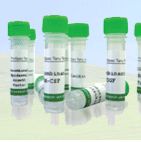
- ¥1080 - 45885
- PROSPEC
- 以色列
- cyt-366
- 2026年02月05日

企业认证
相关产品推荐更多 >

万千商家帮你免费找货
0 人在求购买到急需产品
- 详细信息
- 文献和实验
- 技术资料
- 保存条件:
for future use below -18°C
- 保质期:
See instructions
- 英文名:
CTLA4
- 库存:
部分小规格有备货
- 供应商:
上海经科化学科技有限公司
- 规格:
5ug/25ug/1mg
| 规格: | 5ug | 产品价格: | ¥1080.0 |
|---|---|---|---|
| 规格: | 25ug | 产品价格: | ¥2415.0 |
| 规格: | 1mg | 产品价格: | ¥45885.0 |

CATALOGUE NUMBER
CYT-366
SYNONYMS
INTRODUCTION
DESCRIPTION
CTLA 4 is fused to a 23 amino acid His-tag at N-terminus & purified by proprietary chromatographic techniques.
SOURCE
PHYSICAL APPEARANCE
FORMULATION
STABILITY
For long term storage it is recommended to add a carrier protein (0.1% HSA or BSA).
Avoid multiple freeze-thaw cycles.
PURITY
SAFETY DATA SHEET
SDS
AMINO ACID SEQUENCE
USAGE
BACKGROUND
Title: Cytotoxic T-Lymphocyte Associated Antigen-4 Human Recombinant: A Potential Immunotherapeutic Target
Abstract:
Cytotoxic T-lymphocyte associated antigen-4 (CTLA-4) is a key immune checkpoint receptor that plays a crucial role in regulating T-cell responses. This research paper provides an in-depth analysis of human recombinant CTLA-4, focusing on its production, characterization, and potential applications in immunotherapy. The paper discusses the significance of CTLA-4 in immune regulation, tumor immunity, and autoimmune diseases. Furthermore, it explores ongoing research and clinical trials investigating the therapeutic potential of recombinant CTLA-4 in various pathological conditions. The information presented in this paper aims to enhance our understanding of human recombinant CTLA-4 and its utility as a research tool and a potential immunotherapeutic agent.
Introduction:
Cytotoxic T-lymphocyte associated antigen-4 (CTLA-4) is a cell surface receptor primarily expressed on T-cells. It functions as a negative regulator of T-cell activation, dampening immune responses to prevent excessive inflammation. Human recombinant CTLA-4, produced through genetic engineering techniques, provides researchers with a valuable tool to study its biological functions and explore its therapeutic potential.
Production and Characterization:
Recombinant CTLA-4 is typically generated using expression systems such as mammalian cells or bacteria. The protein is then purified and characterized to ensure its structural integrity and functional activity. Quality control measures are implemented to confirm the specificity and bioactivity of the recombinant CTLA-4.
Role in Immune Regulation:
CTLA-4 plays a critical role in immune regulation by downregulating T-cell activation and suppressing immune responses. It competes with the co-stimulatory receptor CD28 for binding to its ligands, CD80 and CD86, on antigen-presenting cells. This interaction inhibits T-cell activation and promotes immune tolerance. Recombinant CTLA-4 serves as a valuable tool for studying immune checkpoint mechanisms and their impact on immune responses.
Therapeutic Implications:
The blockade of CTLA-4 has emerged as a promising immunotherapeutic strategy in cancer treatment. Monoclonal antibodies targeting CTLA-4, such as ipilimumab, have shown significant clinical efficacy in enhancing anti-tumor immune responses. Recombinant CTLA-4-based therapies, including fusion proteins and engineered T-cell receptors, are being explored as potential immunotherapeutic interventions. Additionally, CTLA-4 plays a role in autoimmune diseases, making it a potential target for the development of novel treatments.
Conclusion:
Human recombinant CTLA-4 is a valuable research tool and a potential immunotherapeutic target. Its production, characterization, and applications in immune regulation contribute to our understanding of T-cell biology and the development of novel immunotherapies. Continued research and clinical trials investigating the therapeutic potential of recombinant CTLA-4 offer promising prospects for improving outcomes in cancer and autoimmune diseases.
风险提示:丁香通仅作为第三方平台,为商家信息发布提供平台空间。用户咨询产品时请注意保护个人信息及财产安全,合理判断,谨慎选购商品,商家和用户对交易行为负责。对于医疗器械类产品,请先查证核实企业经营资质和医疗器械产品注册证情况。
 文献和实验
文献和实验- Pardoll, D. M. (2012). The blockade of immune checkpoints in cancer immunotherapy. Nature Reviews Cancer, 12(4), 252-264.
- Hodi, F. S., O'Day, S. J., McDermott, D. F., et al. (2010). Improved survival with ipilimumab in patients with metastatic melanoma. New England Journal of Medicine, 363(8), 711-723.
- Leach, D. R., Krummel, M. F., & Allison, J. P. (1996). Enhancement of antitumor immunity by CTLA-4 blockade. Science, 271(5256), 1734-1736.
- Walker, L. S., & Sansom, D. M. (2011). The emerging role of CTLA-4 as a cell-extrinsic regulator of T cell responses. Nature Reviews Immunology, 11(12), 852-863.
- Zhang, L., & Morgan, R. A. (2012). CTLA-4 blockade increases antigen-specific CD8+ T cells in prevaccinated patients with melanoma: three cases. Cancer Immunology, Immunotherapy, 61(6), 1047-1056.
antigens (Ag) complexed to MHC class I molecules (6 ,7 ). Immunization with virus-infected antigen-presenting cells (APC) or Ag-expressing transfectants, and even APC osmotically loaded with antigens can elicit CD8+ cytotoxic T-cells (8 –10
Markers for Anti-cytotoxic T-lymphocyte Antigen 4 (CTLA-4) Therapy in Melanoma
Therapeutic strategies that block Cytotoxic T lymphocyte antigen-4 (CTLA-4) enhance antitumor immunity and prolong the lives of patients with metastatic melanoma. However, only a subset of patients benefit, and responses are often delayed
The Cytotoxic T Lymphocyte Assay for Evaluating Cell-Mediated Immune Function
Evaluation of cell-mediated immunity (CMI) is a significant component in any assessment designed to predict the full range of potential immunotoxic risk underlying health risks. Among measures of CMI, the cytotoxic T Lymphocyte (CTL) response
 技术资料
技术资料
