

- ¥3770
- biorbyt

- 125-8000pg/mL
- 75 pg/mL
- orb1948577
- 英国
- 2026年01月21日

企业认证
相关产品推荐更多 >
万千商家帮你免费找货
0 人在求购买到急需产品
- 详细信息
- 文献和实验
- 技术资料
- 库存:
999
- 供应商:
biorbyt
- 检测范围:
125-8000pg/mL
- 检测方法:
Sandwich
- 适应物种:
Rat
- 样本:
serum, plasma, Tissue homogenate and Other biological samples
- 灵敏度:
75 pg/mL
- 规格:
48 T
产品别名:Hsp9
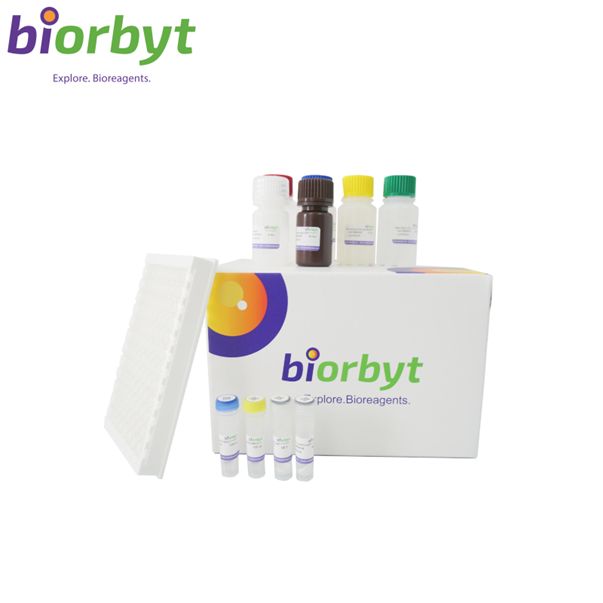
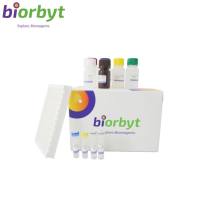
应用笔记:This ELISA kit uses the Sandwich-ELISA principle. The micro ELISA plate provided in this kit has been pre-coated with an antibody specific to Rat HSP-90. Standards or samples are added to the micro ELISA plate wells and combined with the specific antibody. Then a biotinylated detection antibody specific for Rat HSP-90 and Avidin-Horseradish Peroxidase (HRP) conjugate are added successively to each micro plate well and incubated. Free components are washed away. The substrate solution is added to each well. Only those wells that contain Rat HSP-90, biotinylated detection antibody and Avidin-HRP conjugate will appear blue in color. The enzyme-substrate reaction is terminated by the addition of stop solution and the color turns yellow. The optical density (OD) is measured spectrophotometrically at a wavelength of 450 nm ± 2 nm. The OD value is proportional to the concentration of Rat HSP-90. You can calculate the concentration of Rat HSP-90 in the samples by comparing the OD of the samples to the standard curve.
实验时长:3.5H
靶点:HSP-90
Note:For research use only.
风险提示:丁香通仅作为第三方平台,为商家信息发布提供平台空间。用户咨询产品时请注意保护个人信息及财产安全,合理判断,谨慎选购商品,商家和用户对交易行为负责。对于医疗器械类产品,请先查证核实企业经营资质和医疗器械产品注册证情况。
 文献和实验
文献和实验Hsp90 and Client Protein Maturation
Heat-shock protein 90 (Hsp90) is a molecular chaperone that assists in the maturation of a limited set of substrate proteins that are collectively referred to as clients. The majority of identified Hsp90 clients are involved in signal
Detecting HSP90 Phosphorylation
Heat-shock protein 90 (HSP90 ) is an essential molecular chaperone in eukaryotes. It is important for chaperoning proteins that are important determinants of multistep carcinogenesis. HSP90 ’s ATPase activity is associated with its chaperone
Isolation of Heat Shock Protein Complexes
Heat shock proteins (Hsp) are molecular chaperones with the capability to interact with a wide range of other proteins and are thus often found coupled with other heat shock and non-heat shock proteins. This can be an advantage to study


