

- ¥1598 - 2558
- 亚科因(Abbkine)

- 15.63 pg/mL-1,000 pg/mL
- 15.63 pg/mL
- 湖北武汉
- KTE3016-1
- 2026年01月05日

企业认证
相关产品推荐更多 >

万千商家帮你免费找货
0 人在求购买到急需产品
- 详细信息
- 文献和实验
- 技术资料
- 库存:
999
- 供应商:
亚科因(Abbkine)
- 检测范围:
15.63 pg/mL-1,000 pg/mL
- 检测方法:
夹心法
- 应用:
ELISA定量检测细胞培养上清、血清、血浆中的CXCL9蛋白
- 适应物种:
小鼠
- 标记物:
CXCL9
- 样本:
细胞培养上清#血清#血浆
- 灵敏度:
15.63 pg/mL
- 规格:
48 T/96 T
| 规格: | 48 T | 产品价格: | ¥1598.0 |
|---|---|---|---|
| 规格: | 96 T | 产品价格: | ¥2558.0 |
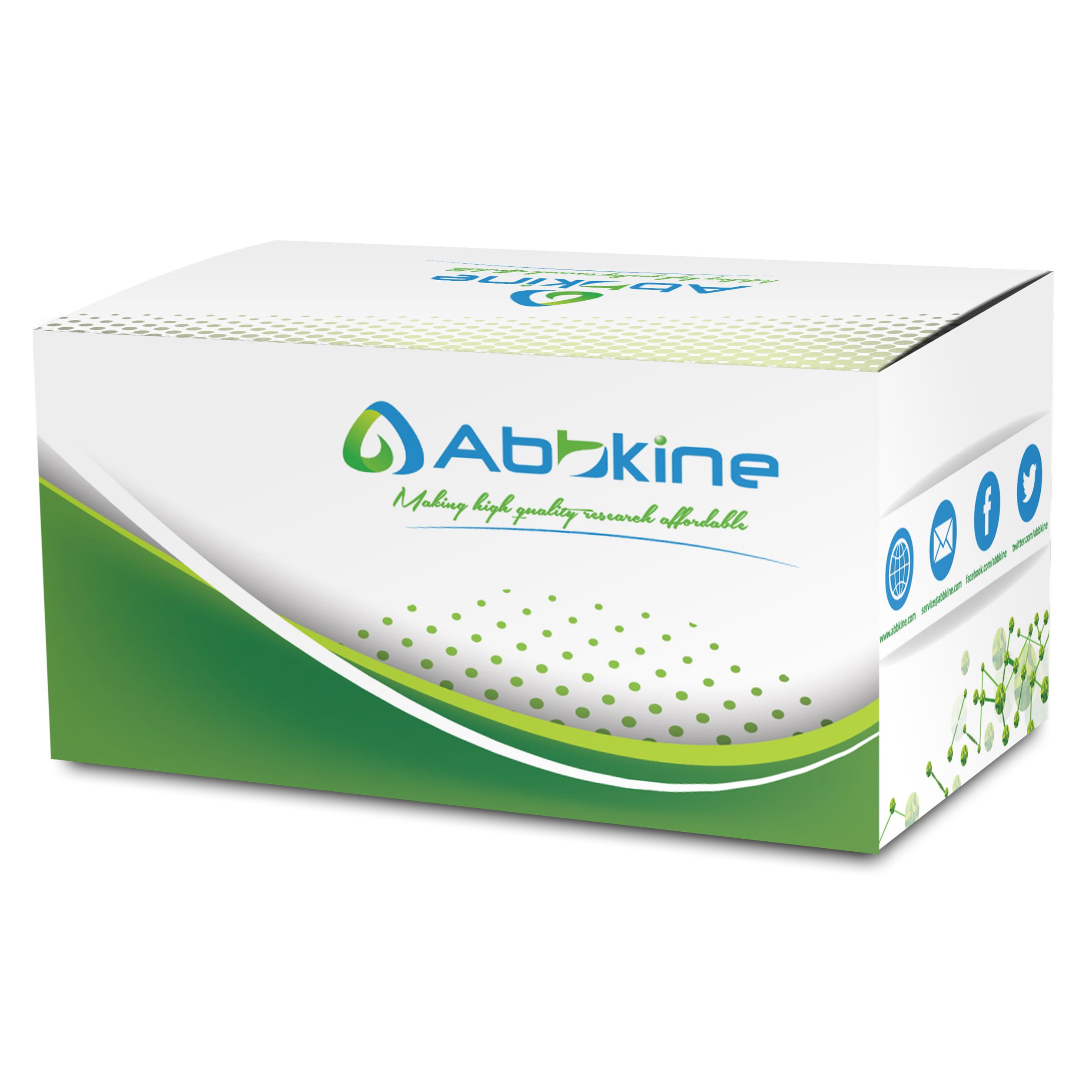
小鼠趋化因子9 ELISA定量试剂盒 (CXCL9) – Mouse CXCL9/MIG ELISA Kit (KTE3016-1)
产品概览
| 货号 | KTE3016-1 |
|---|---|
| 产品分类 | 核心产品 |
| 产品中心 | 细胞分析 |
| 检测类型 | ELISA(夹心法) |
| 适用物种 | 小鼠 |
| 样本类型 | 细胞培养上清、血清、血浆 |
| 检测范围 | 15.63 pg/mL – 1,000 pg/mL |
| 灵敏度 | 15.63 pg/mL |
| 规格/装盒数 | 48 T / 96 T |
| 参考价格(人民币) | 48 T:1,598.00 元 96 T:2,558.00 元 |
| 货期 | 请咨询 |
产品背景
CXCL9(亦称γ-干扰素诱导的单核因子)是 CXC 趋化因子家族的重要成员,主要通过 CXCR3 受体介导 Th1 型炎症反应。它能吸引活化的 B 细胞、单核细胞、CD8⁺记忆 T 细胞以及 CD4⁺ Th1 细胞,并在抑制 Th2 相关趋化因子、促进 Th1 应答及抗微生物活性方面发挥作用。此外,CXCL9 参与 CD34⁺ 干细胞的动员与迁移,并影响造血系细胞的集落形成。
检测原理
本套件采用双抗体夹心 ELISA:
- 预包被抗小鼠 CXCL9 的捕获抗体固定于酶标板孔内。
- 加入待测样品或标准品,孔内 CXCL9 与捕获抗体形成第一层复合物。
- 加入生物素化检测抗体,形成二层复合物。
- 加入链霉亲和素‑HRP(Streptavidin‑HRP),Biotin 与链霉亲和素特异性结合。
- 加入 TMB 显色剂,HRP 催化产生蓝色产物,终止液使其转为黄色。
- 在 450 nm 波长读板,OD 与 CXCL9 含量呈正比。
试剂盒组成
- Mouse CXCL9 Microplate(预包被)
- Mouse CXCL9 Standard (lyophilized)
- Standard Diluent
- Assay Buffer (10×)
- Mouse CXCL9 Detect Antibody (100×)
- Streptavidin‑HRP (100×)
- HRP Substrate (TMB)
- Stop Solution
- Wash Buffer (20×)
- Plate Covers
核心优势
- 高灵敏度:下限 15.63 pg/mL,满足低丰度 CXCL9 检测需求。
- 特异性强:对同类 CXCL10、CXCL11 等趋化因子无显著交叉反应,背景噪声低。
- 采用专有链霉亲和素‑HRP 系统,信号放大稳定。
- 标准曲线范围宽(15.63 pg/mL–1,000 pg/mL),适用于不同浓度的样本。
使用建议
为获得可靠定量结果,建议:
- 每个样本及标准品做双孔或三孔复测。
- 使用一次性吸头,避免交叉污染。
- 在每次洗涤后使用低速振荡器或每 10 min 手动轻摇,确保充分混匀。
- 未使用的酶标板立即密封,置于 4 ℃ 保存。
储存与运输
- 未开封试剂盒:避光保存于 2–8 ℃,有效期 24 个月。
- 开启后各组分请严格按说明书要求储存。
- 运输方式:使用蓝冰冷链包装(冰袋运输),确保全程低温。
注意事项
- 不同批号或过期试剂不得混用。
- 使用前请让所有试剂在室温平衡 30 分钟。
- 严格遵守一次性耗材使用原则。
合规声明
本产品仅供科研使用,不适用于人类或临床诊断。使用本套件进行的任何专利或许可行为均需使用者自行负责,供应方不承担相关责任。
注意:以上信息可能随着产品优化升级等因素产生变动,具体信息请咨询亚科因公司。

Mouse CXCL9/MIG ELISA Kit (KTE3016-1)
Product Overview
| Catalog Number | KTE3016-1 |
|---|---|
| Product Category | Core Product |
| Product Center | Cell Analysis |
| Assay Type | ELISA (Sandwich) |
| Species Reactivity | Mouse |
| Sample Type | Cell Culture Supernatant, Serum, Plasma |
| Detection Range | 15.63 pg/mL – 1,000 pg/mL |
| Sensitivity | 15.63 pg/mL |
| Format/Pack Size | 48 T / 96 T |
| Reference Price (RMB) | 48 T: 1,598.00 CNY 96 T: 2,558.00 CNY |
| Delivery Time | Please Inquire |
Background
CXCL9 (also known as Monokine Induced by Gamma-interferon) is a key member of the CXC chemokine family and primarily mediates Th1-type inflammatory responses via the CXCR3 receptor. It attracts activated B cells, monocytes, CD8⁺ memory T cells, and CD4⁺ Th1 cells, and plays roles in suppressing Th2-associated chemokines, promoting Th1 responses, and exerting antimicrobial activity. Furthermore, CXCL9 is involved in the mobilization and migration of CD34⁺ stem cells and influences colony formation of hematopoietic lineage cells.
Assay Principle
This kit employs a sandwich ELISA format:
- A capture antibody specific for mouse CXCL9 is pre-coated onto the microplate wells.
- Standards or test samples are added, and any CXCL9 present binds to the immobilized capture antibody.
- A biotinylated detection antibody is added, which binds to the captured CXCL9.
- Streptavidin-HRP conjugate is added, binding specifically to the biotin.
- TMB substrate is added. HRP catalyzes the conversion of TMB to a blue product, which turns yellow upon addition of the stop solution.
- The optical density (OD) is measured at 450 nm, which is proportional to the concentration of CXCL9.
Kit Components
- Mouse CXCL9 Microplate (Pre-coated)
- Mouse CXCL9 Standard (lyophilized)
- Standard Diluent
- Assay Buffer (10×)
- Mouse CXCL9 Detect Antibody (100×)
- Streptavidin‑HRP (100×)
- HRP Substrate (TMB)
- Stop Solution
- Wash Buffer (20×)
- Plate Covers
Key Features
- High Sensitivity: Lower detection limit of 15.63 pg/mL, suitable for detecting low abundance CXCL9.
- Excellent Specificity: No significant cross-reactivity with related chemokines such as CXCL10 and CXCL11; low background noise.
- Utilizes a proprietary Streptavidin-HRP system for stable signal amplification.
- Wide standard curve range (15.63 pg/mL – 1,000 pg/mL), suitable for samples with varying concentrations.
Usage Recommendations
For reliable quantitative results, it is recommended to:
- Perform duplicate or triplicate measurements for each standard and sample.
- Use disposable pipette tips to avoid cross-contamination.
- Ensure thorough mixing after each wash step using a low-speed shaker or by manually tapping the plate every 10 minutes.
- Reseal unused wells immediately and store the plate at 4 ℃.
Storage and Shipping
- Unopened Kit: Store protected from light at 2–8 ℃. Stable for 24 months.
- After opening, store individual components strictly as instructed in the manual.
- Shipping: Shipped with blue ice packs to ensure a consistent cold chain.
Precautions
- Do not mix reagents from different lots or use expired reagents.
- Allow all reagents to equilibrate to room temperature for 30 minutes before use.
- Strictly adhere to the use of disposable consumables.
Compliance Statement
This product is for research use only. Not intended for human or clinical diagnostic use. The user is solely responsible for any patent or licensing activities associated with the use of this kit; the supplier assumes no liability.
Note: The above information is subject to change due to factors such as product optimization and updates. For specific details, please inquire with Yakeyin Company.
风险提示:丁香通仅作为第三方平台,为商家信息发布提供平台空间。用户咨询产品时请注意保护个人信息及财产安全,合理判断,谨慎选购商品,商家和用户对交易行为负责。对于医疗器械类产品,请先查证核实企业经营资质和医疗器械产品注册证情况。
 文献和实验
文献和实验细胞因子与趋化因子结合治疗 Dilloo采用的策略是,将T和NK细胞活化因子IL2与T和NK细胞趋化因子XCLl对成纤维细胞同时注射,基因转染并增加骨髓肿瘤T细胞浸润,并以CD4T细胞和CD8T细胞依赖方式抑制肿瘤生长。在小鼠乳腺癌模型中,以腺病毒作载体将XCLl+IL1.2或XCLl+IL12导人肿瘤中显著地增强了抗肿瘤活性并诱导产生了长期的免疫保护作用。 CXCL9和CXCLl0与其受体CXCR3结合,招募Thl和活化的NK
人 肺部活化调节趋化因子(PARC/CCL18) 酶联免疫 分析( ELISA ) 试剂 盒使用说明书 本试剂仅供研究使用 目的:本试剂盒用于测定人血清,血浆及相关液体样本中 肺部活化调节趋化因子(PARC/CCL18)的 含量。 实验原理 : 本试剂盒应用 双抗体 夹心法测定 标本 中 人肺部活化调节趋化因子(PARC/CCL18) 水平。用纯化的 人肺部活化调节趋化因子(PARC/CCL18) 抗体 包被微孔
母细胞 CXCL8 SCYB8 IL-8 嗜中性粒细胞, T细胞, 嗜碱细胞 CXCL9 SCYB9 mig T细胞, 祖细胞 CXCL10 SCYB10 gIP-10, crg
 技术资料
技术资料暂无技术资料 索取技术资料

