

- 询价
- Nebulabio
- 中国
- NBAB-136435
- 2025年12月16日
- IHC

企业认证
相关产品推荐更多 >


万千商家帮你免费找货
0 人在求购买到急需产品
- 详细信息
- 文献和实验
- 技术资料
- 免疫原:
Recombinant Mouse FoxP3 protein
- 形态:
liquid
- 克隆性:
单克隆
- 保质期:
见COA
- 库存:
大量
- 供应商:
北京辰辉创聚生物技术有限公司
- 应用范围:
IHC
- 靶点:
Mouse FoxP3
- 抗体英文名:
Anti-FoxP3 Monoclonal Antibody
- 抗体名:
抗鼠FoxP3抗体
- 规格:
100ul; 500ul; 1ml
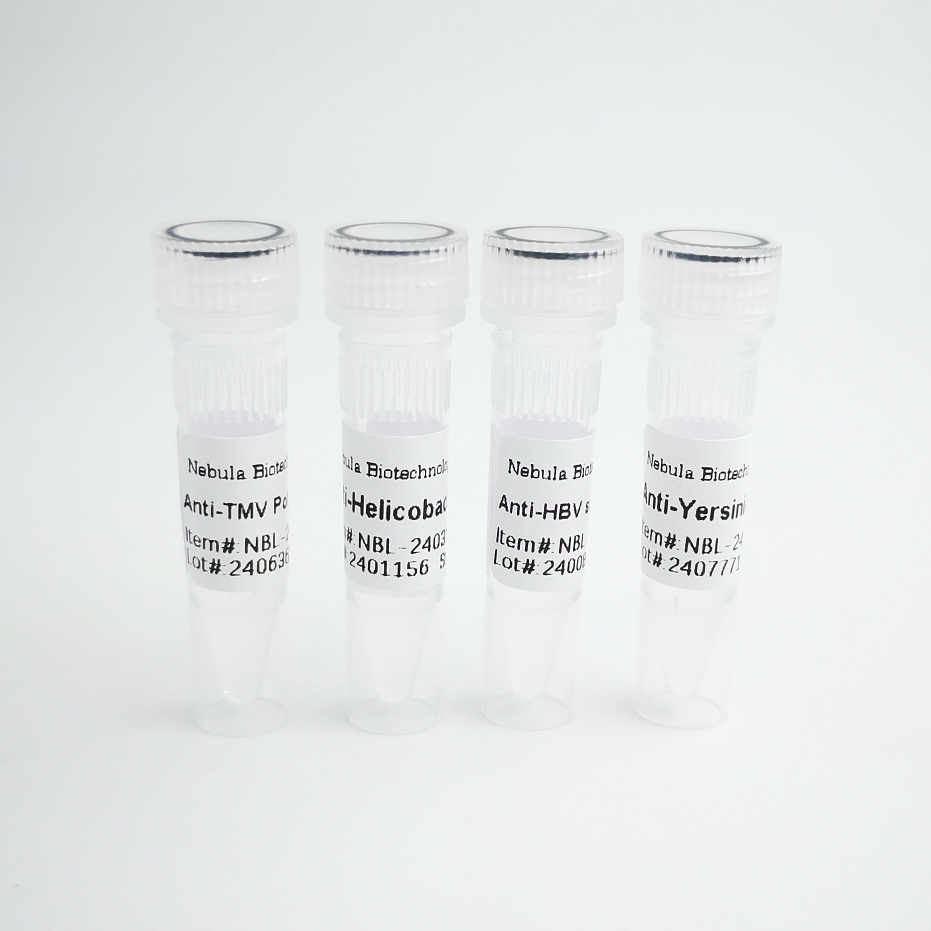
| 产品信息
品名:NebuSelect™ Anti-FoxP3 Monoclonal Antibody
货号:NBAB-136435
品牌:Nebulabio
规格:100ul; 500ul; 1ml
| 产品描述
NebuSelect™ Anti-FoxP3 Monoclonal Antibody (Cat# NBAB-136435) was produced in Rat immunized with Recombinant Mouse FoxP3 protein, and it reacts with Mouse. This antibody is validated for IHC.
| 产品属性
Product Category:Rat MAb
Reactivity:Mouse
Specificity:Mouse FoxP3
Immunogen:Recombinant Mouse FoxP3 protein
Isotype:Monoclonal Rat IgG
Purification:Protein A & Protein G Affinity Purification
Buffer:0.2 μm filtered solution in PBS, pH7.4, containing 0.09% Sodium azide, 50% glycerol.
Conjugate:Unconjugated
Applications:IHC
Dilution:IHC 1:50~1:500
Storage:This liquid antibody can be stored at 2℃-8℃ for at least two weeks. Avoid repeated freeze/thaw cycles. The lyophilized antibody is stable at room temperature for at least one month and for greater than a year when kept at -20℃. When reconstituted in sterile pH 7.4 0.01M PBS or antibody diluent, the antibody is stable for at least two weeks at 2-4℃.
For Research Use Only!
To get more information, please contact us freely.
风险提示:丁香通仅作为第三方平台,为商家信息发布提供平台空间。用户咨询产品时请注意保护个人信息及财产安全,合理判断,谨慎选购商品,商家和用户对交易行为负责。对于医疗器械类产品,请先查证核实企业经营资质和医疗器械产品注册证情况。
 文献和实验
文献和实验人Foxp3 ( Foxp3 )ELISA 试剂盒 原理 本实验采用双抗体夹心 ABC-ELISA 法。用抗人 Foxp3 单抗包被于酶标板上,标准品和样品中的 Foxp3与单抗结合,加入生物素化的抗人 Foxp3 ,形成免疫复合物连接在板上,辣根过氧化物酶标记的 Streptavidin 与生物素结合,加入底物工作液显蓝色,最后加终止液硫酸,在 450nm 处测 OD 值,Foxp3 浓度与 OD 值
Protocol for anti-HA antibody Western Blotting
film for ~2 mins. Notes on the primary antibody: Source : Covance/Babco Description: Crude ascites fluid monoclonal anti-HA antibody (CATLN#135032002, 11mms-101R, 0.5 ml) Handling: Aliquoted into 10ul portions in -20℃ Internal notes: labelled anti
Monoclonal Antibody-Based Strategies in Autoimmunity and Transplantation
of therapeutic monoclonal antibodies in the fields of transplantation and autoimmunity, and discuss the salient features of antibodies presently used in the clinic-notably anti-T-cell and anticytokine antibodies. The discussion will also focus on the unique
 技术资料
技术资料暂无技术资料 索取技术资料

