

- ¥4238.44
- SIGMA
- ESG1106
- 美国
- 2026年04月29日

企业认证
相关产品推荐更多 >

万千商家帮你免费找货
0 人在求购买到急需产品
- 详细信息
- 文献和实验
- 技术资料
- 库存:
999
- 英文名:
ESGRO® Recombinant Mouse LIF Protein
- 保质期:
1年
- 供应商:
北京智杰方远科技有限公司
- 保存条件:
4°C
- 规格:
1000000units
| 名称 | 品牌 | 货号 | 规格 | 保存 |
| ESGRO®重组小鼠LIF蛋白 ESGRO® Recombinant Mouse LIF Protein |
Sigma | ESG1106 | 1000000units | 4℃ |
一、产品概述
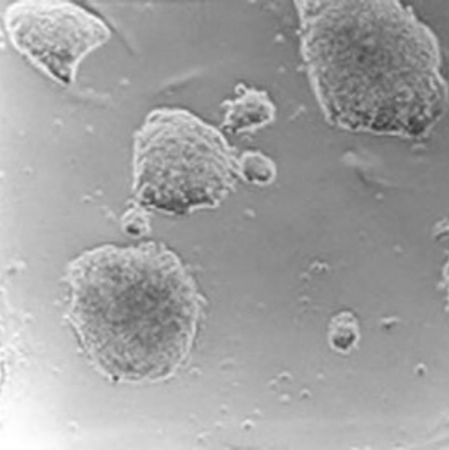
ESGRO小鼠LIF培养基补充剂以有效单位/mL的形式提供,以确保批次之间的性能一致。每批ESGRO补充剂均经过严格的质量控制测试,以确保能可靠地抑制小鼠多能干细胞分化。ESGRO小鼠LIF补充剂可用于小鼠胚胎干(ES)和诱导性多能干(iPS)细胞的基于饲养层和无饲养层的培养。
小鼠白血病抑制因子(LIF,mLIF)通过抑制自发分化,促进多能小鼠胚胎干(ES)和诱导多能干(iPS)细胞的自我更新和长期维持。
二、产品特点
• 一致的ES细胞分化抑制,获得可靠的效果。
• 无批间差异,获得更佳的重复性。
• 高度灵活,支持无饲养层和基于饲养层的细胞培养。
• 方便的包装规格,以活性单位/毫升形式提供。
三、产品应用
•ESGRO白血病抑制因子(LIF)补充剂,用于小鼠ES细胞培养。 每小瓶含有10^6单位/ml
•ESGRO补充剂的应用包括用作体外维持鼠 ES 细胞多能表型的试剂。
建议的实验方案:
•ES细胞:在D3和MBL-1多能ES细胞培养物中,研究发现,通常每1.0mL组织培养基需要1000 U ESGRO补充剂来维持具有干细胞表型的ES细胞。相似浓度的mLIF也已用于遗传修饰的ES细胞的种系传递(E3)。
•在推荐浓度下,107单位的ESGRO补充剂足以用于10.0 L的组织培养基,而106单位的ESGRO补充剂足以用于1.0 L的组织培养基。
四、外形
ESGRO补充剂以液体形式提供,含量为106单位,溶于1.0mL磷酸盐缓冲盐水,含1%w/v牛血清白蛋白BSA为载体以确保稳定性。
形式:纯化
五、制备说明
ESGRO 补充剂在环境温度下运输。出于客户关系,可能包含一个冰袋,但确实没必要。开发期间已使用 ESGRO 补充剂进行了广泛的稳定性测试。 该产品自生产之日起,以浓缩形式或在无菌组织培养基中稀释后至少可稳定保存 18 个月,且对 ES 细胞没有活性损失。 若要长期储存,建议将 ESGRO 补充剂储存于 4°C。 冻融会降低效力。建议在使用前,将 ESGRO 补充剂在无菌组织培养基中稀释并等分至合适的浓度,然后储存于 4°C。应避免冻融。在 ES 细胞培养期间,该产品在 37°C,5% CO2 培养箱中可稳定至少 7 天。
提供的 ESGRO® 补充剂经 0.22 微米无菌过滤,并在支原体检测中呈阴性。
六、分析说明
比活度:ESGRO® 补充剂在小鼠胚胎干细胞(D3 & MBL-1)和鼠 M1 髓样白血病细胞上进行了评估(4)。50 单位的标准定义为在 1.0mL 组织培养基中可诱导 50% 的 M1 菌落分化的 ESGRO 补充剂的浓度(4)。 106 单位相当于大约 10 μg 的纯蛋白质,足以处理 1L 的 ES 细胞培养基。
胚胎干细胞测定:分化抑制测定,浓度为 1000 单位/mL 小鼠骨髓白血病细胞 M1:比活度 >/= 108 单位/mg
七、产品属性
| 质量水平 | 100 |
| 方案 | >95% (active component mLIF, SDS-PAGE) |
| 表单 | liquid |
| 制造商/商品名称 | Chemicon® |
| 浓度 | 1000000 units/mL |
| 技术 | cell culture | stem cell: suitable |
| 输入 | sample type: mouse embryonic stem cell(s) sample type induced pluripotent stem cell(s) |
| NCBI登记号 | NM_008501 |
| UniProt登记号 | P09056 |
| 运输 | wet ice |
| 基因信息 | mouse ... LIF(16878) |
八、运输与保存
湿冰运输;4℃保存
风险提示:丁香通仅作为第三方平台,为商家信息发布提供平台空间。用户咨询产品时请注意保护个人信息及财产安全,合理判断,谨慎选购商品,商家和用户对交易行为负责。对于医疗器械类产品,请先查证核实企业经营资质和医疗器械产品注册证情况。
 文献和实验
文献和实验1.A medium-throughput analysis of signaling pathways involved in early stages of stem cell reprogramming.
Ashley L Fritz et al.
Biotechnology and bioengineering, 112(1), 209-219 (2014-07-30)
The induction of pluripotency from adult cells has enormous potential in regenerative medicine. While initial efforts to study mechanisms and improve efficiency of induced pluripotent stem cell (iPSC) reprogramming focused on the direct roles of transcriptional regulators, increasing evidence indicates.
2.Systematic delineation of optimal cytokine concentrations to expand hematopoietic stem/progenitor cells in co-culture with mesenchymal stem cells.
Andrade, Pedro Z, et al.
Molecular Biosystems, 6, 1207-1215 (2010)
3.Gli3 utilizes Hand2 to synergistically regulate tissue-specific transcriptional networks.
Kelsey H Elliott et al.
eLife, 9 (2020-10-03)
Despite a common understanding that Gli TFs are utilized to convey a Hh morphogen gradient, genetic analyses suggest craniofacial development does not completely fit this paradigm. Using the mouse model (Mus musculus), we demonstrated that rather than being driven by.
4.Short RNAs are transcribed from repressed polycomb target genes and interact with polycomb repressive complex-2.
Kanhere, Aditi, et al.
Molecular Cell, 38, 675-688 (2010)
5.Cap-dependent translation initiation monitored in living cells.
Valentina Gandin et al.
Nature communications, 13(1), 6558-6558 (2022-11-04)
mRNA translation is tightly regulated to preserve cellular homeostasis. Despite extensive biochemical, genetic, and structural studies, a detailed understanding of mRNA translation regulation is lacking. Imaging methodologies able to resolve the binding dynamics of translation factors at single-cell and single-mRNA.
6.Generation of osteoblasts and chondrocytes from embryonic stem cells.
Jitsutaro Kawaguchi
Methods in molecular biology (Clifton, N.J.), 330, 135-148 (2006-07-19)
The efficient generation of mesenchymal cells such as adipocytes, osteoblasts, and chondrocytes from embryonic stem cells is achieved by following sequential steps: embryoid body formation, retinoic acid (RA) treatment, and exposure to specific reagents for differentiation. RA treatment of embryoid.
7.Endothelial differentiation of embryonic stem cells.
Alicia A Blancas et al.
Current protocols in stem cell biology, Chapter 1, Unit 1F-Unit 1F (2008-09-27)
Vascular progenitor cells derived from stem cells could potentially lead to a variety of clinically relevant applications, including cell-based therapies and tissue engineering. Here, we describe methods for isolating purified proliferating populations of vascular endothelial cells from mouse embryonic stem。
8.Efficient generation of germ line transmitting chimeras from C57BL/6N ES cells by aggregation with outbred host embryos.
Marina Gertsenstein et al.
PloS one, 5(6), e11260-e11260 (2010-06-29)
Genetically modified mouse strains derived from embryonic stem (ES) cells have become essential tools for functional genomics and biomedical research. Large scale mutagenesis projects are producing libraries of mutant C57BL/6 (B6) ES cells to enable the functional annotation of every.
9.Isolation of Mammalian Oogonial Stem Cells by Antibody-Based Fluorescence-Activated Cell Sorting.
Deanna M Navaroli et al.
Methods in molecular biology (Clifton, N.J.), 1457, 253-268 (2016-08-26)
The ability to isolate and subsequently culture mitotically active female germ cells from adult ovaries, referred to as either oogonial stem cells (OSCs) or adult female germline stem cells (aFGSCs), has provided a robust system to study female germ cell.
10.Loss of Resf1 reduces the efficiency of embryonic stem cell self-renewal and germline entry.
Matúš Vojtek et al.
Life science alliance, 4(12) (2021-10-06)
Retroelement silencing factor 1 (RESF1) interacts with the key regulators of mouse embryonic stem cells (ESCs) OCT4 and NANOG, and its absence results in sterility of mice. However, the function of RESF1 in ESCs and germline specification is poorly understood.
11.Changes in chromatin accessibility landscape and histone H3 core acetylation during valproic acid-induced differentiation of embryonic stem cells.
Claudia Baumann et al.
Epigenetics & chromatin, 14(1), 58-58 (2021-12-28)
Directed differentiation of mouse embryonic stem cells (mESCs) or induced pluripotent stem cells (iPSCs) provides powerful models to dissect the molecular mechanisms leading to the formation of specific cell lineages. Treatment with histone deacetylase inhibitors can significantly enhance the efficiency.
12.YY1 Is a Structural Regulator of Enhancer-Promoter Loops.
Abraham S Weintraub et al.
Cell, 171(7), 1573-1588 (2017-12-12)
There is considerable evidence that chromosome structure plays important roles in gene control, but we have limited understanding of the proteins that contribute to structural interactions between gene promoters and their enhancer elements. Large DNA loops that encompass genes and.
13.Canonical Bone Morphogenetic Protein Signaling Regulates Expression of Aquaporin-4 and Its Anchoring Complex in Mouse Astrocytes.
Nadia Skauli et al.
Frontiers in cellular neuroscience, 16, 878154-878154 (2022-05-07)
Aquaporin-4 (AQP4) is the predominant water channel in the brain; it is enriched in astrocytic foot processes abutting vessels where it is anchored through an interaction with the dystrophin-associated protein (DAP) complex. Enhanced expression with concomitant mislocalization of AQP4 along.
14.Induced Pluripotent Stem Cells from Ovarian Tissue.
Sophia Salas et al.
Current protocols in human genetics, 95, 21-21 (2017-10-19)
Yamanaka and colleagues revolutionized stem cell biology and regenerative medicine by observing that somatic cells can be reprogrammed into pluripotent stem cells. Evidence indicates that induced pluripotent stem (iPS) cells retain epigenetic memories that bias their spontaneous differentiation into the.
15.The disordered N-terminal domain of DNMT3A recognizes H2AK119ub and is required for postnatal development.
Tianpeng Gu et al.
Nature genetics, 54(5), 625-636 (2022-05-10)
DNA methyltransferase 3a (DNMT3A) plays a crucial role during mammalian development. Two isoforms of DNMT3A are differentially expressed from stem cells to somatic tissues, but their individual functions remain largely uncharacterized. Here we report that the long isoform DNMT3A1, but.
16.Multidimensional Functional Profiling of Human Neuropathogenic FOXG1 Alleles in Primary Cultures of Murine Pallial Precursors.
Simone Frisari et al.
International journal of molecular sciences, 23(3) (2022-02-16)
FOXG1 is an ancient transcription factor gene mastering telencephalic development. A number of distinct structural FOXG1 mutations lead to the "FOXG1 syndrome", a complex and heterogeneous neuropathological entity, for which no cure is presently available. Reconstruction of primary neurodevelopmental/physiological anomalies.
17.Transplantation of chimeric fetal liver to study hematopoiesis.
Sigrid Eckardt et al.
Methods in molecular biology (Clifton, N.J.), 430, 195-211 (2008-03-29)
Complementing mutant embryos or embryonic stem cells with normal cells in embryonic chimeras is a valuable tool for investigating phenotypes. Chimera approaches provide a method to examine the phenotype of mutant cells, including hematopoiesis, in mutants with early embryonic lethality.
18.Teratoma formation in immunocompetent mice after syngeneic and allogeneic implantation of germline capable mouse embryonic stem cells.
Abdullah Aldahmash et al.
Asian Pacific journal of cancer prevention : APJCP, 14(10), 5705-5711 (2013-12-03)
Embryonic stem cells (ESCs) have the potential to form teratomas when implanted into immunodeficient mice, but data in immunocompetent mice are limited. We therefore investigated teratoma formation after implantation of three different mouse ESC (mESC) lines into immunocompetent mice. BALB/c
19.Limited effects of m6A modification on mRNA partitioning into stress granules.
Anthony Khong et al.
Nature communications, 13(1), 3735-3735 (2022-06-30)
The presence of the m6A modification in mammalian mRNAs is proposed to promote mRNA recruitment to stress granules through the interaction with YTHDF proteins. We test this possibility by examining the accumulation of mRNAs in stress granules in both WT.
20.Facultative dosage compensation of developmental genes on autosomes in Drosophila and mouse embryonic stem cells.
Claudia Isabelle Keller Valsecchi et al.
Nature communications, 9(1), 3626-3626 (2018-09-09)
Haploinsufficiency and aneuploidy are two phenomena, where gene dosage alterations cause severe defects ultimately resulting in developmental failures and disease. One remarkable exception is the X chromosome, where copy number differences between sexes are buffered by dosage compensation systems.
21.Inositol polyphosphate multikinase physically binds to the SWI/SNF complex and modulates BRG1 occupancy in mouse embryonic stem cells.
Jiyoon Beon et al.
eLife, 11 (2022-05-14)
Inositol polyphosphate multikinase (IPMK), a key enzyme in inositol polyphosphate (IP) metabolism, is a pleiotropic signaling factor involved in major biological events, including transcriptional control. In the yeast, IPMK and its IP products promote the activity of the chromatin remodeling.
22.Using small molecules to improve generation of induced pluripotent stem cells from somatic cells
Desponts C. & Ding S.
Methods in Molecular Biology null
23.Combinatorial binding of transcription factors in the pluripotency control regions of the genome.
Ferraris, Luciana, et al.
Genome Research (2011)
24.Dual regulatory actions of LncBMP4 on BMP4 promote chicken primordial germ cell formation.
Qisheng Zuo et al.
EMBO reports, 23(1), e52491-e52491 (2021-11-09)
The unique characteristics of chicken primordial germ cells (PGCs) provide potential strategies for transgenic animal generation; however, insufficient PGC availability has limited their application. Regulation of bone morphogenic protein 4 (BMP4), a crucial factor for PGCs formation, may provide new.
25.Derivation and manipulation of murine embryonic stem cells.
Alexander Meissner et al.
Methods in molecular biology (Clifton, N.J.), 482, 3-19 (2008-12-18)
Pluripotent embryonic stem (ES) cell lines were first isolated over 25 years ago and remain an essential tool in molecular and developmental biology to this day. In particular, the use of homologous recombination and subsequent generation of ES-derived mice has.
26.Tcf3 is an integral component of the core regulatory circuitry of embryonic stem cells.
Megan F Cole et al.
Genes & development, 22(6), 746-755 (2008-03-19)
Embryonic stem (ES) cells have a unique regulatory circuitry, largely controlled by the transcription factors Oct4, Sox2, and Nanog, which generates a gene expression program necessary for pluripotency and self-renewal. How external signals connect to this regulatory circuitry to influence.
27.Cell-Cycle-Dependent ERK Signaling Dynamics Direct Fate Specification in the Mammalian Preimplantation Embryo.
Michael J Pokrass et al.
Developmental cell, 55(3), 328-340 (2020-10-23)
Despite the noisy nature of single cells, multicellular organisms robustly generate different cell types from one zygote. This process involves dynamic cross regulation between signaling and gene expression that is difficult to capture with fixed-cell approaches. To study signaling dynamics.
28.Identifying essential genes in mouse development via an ENU-based forward genetic approach.
Aimin Liu et al.
Methods in molecular biology (Clifton, N.J.), 1092, 95-118 (2013-12-10)
The completion of the human and mouse genome projects at the beginning of the past decade represented a very important step forward in our pursuit of a comprehensive understanding of the genetic control of mammalian development. Nevertheless, genetic analyses of.
29.Generation of the organotypic kidney structure by integrating pluripotent stem cell-derived renal stroma.
Shunsuke Tanigawa et al.
Nature communications, 13(1), 611-611 (2022-02-03)
Organs consist of the parenchyma and stroma, the latter of which coordinates the generation of organotypic structures. Despite recent advances in organoid technology, induction of organ-specific stroma and recapitulation of complex organ configurations from pluripotent stem cells (PSCs) have remained.
30.The role of MORC3 in silencing transposable elements in mouse embryonic stem cells.
Varsha P Desai et al.
Epigenetics & chromatin, 14(1), 49-49 (2021-10-29)
Microrchidia proteins (MORCs) are involved in epigenetic gene silencing in a variety of eukaryotic organisms. Deletion of MORCs result in several developmental abnormalities and their dysregulation has been implicated in developmental disease and multiple cancers. Specifically, mammalian MORC3 mutations are.
31.A Genome-Wide CRISPR Screen Identifies Factors Regulating Pluripotency Exit in Mouse Embryonic Stem Cells.
Chen Gao et al.
Cells, 11(15) (2022-07-28)
Pluripotency maintenance and exit in embryonic stem cells is a focal topic in stem cell biology. However, the effects of screening under very stringent culture conditions (e.g., differentiation medium, no leukemia inhibitory factor, no chemical inhibitors such as PD0325901 and.
32.Modulating Glypican4 suppresses tumorigenicity of embryonic stem cells while preserving self-renewal and pluripotency.
Annalisa Fico et al.
Stem cells (Dayton, Ohio), 30(9), 1863-1874 (2012-07-05)
Self-renewal and differentiation of stem cell depend on a dynamic interplay of cell-extrinsic and -intrinsic regulators. However, how stem cells perceive the right amount of signal and at the right time to undergo a precise developmental program remains poorly understood.
作者:James O. Westgard,Sten A. Westgard 编译:冯仁丰 我们已经讨论Westgard多规则有几十年了,我们也已经讨论6西格玛多年了。我们现在想将它们二者放在一起探讨,这是Westgard西格玛多规则(Westgard Sigma Rules)。 引入Westgard 西格玛多规则 我们在很长时间内创导自己定制的统计质量控制程序, 如“Westgard多规则”,以考量某检测预期使用的质量要求,和该方法观察到的不精密度和偏移。在过去的时间里
。 5.如果没有其他参数修改或输入,光标20秒后将自动熄灭。 6.以同样的方法改变其它参数。 三、注意事项 1.离心机应放在平稳且通风良好的台面上。 2.仪器周围至少有30厘米的空间。 3.离心时一定要配平,放置要对称。 4.离心前一定要检查安装的转头编号与离心机程序所设定转头编号是否一致。 5.每次使用完以后必须将盖子打开让离心腔回到室温,并且用软布将离心腔里冷却水和赃物清理干净。 6.转头转轴和螺丝要经常上油(SIGMA货号NO70284),吊篮和适配器经常清洗上油(SIGMA 货号
licanming 请问大家用sigma公司的PMA时,储存液的浓度是配多少的?保存期多长?我是准备用DMSO配,我看说明书的意思是储存液浓度为20mM,但我工作液的浓度只要100nM,故很难分装和稀释。如果储存液浓度低一点,会不会对保存时间产生影响啊?我在园子里搜过,有用1mg/ml的,但我不知他是否用sigma公司的。 licanming 自己顶一下 amygdala 对于保存
 技术资料
技术资料暂无技术资料 索取技术资料

