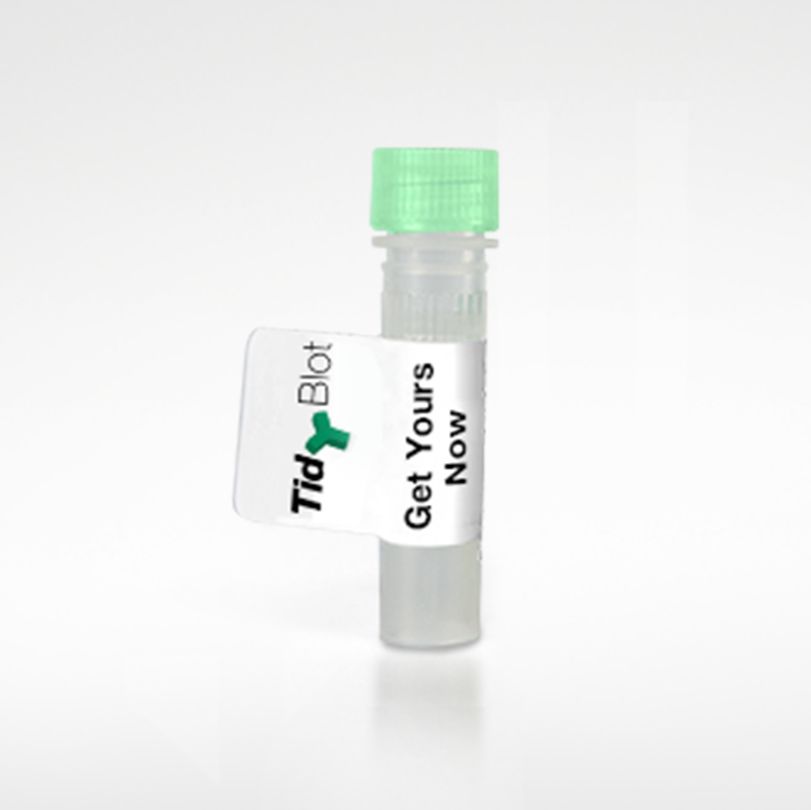
- 询价
- BIO-RAD

- MCA1568F
- 2025年10月17日
- F
- Human

企业认证
相关产品推荐更多 >
万千商家帮你免费找货
0 人在求购买到急需产品
- 详细信息
- 文献和实验
- 技术资料
- 亚型:
IgG2a
- 形态:
Purified IgG conjugated to Fluorescein Isothiocyanate Isomer 1 (FITC) - liquid
- 克隆性:
Monoclonal Antibody
- 标记物:
FITC
- 适应物种:
Human
- 保质期:
自发货之日起 12 个月
- 目录编号:
TÜK4
- 供应商:
伯乐生命医学产品(上海)有限公司
- 应用范围:
F
- 浓度:
IgG concentration 0.1 mg/ml
- 抗体名:
CD14 antibody | TÜK4
- 规格:
0.1 mg/25 µg
| 规格: | 0.1 mg | 产品价格: | 询价 |
|---|---|---|---|
| 规格: | 25 µg | 产品价格: | 询价 |
Mouse anti Human CD14 antibody, clone TÜK4 recognizes the human CD14 cell surface antigen. CD14 is a ~55 kDa glycoprotein that contains multiple leucine-rich repeats. It is anchored to the cell membrane via a glycosylphosphatidylinositol (GPI) linkage (Simmons et al. 1989), a soluble form of CD14 also exists (Bazil et al. 1986).
CD14 is strongly expressed on the surface of monocytes and macrophages but has also been shown to be expressed on the surface of non-myeloid cells (Jersmann 2005). CD14 functions as a pattern recognition receptor (Pugin et al. 1994, Dziarski et al. 1998) in innate immunity for a variety of ligands, in particular for the LPS (endotoxin) of Gram-negative bacteria.
Mouse anti human CD14 antibody, clone TÜK4 has been shown to block SDF-induced chemotaxis of U937 cells in a dose –dependent manner (Yang et al. 2003). Use of the anti-human CD14 antibody, Low Endotoxin format is recommended for this purpose.
CD14 is strongly expressed on the surface of monocytes and macrophages but has also been shown to be expressed on the surface of non-myeloid cells (Jersmann 2005). CD14 functions as a pattern recognition receptor (Pugin et al. 1994, Dziarski et al. 1998) in innate immunity for a variety of ligands, in particular for the LPS (endotoxin) of Gram-negative bacteria.
Mouse anti human CD14 antibody, clone TÜK4 has been shown to block SDF-induced chemotaxis of U937 cells in a dose –dependent manner (Yang et al. 2003). Use of the anti-human CD14 antibody, Low Endotoxin format is recommended for this purpose.
储存信息
This product is shipped at ambient temperature. It is recommended to aliquot and store at -20°C on receipt. When thawed, aliquot the sample as needed. Keep aliquots at 2-8°C for short term use (up to 4 weeks) and store the remaining aliquots at -20°C.
Avoid repeated freezing and thawing as this may denature the antibody. Storage in frost-free freezers is not recommended. This product is photosensitive and should be protected from light.
Avoid repeated freezing and thawing as this may denature the antibody. Storage in frost-free freezers is not recommended. This product is photosensitive and should be protected from light.
应用
This product has been reported to work in the following applications. This information is derived from testing within our laboratories, peer-reviewed publications or personal communications from the originators. Please refer to references indicated for further information. For general protocol recommendations, please visit the antibody protocols page.
| Application Name | Verified | Min Dilution | Max Dilution |
|---|---|---|---|
| Flow Cytometry | ✓ | Neat | 1/2 Pack Size: 0.1 mg 1/10 Pack Size: 25 µg |
Where this product has not been tested for use in a particular technique this does not necessarily exclude its use in such procedures. Suggested working dilutions are given as a guide only. It is recommended that the user titrates the product for use in their own system using appropriate negative/positive controls.
- Flow Cytometry
- Use 10μl of the suggested working dilution to label 106 cells or 100μl whole blood
风险提示:丁香通仅作为第三方平台,为商家信息发布提供平台空间。用户咨询产品时请注意保护个人信息及财产安全,合理判断,谨慎选购商品,商家和用户对交易行为负责。对于医疗器械类产品,请先查证核实企业经营资质和医疗器械产品注册证情况。
 文献和实验
文献和实验该产品被引用文献
References for CD14 antibody
- Jacobsen, C.N. et al. (1993) Reactivities of 20 anti-human monoclonal antibodies with leucocytes from ten different animal species.
Vet Immunol Immunopathol. 39 (4): 461-6. - Gupta, V.K. et al. (1996) Identification of the sheep homologue of the monocyte cell surface molecule--CD14.
Vet Immunol Immunopathol. 51 (1-2): 89-99. - Sopp, P. & Howard, C.J. (1997) Cross-reactivity of monoclonal antibodies to defined human leucocyte differentiation antigens with bovine cells.
Vet Immunol Immunopathol. 56 (1-2): 11-25. - Werling, D. et al. (1998) Analysis of the phenotype and phagocytic activity of monocytes/macrophages from cattle infected with the bovine leukaemia virus.
Vet Immunol Immunopathol. 62 (3): 185-95. - Weiss, D.J. (2001) Evaluation of proliferative disorders in canine bone marrow by use of flow cytometric scatter plots and monoclonal antibodies.
Vet Pathol. 38: 512-8. - Bryan, S.A. et al. (2002) Responses of leukocytes to chemokines in whole blood and their antagonism by novel CC-chemokine receptor 3 antagonists.
Am J Respir Crit Care Med. 165: 1602-9. - Yang, H. et al. (2003) Antibody to CD14 like CXCR4-specific antibody 12G5 could inhibit CXCR4-dependent chemotaxis and HIV Env-mediated cell fusion.
Immunol Lett. 88 (1): 27-30. - Schenk, M. et al. (2005) Macrophages expressing triggering receptor expressed on myeloid cells-1 are underrepresented in the human intestine.
J Immunol. 174 (1): 517-24.
Further Reading
- Bazil, V. et al. (1986) Biochemical characterization of a soluble form of the 53-kDa monocyte surface antigen.
Eur J Immunol. 16:1583-9. - Simmons, D. L. et al. (1989) Monocyte antigen CD14 is a phospholipid anchored membrane protein.
Blood. 73:284-9. - Pugin, J. et al. (1994) CD14 is a pattern recognition receptor.
Immunity.1:509-16. - Dziarski, R. et al. (1998) Binding of bacterial peptidoglycan to CD14.
J Biol Chem. 273:8680-90. - Jersmann, H.P. (2005) Time to abandon dogma: CD14 is expressed by non-myeloid lineage cells.
Immunol Cell Biol. 83:462-7. - Piriou-Guzylack, L. (2008) Membrane markers of the immune cells in swine: an update.
Vet Res. 39: 54.
 技术资料
技术资料暂无技术资料 索取技术资料
文献支持
Mouse anti Human CD14:FITC,clone TÜK4
询价