- 询价
- BIO-RAD

- MCA2678F
- 2025年10月17日
- F
- Bovine

企业认证
相关产品推荐更多 >
万千商家帮你免费找货
0 人在求购买到急需产品
- 详细信息
- 文献和实验
- 技术资料
- 免疫原:
Partially purified polypeptides isolated from bovine leucocyte cell surface membrane.
- 亚型:
IgG1
- 形态:
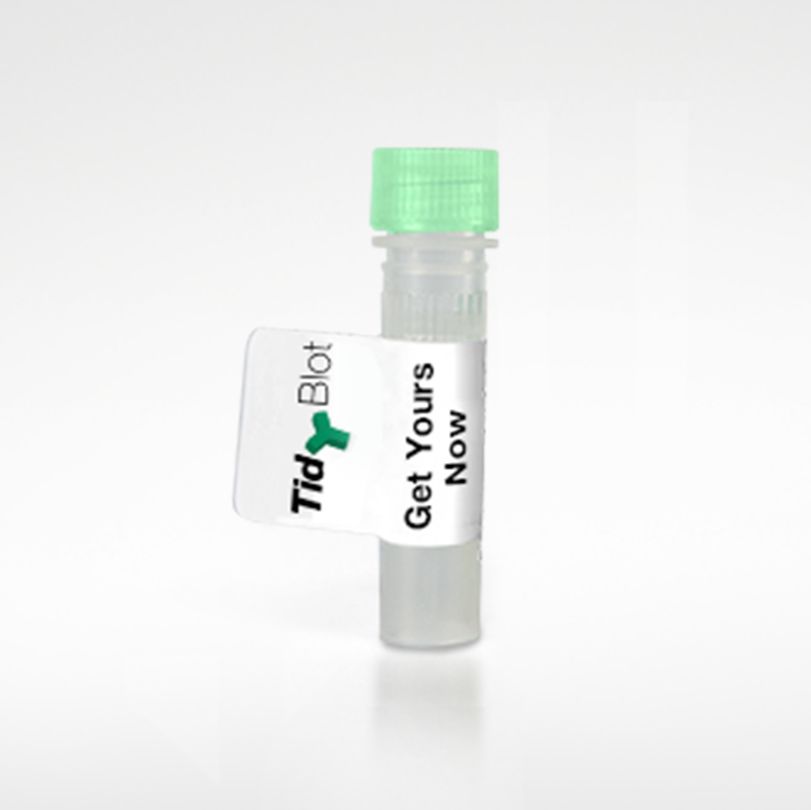
Purified IgG conjugated to Fluorescein Isothiocyanate Isomer 1 (FITC) - liquid
- 克隆性:
Monoclonal Antibody
- 标记物:
FITC
- 适应物种:
Bovine
- 保质期:
自发货之日起 12 个月
- 目录编号:
CC-G33
- 供应商:
伯乐生命医学产品(上海)有限公司
- 应用范围:
F
- 浓度:
IgG concentration 0.1mg/ml
- 抗体名:
CD14 antibody | CC-G33
- 规格:
0.1 mg
Mouse anti Bovine CD14, clone CC-G33 recognizes bovine CD14.
CD14 is a GPI-anchored membrane glycoprotein and monocyte/macrophage differentiation antigen, belonging to the lipopolysaccharide receptor family, also expressed weakly on microglia and Langerhans cells. CD14 acts as a receptor for the potent bacterial endotoxin, lipopolysaccharide (LPS), facilitated by LPS-binding protein (LBP). The binding of LPS to CD14 results in cell activation and the release of cytokines and the inflammatory response, and has been shown to upregulate the cell surface expression of adhesion molecules.
Mouse anti Bovine CD14 clone CC-G33 cross-reacts with human CD14 expressed on transfected COS-7 cells (Berthon & Hopkins 1996), ovine CD14 (Sopp et al. 1996) and Water buffalo (Bubalus bubalis) CD14, (Mirielli et al. 2013).
CD14 is a GPI-anchored membrane glycoprotein and monocyte/macrophage differentiation antigen, belonging to the lipopolysaccharide receptor family, also expressed weakly on microglia and Langerhans cells. CD14 acts as a receptor for the potent bacterial endotoxin, lipopolysaccharide (LPS), facilitated by LPS-binding protein (LBP). The binding of LPS to CD14 results in cell activation and the release of cytokines and the inflammatory response, and has been shown to upregulate the cell surface expression of adhesion molecules.
Mouse anti Bovine CD14 clone CC-G33 cross-reacts with human CD14 expressed on transfected COS-7 cells (Berthon & Hopkins 1996), ovine CD14 (Sopp et al. 1996) and Water buffalo (Bubalus bubalis) CD14, (Mirielli et al. 2013).
储存信息
This product is shipped at ambient temperature. It is recommended to aliquot and store at -20°C on receipt. When thawed, aliquot the sample as needed. Keep aliquots at 2-8°C for short term use (up to 4 weeks) and store the remaining aliquots at -20°C.
Avoid repeated freezing and thawing as this may denature the antibody. Storage in frost-free freezers is not recommended. This product is photosensitive and should be protected from light.
Avoid repeated freezing and thawing as this may denature the antibody. Storage in frost-free freezers is not recommended. This product is photosensitive and should be protected from light.
应用
This product has been reported to work in the following applications. This information is derived from testing within our laboratories, peer-reviewed publications or personal communications from the originators. Please refer to references indicated for further information. For general protocol recommendations, please visit the antibody protocols page.
| Application Name | Verified | Min Dilution | Max Dilution |
|---|---|---|---|
| Flow Cytometry | ✓ |
Where this product has not been tested for use in a particular technique this does not necessarily exclude its use in such procedures. Suggested working dilutions are given as a guide only. It is recommended that the user titrates the product for use in their own system using appropriate negative/positive controls.
- Flow Cytometry
- Use 10ul of the suggested working dilution to label 1x10⁶ cells in 100ul.
风险提示:丁香通仅作为第三方平台,为商家信息发布提供平台空间。用户咨询产品时请注意保护个人信息及财产安全,合理判断,谨慎选购商品,商家和用户对交易行为负责。对于医疗器械类产品,请先查证核实企业经营资质和医疗器械产品注册证情况。
 文献和实验
文献和实验该产品被引用文献
Source Reference
- Sopp, P. et al. (1996) Identification of bovine CD14.
Vet Immunol Immunopathol. 52 (4): 323-8.
References for CD14 antibody
- Berthon, P. & Hopkins, J. (1996) Ruminant cluster CD14.
Vet Immunol Immunopathol. 52 (4): 245-8. - Haas, K.M. and Estes, D.M. (2001) The identification and characterization of a ligand for bovine CD5.
J Immunol. 166: 3158-66. - Altreuther, G. et al. (2001) Morphologic and functional changes in bovine monocytes infected in vitro with the bovine leukaemia virus.
Scand J Immunol. 54: 459-69. - Fikri Y et al. (2002) Costimulatory molecule requirement for bovine WC1+gammadelta T cells' proliferative response to bacterial superantigens.
Scand J Immunol. 55 (4): 373-81. - Glew, E.J. et al. (2003) Differential effects of bovine viral diarrhoea virus on monocytes and dendritic cells.
J Gen Virol. 84: 1771-80. - Harris, J. et al. (2003) Expression of caveolin by bovine lymphocytes and antigen-presenting cells.
Immunology. 105: 190-5. - Villarreal-Ramos, B. et al. (2003) Investigation of the role of CD8+ T cells in bovine tuberculosis in vivo.
Infect Immun.71: 4297-303. - Gliddon, D.R. et al. (2004) DEC-205 expression on migrating dendritic cells in afferent lymph.
Immunology. 11: 262-72.
 技术资料
技术资料暂无技术资料 索取技术资料
文献支持
Mouse anti Bovine CD14:FITC,clone CC-G33
询价