

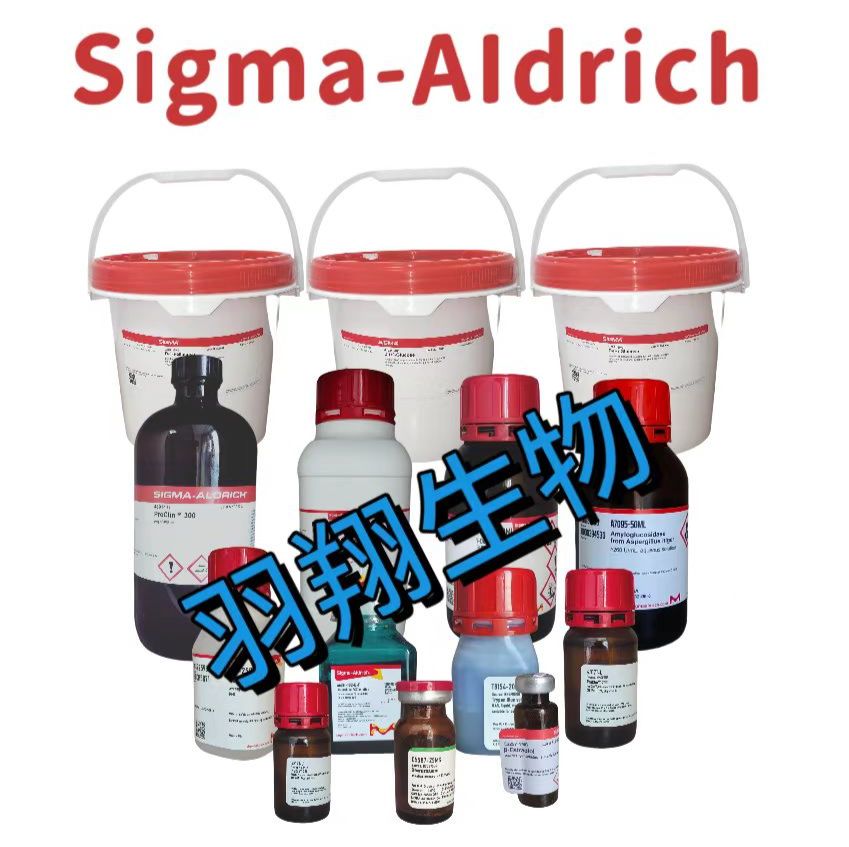
- ¥454
- Sigma-Aldrich
- 进口
- M2933-25G
- 2026年05月29日

企业认证
相关产品推荐更多 >
万千商家帮你免费找货
0 人在求购买到急需产品
相关阅读
源叶生物 十万种现货试剂速发,品质稳、品类全,实验不再等!Takara 秋促来袭,提取+反转录+定量套装仅 1200 元abinScience 体内级抗体 全年锁价 低至 ¥1200阿拉丁 22万+ 科研级产品现货速发,品质严控、科研无忧- 详细信息
- 文献和实验
- 技术资料
- 保存条件:
常温
- 保质期:
根据瓶身LOT号查询
- 英文名:
MES hydrate
- 库存:
有现货
- 供应商:
浙江羽翔生物科技有限公司
- CAS号:
1266615-59-1
- 规格:
25G
属性
质量水平
400
等级
BioPerformance Certified
Molecular Biology
方案
≥99.5%
表单
crystalline powder
储存条件
dry at room temperature
技术
cell culture | mammalian: suitable
immunofluorescence: suitable
nucleic acid detection: suitable
杂质
endotoxin and Total Aerobic Microbial Count, tested
颜色
white
有效pH范围
5.5-6.7
pKa
6.1
溶解性
water: 335.3 g/L at 20 °C
适用性
suitable for component for culture media
suitable for molecular biology
应用
agriculture
diagnostic assay manufacturing
life science and biopharma
sample preparation
异质活性
DNase, RNase, protease, none detected
SMILES字符串
O.OS(=O)(=O)CCN1CCOCC1
InChI
1S/C6H13NO4S.H2O/c8-12(9,10)6-3-7-1-4-11-5-2-7;/h1-6H2,(H,8,9,10);1H2
InChI key
MIIIXQJBDGSIKL-UHFFFAOYSA-N
一般描述
除了这些应用以外,MES水合物还被广泛用于植物培养基、试剂溶液和生理实验中pH 值的调节。它是研究pH 值对酶促反应的作用以及考察蛋白质和其它生物分子与金属离子相互作用的试剂。作为Good′s缓冲液,MES 水合物满足以下严格标准:中值pKa,最大水溶性,在所有其他溶剂中的最小溶解度,最小盐效应,不同温度下的稳定性,化学和酶学稳定性,在可见光或紫外光谱范围的最小吸收,易于合成。此外,它不会与大多数金属离子形成复合物,从而确保涉及金属离子的应用得到可靠的结果。
应用
- 在自噬诱导研究以前悬浮细胞
- 制备用于拟南芥幼苗生长的MS生长培养基
- PCR扩增以前杂交探针与微珠的偶联
- 在与肝素结合以前处理成纤维细胞衍生的基质,可用作血管内皮生长因子运送平台
- 作为分子生物学研究中的清洗缓冲液
- 作为培养基成分
特点和优势
- 适用于分子生物学和细胞培养
- 可用作缓冲液成分,用于电泳和蛋白质分离
- 通过内毒素和好氧微生物总数测试
- 不含DNA酶、切开酶(NICKase)、RNA酶和蛋白酶
- 经测试证实重金属污染浓度低,从而确保其适用于各种应用
- pKa值为6.1 的(25 °C)可在pH 5.5-6.7 (25 °C) 范围内有效缓冲
- 易溶于水
- 金属离子结合能力极低
- 与其它缓冲液如Tris和磷酸盐相比细胞毒性更低
- 在很宽的pH范围内保持稳定
- 低紫外吸收率
- 反应性极低
制备说明
风险提示:丁香通仅作为第三方平台,为商家信息发布提供平台空间。用户咨询产品时请注意保护个人信息及财产安全,合理判断,谨慎选购商品,商家和用户对交易行为负责。对于医疗器械类产品,请先查证核实企业经营资质和医疗器械产品注册证情况。
 文献和实验
文献和实验Comparative genomic and phenotypic characterization of invasive non-typhoidal Salmonella isolates from Siaya, Kenya.
Non-typhoidal Salmonella (NTS) is a major global health concern that often causes bloodstream infections in areas of the world affected by malnutrition and comorbidities such as HIV and malaria. Developing a strategy to control the emergence and spread of highly invasive and antimicrobial resistant NTS isolates requires a comprehensive analysis of epidemiological factors and molecular pathogenesis. Here, we characterize 11 NTS isolates that caused bloodstream infections in pediatric patients in Siaya, Kenya from 2003-2010. Nine isolates were identified as S. Typhimurium sequence type 313 while the other two were S. Enteritidis. Comprehensive genotypic and phenotypic analyses were performed to compare these isolates to those previously identified in sub-Saharan Africa. We identified a S. Typhimurium isolate referred to as UGA14 that displayed novel plasmid, pseudogene and resistance features as compared to other isolates reported from Africa. Notably, UGA14 is able to ferment both lactose and sucrose due to the acquisition of insertion elements on the pKST313 plasmid. These findings show for the first time the co-evolution of plasmid-mediated lactose and sucrose metabolism along with cephalosporin resistance in NTS further elucidating the evolutionary mechanisms of invasive NTS phenotypes. These results further support the use of combined genomic and phenotypic approaches to detect and characterize atypical NTS isolates in order to advance biosurveillance efforts that inform countermeasures aimed at controlling invasive and antimicrobial resistant NTS.
free acid monohydrate Sigma (M2933) 9.66g MES Sodium salt Sigma (M3058) Water to 40ml pH to 6.5 with 1M Hydrochloric acid Add water to 50ml Filter sterilise with a 0.45μm filter Store at 4 °C
 技术资料
技术资料暂无技术资料 索取技术资料

