


- 询价
- DSHB (Developmental Studies Hybridoma Bank)
- Gene: PDE4A
- 美国
- 2026年02月05日

企业认证
相关产品推荐更多 >



![8-METHYL-8-AZABICYCLO[3.2.1]OCTAN-3-ONE OXIME HYDROCHLORIDE](https://img1.dxycdn.com/p/s14/2025/0214/356/6929720261441720981.jpg!wh200)
万千商家帮你免费找货
0 人在求购买到急需产品
- 详细信息
- 文献和实验
- 技术资料
- 库存:
2
- 英文名:
cAMP-specific phosphodieserase PDE4A4
- CAS号:
Gene: PDE4A
- 保质期:
1年
- 供应商:
北京孚博生物
- 保存条件:
−20°C
- 规格:
1mg
DSHB 由美国国家儿童健康与人类发展研究所于 1986 年创建,目的是将杂交瘤及其产生的单克隆抗体 (mAb)进行储存并提供给一般科学界,以促进研究。公司的第一个目标是保持低价格,以便研究人员无需投入大量资金即可测试多种 mAb,然后继续使用感兴趣的产品,而无需担心费用。第二个目的是减轻科学家开发杂交瘤和 mAb 的时间和费用。第三个宗旨是向科学界的保证,需求有限的 mAb 仍然可用。最后,第四个意图是保持最高质量的产品并及时为我们的客户提供帮助。在过去的三十三年里,公司一直努力忠于使命。自 1996 年以来,实现完全自给自足,不需要NIH的资金,并且能够将价格保持在非常接近成本的水平。DSHB将打算执行这项政策。1 毫升上清液样品的40美元价格仍然是平均商业价格的一小部分,公司的其他产品同样便宜。 DSHB继续快速响应客户有关产品质量和应用的询问。如果客户发现杂交瘤或上清液的有效性降低,会立即对其进行测试,并在必要时重新克隆该生产线。DSHB的杂交瘤收集在过去一年中增加了一倍多。现在它的数量超过 5,000。公司已经从各种个人和机构获得了新的杂交瘤,包括NIH蛋白质捕获试剂计划、国家癌症研究所、欧洲分子生物学实验室和肌肉萎缩症协会,DSHB热切期待新的收藏。目前的一个主要挑战是让研究人员了解我们的新试剂。为响应全球客户的要求,公司内部开发了七种杂交瘤细胞,可产生针对天然 GFP 的单克隆抗体和至少四种针对变性 GFP 的单克隆抗体。目前正在开发针对其他八个标签的 mAb。在过去的 12 个月中,DSHB 在全球范围内分发了 65,000 多个样本。 DSHB 仍然是单克隆抗体的分销渠道,但不拥有知识产权。作为一家 mAb 银行,DSHB 继续按成本维护和分发属于其他机构和 NIH 的知识产权的抗体和 mAb。我们的使命将与三十多年来一样,即为基础科学家的利益服务。
我们优势进口DSHB的抗体产品,价格优惠,货期低至3-4周,质量和售后有保障!
了解更多产品和定制服务信息请留言,或 直接与我们销售人员联系。
下面以几种产品为例,介绍一下DSHB的业务
1. cAMP-specific phosphodieserase PDE4A4(cAMP 特异性磷酸二酯酶 PDE4A4)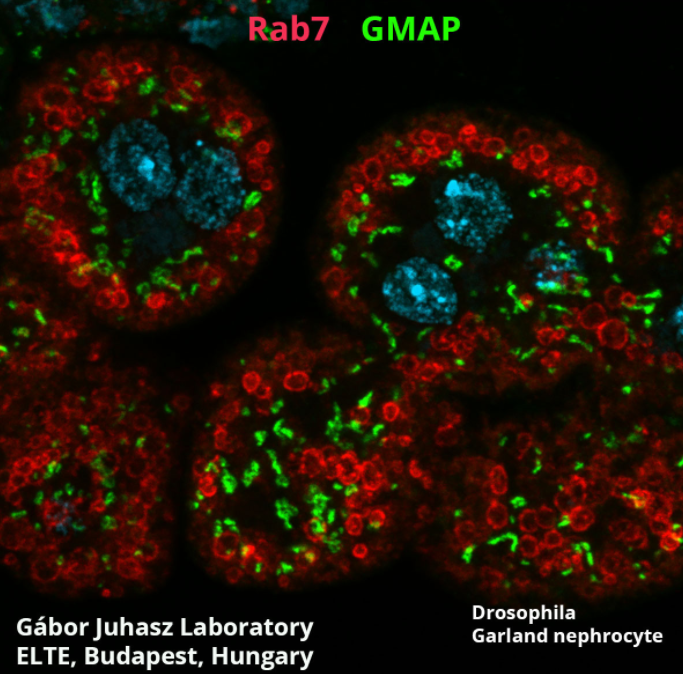
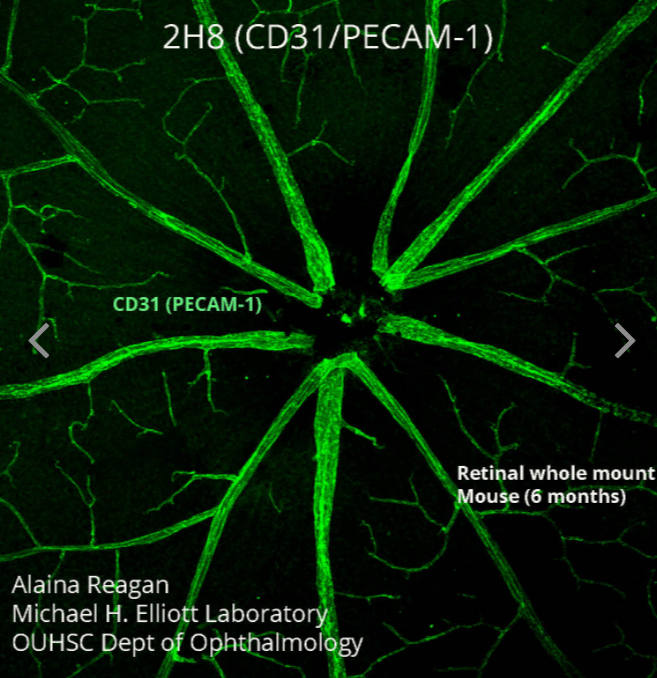
产品信息目录:
Catalog Fields
Antigen: cAMP-specific phosphodieserase PDE4A4
Hybridoma Cells Available: Yes
Antigen Species: Human
Depositor: Bolger, G.B.
Isotype: MIgG2a, kappa light chain
Antigen Sequence:
Host Species: mouse
Depositors Institution: University of Alabama at Birmingham
Positive Tested Species Reactivity: Human
Depositors Notes:
Antigen Molecular Weight: 97 kDa
Human Protein Atlas:
Predicted Species Reactivity:
Gene: PDE4A
Immunogen: Peptide
Alternate Gene Names: DPDE2
Alternate Antibody Name:
Clonality: Monoclonal
Alternate Antigen Name:
Epitope Mapped: No
Myeloma Strain:
Epitope Location or Sequence:
Uniprot ID: P27815
Immunogen Sequence: a.a. 51-70 SAERAERERQPHRPIERADA
Entrez Gene ID: 5141
Additional Characterization:
Antibody Registry ID: AB_2617202
Additional Information: RRID:AB_2617202
Recommended Applications: Immunofluorescence, Immunohistochemistry, Western Blot
产品使用建议:
For your Materials & Methods section:
1-21.2 was deposited to the DSHB by Bolger, G.B. (DSHB Hybridoma Product 1-21.2)
Storage and Handling Recommendations
Although many cell products are maintained at 4°C for years without loss of activity, shelf-life at 4°C is highly variable. For immediate use, short term storage at 4°C up to two weeks is recommended. For long term storage, divide the solution into volumes of no less than 20 ul for freezing at -20°C or -80°C. The small volume aliquot should provide sufficient reagent for short term use. Freeze-thaw cycles should be avoided. For concentrate or bioreactor products, an equal volume of glycerol, a cryoprotectant, may be added prior to freezing.
Usage Recommendations
The optimal Ig concentration for an application varies by species and antibody affinity. For each product, the antibody titer must be optimized for every application by the end user laboratory. A good starting concentration for immunohistochemistry (IHC), immunofluorescence (IF), and immunocytochemistry (ICC) when using mouse Ig is 2-5 ug/ml. For western blots, the recommended concentration range of mouse Ig 0.2-0.5 ug/ml. In general, rabbit antibodies demonstrate greater affinity and are used at a magnitude lower Ig concentration for initial testing. The recommended concentrations for rabbit Ig are 0.2-0.5 ug/ml (IF, IHC and ICC) and 20-50 ng/ml
2. Tannerella forsythia, strain FDC 331 (OMZ 348)(Tannerella forsythia,菌株 FDC 331 (OMZ 348))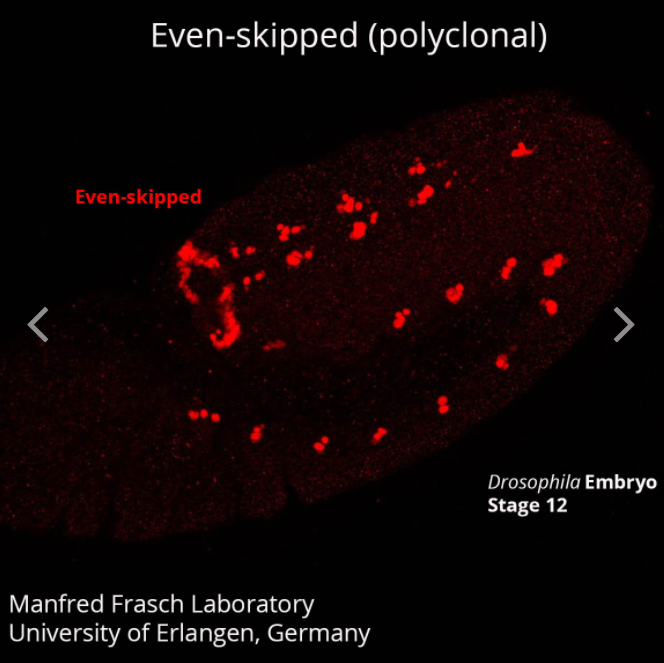
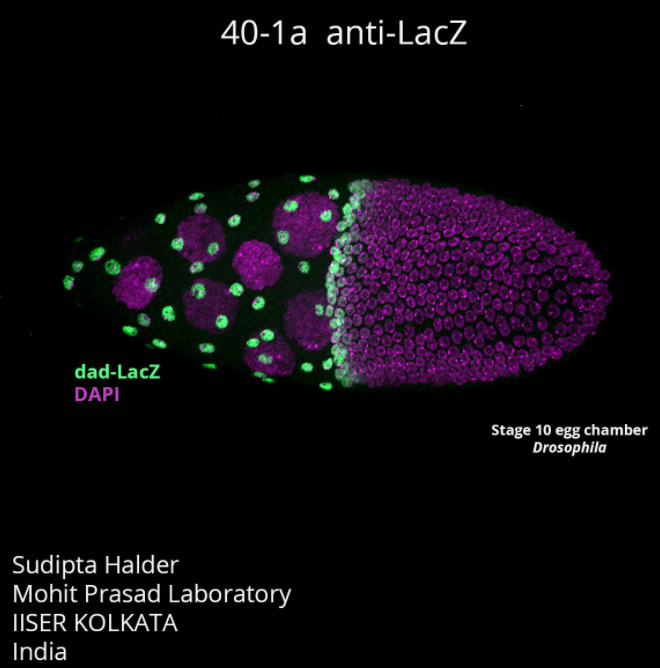
产品信息目录:
Catalog Fields
Antigen: Tannerella forsythia, strain FDC 331 (OMZ 348)
Hybridoma Cells Available: No
Antigen Species: Tannerella forsythia
Depositor: Gmuer, R.
Isotype: MIgG2b
Antigen Sequence:
Host Species: mouse
Depositors Institution: Institute of Oral Biology, ZZMK, University of Zuerich
Positive Tested Species Reactivity: Tannerella forsythia
Depositors Notes:
Antigen Molecular Weight:
Human Protein Atlas:
Predicted Species Reactivity:
Gene:
Immunogen: Tannerella forsythia, strain FDC 331 (OMZ 348)
Alternate Gene Names:
Alternate Antibody Name:
Clonality: Monoclonal
Alternate Antigen Name:
Epitope Mapped: No
Myeloma Strain: F0
Epitope Location or Sequence:
Uniprot ID:
Immunogen Sequence:
Entrez Gene ID:
Additional Characterization:
Antibody Registry ID: AB_10572303
Additional Information: *Cell lines will be distributed only with the written consent of University of Zurich's tech transfer office, Ref. UZ-18/273. Contact the DSHB for details (dshb at uiowa.edu). RRID:AB_10572303
Recommended Applications: Western Blot
产品使用建议:
For your Materials & Methods section:
103BF1.1 was deposited to the DSHB by Gmuer, R. (DSHB Hybridoma Product 103BF1.1)
Storage and Handling Recommendations
Although many cell products are maintained at 4°C for years without loss of activity, shelf-life at 4°C is highly variable. For immediate use, short term storage at 4°C up to two weeks is recommended. For long term storage, divide the solution into volumes of no less than 20 ul for freezing at -20°C or -80°C. The small volume aliquot should provide sufficient reagent for short term use. Freeze-thaw cycles should be avoided. For concentrate or bioreactor products, an equal volume of glycerol, a cryoprotectant, may be added prior to freezing.
Usage Recommendations
The optimal Ig concentration for an application varies by species and antibody affinity. For each product, the antibody titer must be optimized for every application by the end user laboratory. A good starting concentration for immunohistochemistry (IHC), immunofluorescence (IF), and immunocytochemistry (ICC) when using mouse Ig is 2-5 ug/ml. For western blots, the recommended concentration range of mouse Ig 0.2-0.5 ug/ml. In general, rabbit antibodies demonstrate greater affinity and are used at a magnitude lower Ig concentration for initial testing. The recommended concentrations for rabbit Ig are 0.2-0.5 ug/ml (IF, IHC and ICC) and 20-50 ng/ml (WB).
3. Chloride channel calcium activated 3A1; CLCA1 protein(氯离子通道钙激活 3A1; CLCA1蛋白)
产品信息目录:
Catalog Fields
Antigen: Chloride channel calcium activated 3A1; CLCA1 protein
Hybridoma Cells Available: Yes
Antigen Species: Mouse
Depositor: Farr, A.G .
Isotype: Syrian Hamster IgG
Antigen Sequence:
Host Species: Syrian hamster
Depositors Institution: Univ. Wash. School of Medicine
Positive Tested Species Reactivity: Mouse
Depositors Notes: This antibody also cross reacts with mouse CLCA2 protein
Antigen Molecular Weight: 92kDa unreduced; 95 kDa reduced
Human Protein Atlas:
Predicted Species Reactivity:
Gene: Clca3a1
Immunogen: Thymic stromal cells
Alternate Gene Names: Clca1
Alternate Antibody Name:
Clonality: Monoclonal
Alternate Antigen Name:
Epitope Mapped: No
Myeloma Strain: X63-Ag8.653
Epitope Location or Sequence:
Uniprot ID: Q91Z28
Immunogen Sequence:
Entrez Gene ID: 12722
Additional Characterization:
Antibody Registry ID: AB_2618044
Additional Information: Frozen sections post-fixed with ace*tone or paraformal*dehyde are recommended.
Recommended Applications: FACS, Immunofluorescence, Immunohistochemistry, Immunoprecipitation, Western Blot
产品使用建议:
For your Materials & Methods section:
10.1.1 was deposited to the DSHB by Farr, A.G . (DSHB Hybridoma Product 10.1.1)
Storage and Handling Recommendations
Although many cell products are maintained at 4°C for years without loss of activity, shelf-life at 4°C is highly variable. For immediate use, short term storage at 4°C up to two weeks is recommended. For long term storage, divide the solution into volumes of no less than 20 ul for freezing at -20°C or -80°C. The small volume aliquot should provide sufficient reagent for short term use. Freeze-thaw cycles should be avoided. For concentrate or bioreactor products, an equal volume of glycerol, a cryoprotectant, may be added prior to freezing.
Usage Recommendations
The optimal Ig concentration for an application varies by species and antibody affinity. For each product, the antibody titer must be optimized for every application by the end user laboratory. A good starting concentration for immunohistochemistry (IHC), immunofluorescence (IF), and immunocytochemistry (ICC) when using mouse Ig is 2-5 ug/ml. For western blots, the recommended concentration range of mouse Ig 0.2-0.5 ug/ml. In general, rabbit antibodies demonstrate greater affinity and are used at a magnitude lower Ig concentration for initial testing. The recommended concentrations for rabbit Ig are 0.2-0.5 ug/ml (IF, IHC and ICC) and 20-50 ng/ml (WB).
部分产品列表:
| Antibody Name | Antigen |
| 1-21.2 | cAMP-specific phosphodieserase PDE4A4 |
| 10.1.1 | Chloride channel calcium activated 3A1; CLCA1 protein |
| 103BF1.1 | Tannerella forsythia, strain FDC 331 (OMZ 348) |
| 10C1 (reovirus) | reovirus outer capsid protein sigma 3 |
| 10C9 anti-late bloomer | Late Bloomer Protein |
| 10D3 anti-wrapper | wrapper |
| 10D9G11 | Germ cell nuclear antigen 1; GCNA1 |
| 1000000 | integrin alphaIIb |
| 10F1 | ecdysone receptor (EcR) (common), Manduca sexta |
| 10F5 | myosin heavy chain, fast, 2B |
| 10F6 (reovirus) | reovirus capsid protein mu 1C |
| 10G10 (reovirus) | reovirus outer capsid protein sigma 3 |
| 116BF1.2 | Tannerella forsythia, strain FDC 331 (OMZ 348) |
| 12-120-94/6 | csA (contact site A glycoprotein) |
| 12-5B11 | Muscarinic antagonist propylbenzilylcholine mustard |
| 12/101 | skeletal muscle marker, 102 kDa |
| 12/21/1-C-6 | proteoglycan, hyaluronic acid binding region; aggrecan |
| 123-353-1 | csA (contact site A glycoprotein) Please allow 4-6 weeks for production and delivery |
| 12A7 | Frizzled2 |
| 12C5 | versican (hyaluronate-binding region) |
| p7-1A4 | nucleolin (95 kDa and 90 kDa isoforms) |
| poly(GP) TALS 828.179 | GP dipeptide repeat proteins, poly(GP) |
| poly(GP) TALS 828.66 | GP dipeptide repeat proteins, poly(GP) |
| rMR1-18 1D5 | mineralocorticoid receptor |
| rMR365 4D6 | mineralocorticoid receptor |
| rTSB D3 | Enolase superfamily member 1, Mitochondrial |
| rat-401 | Nestin (intermediate filament protein) |
| ro-62C2A8 anti-rough | rough Drosophila protein |
| rr1 | cadherin, E- (canine) |
| sm 1.2 | somatomedin-C; Sm-C/IGF-1 |
| sn 7C | singed (fascin) |
| tor23 | Acetylcholinesterase, presynaptic |
| tor70/Notochord Ab1 | Synaptic vesicle proteoglycan/Notochord marker |
| vRobo1 | Robo1 (vertebrate) |
| zn-1 | neuronal marker (cytoplasmic) |
| zn-12 | neuronal cell surface marker (HNK-1 carbohydrate epitope) |
| znp-1 | Synaptotagmin 2, synaptic marker |
| zns-2 | nervous system marker |
| znt-1 | notochord and neuropil marker |
目前,DSHB所能够提供的
多克隆抗体类型包括:
- RABBIT POLYCLONAL ANTIBODIES
- GOAT POLYCLONAL ANTIBODIES
单克隆抗体包括:
- MOUSE MONOCLONAL ANTIBODIES
- RAT MONOCLONAL ANTIBODIES
- RABBIT MONOCLONAL ANTIBODIES
- HAMSTER MONOCLONAL ANTIBODIES
DSHB收藏库(COLLECTIONS)的产品类型包括:
- C ELEGANS
- CANCER TARGETS - NCI
- CARDIAC DEVELOPMENT
- CD ANTIGENS
- CELL ADHESION
- CELL MARKERS
- CELL SIGNALING
- COVID-19
- CYTOSKELETON
- DICTYOSTELIUM ANTIGENS
- DROSOPHILA ANTIBODIES (ANTIGENS)
- EMBL-AFFINOMICS
- ENZYMES
- EXTRACELLULAR MATRIX PROTEINS
- GFP
- HUMAN
- MICROBE ANTIBODIES
- MUSCULAR DYSTROPHY
- NEURODEVELOPMENT
- NEUROMAB
- NUCLEUS
- PROTEIN CAPTURE REAGENTS
- PROTEIN TAGS*
- SKELETAL MUSCLE
- STEM CELL
- TRANSCRIPTION FACTORS
- XENOPUS
孚博生物常备库存产品
品牌、货号、名称、包装如下:
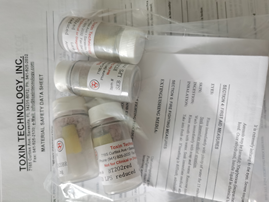
Toxin technology#BT202,SEB,1mg;
Toxin technology#BT202red,SEB(Staphylococcal Enterotoxins B),1mg;
Toxin technology#ET404,SEE,100ug;
Toxin technology#DT303,SED,100ug;
Toxin technology#TT606,TSST-1,100ug;
Toxin technology#AT101,SEA,100ug;
Toxin technology#HT101,Alpha Hemolysin highly purified,100ug;
Toxin technology#HP101,Alpha Hemolysin - partially purified,10000Units;
IRA#SE-121-0.72mg,17β-ESTRADIOL,25片;
Listbio#150,Diphtheria Toxin, Unnicked, from Corynebacterium diphtheriae,1mg;
visual protein#IF01-4N,ImmunoFas Adjuvant,1套;
visual protein#HB01-1L,杂交瘤促进生长因子,50mg;
visual protein#BF20-50P,无蛋白封闭缓冲液,20片;
Research Diets#D12492,60%高脂饲料(research diets),12.5KG 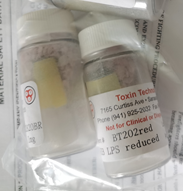
Hooke Laboratories: 
风险提示:丁香通仅作为第三方平台,为商家信息发布提供平台空间。用户咨询产品时请注意保护个人信息及财产安全,合理判断,谨慎选购商品,商家和用户对交易行为负责。对于医疗器械类产品,请先查证核实企业经营资质和医疗器械产品注册证情况。
 文献和实验
文献和实验DSHB标准试剂
 技术资料
技术资料
